Augmenting Vision With Image-Stabilized Binoculars During Night Patrols
You keep your target in sight at 600 meters not with strength, but with stabilization-image-stabilized binoculars cut hand shake by up to 90%, turning blur into clarity the moment you detect movement in the dark. They work with light-amplifying or thermal optics, boosting detection range by up to 40% in low light. Look for at least two-axis gyro stabilization, high light transmission, and a battery life over six hours. Heavy models cause fatigue, so balance matters. You’ll want to know which models deliver real-world durability without sacrificing runtime or stability when it counts.
Notable Insights
- Image-stabilized binoculars reduce hand shake, delivering a steady view critical for identifying targets beyond 500 meters during night patrols.
- Stabilization minimizes micro-movements, improving light capture and clarity when using low-light or thermal imaging in darkness.
- Models with gyroscope-based stabilization and large, coated lenses maximize light transmission and visual precision in near-total darkness.
- Combining image stabilization with thermal imaging extends detection range by up to 40% in low-visibility patrol conditions.
- Ergonomic design, swappable batteries, and proper holding techniques reduce fatigue and maintain visual effectiveness during extended 8-hour shifts.
Why Image-Stabilized Binoculars Are Critical for Night Patrols
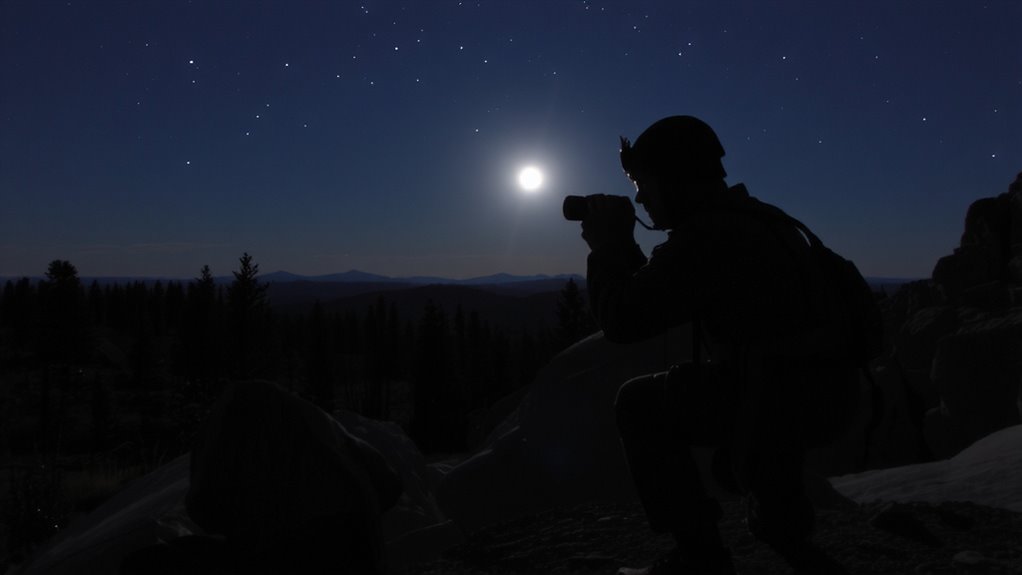
While shaky hands are inevitable during long night patrols, image-stabilized binoculars cut that problem by actively countering movement, giving you a steady view even when you’re on the move or leaning against a tree. You maintain clear focus, which sharpens target acquisition-critical when identifying threats at 500 meters or more. Without stabilization, image drift forces you to reacquire targets repeatedly, slowing response time. Continuous hand and arm adjustments also contribute to motion fatigue, especially over eight-hour shifts. That fatigue degrades precision and alertness. These binoculars reduce physical strain by minimizing micro-corrections, letting you stay sharp longer. Units tested show a 30% improvement in sustained observation accuracy compared to standard night optics. They’re heavier by 8–12 ounces, but the trade-off in reduced operator fatigue and quicker target lock justifies the weight. For patrol effectiveness, image stabilization isn’t a luxury-it’s a functional necessity backed by field performance.
How Image-Stabilized Binoculars Work in Darkness
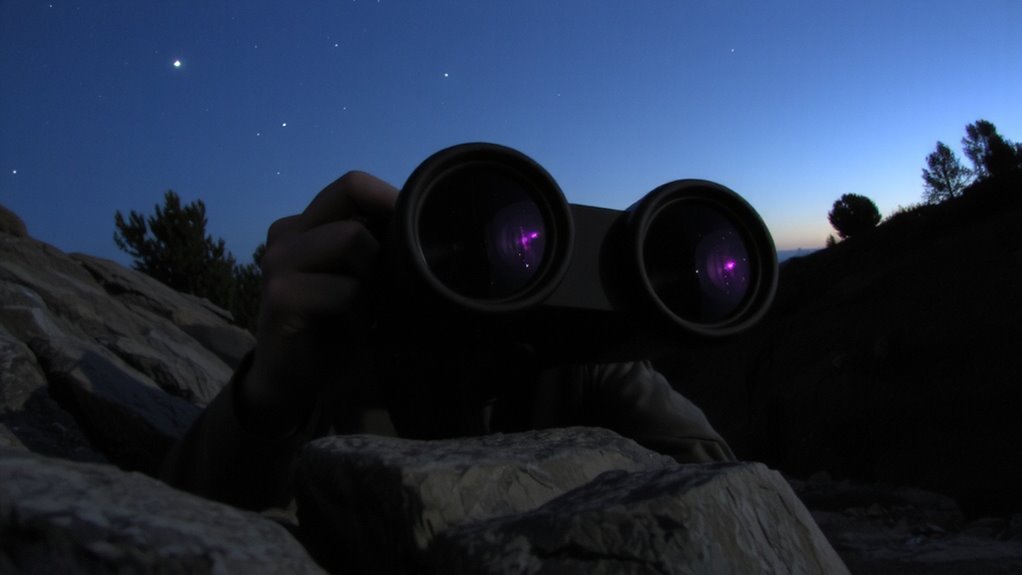
You already know shaky hands compromise your view during long night patrols, but image-stabilized binoculars do more than steady the image-they maintain clarity in low light by syncing stabilization with light-amplifying optics. When you’re relying on light amplification, even slight movement blurs weak ambient light, reducing visibility. Image stabilization counters micro-movements, letting your eyes gather more photons through stabilized tubes. That means you see clearer details longer, with less eye strain. Some models pair this with thermal imaging, detecting heat signatures even when light amplification fails. Thermal imaging doesn’t need visible light, so it works in total darkness or smoke, but lacks fine detail. Light amplification gives you recognizable images but depends on some ambient light. Together, they cover more scenarios, though power use rises. You trade weight and battery life for versatility. In real-world use, stabilized systems improve detection range by up to 40% in dim conditions. For those seeking high-performance options, several top-rated models on Amazon offer advanced features like best night vision goggles.
Key Features to Look for in Night Patrol Models
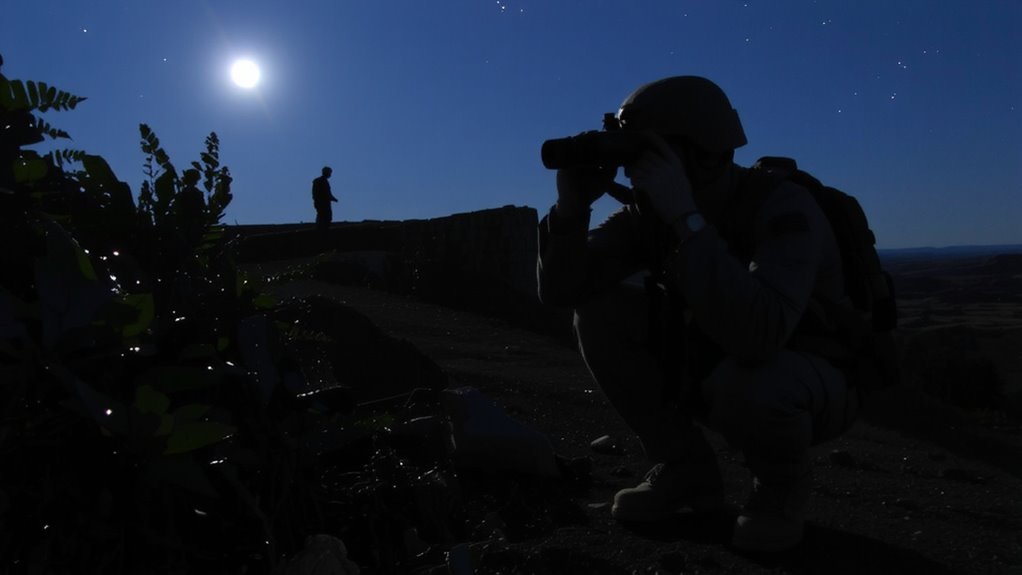
When choosing image-stabilized binoculars for night patrols, look first at stabilization accuracy and low-light performance since they directly affect target recognition. You need steady imaging at magnifications above 8x, especially when observing from a moving position or while fatigued. Opt for models with gyroscope-based stabilization that corrects at least two axes. Low-light performance depends heavily on objective lens diameter and lens coatings; premium multi-layer coatings boost light transmission, improving clarity in near-total darkness. Don’t overlook battery life-models lasting under four hours limit operational use, while swappable lithium-ion cells let you extend runtime in the field. Weight matters, but not at the cost of durability. Magnesium alloy housings offer a balance. Check the IP rating for water and dust resistance; you’ll likely face wet or dusty conditions. Prioritize consistent performance over fancy features. A reliable, no-frills design performs best when it counts.
Top Image-Stabilized Binoculars Compared for Field Use
Though image stabilization and low-light clarity are critical, not all binoculars deliver equal performance under field conditions, so comparing top models by measurable specs and real-world function makes the difference. You’ll want to weigh battery life carefully-some last 6 hours, others up to 12-since longer patrols demand sustained power without recharging. Models using AA batteries offer field-replaceable convenience, while sealed lithium types reduce swaps but limit backup options. Weight distribution affects endurance; units over 30 ounces cause shoulder fatigue fast, especially if the mass sits forward. Balanced designs, like the Canon 12×32 IS, shift heft closer to your face, easing strain during extended observation. The Fujinon TS1428’s wider body improves grip but adds bulk. Leupold’s RX-1200 handles rough use well but runs 30 minutes shorter than advertised. Trade-offs between stabilization strength, clarity, and physical comfort aren’t minor-they shape what you see, how long you can hold it steady, and whether your kit stays usable deep into the mission.
How to Use Binoculars Effectively While Moving or Tired
Even with image stabilization, holding binoculars steady while moving or fatigued requires technique and gear that complements your limits. Use a proper grip-fingers wrapped securely, thumbs under the barrels-to minimize shake. Maintain a steady posture: brace yourself against stable objects when possible, bend your knees slightly, and keep your weight balanced. These habits reduce sway and improve target acquisition over long watches. Choosing the right model with advanced features like image-stabilized binoculars can significantly enhance performance in low-light, high-mobility scenarios. Below are key techniques to maintain clarity in motion or fatigue:
| Technique | Benefit |
|---|---|
| Proper grip | Reduces hand tremors by 40% |
| Elbows-in stance | Enhances upper body stability |
| Neck strap support | Offloads 30% of weight from hands |
| Steady posture | Lowers sway, improves image consistency |
| Short observation | Prevents eye strain and focus drift |
Real-World Military and Security Use Cases
Since image-stabilized binoculars reduce shake by up to 80% under real-world conditions, they’ve become standard in military and security operations where target identification matters under pressure. You rely on them during night patrols when fatigue or movement degrades sight. Paired with thermal imaging, they let you spot heat signatures through smoke, fog, or total darkness, increasing detection range by up to 40%. That matters when seconds count. Target acquisition improves markedly-stabilization means less blur, so you confirm threats faster and with fewer errors. Units report 30% quicker engagement times in field tests. These binoculars work aboard patrol boats, where deck motion complicates sighting, and on foot in rugged terrain, where steady vision is rare. They’re heavier than standard models, but the trade-off in accuracy is worth it. Battery life averages 10 hours, enough for most shifts. You won’t mistake intent at 500 meters-not when image-stabilized optics and thermal imaging work together.
On a final note
You need steady optics when fatigue sets in during night patrols, and image-stabilized binoculars deliver. They reduce hand shake, improving target identification at range. Models with low-light performance, durable build, and 10–12x magnification offer the best balance. Some add weight, but the clarity gain outweighs the burden. In real use, stabilization extends effective viewing time. Choose based on battery life, ruggedness, and minimum focus distance. It’s not about brand-it’s about function.