How to Identify Risks From Downed Power Lines After Storms
Treat every downed wire as live-even if it looks dead or is underwater. Stay at least 30 feet away, since voltage can travel through wet ground, fences, or puddles. Watch for flickering lights or hissing sounds-those mean arcing is happening. Don’t touch debris or water near lines, since insulation could be damaged. Report the location to 911 or your utility right away. Only trained crews can confirm a line is safe, and response usually takes under an hour. You’ll want to know what to do if you spot one near your home.
Notable Insights
- Treat every downed wire as live, even if it appears harmless or shows no sparks.
- Beware of wires hidden in floodwater or under storm debris, as both can conduct electricity.
- Listen for hissing or crackling sounds, which signal dangerous electrical arcing.
- Stay at least 30 feet away, as voltage can travel through wet ground and metal objects.
- Report downed lines immediately to 911 or your utility; never approach to take photos or inspect.
Treat Every Downed Wire as Live
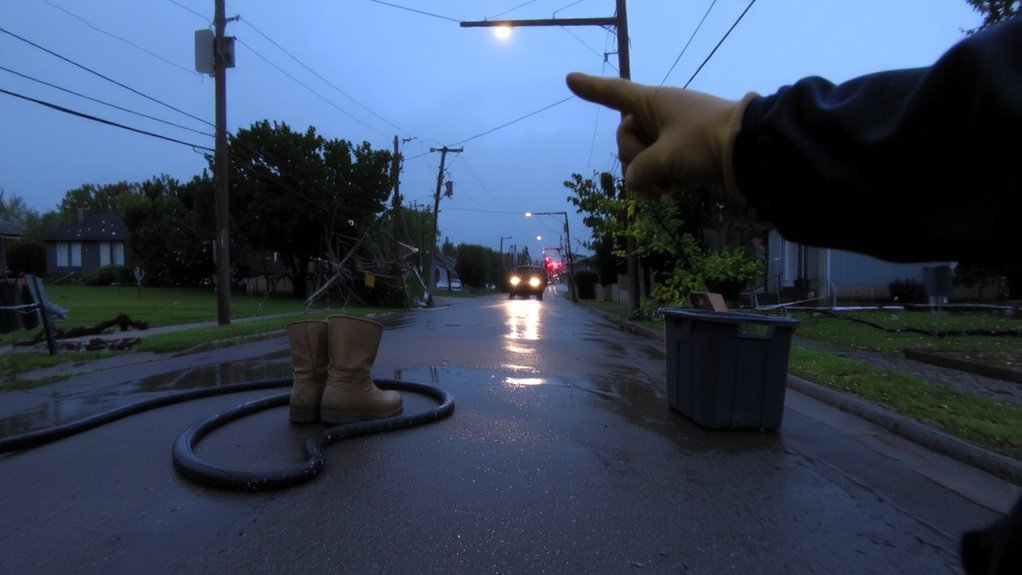
A wire lying across the road isn’t just a nuisance-it’s a potential killer. You must treat every downed wire as live, because even if it looks harmless, it could be carrying deadly voltage. During storm aftermath, electrical hazards are unpredictable-lines may snap and fall without warning, energized by damaged transformers or backup systems. Power lines don’t always spark or hum, so silence doesn’t mean safety. You can’t rely on appearance to judge risk; insulation may be compromised, and the ground or nearby objects could be electrified. Distance is your best defense-stay at least 30 feet away. Never assume a wire is dead, even if nearby lights are off. Emergency crews confirm status with testing equipment; you don’t have that. Acting as if every downed line is active reduces your risk. In storm aftermath, caution beats confidence. Your judgment could determine survival.
Look for Fallen Wires in Water or Debris
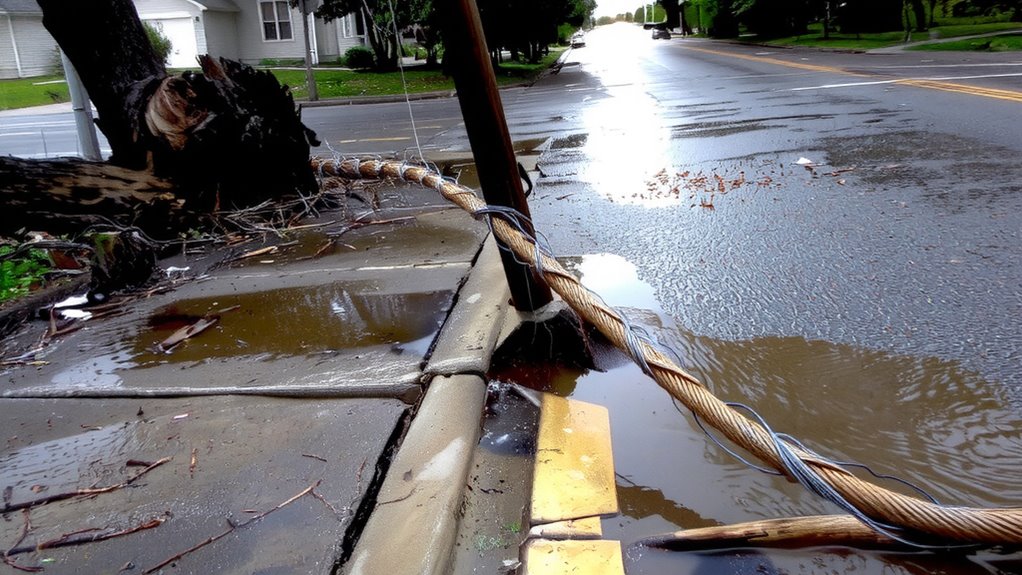
That wire half-buried in floodwater or tangled in storm debris could be live, and you won’t always see the danger. Water conductivity means even pooled rainwater can carry current from a downed line. You might not see sparks, but the whole area could be energized. Debris hazards hide live wires under branches, metal, or trash-what looks like harmless wreckage might be lethal. Stay at least 30 feet away and never wade through floodwater near downed lines.
| Situation | Risk Level |
|---|---|
| Wire in standing water | Extreme |
| Wires under storm debris | High |
| Wet surface near wire | High |
| Intact insulation in mud | Medium |
Assume every line is live. Use caution, not curiosity. Your safety depends on treating unseen threats as real ones.
Watch for Hissing Sounds or Flickering Lights
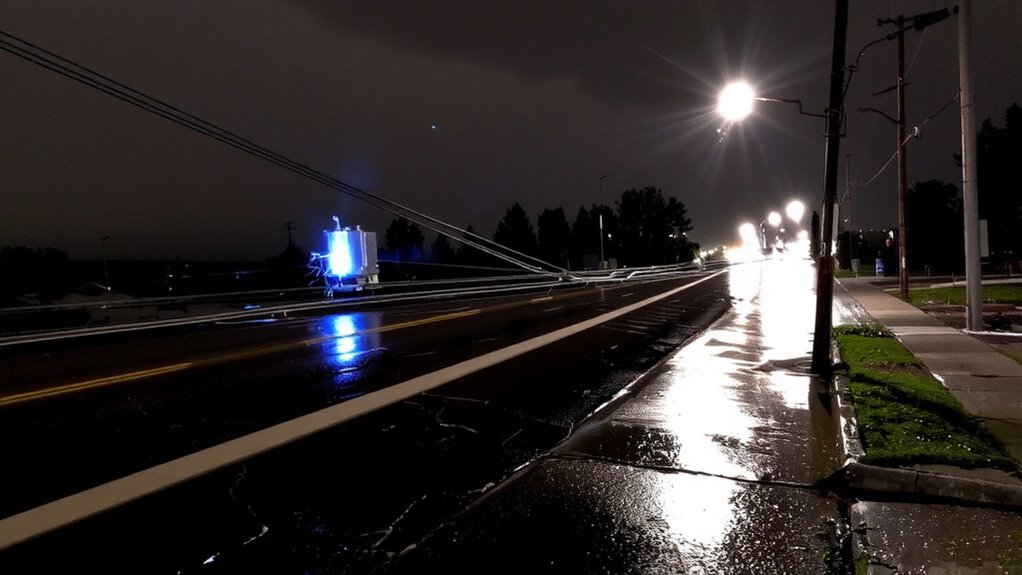
Don’t rely on sight alone-your ears and eyes can catch what your instincts might miss. If you hear a hissing or crackling noise near a downed line, it’s likely electrical arcing caused by exposed wires energizing the air. This often follows insulation damage from storms, where frayed or broken coverings expose live conductors. Even if the wire looks quiet, intermittent flickering lights in nearby homes or transformers can signal arcing or unstable current flow. These aren’t just warning signs-they confirm danger is present. Arcing can ignite fires or energize nearby surfaces without visible sparks. You don’t need specialized tools to notice these cues. Trust the sound and erratic lighting as real indicators. They result from compromised systems, not minor glitches. Recognizing them helps you act quickly and safely. Don’t wait for visible flames or contact. Hissing and flickering mean the system is failing and still live.
Keep Your Distance From Fallen Wires
Stay at least 30 feet away from any downed power line-you can’t tell if it’s live just by looking. Electrical hazards remain even if the line appears inert. After storm damage, power lines may lie across wet ground, fences, or vehicles, extending danger beyond the wire itself. Voltage can travel through conductive materials, making nearby objects risky to touch. You don’t need direct contact to be shocked; electricity can arc in damp or storm-affected conditions. Avoid puddles, metal surfaces, and debris near downed lines. Keep children and pets far away. Walking near a fallen line, even on dry ground, isn’t safe due to potential ground current. Electrical hazards from broken lines are unpredictable. Storm damage complicates visibility and stability, increasing the chance of hidden live wires. Don’t assume lines are insulated or harmless-they usually aren’t. Distance is your best protection. Move away without turning your back on the line, but never get closer.
Report Downed Lines Immediately
Once you’ve moved to a safe distance from a downed power line, your next step is clear: report it immediately. Use your emergency contacts-like calling 911 or your local utility-to guarantee a rapid utility response. Delaying increases risk to others and slows power restoration. You don’t need to assess the line’s condition; even if it looks dead, it could still be live. Your prompt call triggers professional dispatch and hazard containment. Most utilities respond within 30 to 60 minutes when notified. Include precise location details so crews can act quickly. Use a mobile phone from a safe spot-never return closer. Reporting isn’t optional; it’s a critical safety action. Emergency contacts exist for this exact reason. Every minute counts. Let trained personnel handle the danger. Fast notification means faster resolution and fewer risks during storm recovery.
Don’t Touch or Approach Downed Lines
Why risk it when the danger is both invisible and lethal? Downed power lines can carry high voltage even if they appear dead. Stay alert and never assume a line is safe. Electricity can arc and jump to nearby objects or people, especially in wet conditions. Avoid contact with anything touching a downed line-this includes fences, trees, and vehicles. Even standing too close can be deadly due to ground current. Keep a distance of at least 35 feet-more if lines are sparking or buzzing. Never try to move a downed line with a stick, tool, or any object. Your actions could complete a circuit and result in severe injury or death. If you see a downed line, stay back, warn others, and call emergency services immediately. Your caution protects everyone. Safety depends on distance, awareness, and quick reporting-nothing more, nothing less.
On a final note
You should always treat downed power lines as live-they’re dangerous even if they look dead. Stay at least 30 feet away, especially near water or debris where conductivity increases. If you hear hissing or see flickering, electricity may still be flowing. Never touch a wire or anything in contact with it. Report it immediately-utilities respond fast. Your caution gives crews safer conditions and reduces risk. Simple distance and quick reporting save lives.