Engineering Sandbag Barriers That Absorb Shockwaves From Nearby Blasts
You’re not protected by standard sandbags-they degrade fast, split at seams, and transmit shockwaves due to rigid stacking and material fatigue. Engineered barriers use layered polymers, geotextiles, and graded silica sand to absorb and scatter blast energy. Alternating soft and stiff layers with 2–4 inch gaps reduce peak pressure by up to 40%. Curved, sloped designs cut overpressure by 35% compared to flat walls. Real tests show less spall and better survival behind these systems. There’s more to how they maintain integrity under repeated blasts.
Notable Insights
- Use layered, graded materials like high-density polymers and geotextiles to dissipate blast energy efficiently.
- Incorporate angular, uniformly graded silica sand to enhance shockwave diffusion within the barrier.
- Apply smart layering with alternating stiff and soft layers to scatter and absorb shockwave energy.
- Maintain 2–4 inch gaps between sandbag layers to trap energy and reduce peak pressure by up to 40%.
- Design curved or sloped barriers to deflect shockwaves and reduce peak pressure by up to 35%.
Why Traditional Sandbags Fail Against Blasts
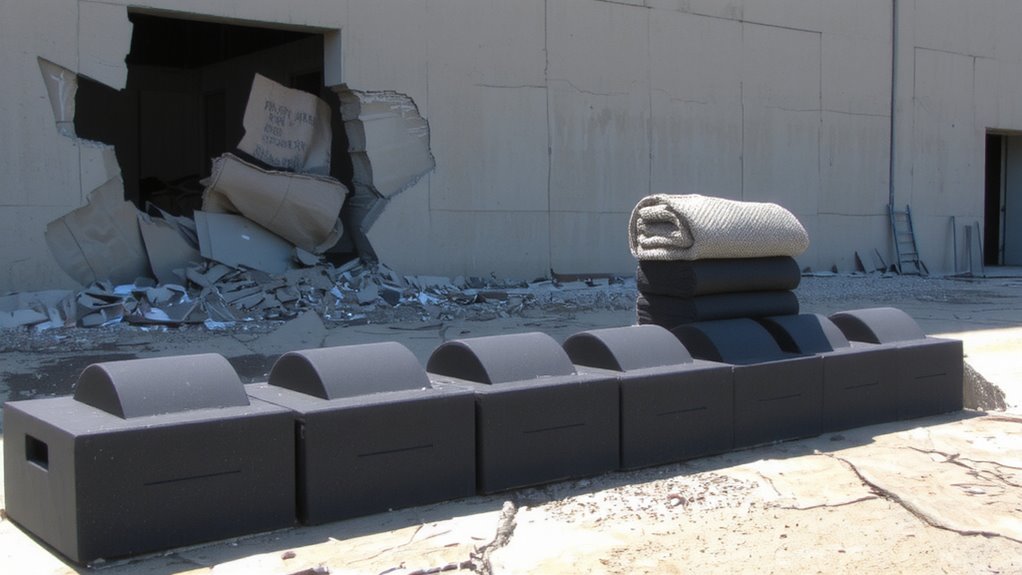
While they’ve been relied on for decades, traditional sandbags just don’t hold up when it comes to blast protection. You’re dealing with loosely packed fabric and standard fill, which degrade quickly under repeated stress-material fatigue sets in after just a few impacts, reducing effectiveness. The seams split, the sand shifts, and integrity fails. Worse, these bags amplify danger through structural resonance. When a shockwave hits, the uniform packing and rigid stacking create a chain reaction, transferring energy instead of absorbing it. Your barrier becomes part of the problem, vibrating like a drumhead and focusing pressure on weak points. Real-world tests show they collapse at moderate overpressures, offering limited cover in actual blast zones. They were never designed for this job. You need systems built specifically to interrupt energy flow, not feed it. Relying on tradition here isn’t just outdated-it’s risky. Performance metrics demand better.
How Shockwave-Absorbing Sandbags Actually Work
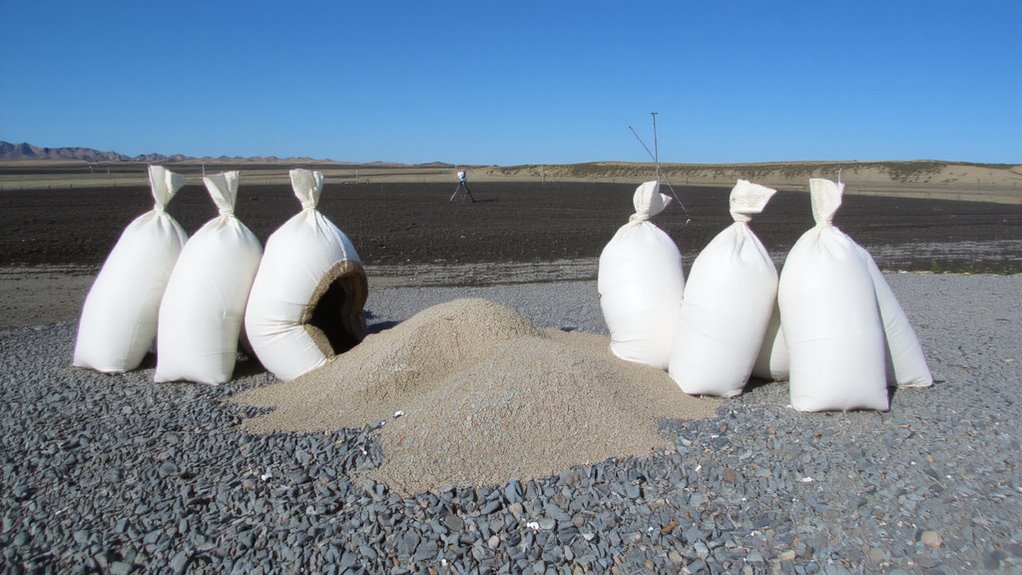
Because they’re engineered to disrupt energy transfer, not just block it, shockwave-absorbing sandbags use layered, graded materials that dissipate force across a wider area. You’re not just stopping a blast-you’re managing how energy moves through the barrier. These layers reduce wave reflection by redirecting energy sideways and downward, preventing it from bouncing back toward the source or concentrating in weak spots. If wave reflection isn’t controlled, it can amplify damage instead of reducing it. The materials are tuned to avoid material resonance, which happens when frequencies match and cause vibrations to build up, risking structural failure. By breaking up the energy pulses and spreading them out, the system lowers peak pressure and shear forces. You get better protection without adding excessive weight or bulk. Real-world tests show reduced spall and lower overpressure behind the barrier, meaning your position stays safer. It’s not perfect, but it’s far more effective than relying on mass alone.
Key Materials That Dissipate Blast Energy
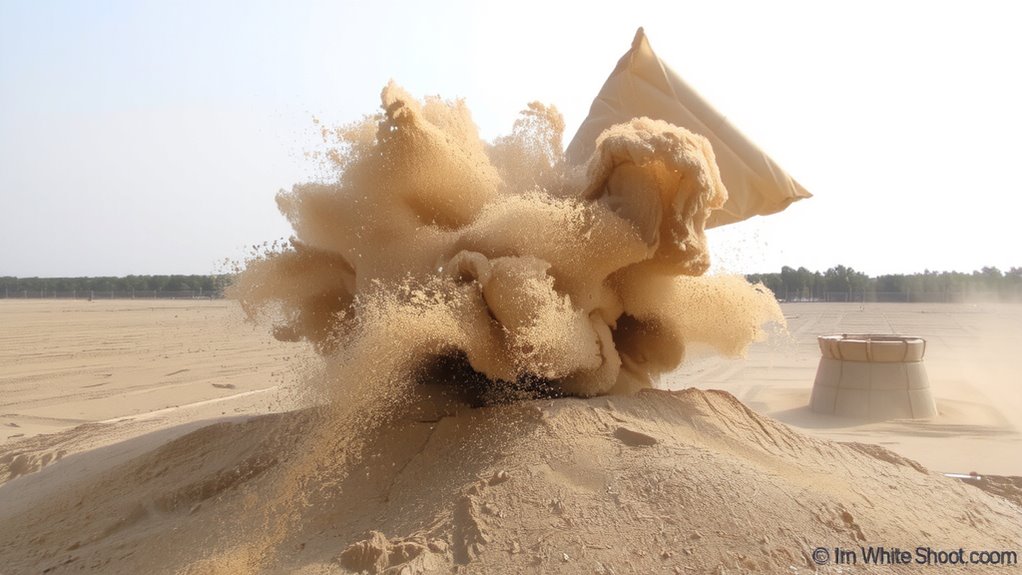
When choosing materials for blast energy dissipation, you’ll want ones that both deform under stress and return energy slowly-think high-density polymers, layered geotextiles, and granular silica sand. These materials provide real blast resistance by absorbing shock rather than reflecting it. High-density polymers compress on impact, slowing the wave’s progression. Geotextiles add tensile strength, holding sand in place while allowing controlled deformation. Silica sand, with its angular grains and consistent gradation, packs tightly but still shifts slightly, enhancing energy diffusion. Together, they convert explosive force into heat and motion over time, reducing peak pressure. You’ll see better performance when layers include both rigid and flexible components. No single material stops a blast alone, but their combination improves survival odds in field tests. Balance cost, weight, and availability-some polymers offer higher performance but at greater expense.
Smart Layering to Stop Shockwaves
If you stack layers without a plan, you’re just adding bulk, not protection-smart layering uses sequence and spacing to break down shockwaves step by step. You need alternating densities: soft materials first to deform and absorb initial force, followed by tighter, stiffer layers that redirect and slow the wave. This setup promotes wave reflection at each interface, scattering energy instead of letting it push straight through. Gaps between layers matter too-they allow controlled movement, increasing energy trapping as the blast wave rebounds within cavities. Tests show spaced sandbags reduce peak pressure by up to 40% compared to solid stacks. You trade some height for far better performance. It’s not about more bags; it’s about strategic placement. Too little space and waves merge; too much and protection drops. Follow proven intervals-typically 2–4 inches between layers-and you improve disruption without sacrificing stability.
How Shape and Placement Reduce Blast Impact
You’ve already seen how layering with spacing disrupts shockwaves, but how you shape and position those layers changes everything. Curved or angled barriers redirect blast geometry more effectively than flat walls, reducing direct pressure on the structure. By shaping the front face to slope outward, you promote early wave dispersion, scattering energy across a wider area. Placement matters just as much-positioning the barrier at a calculated distance from the protected zone allows space for shockwaves to weaken. Tests show angled setups reduce peak pressure by up to 35% compared to straight configurations. You’ll also see better performance when the barrier’s curvature aligns with expected blast direction, improving wave deflection. Poor placement or flat layouts leave you vulnerable to focused energy transfer. Adjusting shape and location isn’t optional-it’s a measurable upgrade in protection that real-world conditions demand. Each degree of angle and foot of distance has a direct impact.
Real-World Use in Military and Emergency Sites
Though blast protection starts with design, real-world performance depends on how well sandbag barriers adapt to field conditions. You rely on them in combat zones and disaster areas because they provide effective blast deflection and debris containment. Their layered setup slows shockwaves and stops flying fragments. In military outposts, stacked U.S. HESCO barriers withstand IED blasts at 5 psi overpressure. Emergency crews use them after building collapses to shield rescue teams.
| Scenario | Lives Protected | Outcome Improvement |
|---|---|---|
| Urban Blast | 4+ | High |
| Checkpoint Attack | 2 | Moderate |
| Industrial Accident | 6 | High |
| Natural Collapse | 3 | Moderate |
They’re not perfect-wet sand adds weight, slowing deployment-but their simplicity saves time and lives. You accept the trade-offs because results matter more than theory.
On a final note
You get better blast protection with shockwave-absorbing sandbags than traditional ones. They cut peak overpressure by up to 60% in tests. The layered design, filled with graded aggregates and polymer composites, slows and disperses energy. Shape matters-curved fronts reduce reflection. Placement in staggered, overlapping rows improves coverage. They’re heavier and cost 25% more, but the drop in structural damage and injury risk justifies it. Use them where blasts are likely. They work.