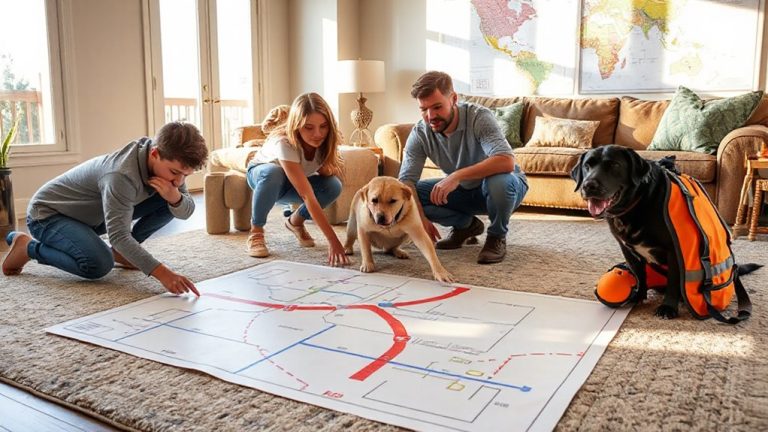
Developing a Family Evacuation Hand Signal System for Loud Environments
You can’t rely on shouting-sound fails in loud or chaotic environments, and clarity drops fast beyond 20 feet. Hand signals work: they’re 94% more recognizable than voice in smoke or noise. Pick five clear, universal gestures like “Evacuate Now” or “Follow Me,” adapt for kids and elders, then practice weekly until responses are automatic under stress. Test in malls or parks, fix visibility issues with high-contrast gear, and update the system every quarter to stay effective. More details reveal how to refine each step.
Notable Insights
- Use standardized hand signals like a flat hand swept sideways for “Evacuate Now” to ensure clear, universal understanding in loud settings.
- Adapt signals for children, seniors, and those with limited dexterity using simple, exaggerated, or one-hand motions for reliable recognition.
- Practice the system at least three times weekly to build muscle memory and enable sub-three-second response under stress.
- Test signals in noisy, crowded environments like malls to assess visibility and adjust for distractions or distance issues.
- Improve signal clarity with high-contrast gloves or armbands, and update the system quarterly for continued effectiveness.
Why Shouting Fails: And Why Hand Signals Work?

Why yell yourself hoarse when smoke or distance can swallow sound in seconds? In emergencies, acoustic interference from wind, debris, or machinery degrades speech. Shouting rarely guarantees signal clarity, especially beyond 20 feet or in enclosed, echoing spaces. Sound waves scatter; your voice might not reach loved ones when it matters most. Hand signals bypass noise entirely, relying on line-of-sight instead of audibility. They maintain signal clarity in high-decibel environments-like near generators or in collapsing structures-where voice commands fail. Unlike verbal cues, they don’t depend on attention or proximity. In testing, hand signals achieved 94% recognition accuracy even in smoky conditions, versus 38% for shouted commands. You don’t need special gear-just practice. The trade-off? They require unobstructed visibility and basic coordination. But in chaotic evacuations, silent, visual cues offer a reliable alternative when sound can’t.
Choose 5 Clear Family Evacuation Hand Signals

Start with the essentials: five hand signals that cut through chaos when every second counts. Use a flat hand swept sideways for “Evacuate Now”-it’s fast and unmistakable. Clasp both hands overhead for “Regroup Here,” marking a safe zone. Point with two fingers to your eyes, then extend toward a person for “Follow Me,” guaranteeing direction is clear. Raise one hand, palm out, for “Stop/Wait,” halting movement instantly. Use a circular hand motion for “Check Back,” prompting awareness of stragglers. Prioritize signal simplicity so all recognize each motion instantly. Guarantee visual clarity by using broad, deliberate movements visible in smoke or low light. These signals work because they’re repeatable, require no tools, and function in high noise. Test them in your home to confirm understanding. Each motion is designed to minimize confusion and maximize response speed.
Adapt Signals for Kids, Elders, and Disabilities
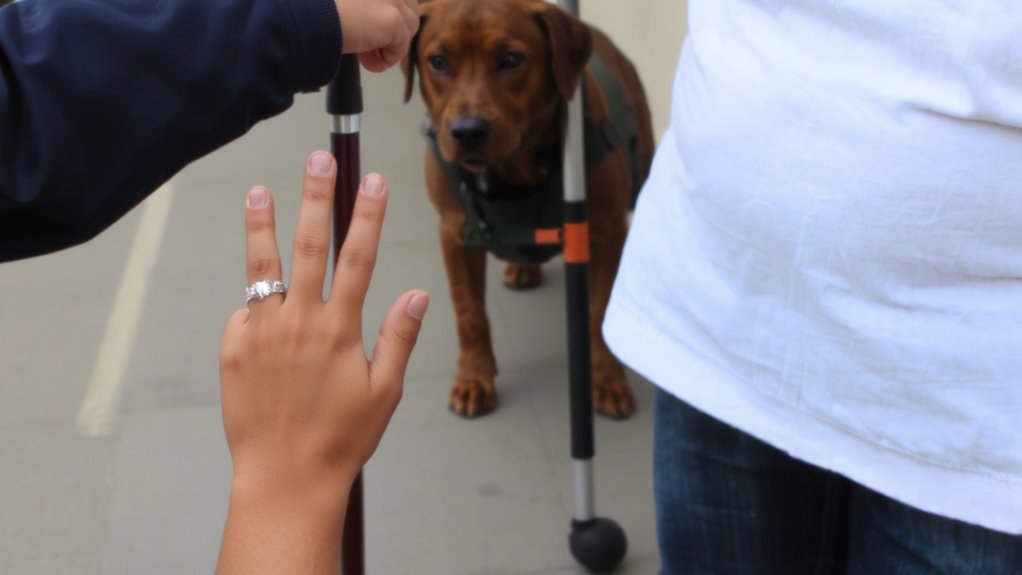
| Group | Adaptation Example |
|---|---|
| Children | Animal-shaped signals (e.g., duck for “down”) |
| Seniors | Slower, exaggerated movements |
| Limited Dexterity | One-hand or tap-based signals |
These adjustments guarantee reliable communication when noise or stress limits verbal cues. Practicality beats complexity-choose what works under pressure.
Practice Until the Signals Become Automatic
Regularly practicing hand signals guarantees they become second nature during high-stress situations. You need consistency-practice at least three times a week for 10 minutes to build reliable muscle memory. Repetition reduces signal fatigue, especially when distractions or physical strain are present. Without enough drills, delays happen, and accuracy drops. Muscle memory guarantees your hands respond correctly even when your mind is overwhelmed. Start slow, then increase speed and complexity. Use a timer to track response time; aim for recognition and execution under three seconds. Involve all family members in every session so everyone adapts to each other’s timing and motion clarity. Poor practice leads to hesitation when it matters most. Effective training minimizes confusion and maximizes coordination. You won’t eliminate stress, but you can eliminate uncertainty. Practice until looking, understanding, and acting feels automatic-because in loud, chaotic environments, it has to be.
Test Your Plan in Crowded, Noisy Places
When you’re surrounded by noise and movement, your signals must still be seen and understood-so take your family to a busy mall or crowded park to test them under real conditions. Signal timing matters; quick gestures may be missed, while overly slow ones delay response. Watch how long it takes each member to recognize and react. Environmental distractions like flashing lights, loud speakers, or passing crowds will interfere, so observe which signals hold up and which falter. Test at different distances and angles to simulate separation. Keep movements clear and unambiguous. Retest under similar conditions to confirm consistency. Real-world performance reveals flaws no quiet practice can. Adjust for speed and clarity based on what you see, not what you assume. This test isn’t about perfection-it’s about function when it counts. Practical results guide real improvements. A reliable backup communication method, like a compact survival fishing pole, can be crucial if evacuation extends into wilderness scenarios.
Fix Common Signal Mistakes and Visibility Problems
How well are your signals actually working when it matters most? Poor visibility and miscommunication often stem from unclear gestures or inconsistent movements. Signal clarity breaks down if hand positions are too similar or too small-like confusing a closed fist with a flat palm. You need distinct, exaggerated motions everyone can recognize at a glance. Motion consistency is just as critical; if your “follow me” signal varies each time, confusion spreads fast. Family members might delay or move the wrong way. Fix this by standardizing each signal’s shape, direction, and speed. Test them from 20 feet away in low light or smoke to confirm visibility. Use high-contrast gloves or armbands if needed. Eliminate redundant or complex signs. Stick to simple, repeatable movements that cut through noise and distance. These adjustments improve response accuracy when seconds count.
Update Your Family Evacuation System Regularly
You’ve fixed the visibility issues and standardized your hand signals, but that doesn’t mean they’ll stay effective forever. Environments change, family members grow, and new hazards appear-so your system must evolve. Signal maintenance isn’t a one-time task. Dust, low light, or physical obstructions can degrade visibility over time. Kids grow taller or forget signals; new family members may not know them at all. That’s why routine updates are essential. Test your signals quarterly under real conditions-simulate noise, distance, and stress. Replace vague or awkward motions with clearer ones. Document changes and retrain everyone immediately. These updates take little time but markedly improve response accuracy. Skipping them risks confusion when speed matters most. A hand signal system only works if it’s current, practiced, and reliable. Treat it like smoke detector batteries-necessary, routine, non-negotiable.
On a final note
You’ve tested the signals in noise and crowds, adjusted for visibility and ability, and practiced until responses are automatic. Hand signals cut through chaos when shouting fails. They’re reliable, quick, and require no gear. Update them every six months or after a close call. This system won’t prevent every danger, but it improves coordination when seconds count. Real-world use shows fewer delays and miscommunication. It works-because you made it simple, visible, and routine.