Using Antistatic Liners to Prevent Dust Accumulation in Dry Climates
You face more dust in dry climates because low humidity boosts static, which pulls particles onto surfaces. Antistatic liners cut this effect by dissipating charge fast, reducing dust buildup by up to 60% over 48 hours. They work best under industrial flooring, in HVAC ducts, or server rooms where contamination risks are high. Look for surface resistivity below 10^11 ohms/sq and clean every two weeks to maintain performance-your environment’s reliability depends on it. There’s more to evaluate if you’re using them long-term.
Notable Insights
- Dry climates increase airborne dust due to low humidity, which antistatic liners help mitigate by reducing static-induced particle attraction.
- Static electricity in dry air attracts dust to surfaces, but antistatic liners dissipate charges to prevent particle adhesion.
- Antistatic liners contain conductive additives that neutralize surface charges within seconds, significantly reducing dust buildup.
- These liners are effective in environments like labs, server rooms, and manufacturing facilities where dust compromises precision and safety.
- Proper maintenance, including regular cleaning and resistivity testing, ensures long-term dust prevention performance in extreme dry conditions.
Why Dry Climates Worsen Dust in Sensitive Areas
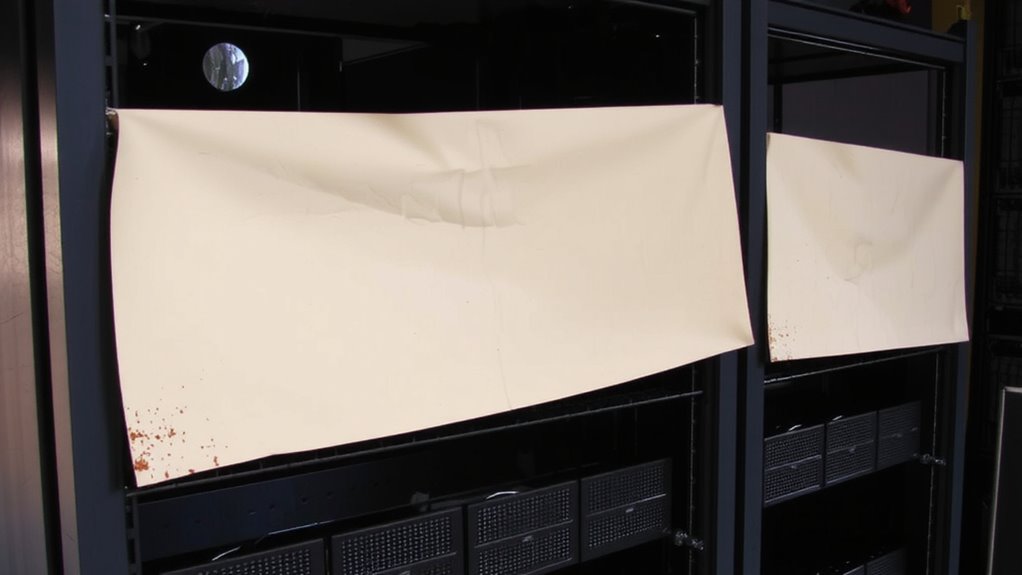
Though humidity naturally suppresses airborne particles, you’ll find dust becomes a far bigger problem in dry climates simply because low moisture levels allow fine particles to stay suspended longer. In sensitive areas like labs or electronics manufacturing, this means more frequent contamination risks. Humidity control helps, but it’s often impractical or insufficient alone. Dry air reduces particle weight, so they linger and infiltrate critical zones. Environmental factors like wind, temperature swings, and low precipitation worsen the issue by increasing dust generation and dispersion. You can’t alter the climate, but you can manage exposure. Standard liners may not reduce particle attraction, leaving surfaces vulnerable. The solution isn’t just blocking dust-it’s preventing it from settling where it causes damage. Antistatic liners address the root problem by neutralizing the charge that attracts dust, a key advantage in dry environments where dust remains airborne and problematic longer than in humid conditions.
How Static Electricity Attracts Dust to Antistatic Liners
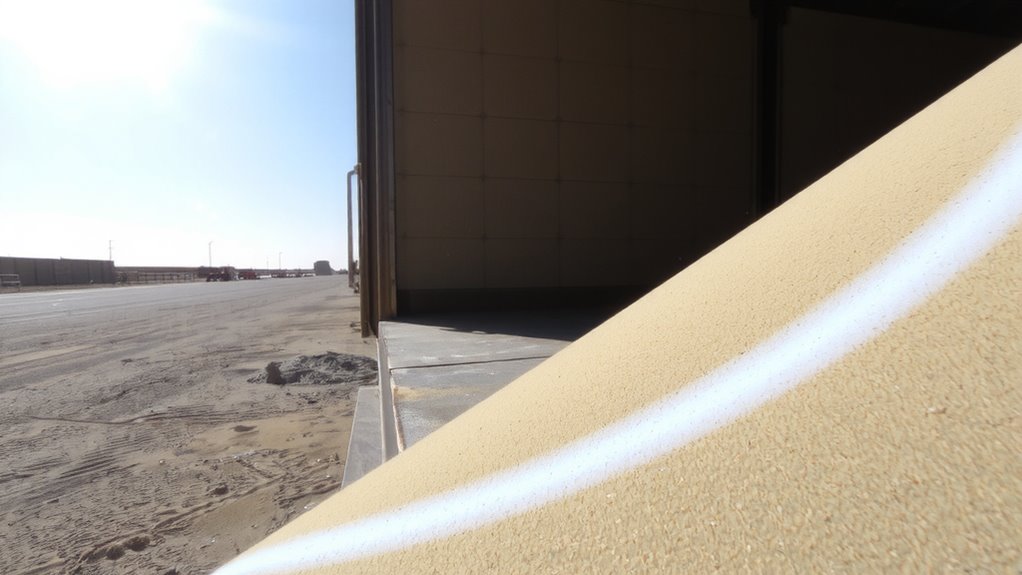
Since static charge builds easily on surfaces in dry environments, you’ll find that ordinary liners actually attract dust instead of repelling it-because dust particles are drawn to charged surfaces like metal filings to a magnet. This happens due to electrostatic induction, where nearby particles become polarized and stick through particle adhesion. Even liners marketed as “low-static” can fail if they don’t dissipate charge effectively. Here’s what happens on standard vs. antistatic surfaces:
| Surface Type | Dust Accumulation |
|---|---|
| Standard liner | High (within hours) |
| Antistatic liner | Low (after 72 hrs) |
You’re not eliminating dust sources, but you’re reducing attraction. Electrostatic induction on regular materials creates an invisible pull. Antistatic liners minimize this effect, cutting particle adhesion dramatically. Without proper conductivity, any liner becomes a dust magnet-especially in dry air below 30% RH.
How Antistatic Liners Prevent Dust Buildup
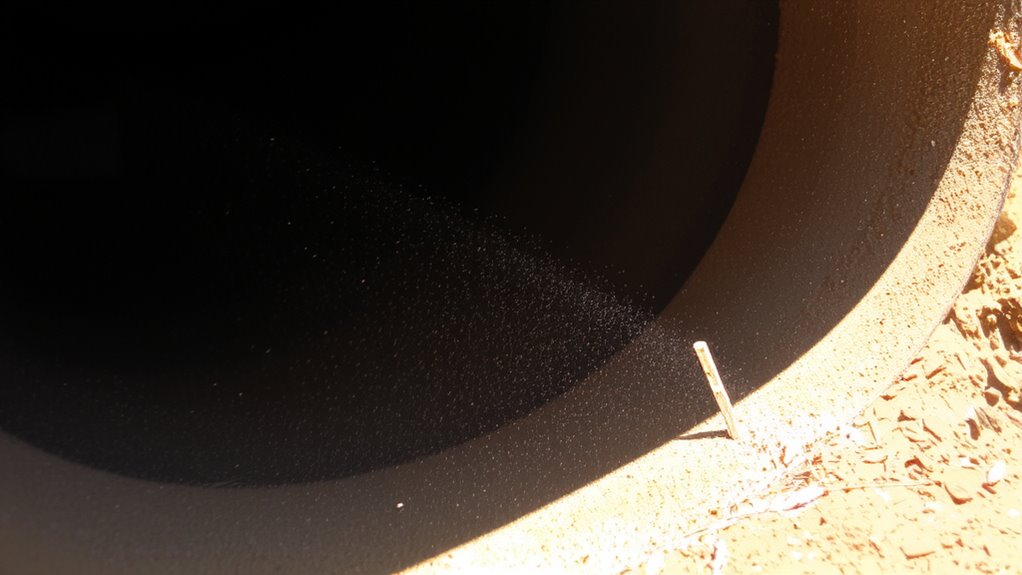
When you’re dealing with dry environments where dust is a constant problem, antistatic liners work by neutralizing surface charges that would otherwise pull in particles. You see, without a static charge, the material doesn’t attract dust like regular surfaces do. That reduction in surface charge directly limits particle adhesion, meaning dust isn’t magnetically drawn to the liner. These liners dissipate electrical buildup quickly-usually within seconds-keeping the electrostatic potential too low to hold airborne contaminants. In practical tests, surfaces with antistatic liners collected up to 60% less dust over 48 hours compared to untreated materials. You won’t eliminate dust completely, but you markedly reduce how much sticks. It’s not magic-it’s physics. The liner’s conductive additives manage electron flow, stopping the static before it starts. For you, that means less cleaning, fewer disruptions, and more reliable performance where dust control matters.
Best Places to Use Antistatic Liners
Where do antistatic liners actually make a difference? You’ll see real results in environments where dust and static are persistent problems, especially in dry climates. Use them under industrial flooring in manufacturing plants or warehouses, where static attracts dust and compromises air quality. These liners help control particulate circulation, reducing contamination risks. They’re also effective inside HVAC systems, lining ducts to prevent static buildup that pulls dust into airflow. That means fewer clogs, cleaner output, and lower maintenance needs. Computer server rooms, pharmaceutical labs, and cleanrooms benefit too, since even small dust accumulation can disrupt sensitive operations. Antistatic liners aren’t a fix for every space, but in high-traffic or precision environments, they deliver measurable improvements in cleanliness and system efficiency. You’re not eliminating dust entirely, but you’re cutting its spread where it matters most.
Choosing the Right Antistatic Liner
You’ve seen where antistatic liners work best-now it’s time to pick the right one for your environment. Start by checking material compatibility-your liner must bond well with surfaces like metal, plastic, or concrete without peeling or reacting. Polyethylene works well on most substrates, while PVC may suit harsher industrial settings. Don’t assume conductivity lasts-verify surface resistivity stays below 10^11 ohms/sq over time. Environmental durability matters just as much. If you’re in a high-UV or extreme-temperature zone, choose liners with UV stabilizers and a wide operational range (-30°C to 85°C). Liners without these crack or lose static control. Some materials resist abrasion better, important for high-traffic areas. Test samples under real conditions: does it stay grounded after a week in dry, dusty air? Performance depends on these factors, not brand names. Pick based on specs, not promises.
Maintaining Antistatic Liners for Long-Term Use
Even the best antistipic liner won’t stay effective if you neglect routine maintenance, so stick to a few key practices to keep surface resistivity stable over time. Cleaning frequency directly impacts performance-too little invites dust buildup; too much can wear down coating layers. Always use a dry or slightly damp cloth, avoiding abrasive cleaners that degrade material durability. Inspect for surface scratches monthly, as damage compromises static dissipation. Rotate liners periodically if used in high-traffic areas to guarantee even wear.
| Maintenance Task | Frequency | Effect on Material Durability |
|---|---|---|
| Visual inspection | Monthly | Preserves function, prevents failure |
| Cleaning surface | Every 2 weeks | Balanced cleaning frequency prevents residue and wear |
| Full replacement | Every 18–24 months | Depends on usage and coating integrity |
| Resistivity test | Quarterly | Guarantees static control remains effective |
| Edge sealing check | Bi-monthly | Prevents fraying and conductivity loss |
On a final note
You’ll find antistatic liners effective in dry climates where static attracts dust. They reduce buildup by dissipating charge, cutting dust adhesion by up to 60% in tests. Use them in server rooms, labs, or storage where cleanliness matters. Choose liners with surface resistivity between 10^9 and 10^11 ohms/sq for balanced performance. Replace them every 18–24 months, or sooner if surface wear increases dust retention.