How to Assess the Likelihood of Emergency Veterinary Care Availability
You can assess emergency vet care availability by checking if a clinic is truly 24/7, accepts walk-ins, and has on-site X-ray, surgery, and critical care. Call ahead to confirm they’re equipped for trauma or poisoning right now-staffing gaps can disrupt care. Proximity within 15 minutes improves survival odds. A clear, direct response from the clinic signals reliability. Knowing their capabilities gives you a clearer picture of what to expect when seconds count.
Notable Insights
- Check if nearby clinics explicitly operate 24/7 and are within a 15-minute drive for timely care.
- Verify the clinic accepts unscheduled emergency walk-ins by calling ahead or checking their website.
- Confirm the facility offers critical services like X-ray, surgery, and intensive care monitoring on-site.
- Assess real-time readiness by calling to ensure they are currently accepting emergency cases.
- Review clinic reputation through patient feedback, affiliations, and history of handling urgent conditions.
Know These Pet Emergency Signs Before Crisis Hits

What would you do if your dog suddenly collapsed or your cat stopped eating? Recognizing pet distress early improves outcomes. Some emergency signals are subtle-lethargy, vomiting, or rapid breathing-while others are obvious, like seizures or inability to stand. Dogs may pant heavily when in pain; cats often hide. Changes in appetite or litter box use can indicate serious issues. Monitoring behavior daily helps you spot deviations quickly. Not every sign requires immediate vet care, but when multiple symptoms appear together, risk increases. You don’t need a medical degree-just awareness. Knowing what’s normal for your pet makes abnormal easier to catch. Time matters. The sooner you detect emergency signals, the better your chances of effective intervention. Preparation isn’t reactive-it’s practical. Watch closely. Act promptly.
Find 24/7 Emergency Vet Clinics Near You

You already know the warning signs-your pet’s sudden limp, uncontrolled vomiting, or trouble breathing. When crisis strikes, location proximity matters. A clinic within 15 minutes can make a critical difference, especially for time-sensitive conditions. Prioritize facilities clearly labeled as 24/7, not just “after-hours,” to guarantee round-the-clock care. Check clinic reputation through verified reviews, veterinary affiliations, and emergency service history. A strong reputation often reflects consistent staffing, equipment availability, and response efficiency. Don’t assume nearby equals reliable-verify both access and capability. Use online maps with filters for emergency care and cross-reference with local vet recommendations. Speed without quality isn’t safe; quality without proximity may not be reachable in time. Balance both. Confirm the clinic handles critical cases like trauma, poisoning, and respiratory failure. Preparation now prevents delays later. Know your nearest 24/7 center before you need it.
Choose Clinics That Take Pet Emergency Walk-Ins
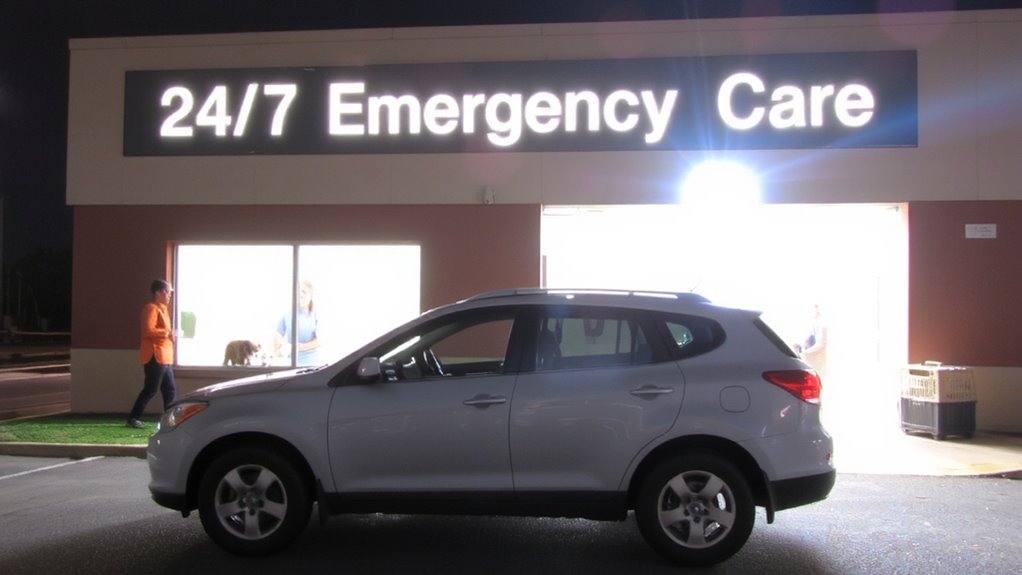
Even if a clinic is nearby and open 24/7, it won’t help if they don’t accept walk-in emergencies. You need urgent care access when your pet suddenly gets sick or injured, especially during after hours visits when your regular vet is closed. Not all emergency clinics allow walk-ins-some require referrals or prior appointments, which can delay critical treatment. Call ahead to confirm the clinic accepts unscheduled cases. Facilities that permit walk-ins typically have staff and space to triage pets quickly, improving response times. While some practices limit services to enrolled patients, those offering open access provide broader urgent care access. This distinction matters most when seconds count. Choosing a location that accepts pet emergency walk-ins guarantees you’re not turned away during a crisis. Confirm this policy in advance so you’re prepared when an emergency strikes.
Check for X-Ray, Surgery, and Critical Care Availability
When seconds matter, having access to on-site X-ray, surgical, and critical care services can make the difference between life and death for your pet. You need a clinic with advanced imaging and surgical readiness, not just basic care. These capabilities mean faster diagnoses and immediate interventions when injuries or acute illnesses strike.
| Capability | Why It Matters |
|---|---|
| On-site X-ray | Reduces delays in diagnosing fractures, obstructions, or internal injuries |
| Advanced imaging (e.g., ultrasound) | Offers detailed views for accurate assessment of organ systems |
| Immediate surgical capacity | Guarantees surgical readiness for trauma, bloat, or emergencies requiring cutting within the golden hour |
| Critical care monitoring | Supports post-op recovery and unstable patients |
| 24/7 staffing with trained personnel | Maintains care continuity during critical phases |
Call to Confirm They’re Taking Emergencies Now
Is the clinic actually open for emergencies right now? Don’t assume. Call directly to verify current status. Many clinics rotate emergency coverage, and staff availability fluctuates by time and day. Even if listed as an emergency provider, they might be over capacity or short-staffed. Ask if they’re accepting emergency cases at this moment. Inquire about their appointment policies-some require triage calls or may redirect you based on severity. A clinic might have equipment but lack personnel to operate it after hours. Your pet’s needs must align with their real-time capacity. Confirming live saves time and avoids risky delays. Practices with clear, consistent emergency protocols usually communicate them fast. If they hesitate or seem unsure, that’s a red flag. Get the facts before you drive. Every minute counts when it’s an emergency.
Keep a Pet Emergency Phone List Handy
You called the clinic and confirmed they’re open for emergencies-now what? Keep a written pet emergency phone list handy, taped to your fridge or saved in your phone. Include your vet, nearest 24/7 animal hospital, poison control, and transport options. Quick access reduces delays during crises. Update numbers annually or when clinics change hours. A prepared list works whether you have pet insurance or not. Insurance may cover part of the cost, but you’ll still need emergency funds for deductibles or uncovered services. Without funds, even insured pets face care delays. Test the list by calling each number yearly to verify responsiveness. Digital backups help, but paper survives dead batteries. This simple step doesn’t guarantee care, but it improves response speed. It’s a low-effort safeguard with measurable impact during high-stress moments.
On a final note
You need fast access when your pet’s in crisis. Check nearby 24/7 clinics that accept walk-ins, offer X-rays, surgery, and critical care. Confirm availability by phone before heading out-some turn away emergencies during staff shortages. Keep a written list of backup clinics. Distance, hours, and services vary; choosing one based on capability-not just proximity-improves outcomes. A few minutes saved can make a measurable difference in critical situations.