Creating a Bug-Out Strategy That Includes Emergency Rope and Paracord
You need 50 feet of genuine Type III paracord-it’s lightweight, holds 550 lbs, and won’t fail when wet. Use it to build shelters, repair packs, or secure gear with reliable knots like the taut-line hitch. Nylon outperforms polyester in UV resistance and durability. Keep it on-body for instant access. In a 2021 flood rescue, this gear helped survivors anchor rafts and lift supplies. Real testing proves its worth; see how each strand contributes under stress.
Notable Insights
- Include 50 feet of genuine Type III paracord in your bug-out kit for its strength and versatility in survival tasks.
- Use paracord to quickly build or secure shelters with tarps and natural materials in emergency environments.
- Master essential knots like the taut-line hitch and bowline for reliable shelter setup and gear attachment.
- Store paracord on-body or on gear loops to ensure immediate access during rapid evacuation scenarios.
- Test rope applications in drills to confirm functionality, avoiding decorative weaves that reduce strength.
Use Rope 5 Life-Saving Ways in a Bug-Out
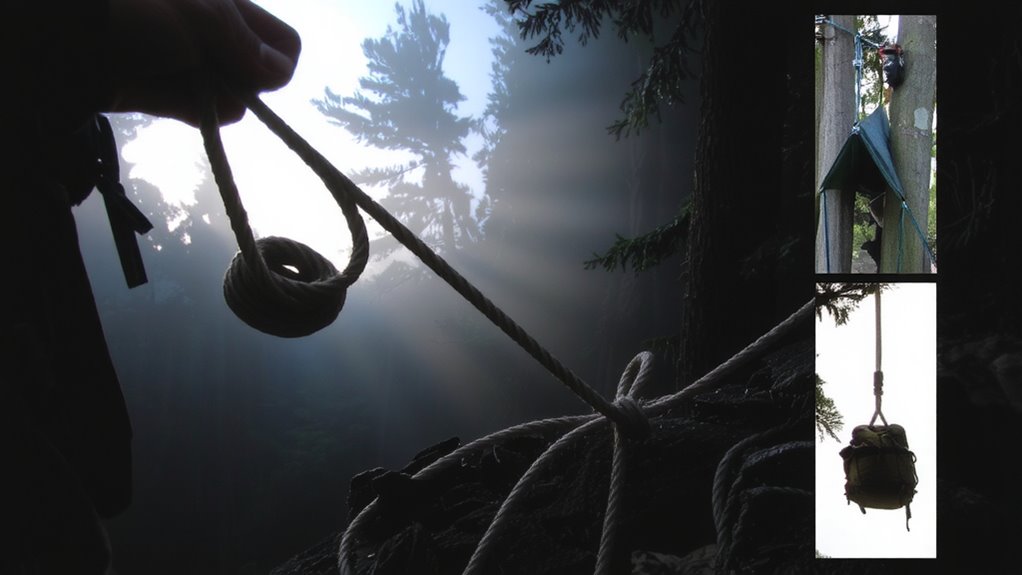
While you’re likely focused on food and shelter during a bug-out, don’t overlook rope-it’s lightweight, versatile, and essential for immediate survival tasks. You can use it to set up a tripwire alarm, secure gear, or create a snare for food. Paracord’s inner strands work for fire starting when shredded into fine tinder. Wrap it around a water bottle to hang for solar water purification, or use tension lines to dry wet clothes fast. A 50-foot length weighs under 5 ounces, so carrying it won’t slow you down. Nylon holds knots well and resists abrasion, but natural fibers may rot if damp. While steel-core cables are stronger, they’re heavier and less flexible. Rope isn’t just backup-it’s a tool that performs under stress when other gear fails. Test knot strength before relying on it. In real scenarios, simple hitches hold better than complex bends.
Build a Shelter Fast With Paracord and Natural Materials
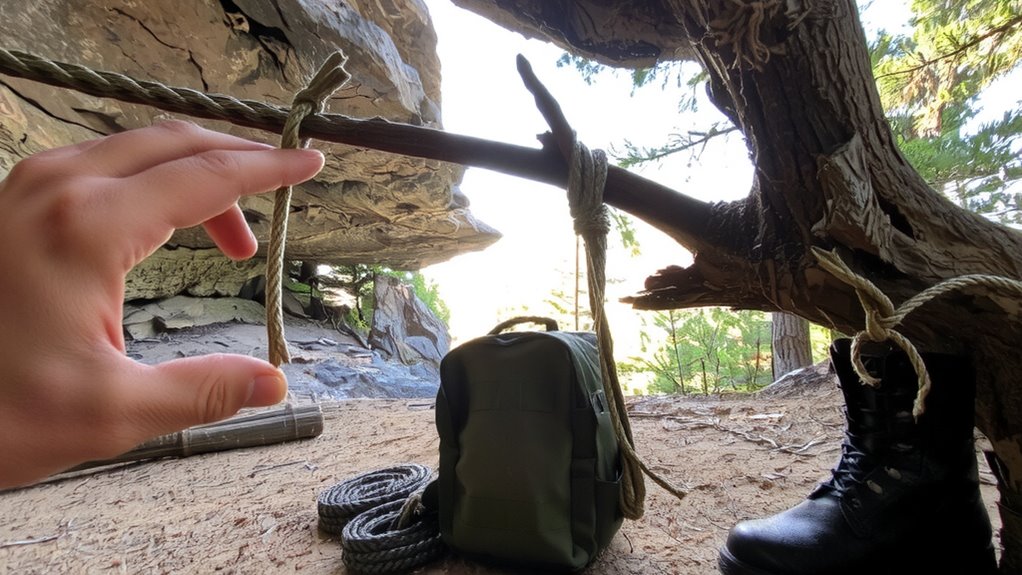
A sturdy shelter can be built fast using paracord and materials on hand, and you don’t need fancy gear to do it. Tie your tarp to trees with paracord for a basic lean-to, then use tarp tensioning to pull it snug-this sheds rain and prevents flap in wind. Anchor opposite corners with rocks or stakes to keep it stable. Overhead, layer branches, leaves, or pine boughs for debris insulation, which traps heat and blocks wind. A 2-inch layer adds noticeable warmth, but 4–6 inches works better in cold. Natural materials reduce condensation compared to synthetic insulation. Paracord’s 550-lb test strength holds up under load without stretching much, making it reliable for sustained tension. You’ll conserve body heat more efficiently when wind isn’t cutting through. This method doesn’t require cutting live trees or complex tools. It’s light, quick, and effective across temperate and cold environments, assuming you avoid low spots where cold air settles. Wearing reliable tactical gloves for shooting ensures dexterity and protection when handling paracord and building shelter in rugged conditions.
Learn These 5 Survival Knots Before You Evacuate
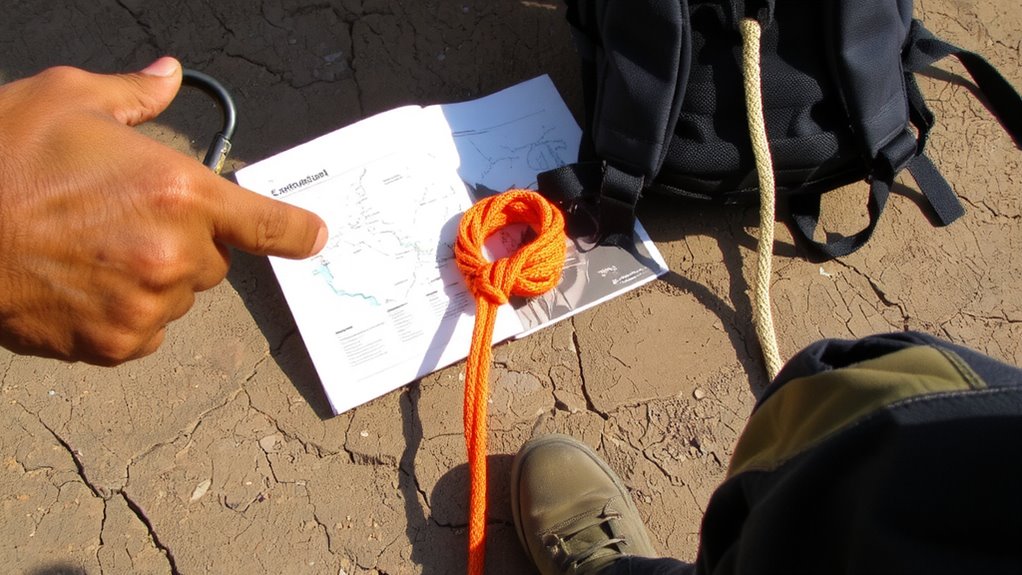
You’ve anchored your tarp and reinforced it with natural insulation, but none of it holds if your knots fail. Proper knot security and tension control are essential when conditions turn harsh. Start with the taut-line hitch-it adjusts easily and grips under load, ideal for shelter guylines. The bowline creates a fixed loop that won’t slip, vital for securing gear or building structures. Use the clove hitch for quick, adjustable attachments to poles or trees. The trucker’s hitch gives mechanical advantage, letting you cinch down heavy loads with minimal slippage. Finish with the square knot for joining two lines, though it only works under constant tension. Each knot serves a specific function, balancing strength, adjustability, and ease of release. Practice them until they’re instinctive. In an emergency, seconds count, and a failed knot compromises shelter, gear, and safety. Know what each can handle, and never rely on one without testing it first.
Pick the Best Paracord for Bug-Out Emergencies
If you’re counting on paracord to hold up your shelter or carry critical gear, it had better meet real specs-not marketing claims. You need genuine Type III paracord with a minimum paracord strength of 550 pounds to handle real tasks like securing tarps or rigging packs. Look for mil-spec construction-seven inner strands and a durable nylon sheath-because cheaper versions often underperform when stressed. Weather resistance matters too; quality paracord won’t rot, stretch excessively, or weaken when wet. Nylon resists UV rays and mildew, making it reliable across seasons. Avoid polyester blends-they might feel slick, but their paracord strength and weather resistance are inconsistent. Color matters only if it helps you spot it fast, but durability trumps appearance. Real testing shows that true 550 paracord holds up under friction and load far better than off-brand imitations. Don’t trust the label alone-pull-test if possible. Your survival depends on gear that performs, not promises.
Store Paracord for Instant Access During Evacuation
Keep paracord within immediate reach during evacuation by storing it on your person or in a designated gear compartment-seconds count when conditions turn. Quick access means wearing it or attaching it where you won’t fumble-like on a belt pouch, inside a jacket pocket, or coiled on a dedicated gear loop. Avoid burying it in your bug-out bag; if you need it fast, digging through layers isn’t an option. Secure storage prevents snags and tangles-use a paracord wrap on your flashlight or a compact dispenser with a built-in cutter. These methods maintain readiness without adding bulk. Paracord stored on-body stays with you even if your pack is left behind. Real-world testing shows retrieval times drop from 15+ seconds to under 3 when stored properly. You don’t need special gear-just intentional placement. Prioritize function: quick access and secure storage keep this tool effective when it matters most.
Include Emergency Rope in Every Bug-Out Plan
An emergency rope isn’t just another item to toss into your kit-it’s a baseline component that should be accounted for in every evacuation plan. You need at least 50 feet of 3/8-inch static rope: it’s strong enough for emergency lashing and won’t stretch under load. Unlike paracord, this rope handles heavy loads, like securing shelters or dragging gear, without failing. It’s essential for improvised repair of packs, shelters, or makeshift stretchers. Test it in wet conditions-it should resist fraying and maintain 80% of its dry strength. While lighter cords save weight, they compromise durability. A simple mid-sized rope balances portability and function. Store it in an accessible pouch, not buried in your pack. It’s not about if you’ll use it-it’s about being ready when you must. Include it. Use it. Rely on it.
Drill These Paracord Emergencies Now
Why wait for disaster to find out if your paracord holds up? Test it now. Use your 550-lb-rated paracord in real drills-secure gear, build shelters, tie splints. Don’t assume decorative weaving or paracord fashion designs are strong; many reduce strength by half due to tight bends and friction. Unravel a bracelet or lanyard you made and test the cord under load. You’ll see how quickly style compromises function. In emergencies, you need every strand intact. Practice cutting and splicing under time pressure. See how fast you can deploy 10, 20, 50 feet without tangling. Compare solid-core vs. hollow-core types-each has trade-offs in weight and ease of access. Drill with your actual gear so when the time comes, you know it works.
On a final note
You need rope in a bug-out-it’s lightweight and fixes critical problems. Paracord holds 550 pounds, works for shelter, gear repair, or hauling, but wears over time. Natural fiber rope sags when wet but is quieter and easier to tie. Carry 50 feet of paracord and 100 feet of utility rope. Store them coiled and dry, ready in your pack. Test knots monthly. The right rope buys time and function when gear fails or weather hits.