How to Store Water in Reinforced Abandoned Mine Shafts
You can store water in reinforced abandoned mine shafts by sealing them with HDPE liners and shotcrete or steel supports where needed. The bedrock keeps water stable and isolated, cutting evaporation and contamination risks. Strain gauges and cathodic protection help maintain structural and material integrity over time. Cities like Johannesburg already use this method to save up to 60% on infrastructure. They integrate filtration and regular water testing to guarantee safety-there’s more to how it scales effectively.
Notable Insights
- Use steel liners or shotcrete to reinforce shaft walls based on bedrock stability assessments.
- Install HDPE linings to create a waterproof barrier and prevent contamination from surrounding rock.
- Equip the shaft with strain gauges and monitoring systems to detect structural shifts over time.
- Implement cathodic protection and corrosion-resistant materials to extend the life of metal components.
- Integrate filtration systems and conduct regular water testing to ensure long-term water quality.
Why Mine Shafts Make Good Water Reservoirs
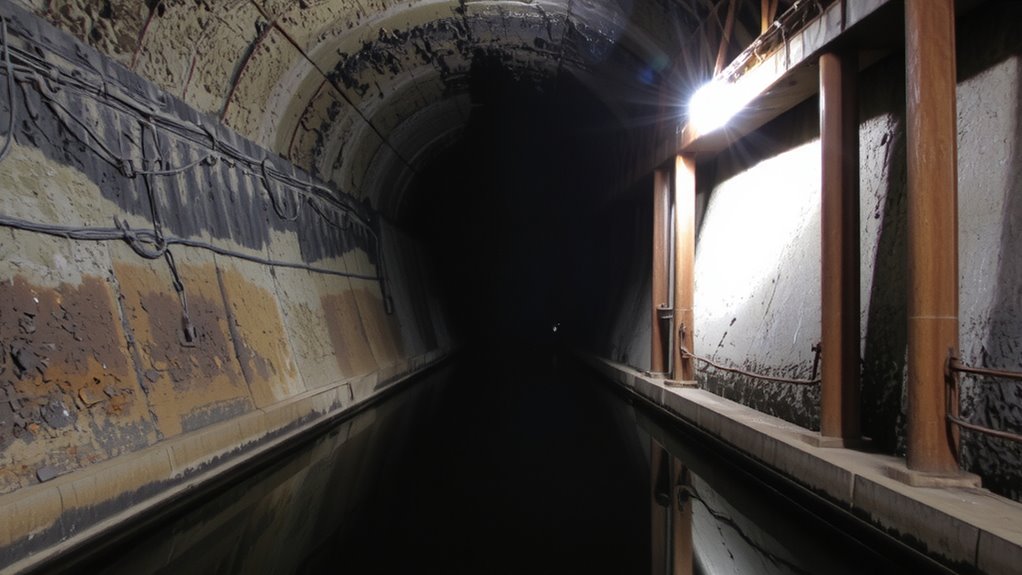
You’re probably wondering why an old mine shaft would even cross your mind as a place to store water-after all, it’s dark, deep, and abandoned for a reason. Yet buried underground, these shafts offer something few reservoirs can: geological stability. The bedrock surrounding old mines has held firm for centuries, reducing the risk of collapse or leakage. That natural support means less need for artificial reinforcement, which cuts construction time and material use. Water stays isolated from surface contaminants and evaporation, maintaining quality with minimal intervention. Plus, repurposing an existing shaft beats excavating a new reservoir from scratch. The cost efficiency is clear-up to 60% less in initial infrastructure spending. You’re not building space; you’re reclaiming it. While not perfect, the combination of secure containment and low development expense makes abandoned mines practical candidates. They won’t replace modern reservoirs, but in water-scarce regions, they’re a sensible backup.
Reinforcing Shafts for Water Safety
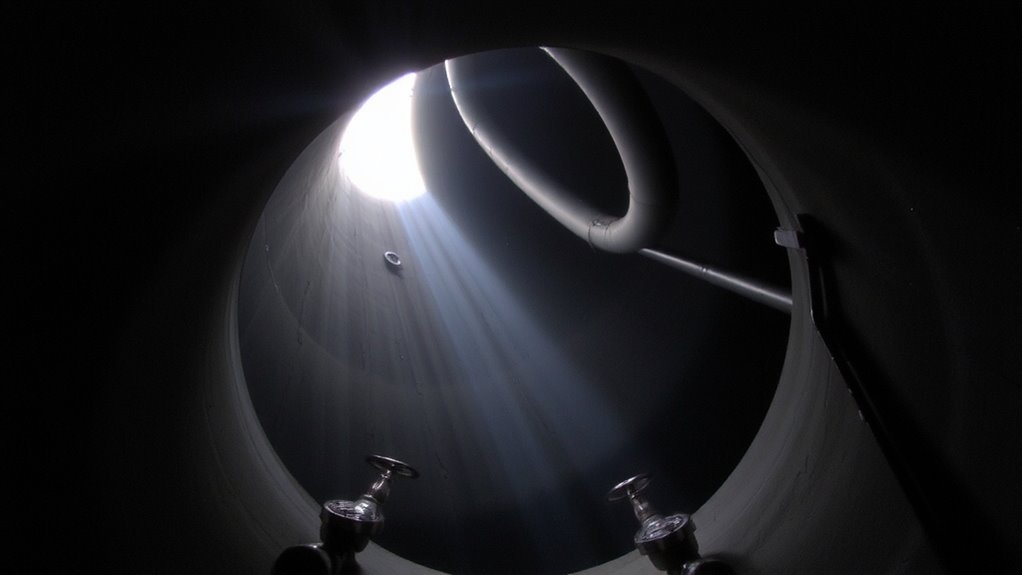
Old mine shafts may offer solid geology, but they weren’t built to hold water under pressure, so some upgrades are necessary before they can serve safely. You’ll need to assess and improve structural integrity by installing steel liners or shotcrete, depending on rock stability-weak zones require steel for long-term support. Monitoring with strain gauges helps detect shifts early. For corrosion prevention, use epoxy-coated rebar and stainless-steel fixtures where water contact is constant. Standard carbon steel degrades too quickly, reducing lifespan by decades. Cathodic protection systems can extend metal component life in wet environments. Seal joints tightly to avoid water pooling behind supports, which accelerates deterioration. Reinforcement isn’t optional-it guarantees the shaft withstands hydrostatic loads and minimizes failure risks. Skip shortcuts; proper materials and installation keep structural integrity high and maintenance low over time.
Sealing Against Contamination
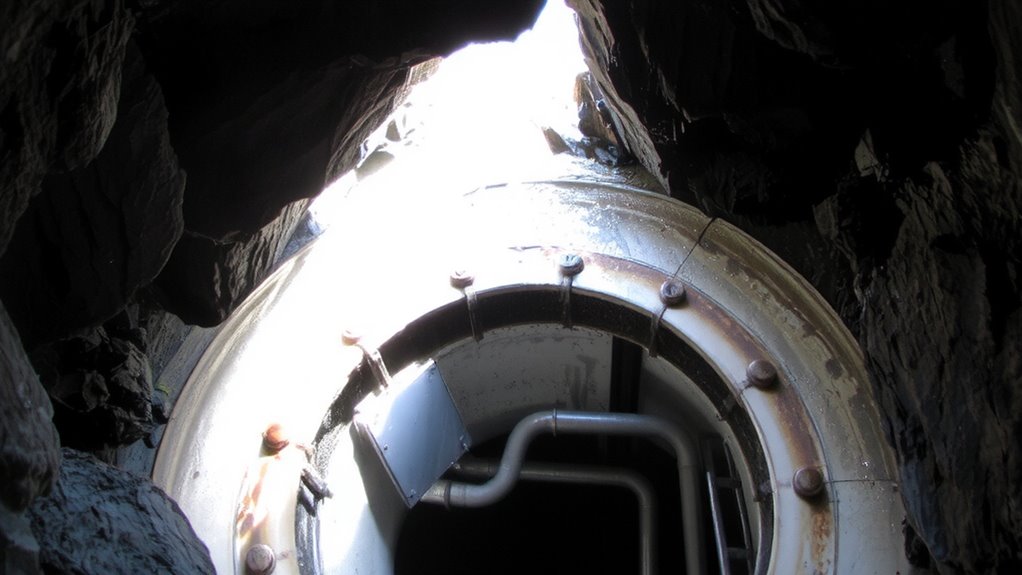
While the rock walls might seem tight, even small fractures can let contaminants in over time, so sealing the shaft fully is essential for water purity. You’ll need durable waterproof linings-like high-density polyethylene (HDPE)-to create a reliable barrier. These linings must withstand pressure, resist degradation, and cover every inch without seams if possible. Over time, ground shifts can stress weak points, so regular inspections are non-negotiable. Pair the linings with inline filtration systems at inflow and outflow points to catch particulates and microbes before they reach storage. Carbon and UV filters add layers of protection, but they require maintenance and power. Mesh pre-filters reduce clogging and extend system life. While no seal is perfect, combining robust materials with redundant filtration improves odds markedly. Test water monthly using standard microbiological assays to confirm integrity. This isn’t about perfection-it’s about minimizing risk with proven methods.
Mine Reservoirs vs. Traditional Storage
How do underground mine reservoirs stack up against conventional aboveground tanks or reservoirs? They take up less surface space and often cost less to maintain. You’re not battling evaporation or algae growth like you would with open-air reservoirs. But their performance hinges on geological stability-sites must be carefully evaluated. If the surrounding rock is solid and impermeable, the risk of leakage drops. Still, you can’t ignore seismic impact. In active fault zones, vibrations could compromise integrity, even with reinforcement. Aboveground tanks offer easier access and inspection but require more land and structural upkeep. Mine reservoirs aren’t a one-size-fits-all solution. You’re trading surface footprint for subsurface complexity. When conditions are right, they deliver durable, low-maintenance storage. In unstable areas, the risks outweigh the benefits. Choose based on site-specific assessments, not assumptions.
Cities Using Abandoned Mines for Water Storage
If you’re looking to repurpose existing infrastructure for water storage, some cities have already turned to abandoned mine shafts as a practical option. Reinforced shafts offer large, stable underground spaces that support urban planning with minimal surface disruption. Cities like Johannesburg and Walsall use these mines to bolster water security, storing millions of gallons safely below ground. The depth and geology protect water quality, reduce evaporation, and lower contamination risks compared to surface reservoirs. Retrofitting shafts costs less than building new facilities and uses existing access points. You’ll still need to line or seal older tunnels to prevent seepage, but the investment pays off over time. Power needs for pumping are moderate, and monitoring systems can be integrated into municipal grids. While not every city has suitable mines, those that do can balance supply demands efficiently. This method isn’t a fix-all, but it’s a proven asset where geology and infrastructure align.
On a final note
You can store water in reinforced mine shafts, but only if sealed and monitored. The depth and stability help maintain cool, steady temperatures, reducing evaporation. Reinforcement prevents collapse, while liners or grouting stop leaks and contamination. Compared to surface reservoirs, mines save land and degrade slower. However, initial sealing costs are high, and water quality must be tested regularly. It works where geology and infrastructure align-else, it’s not worth the risk.