How to Prevent Cross-Contamination When Using Shared Knives for Foraging
Always wipe your blade with an alcohol-soaked pad or dedicated cloth after each species-you can’t see plant residues, but they transfer toxins like those from poison hemlock to edible plants. Use stainless steel knives with smooth handles; they clean faster and resist buildup. Carry separate, color-coded knives for high-risk plants and lookalikes like wild parsnip and Queen Anne’s lace. Store tools in labeled, breathable containers. A clean blade now prevents danger later-there’s more to get right in the field.
Notable Insights
- Wipe or wash blades between species to prevent toxic residue transfer during foraging.
- Use stainless steel knives with smooth, seamless handles to minimize contamination risks.
- Sanitize blades immediately after each species with alcohol or water and dry thoroughly.
- Assign dedicated, color-coded knives for high-risk, moderate-risk, and edible-only plants.
- Store knives separately in labeled, breathable containers to avoid cross-contact with lookalikes.
Stop Cross-Contamination at the Source
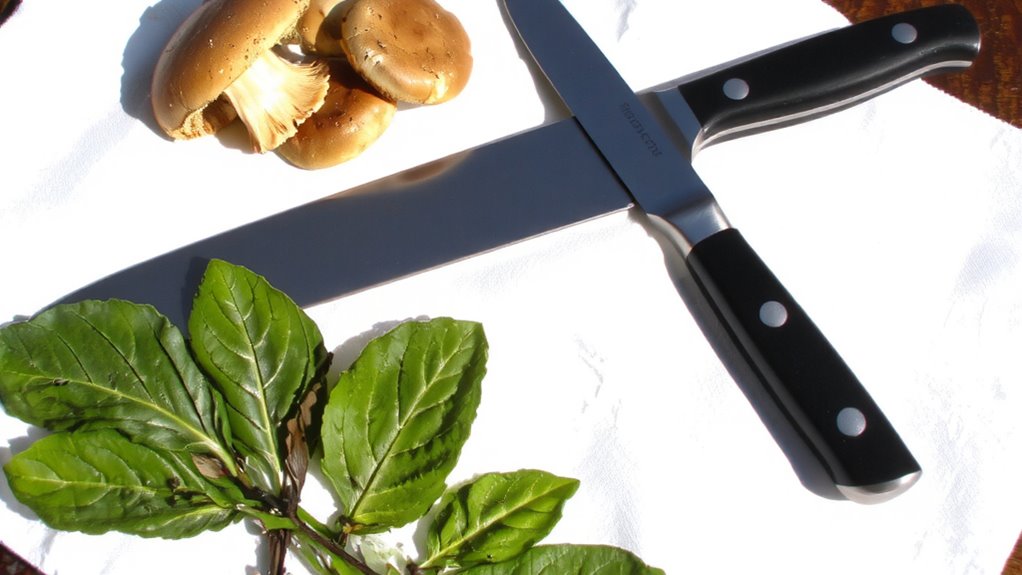
A clean knife is your first line of defense. You’re in the field, switching between plants, and each cut risks cross-contamination if the blade isn’t wiped or washed. Residue from toxic species can transfer to edible ones, so source control starts the moment you make your first slice. Wipe the blade with a dedicated cloth or alcohol wipe between uses-this isn’t optional if you’re serious about contamination prevention. Shared knives multiply the risk, especially in group foraging. You can’t rely on others’ hygiene, so assume every handle and edge is compromised. Treat your knife like a surgical tool: clean it frequently, document exposure if needed, and keep it separate when not in use. Effective contamination prevention isn’t about perfect conditions-it’s consistent, minimal-effort hygiene that scales across environments and user behaviors.
Pick a Knife That Prevents Contamination
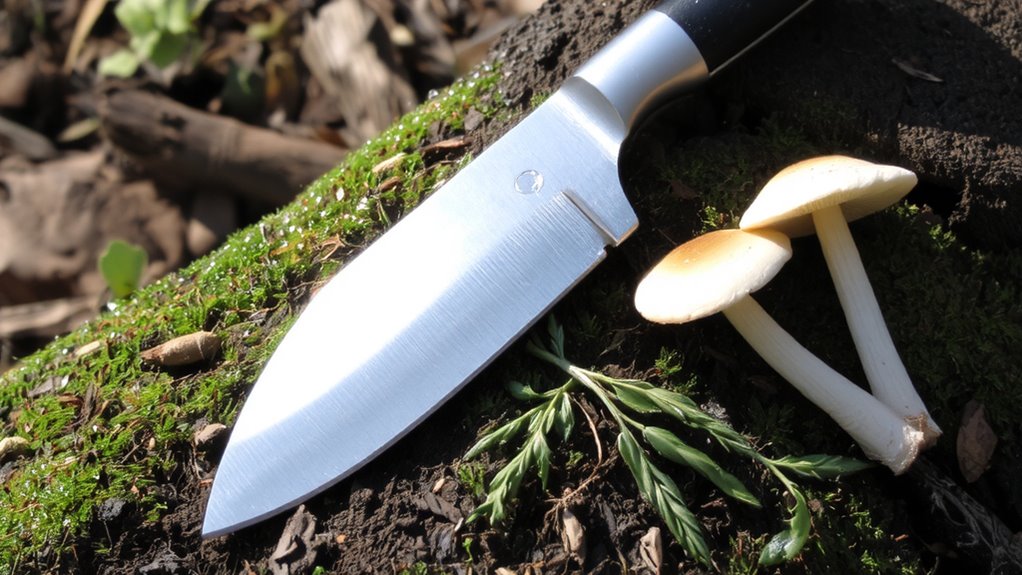
Your best defense against contamination starts with choosing a knife that’s easy to clean and built for field use. The right blade material and handle design make all the difference in real-world foraging conditions. Stainless steel is reliable-resists rust and wipes clean fast. High-carbon steel cuts better but needs more maintenance. Full-tang builds add durability, while smooth, non-porous handles prevent gunk from sticking.
| Feature | Why It Matters |
|---|---|
| Stainless blade | Resists corrosion, easy to sanitize |
| High-carbon blade | Holds edge longer, harder to clean |
| Smooth handle | No crevices for residue |
| Textured grip | Better hold, may trap moisture |
| Seamless design | Reduces bacterial harborage points |
Choose practicality-your knife should survive tough use without becoming a contamination risk.
Clean Your Knife After Every New Species
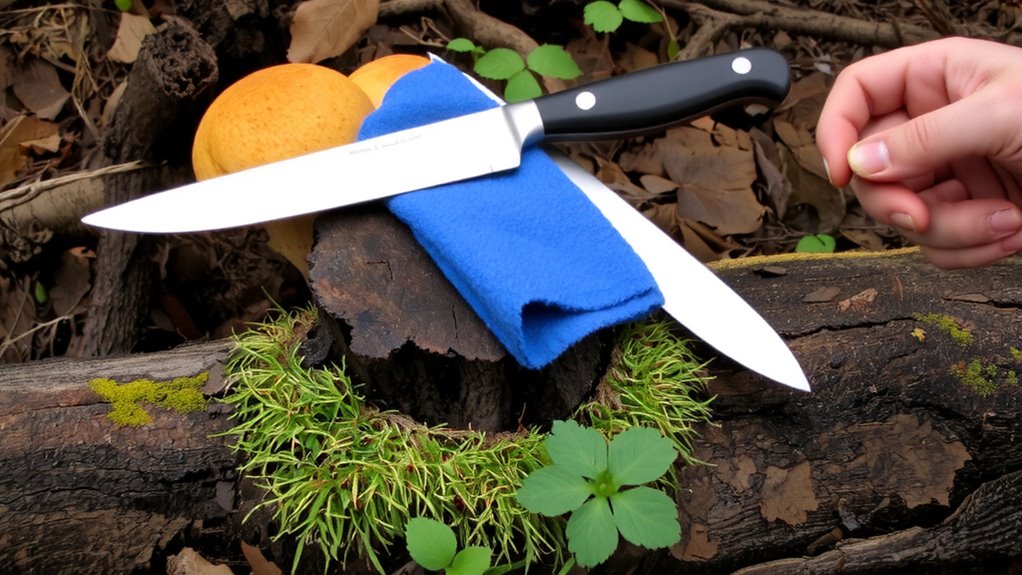
After slicing into one type of mushroom or plant, that knife carries microscopic residues-spores, sap, or tissue-that can transfer to the next species you harvest. You need immediate blade sanitation to maintain accurate species isolation. Wipe the blade with a clean cloth, then rinse with water or wipe with an alcohol-soaked pad. It only takes seconds, but it prevents chemical or biological carryover that could skew identification or trigger allergic reactions. Stainless steel cleans faster than carbon, but both require attention between uses. Dry the blade before the next cut to avoid moisture-related contamination. Every new species demands this reset. Skipping steps risks misidentification and edibility errors. You’re not just collecting specimens-you’re managing data, and cross-contamination corrupts it. Simple hygiene supports precision. Keep a small bottle of isopropyl alcohol and a pack of lint-free wipes in your foraging kit. Efficiency and accuracy depend on routine, not memory. Make cleaning automatic-after each species, every time.
Use Different Knives for Risky Plants
While some plants pose little risk when handled, others-like poison hemlock or giant hogweed-carry toxins that persist on steel long after cutting, so you’d be smart to keep a dedicated knife just for high-risk species. Using separate tools limits exposure, especially when toxins resist standard wiping or rinsing. Implementing knife color coding and blade labeling helps you identify which blade handles dangerous plants, reducing mistakes in fast-paced foraging conditions.
| Risk Level | Recommended Action |
|---|---|
| High | Assign red-handled knife |
| Moderate | Use yellow, labeled blade |
| Low | Share general-purpose knife |
Color coding works reliably in poor light, while blade labeling adds clarity when gloves or dirt obscure visual cues. Though managing multiple knives may seem excessive, it’s a low-cost safeguard against toxic transfer. You’d trade slight logistical effort for markedly reduced risk.
Avoid Cutting Lookalikes With the Same Blade
A single blade used on both edible and toxic lookalikes can transfer harmful compounds, so keep separate knives for plants like wild parsnip and Queen Anne’s lace. You can’t rely on visual checks alone-blade residue from a toxic plant may persist even after wiping. This residue could contaminate your harvest, leading to accidental ingestion of irritants or toxins. Species confusion is common among similar-looking plants, and using the same knife increases risk when misidentification occurs. Dedicate one knife strictly for known edibles and another for uncertain or toxic species. Clean blades aren’t enough; microscopic traces remain. You’re better off avoiding cross-use entirely. Label your knives clearly and stick to the system. It’s a simple step that reduces error in high-stakes situations. Practicality beats caution here-consistency prevents dangerous outcomes.
Keep Your Harvest Separate and Safe
Your foraged greens deserve their own container-no exceptions. Using designated containers prevents cross-contact with toxic plants or contaminants picked up from shared use. Each type of harvest-edible roots, leafy greens, mushrooms-needs separation to maintain safety and quality. Plastic bags or unlined baskets won’t cut it; they retain moisture and encourage spoilage. Opt for breathable, washable containers like perforated harvest totes or lidded crates you can label and clean after each trip. Proper storage begins in the field: separate species immediately to avoid accidental mixing. Designated containers also make identifying any contamination source easier if illness occurs. You’re not just organizing-you’re eliminating risk. Label each container by plant type to reduce confusion during processing. This system works consistently across terrains and seasons. It’s simple, scalable, and necessary. Skip this step, and you compromise everything. Safety isn’t optional out here.
Make Safe Cutting a Field Routine
You need a knife you can trust, not one that’s going to fail mid-cut or carry residue from your last forage. A reliable fixed-blade with a stainless or high-carbon steel blade performs consistently and cleans easily. After each use, wipe the blade with a 70% isopropyl wipe or rinse and dry thoroughly-this is basic field hygiene. Assign one knife per forager when sharing is unavoidable, or sanitize between species to avoid cross-contamination. Blade discipline means never placing your knife on the ground and always storing it sheathed. Use a dedicated cutting mat to protect the edge and reduce soil contact. Keep a small brush and cloth in your kit for quick cleanups. These habits take seconds but drastically reduce risk. Over time, consistent routine guarantees your tools stay safe and functional, whether you’re harvesting mushrooms or medicinal plants. A well-maintained knife from a trusted Best Made Knives lineup ensures durability and precision in the field. Safety isn’t flashy-it’s habitual.
On a final note
You cut different species, so your knife carries trace residues that matter. Stainless steel wipes clean fast, but carbon steel holds odors longer-stick to stainless. One knife per species cuts risk, but if you share, clean thoroughly with isopropyl after each use. No shortcuts if you’re harvesting lookalikes like hemlock and parsley. Plastic sleeves separate samples, but they don’t replace blade hygiene. Real safety starts the moment you make the first cut.