Creating Your Survival Kit: What You Need and How to Pack It Effectively
You need a 0.1-micron water filter or purification tablets to reliably treat up to 100 liters of water-you can’t afford dehydration when clean water’s scarce. Pack calorie-dense rations (900–1,200 per sealed pouch) and a lightweight thermal blanket that reflects 90% of body heat. Keep everything under 10 pounds in a 20-liter pack with clear compartments. Prioritize accessibility: place flashlights and radio on top, store meds and docs in waterproof bags. Check supplies every quarter and rotate what’s expiring. Smart organization means faster response when it counts.
Notable Insights
- Include a 0.1-micron filter or purification tablets to safely treat at least one liter of water per person daily.
- Pack calorie-dense, no-cook rations (900–1,200 calories each) with a five-year shelf life to meet energy needs.
- Use a lightweight emergency blanket or bivvy to retain body heat and provide compact, durable shelter.
- Add disaster-specific items like N95 masks, gloves, or electrolyte packets based on regional risks and climate.
- Organize supplies in labeled, waterproof compartments with high-priority items like flashlights and radios easily accessible.
Start With Survival Kit Essentials: Water, Food, Shelter
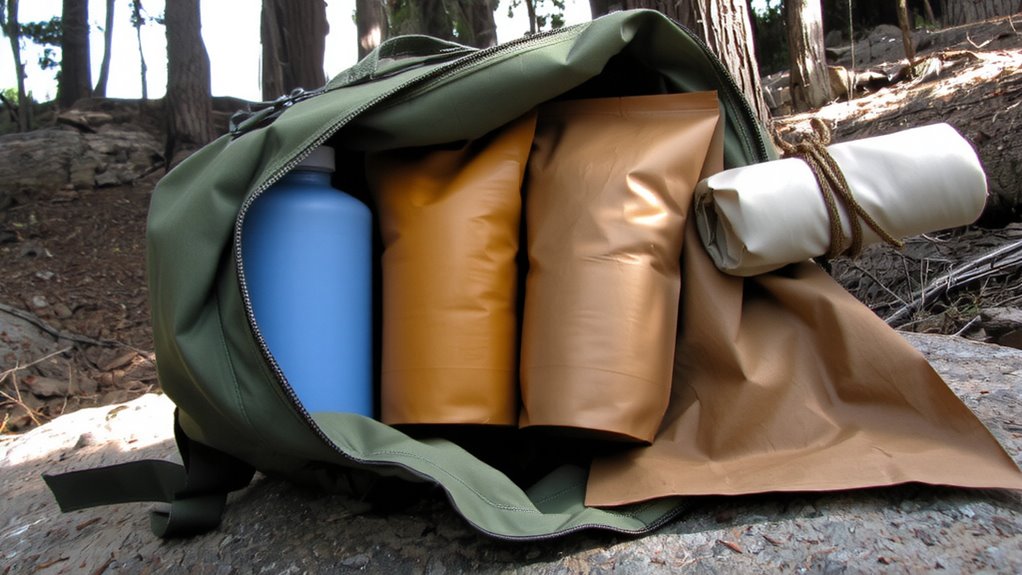
While water, food, and shelter form the foundation of any survival kit, choosing the right gear means focusing on weight, shelf life, and real-world performance. You need at least one liter of water per day, so include a compact water purification method like a filter with a 0.1-micron rating or purification tablets that neutralize bacteria and protozoa. These weigh less than two ounces and handle 50–100 liters, making them efficient. For calories, go with sealed food rations-900 to 1,200 per packet-that last up to five years. They’re calorie-dense and require no cooking. Pair them with a lightweight emergency blanket or bivvy for shelter; most weigh under 10 ounces and reflect 90% of body heat. All components should fit in a 20-liter pack without exceeding 10 pounds. Prioritize function: if it’s too heavy or degrades quickly, it won’t help when you need it. For reliable long-term use, consider a top-rated water filter that balances flow rate, contaminant removal, and durability.
Tailor Your Kit for Different Disasters
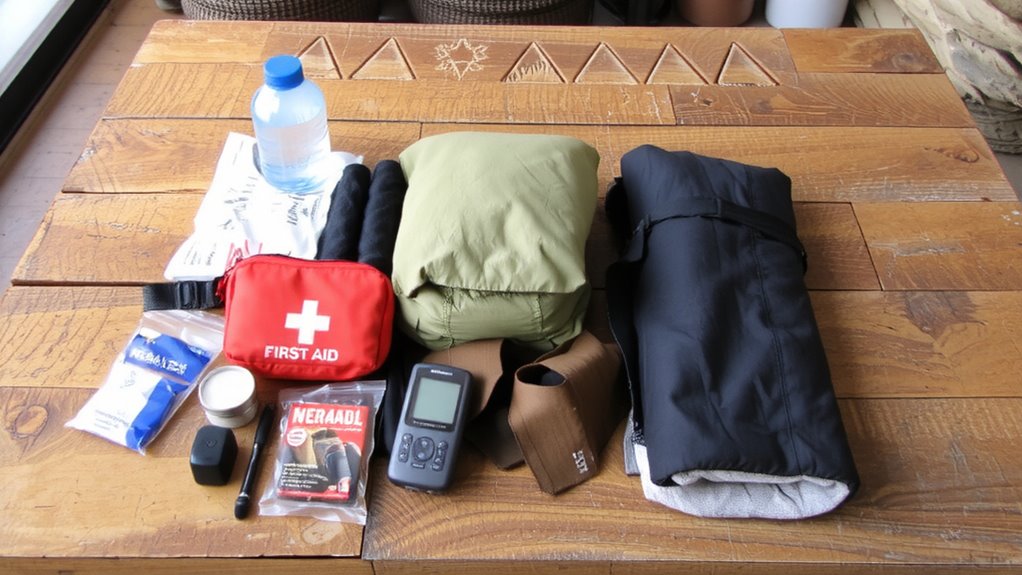
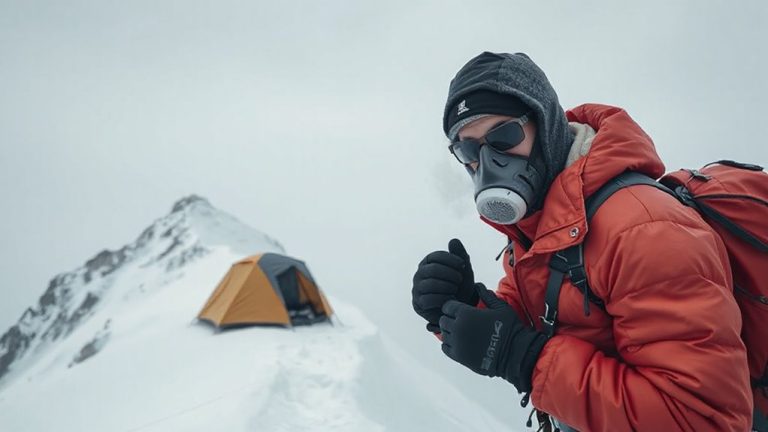
Because disasters vary in type and impact, you’ll need to adjust your survival kit to match the specific risks you’re most likely to face. For natural disasters like hurricanes or wildfires, include N95 masks, waterproof bags, and evacuation maps. If you’re in a flood-prone area, add sandbags and a compact pump. Earthquake zones require sturdy gloves, a helmet, and pry bars-tools that help you move debris safely. Climate variations matter too: extreme heat calls for electrolyte packets and cooling towels, while cold regions need hand warmers and insulated layers. A standard kit won’t address every scenario, so assess your local threats. Include a battery-powered NOAA radio tuned to local alerts. Store supplies in durable, compartmentalized containers that resist moisture and impact. Rotation and accessibility are key-place region-specific items where you can grab them fast. Tailoring your kit improves response speed and effectiveness when seconds count. For reliable respiratory protection, choose a high-quality N95 mask from top-rated options available on Amazon.
Don’t Skimp on First Aid and Medications
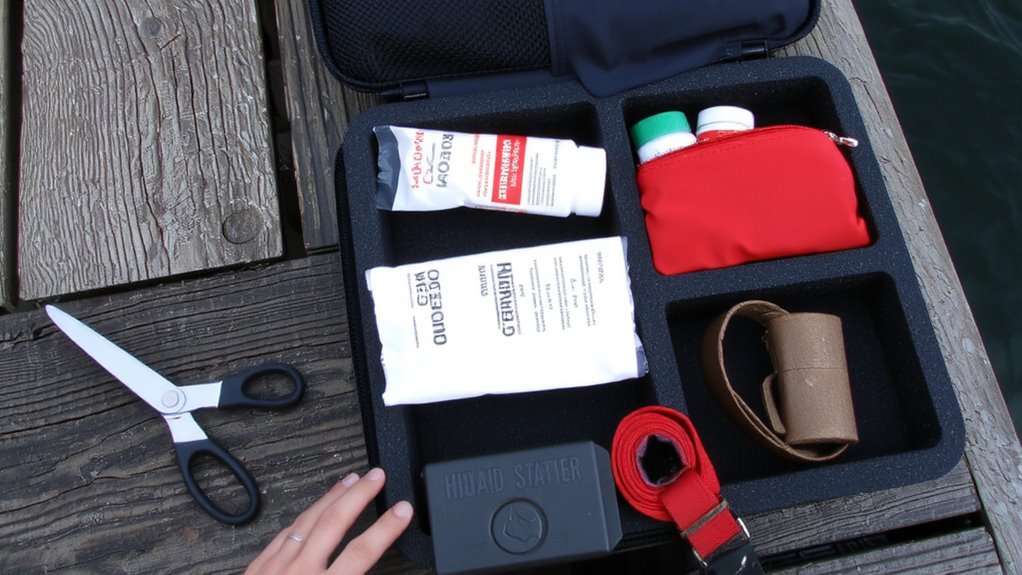
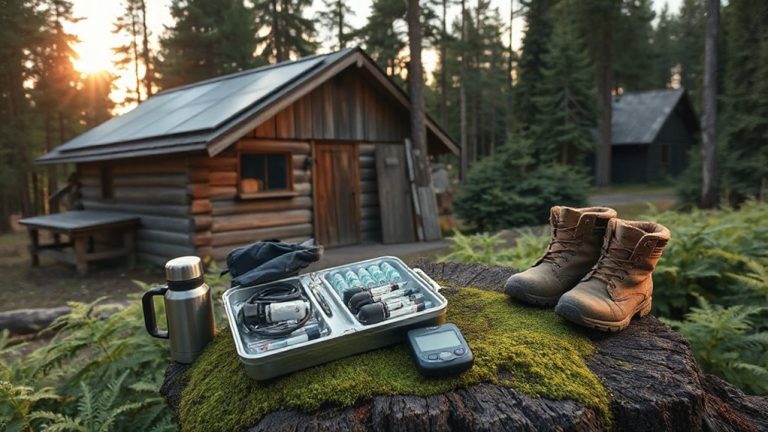
You’ve already matched your survival kit to local threats, but a well-stocked first aid kit and reliable medications are just as important when injuries or health issues arise. Don’t underestimate wound care or the need to manage chronic conditions during emergencies. Skipping critical supplies can turn minor issues into serious risks. Include basics like bandages, antiseptic wipes, and gauze, along with prescription meds if needed. Rotate medications annually to maintain effectiveness. Choosing a kit tailored to your activity level and environment enhances your preparedness, so consider a wilderness first aid kit designed for remote conditions.
Include Light, Power, and Communication Gear
A reliable light source, backup power, and working communication tools aren’t luxuries-they’re essentials when the grid goes down. You’ll need a headlamp or flashlight with a minimum 100-lumen output and long battery life; consider models with red-light modes to preserve night vision. Pack extra batteries or a hand-crank option. Solar chargers are practical for extended outages-choose one with at least 10 watts and dual USB ports for faster charging. They’re slower than wall outlets but reliable in sunlight. Keep a hand-crank emergency radio to receive weather alerts and conserve phone battery. Signal flares remain one of the most effective visual distress tools-visible up to 10 miles and lasting 30 seconds-especially when cell service fails. Don’t rely solely on electronics; include analog backup signals. These tools work best when tested ahead of time and stored in waterproof cases.
Organize and Maintain Your Kit for Fast Access
How quickly can you grab what you need when seconds count? Organize your kit so essentials are visible and accessible. Use clear, labeled compartments-label contents by category and function so you don’t waste time guessing. Group items by use: first aid, food, tools. Place high-priority gear like flashlights and radios on top. Use waterproof pouches to protect electronics and documents. Check expiration dates every three months-replace expired food, medication, and batteries without delay. Rotate perishable supplies as needed. A well-organized kit speeds response time during emergencies. You won’t fumble through clutter under stress. Regular maintenance guarantees reliability. Think of it like checking smoke detectors-routine but necessary. Fast access isn’t just convenient; it’s a functional requirement. Prioritize layout efficiency over compactness. A slightly larger, logical setup outperforms a cramped, confusing one every time.
On a final note
You’ve packed the basics, but check them-water filters last 1,000 gallons, not forever. Calorie-dense food needs 2,000 kcal per day minimum. A $20 radio works, but only if it’s hand-crank and NOAA-alert equipped. Shelter tabs save space, but test them first. Rotate meds every six months. Weight matters: 15 lbs is manageable, 30 isn’t. Store it near the door, not the garage. Replace what you use.