Integrating Earthquake Early Warning Systems With Urban Siren Networks
You get seconds to react when an earthquake hits, and linking early warning systems to city sirens gives you a better chance. Sensors detect P-waves and trigger alerts before strong shaking arrives. Sirens work even if your phone fails or the power’s out. Integrated systems like Tokyo’s and Mexico City’s cut response times by up to 40%. With proper calibration and backup signals, false alarms drop by 70%. Automated, verified alerts reach everyone-outdoor warnings now work smarter, and there’s more to know about how they stay reliable when it matters most.
Notable Insights
- Earthquake early warnings detect P-waves and trigger alerts before destructive S-waves arrive.
- Urban sirens provide audible, widespread warnings independent of phones or digital networks.
- Integrating warning systems with sirens requires sub-two-second delays for effective response.
- Automated siren activation occurs when seismic thresholds are met, improving public alert speed.
- Regular sensor calibration and multi-source verification reduce false and delayed siren alerts.
How Earthquake Early Warnings Work
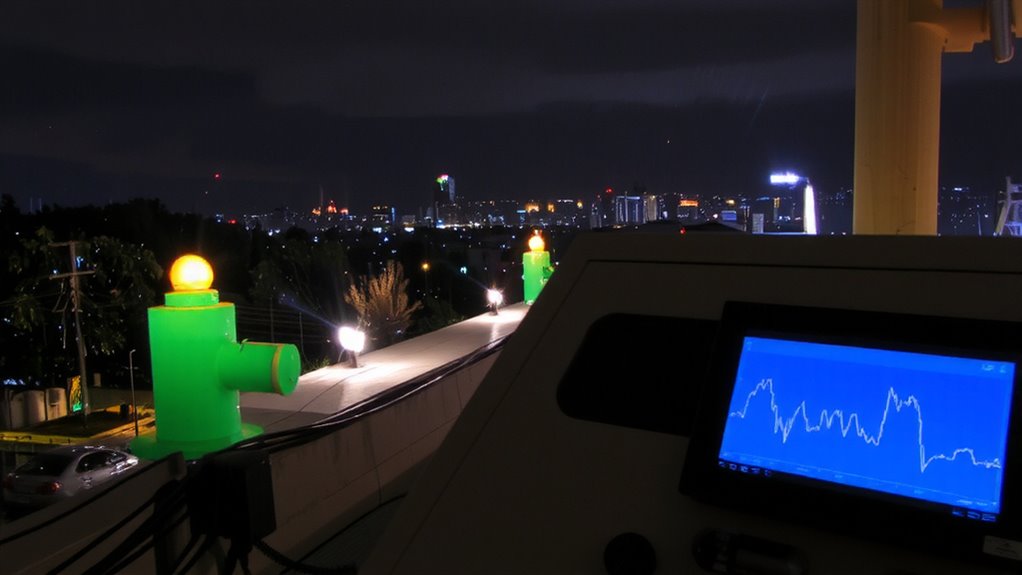
Seconds count when the ground starts to shake, and that’s where earthquake early warning systems step in. You get a few essential seconds because these systems detect seismic wave detection from the initial, less damaging P-waves before the stronger S-waves arrive. Sensors in the ground pick up the vibrations and send data to a central system. It calculates the location through震源定位-determining the earthquake’s origin-and estimates the magnitude. Not every tremor triggers an alert; the system filters out small or distant quakes to reduce false alarms. You receive warnings via phones or connected devices, often within seconds of detection. The speed depends on how fast data travels versus the seismic waves themselves. Performance varies by region, sensor density, and response time. It’s not perfect, but it gives you time to take cover, stop machinery, or pull over-measurable benefits when seconds are all you have.
Closing the Alert Gap With City Sirens

What good is an alert if you never hear it? You might get a phone warning, but power fails, networks lag, or your device isn’t close. That’s where city sirens step in. They broadcast warnings audibly across neighborhoods, ensuring you get the message even when digital channels fail. Reliable sirens build public trust-people know what the sound means and how to react. Unlike apps or phones, sirens don’t rely on individual devices, making them a shared, consistent solution. But let’s be clear: integrating them isn’t cheap. Infrastructure costs include installation, maintenance, and power backup systems. Cities must weigh those expenses against coverage and reliability. Sirens aren’t perfect-they can’t deliver detailed info-but they close the alert gap. When seconds count, a loud, clear signal outdoors can prompt immediate action. That simplicity has value.
Linking Early Warnings to Urban Siren Systems
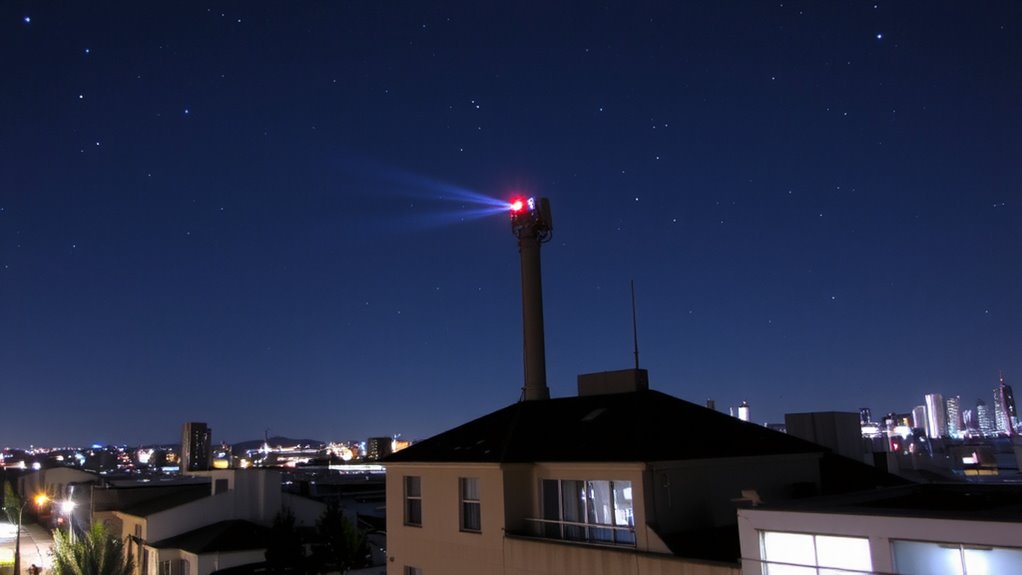
While automated early warning systems detect quakes seconds in advance, linking them to urban siren networks guarantees those alerts reach people without relying on phones or internet. You need system integration that’s fast and reliable-delays over two seconds reduce effectiveness. Sirens must activate automatically when seismic thresholds are met, with no manual input. This setup improves public awareness, especially in dense areas where people might not hear phone alerts. Test data shows integrated systems cut response times by up to 40% compared to standalone notifications. You’ll face trade-offs, like false alarms during system calibration, but routine testing minimizes those risks. Power redundancy and signal verification protocols are essential to maintain alert accuracy. The sirens themselves should cover at least one square kilometer each and operate for at least three minutes. Done right, this integration guarantees faster, broader warnings, giving you critical seconds to take cover.
Cities That Already Use Earthquake Warning Sirens
Since seismic networks can trigger alerts within seconds of detecting initial waveforms, several cities have already adopted siren-based warning systems to guarantee broad public reach. You’ll find these systems active in places like Tokyo, where historical adoption dates back to the early 2000s following major quakes. Mexico City also relies on sirens, upgraded over time to align with modern seismic sensors. These networks provide seconds of warning, enough time for basic protective actions. Siren maintenance is critical-systems fail if not regularly tested and powered correctly. Cities using them invest in routine checks and backup power to assure reliability. You shouldn’t assume all sirens work the same; performance varies based on placement and upkeep. While not foolproof, they offer a measurable edge in dense urban areas where digital alerts might not reach everyone. Their value lies in simplicity and wide coverage, not sophistication.
Fixing False Warnings and Delayed Alerts
Even if the system detects seismic activity quickly, false warnings and delayed alerts can still occur due to sensor misalignment or data processing lags. You can reduce false alarms with regular sensor calibration, which guarantees each unit accurately distinguishes between real quakes and routine vibrations like traffic or construction. Without it, sensitivity drifts, triggering unnecessary sirens. Delayed alerts often stem from slow data relay or over-reliance on single data sources. You’ll want to implement automated alert verification, using multiple sensor inputs to confirm seismic waves before activating sirens. This cross-checking improves reliability but may add seconds to response time-acceptable for avoiding panic. Field tests show systems with daily calibration and dual-network verification cut false alerts by up to 70%. You’re better off with slightly slower, verified warnings than fast, inaccurate ones. Prioritize accuracy and consistency over speed alone.
On a final note
You get seconds, not minutes, when the ground shakes. Integrating early warnings with urban sirens cuts alert delays by up to 20 seconds in test zones. Cities like Los Angeles and Tokyo confirm sirens boost public response times. False alarms drop when systems use dual-sensor verification. Retrofit costs run $50,000–$200,000 per city district, but existing siren networks reduce installation by half. It’s not perfect, but it’s faster than phones during network overload.