Evaluating Soil Stability Before Digging Emergency Latrines on Slopes
Check the slope angle first-stay under 10 degrees to lower collapse risk. Look for cracks wider than 1 cm, slumping, or wet soil, which signal instability. Use the ribbon test: if you can form a ribbon over 2 inches, high clay content means poor drainage. Avoid saturated ground or shallow roots. Firm soil with deep roots over 12 inches offers better support. If the ground’s too wet, elevated latrines with anchored bases are safer. Choosing the right spot now prevents failure later.
Notable Insights
- Assess soil stability by checking for dense vegetation, as deep roots over 12 inches bind soil and reduce erosion risk.
- Inspect slopes for cracks wider than 1 cm, curved deformations, or water seepage, which indicate potential slope failure.
- Perform the ribbon test to identify soil type; avoid high clay content that swells and drains poorly.
- Measure slope angle with a clinometer; avoid digging on inclines over 10 degrees to prevent pit wall collapse.
- Do not excavate on saturated ground; use elevated latrines with stable supports in wet or unstable conditions.
Assess Soil Stability Before Digging on Slopes
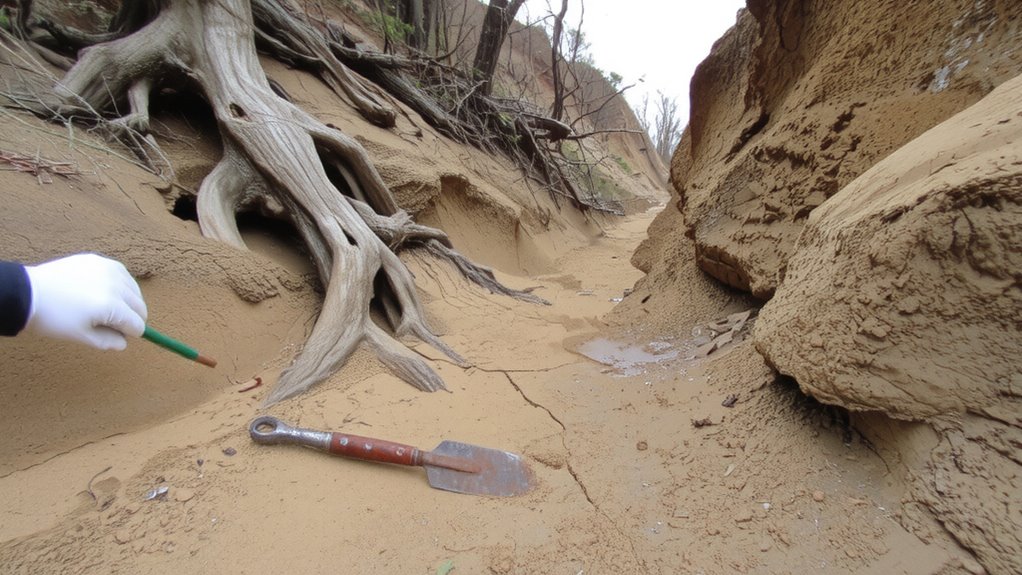
If you’re planning to dig an emergency latrine on a slope, check the soil stability first-unstable ground can collapse, risking injury and rendering the latrine unusable. You’ll need firm soil that resists erosion and supports basic excavation. Look at the vegetation cover; dense plants often signal better stability because their root depth binds the soil. Sparse or shallow vegetation suggests weak support, increasing slide risk. Avoid areas with loose topsoil or where roots are thin and surface-level-they won’t hold structure. Ground with deep, interwoven root systems typically withstands pressure better. Vegetation cover also reduces runoff impact, which helps maintain trench integrity. You’re not just digging a hole-you’re building a temporary system that must stay intact. Prioritize spots where plants are well-established and root depth exceeds 12 inches. These signs indicate cohesive soil. Ignoring them increases failure odds. Choose wisely. Stability now prevents hazards later.
Look for Cracks, Slumping, and Water Seepage
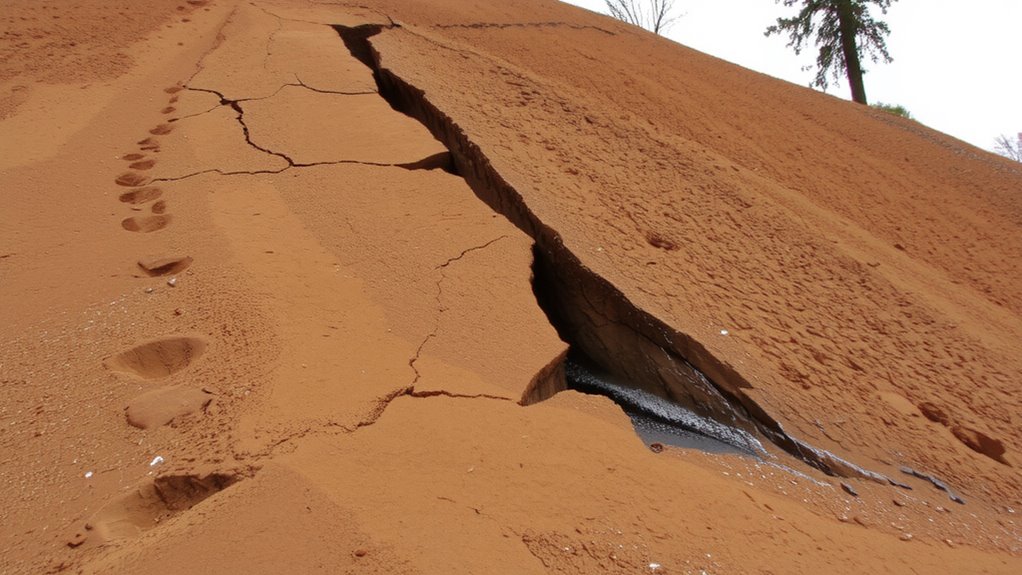
You’ve checked the vegetation and root depth, now turn your attention to visible signs of slope failure-cracks, slumping, and water seepage-because these are clear warnings the ground can’t support a latrine. These features suggest active erosion or saturation, especially if you notice changes in soil color or low root density. Darkened soil may indicate persistent moisture, while cracked or shifting surfaces show instability.
| Sign | What to Look For |
|---|---|
| Cracks | Open fissures over 1 cm wide |
| Slumping | Curved ground deformations |
| Water Seepage | Moist patches or dripping soil |
| Soil Color | Damp, darker areas vs. dry, light soil |
| Root Density | Sparse roots mean weak structure |
Avoid areas with any of these traits. A stable site will have uniform soil color, no visible cracks, and consistent root density to anchor the soil.
Test Soil Type in 5 Minutes With the Ribbon Test
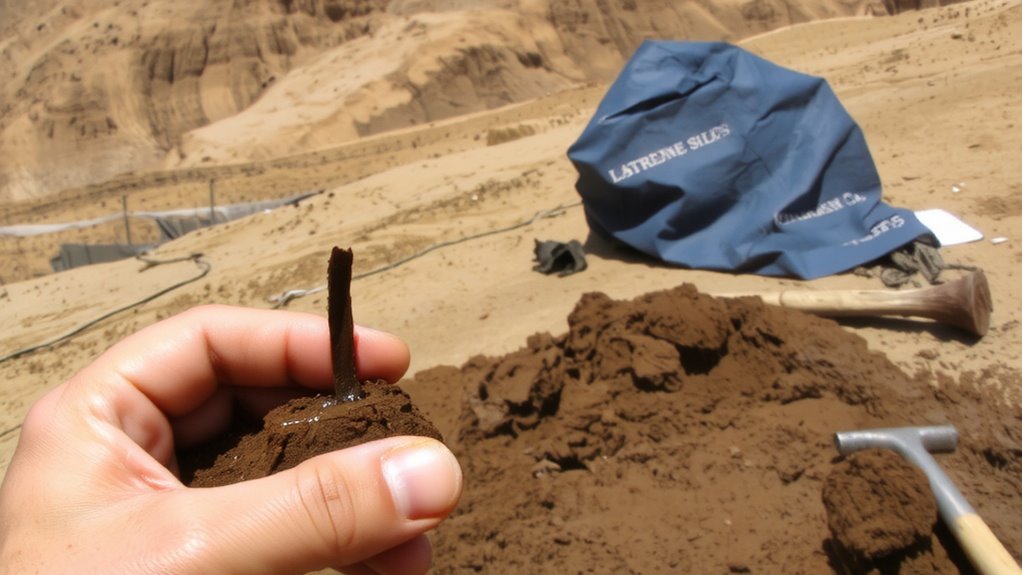
While knowing the slope’s surface cues is critical, testing the soil type gives you a clearer picture of whether it can hold a latrine under stress. Use the ribbon test to quickly assess soil texture. Grab a handful of moist soil and knead it. If it forms a long, smooth ribbon when squeezed between your thumb and forefinger, you’ve got high clay content. Ribbons over 2 inches suggest poor drainage and swelling risk. Short or no ribbon means more sand or silt-better for digging. This hand feel method isn’t lab-precise, but it’s reliable in the field. Sandy soils feel gritty and won’t stick; clay feels slick and molds easily. Loam is somewhere in between. Knowing your soil texture helps predict stability. It won’t replace tools, but it cuts guesswork. In emergencies, five minutes with the ribbon test gives actionable insight.
Check Slope Angle to Prevent Latrine Collapse
How steep is too steep when placing an emergency latrine on a slope? Avoid slopes over 10 degrees-beyond that, collapse risk increases sharply. You can perform a quick slope measurement using a clinometer or a simple inclinometer app on your phone. Take readings at multiple points where the latrine might go. An accurate angle assessment helps determine if the ground is stable enough. Slopes steeper than 15 degrees are high-risk; lateral pressure on pit walls rises markedly, especially when wet. Even moderate rainfall can weaken soil cohesion on inclines. Keep latrines at least 30 meters downhill from water sources and living areas. A slight downhill tilt is acceptable, but never place them where water might flow into the pit. Stick to flat or gently inclined ground-your safety depends on it.
Don’t Dig Latrines on Saturated or Steep Ground
Digging a latrine on saturated or steep ground is a risk you can’t afford in emergency situations. Saturated soil lacks structural integrity, increasing collapse potential and creating a drowning hazard. Even moderate rainfall can turn wet ground into a slurry, escalating flood risk and contaminating water sources. Steep slopes are unstable; they have high erosion potential, especially when disturbed. Once the soil is cut into, gravity and water flow can accelerate movement, undermining the latrine and endangering nearby shelters. You’re not just risking the latrine-you’re risking lives. A slope over 15% is too steep, and ground that squishes underfoot or shows standing water is too wet. These conditions fail basic stability checks. Avoid such spots entirely. Choosing stable, flat, well-drained ground reduces failure rates and guarantees safer sanitation. Your site selection directly affects long-term functionality and community health. Make no compromises here-lives depend on it.
What to Do If the Ground Is Too Wet
If you’re faced with ground that’s too wet for digging, elevating the latrine is your best option-standard pit latrines will fail in saturated soil, but a raised platform with a sealed base can stay functional without collapsing or leaking. Build the platform on sturdy supports driven into firmer soil below the surface. Use waterproof materials for the base to prevent seepage. Install drainage solutions around the structure to divert rainwater and reduce pooling-simple trenches or gravel-lined gutters work well. Anchor the platform with sandbags reinforcement to add stability and counteract shifting in soft ground. Keep the access ramp elevated and covered to maintain hygiene. This setup won’t drain into the soil, so plan for more frequent waste removal. While more labor-intensive than a pit, it performs reliably in wet conditions where digging isn’t viable. Monitor for erosion and adjust drainage as needed.
On a final note
You need stable soil to prevent latrine collapse on slopes. Check for cracks, slumping, or water seepage-signs of instability. Use the ribbon test to identify clay-heavy soil, which holds shape better. Avoid slopes over 15 degrees or saturated ground, where trenches can fail. If the soil’s too wet, relocate or elevate the latrine. Your safety depends on these quick checks-they’re not optional. Skip them, and risk structural failure.