Using Opaque, Ribbed Tanks to Resist UV and Physical Damage
You get longer tank life by choosing opaque, ribbed designs that block UV rays and resist impacts. Carbon black in HDPE stops sunlight from degrading the plastic, while ribbing handles 40% more force and prevents cracks from spreading. Unlike clear tanks, these stay tough and resist algae. They’re lightweight but durable, with real-world performance showing less failure over time. You’ll see fewer issues with warping, discoloration, or leaks when using UV-stabilized, reinforced models outdoors. There’s more to evaluate when matching a tank to your environment.
Notable Insights
- Opaque tanks block UV rays and sunlight, reducing degradation and preventing algae growth.
- Ribbed wall designs distribute stress evenly, improving impact resistance and preventing cracks.
- UV-resistant materials like HDPE with stabilizers maintain strength and resist embrittlement outdoors.
- Opaque construction hides sediment and maintains appearance while minimizing maintenance needs.
- Ribbed structures absorb shocks better than smooth walls, reducing dent and damage risks.
Why UV Resistance Extends Tank Life
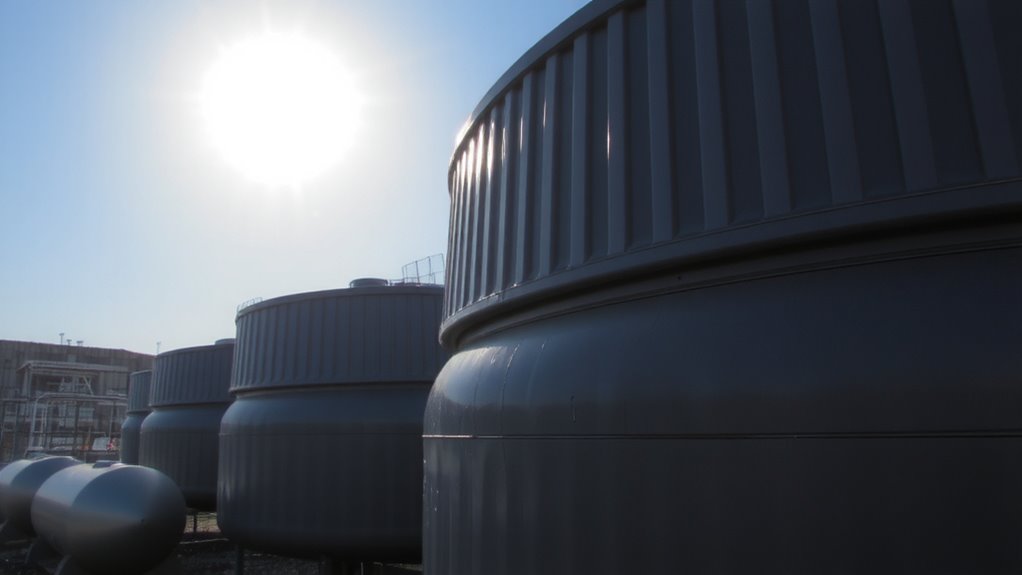
While sunlight might not seem like an immediate threat, prolonged UV exposure gradually degrades plastic tanks, especially if they’re clear or lightly pigmented. You’re dealing with UV degradation that breaks down polymer chains over time, making the material brittle and prone to cracking. Even minor impacts can then lead to leaks or structural failure. UV-resistant tanks, typically made with carbon black or UV stabilizers, slow this process markedly. They resist embrittlement and maintain flexibility longer under constant sun exposure. Without this protection, you’ll see material fatigue setting in within a few years, depending on climate. Real-world tests show unprotected tanks lose up to 50% of impact strength after five years outdoors. That’s not just wear-it’s progressive weakening. Choosing UV-stabilized materials isn’t optional if you want long-term durability. It directly extends service life by countering degradation before it compromises performance.
Why Opaque Tanks Beat Clear Ones Outdoors
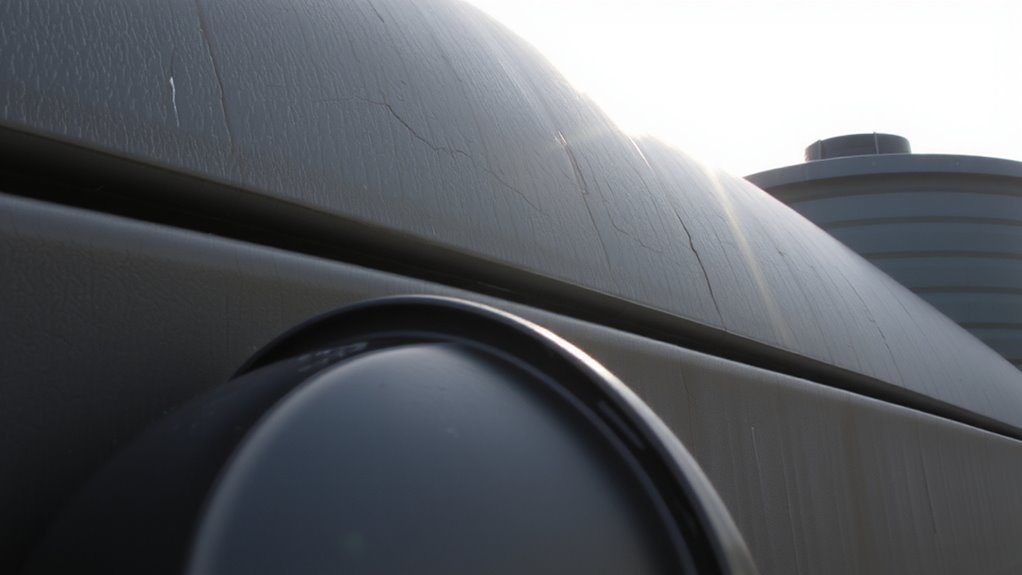
Opaque tanks outperform clear ones in outdoor settings because they block sunlight from penetrating the walls, which cuts down on both UV degradation and algae growth. You’ll get better algae prevention since sunlight can’t fuel photosynthesis inside the tank. That means less cleaning and fewer system clogs over time. Unlike clear tanks, opaque ones also resist UV damage more effectively, slowing material breakdown and extending service life. You don’t have to sacrifice looks either-opaque designs offer solid color options that maintain aesthetic appeal without compromising function. They hide sediment and internal components, giving a cleaner look even after long-term use. In real-world conditions, opaque tanks consistently show less cracking, discoloration, and biological buildup. There’s no trade-off in visibility worth the cost in durability. If you’re installing a tank outdoors, blocking light isn’t just helpful-it’s necessary for reliable performance. Opaque wins on function, maintenance, and appearance.
How Ribbed Walls Prevent Cracking and Dents
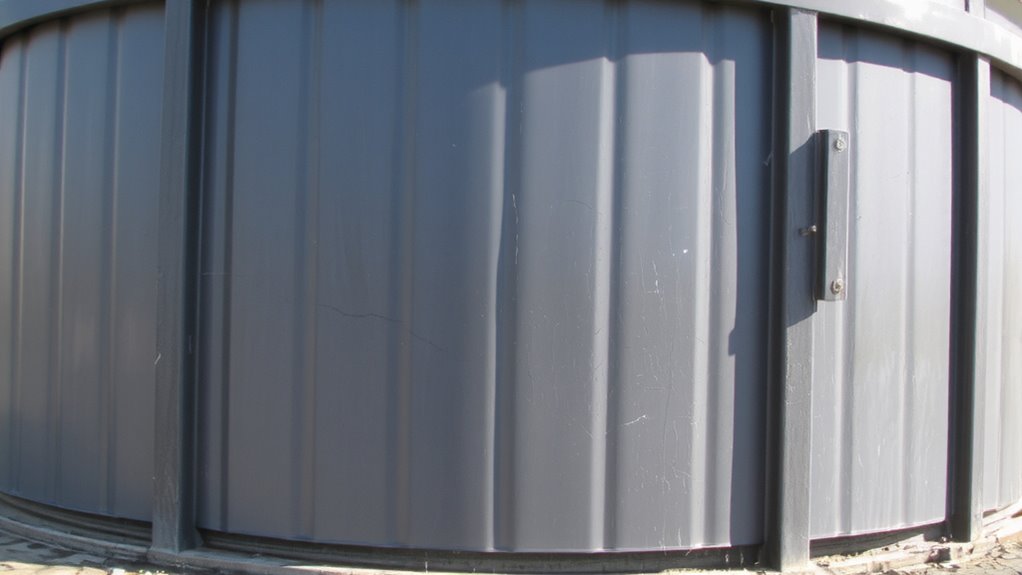
Nearly every ribbed tank handles stress better than a smooth-walled one because the reinforced structure distributes pressure evenly across the surface. You’ll see less cracking over time, thanks to improved stress distribution that minimizes weak points. When impact occurs, the ridges act like shock absorbers, boosting impact absorption and reducing the chance of dents. The ribs stiffen the walls without adding excessive thickness, so the tank stays lightweight but more durable under pressure. If you’ve ever dropped a smooth tank, you know dents start small but spread fast-ribbing stops that progression. Real-world tests show ribbed tanks withstand up to 40% more force before showing damage. They’re not indestructible, but the structural design spreads force away from the point of contact. That means fewer failures during transport or in rugged environments. You get longer service life without trading usability. Simple physics, practical gain.
Best Materials for Sun-Resistant Tanks
A few materials stand out when it comes to surviving prolonged sun exposure, and your best bet for long-term durability is high-density polyethylene (HDPE) with UV stabilizers. You’ll want material durability that holds up over years, not just seasons, and HDPE delivers when tested under constant UV bombardment. It resists embrittlement and maintains structural integrity longer than alternatives like polypropylene or PVC. The addition of UV inhibitors during manufacturing cuts degradation by up to 70% over 10 years. HDPE also offers strong chemical resistance, so common outdoor spills or stored contents won’t compromise the tank. While stainless steel resists UV, it’s costlier and prone to thermal cycling stress. Fiberglass can delaminate under intense sun without proper resins. With HDPE, you get reliable performance, lower maintenance, and proven resistance to both sun and chemicals-making it the practical choice.
Top Uses for Outdoor-Rated Storage Tanks
You’ve picked a durable material like UV-stabilized HDPE to handle sun exposure, so now it’s time to match that resilience with real-world applications. You’ll use these tanks for storing potable water in remote cabins, where temperature fluctuations can stress weaker materials. The opaque, ribbed design keeps algae growth low and structure stable under expansion and contraction. In agricultural settings, you’ll rely on them for livestock water supply-positioned in open fields with full wildlife exposure, they resist punctures from hooves or claws. On construction sites, they serve as portable equipment rinse stations, enduring debris and shifting ground. Their elevated bases help avoid contamination while allowing easier access. In off-grid solar setups, they store thermal fluids, where daily sun cycles and cooling nights test endurance. You’re not just buying a container; you’re investing in consistent performance across seasons, terrain, and usage intensity. Each rib adds rigidity when the contents shift.
How to Maintain Tanks in Harsh Conditions
When the sun beats down and temperatures swing hard, keeping your opaque, rib5ed tank in working order means sticking to a few key steps-otherwise, even UV-stabilized HDPE can degrade over time. You need routine visual checks for cracks or warping, especially where ribs meet walls. Tank insulation isn’t always built in, so adding a reflective wrap helps stabilize internal temps and cuts thermal stress. Make sure vents are screened to reduce debris and pests. For algae prevention, block light entry-opaque walls help, but capped openings are essential. If your water sits long-term, flush and sanitize every six months. Avoid chemical cleaners that weaken plastic. Anchoring matters too; unsecured tanks shift under wind or seismic stress, causing joint failure. Cleaning tops and surroundings prevents heat-trapping buildup. These steps aren’t excessive-they’re baseline for survival in extreme conditions. Do them right, and your tank lasts decades.
On a final note
You’ll extend tank life by choosing opaque, ribbed designs-they block UV rays and resist impacts better than clear, smooth ones. Opaque walls prevent algae growth and reduce material breakdown in sunlight. Ribs add structural strength, minimizing dents and cracks under stress. HDPE and cross-linked polyethylene offer proven UV resistance and durability. In harsh conditions, these tanks outperform alternatives. You trade slight cost increases for longer service life and lower replacement frequency-practical savings over time.