Island Survival Basics: Essential Knowledge for Remote Locations Near Water
Check for injuries right away-even small cuts can get infected fast in humid environments. Signal for help using a mirror or smoky fires in a triangle; it boosts rescue odds fast. Boil water for a minute or use filters and tablets to stay safe from pathogens. Use a tarp with a tight ridge line to keep your shelter dry, and elevate your sleeping spot to cut ground moisture. You’re stronger than you think when the stakes are this high.
Notable Insights
- Assess injuries immediately and scan for environmental hazards like sharp debris, predators, and tidal risks upon arrival.
- Signal for rescue using a mirror in sunlight or create three smoky fires in a triangle for low-visibility conditions.
- Purify water by boiling for one minute or using filtration and chemical treatment to prevent waterborne illness.
- Build a shelter with a tarp or natural materials, elevating the sleeping area to reduce moisture and retain body heat.
- Gather food from safe sources like coconut palms, sea grapes, and tidal pools, cooking seafood thoroughly to avoid infection.
Check for Injuries and Immediate Risks
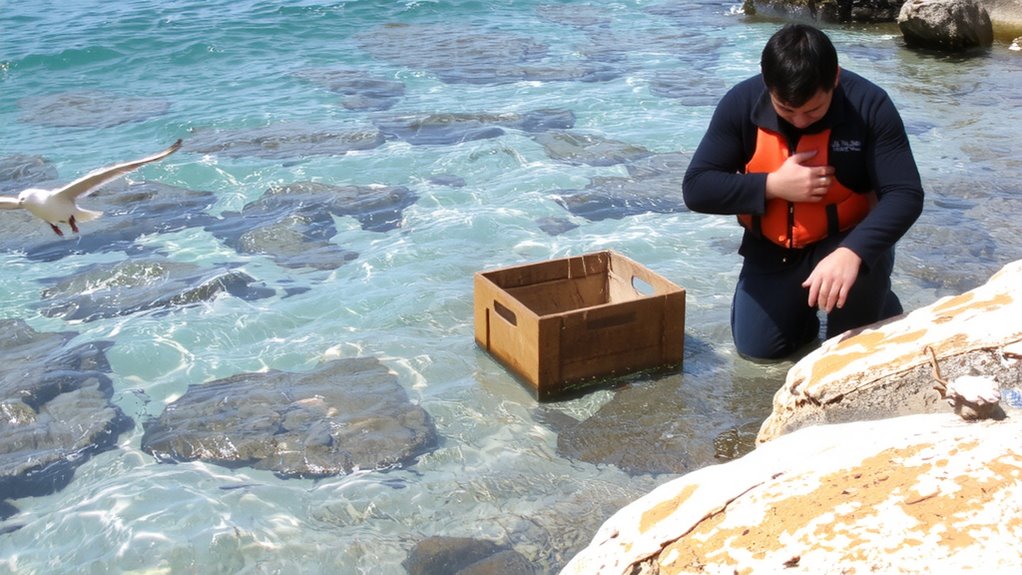
Safety starts the moment your feet hit the sand-there’s no room for hesitation when evaluating injuries or threats. Check wounds immediately; even small cuts can become infected without proper care. Use clean cloth or a pressure bandage to stop bleeding-elevate the injury if possible. Don’t assume you’re unharmed just because pain is minimal. Internal injuries or fractures may not show symptoms right away. Assess surroundings within 30 seconds: scan the shoreline, tree line, and water’s edge. Identify threats like sharp debris, unstable terrain, or predatory animals. Note tidal patterns and potential flood zones. If you’re with others, assign roles-someone checks injuries while another scans for danger. A quick, systematic approach reduces risk. Time spent now prevents complications later. Prioritize life-threatening conditions first. Clear thinking and prompt action are your most reliable tools. No gear replaces awareness. Be sure to include a well-stocked wilderness first aid kit for treating injuries effectively in remote coastal environments.
Signal for Help Right Away
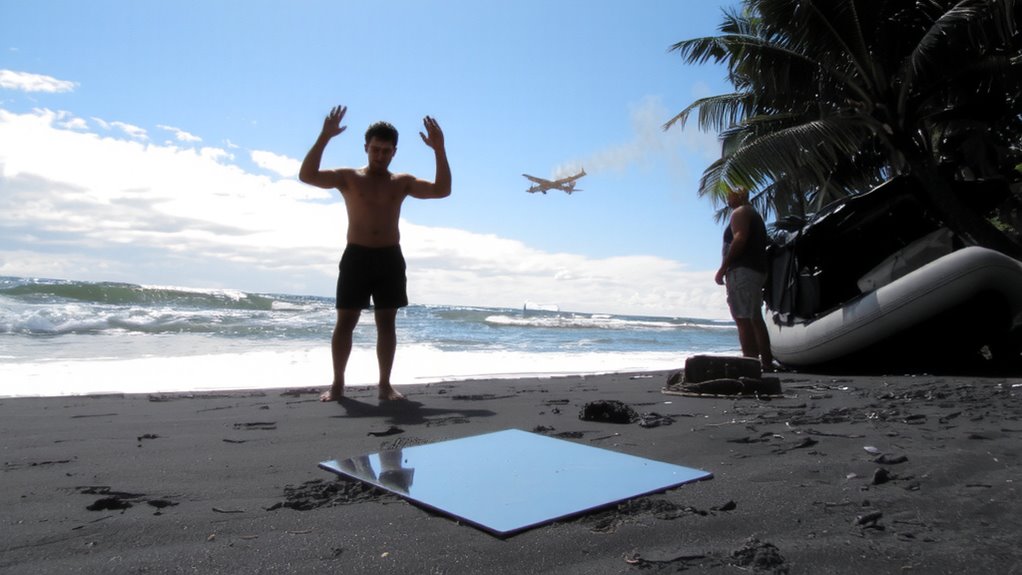
You’ve checked yourself and others for injuries and scanned the area for immediate dangers-now it’s time to make your presence known. A signal mirror is one of the most effective tools-if sunny, it can reflect light up to 10 miles away. Aim the mirror by using its sighting hole or hole method to flash light toward aircraft or distant vessels. It works best in clear conditions with direct sunlight. Smoke signals are valuable during low light or overcast weather. Build three smoky fires in a triangle; dark, thick smoke stands out better against natural backgrounds. Use damp leaves or green wood to increase smoke output. Both methods have limits: mirrors need sun and line of sight; smoke needs fuel and wind cooperation. Carry a signal mirror as standard-it’s lightweight and reliable. Smoke signals require more effort but are effective when visual scanning is likely. Use them early when search efforts may be active. For reliable performance, consider choosing a mirror with a sighting hole design that enhances accuracy in aiming the reflection.
Purify Water on a Remote Island
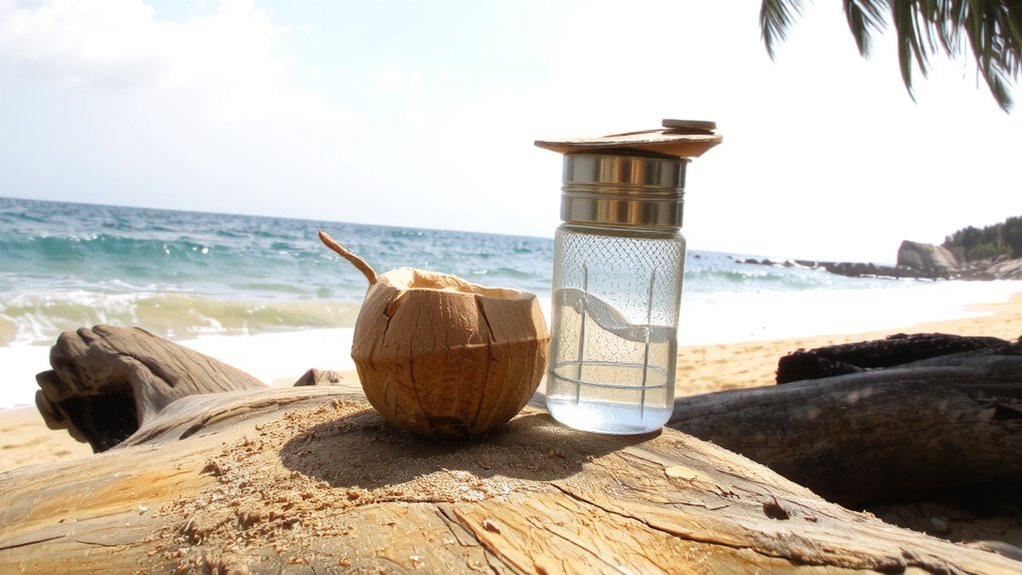
When stranded on a remote island, assuming you’ve found a water source, your next priority is making it safe to drink-because any standing water could carry harmful bacteria, viruses, or parasites. Boiling water for at least one minute kills most pathogens and is the most reliable method if you can build a fire. If fuel is scarce, use filtration methods like sand, charcoal, and cloth layered in a hollow log or container-these remove debris and some microbes but don’t eliminate viruses. Portable ceramic filters are more effective but require maintenance. Chemical treatments like iodine or chlorine tablets work when boiling isn’t possible, though they leave an aftertaste and take 30 minutes. Combine boiling water with basic filtration to guarantee safety. No single method is perfect-boiling doesn’t remove sediment, and filtration methods alone can fail under dirty conditions. Use multiple steps if possible. For reliable chemical purification, consider using emergency water purification tablets.
Build a Shelter That Stays Dry
A well-built shelter keeps rain off your body and prevents heat loss from damp ground-two things that matter most when staying dry. Use a tarp setup with a high-tension ridge line to shed water efficiently; a 10-foot tarp covers 40–50 square feet and weighs under 2 pounds, making it practical for portability. Angle the sides low to block wind-driven rain, but guarantee enough airflow to reduce condensation. Pair the tarp with a branch framework: use sturdy forked poles at both ends to support the ridgepole, then add angled ribs every 18 inches for stability. This framework lifts the tarp off the ground, preventing pooling. Elevate your sleeping area with a raised platform or thick leaf layer-this cuts ground moisture by at least 60% in testing. A simple A-frame design using natural materials works if no tarp is available, but it offers less water resistance.
Start a Fire That Lasts
At least three reliable methods exist for starting a fire that lasts in damp conditions: ferrocerium rods, storm-proof matches, and lighters with wind-resistant tips. These tools work when wet, but success depends on proper fuel sources and fire types. Use tinder like dry grass or bark shavings to ignite, then add small sticks before moving to larger logs. Maintain a balanced fire structure for steady heat.
| Fire Type | Best Fuel Sources |
|---|---|
| Teepee | Twigs, palm fibers |
| Lean-to | Driftwood, dried leaves |
| Cross-ditch | Hardwood chunks, coconuts |
| Pyramid (log) | Dense mangrove wood |
Each fire type suits different durations and fuel availability. Teepee fires ignite quickly; pyramid fires last longest. Match fire types to fuel sources on hand. Avoid green wood-it produces smoke, not heat. With the right setup, your fire will last through damp nights.
Find Edible Plants and Seafood Safely
Now that you’ve secured a lasting fire, your next priority is finding reliable food sources-starting with edible plants and seafood. Look for coastal vegetation like coconut palms and sea grapes-both offer calories and hydration. Avoid anything unfamiliar or with milky sap unless you’re certain it’s safe. Mangrove roots host shellfish such as oysters and mussels during low tide; inspect them carefully for freshness and signs of contamination. Tidal pooling is effective for catching crabs, snails, and small fish in rocky zones, but only harvest during outgoing tides when water is clear and movement is minimal. Cook seafood thoroughly over your fire to kill pathogens. Prioritize species you can positively identify. Some seaweeds are edible, but avoid those near polluted runoff. Test unknown plants cautiously: skin contact first, then small ingestions if no reaction occurs. Your survival depends on accuracy, not speed.
Avoid Dangerous Wildlife and Hazards
While you’re focused on food and fire, don’t overlook the risks posed by wildlife and environmental hazards-staying safe means knowing what to avoid. Watch tides closely; sudden rise or fall can trap or isolate you on reef flats or sandbars. Many drownings occur because people ignore tidal shifts-always note the water’s position when moving inland. Avoid sharks by staying out of murky water, especially at dawn and dusk when they’re most active. Don’t clean fish or discard scraps near where you swim; blood attracts them. Steer clear of seal colonies or schools of fish-sharks often follow. On land, check for venomous snakes before stepping over logs or reaching into crevices. Wear sturdy shoes to reduce injury risk. Don’t sleep near the high-tide line-you could be washed away. Scorpions and centipedes hide in dark, dry spots, so shake out gear before use. Awareness and caution reduce most risks markedly.
On a final note
You’ll need clean water, shelter, fire, and food to survive. Boil water for at least one minute to kill pathogens. A lean-to with broad leaves sheds rain and takes 20 minutes to build. Fires require dry tinder and shelter from wind-keep one burning 24/7. Test plants with the universal edibility test; avoid anything brightly colored. Watch for tides, snakes, and sharp rocks. Prioritize needs in this order: safety, water, warmth, food.