Safe Methods for Storing Foraged Wild Onions to Prevent Sprouting and Rot
Store your wild onions in a cool, dark pantry in airtight glass or food-grade plastic containers to prevent sprouting and rot. Skip washing-they spoil faster with moisture. Dry them first at 95°F until they snap, not bend. If you skip drying, refrigerate in a perforated bag for up to 3 weeks. Toss any that turn slimy, soft, or moldy. Proper prep and storage cut waste and extend usability. You’ll find more tips on handling each step correctly just ahead.
Notable Insights
- Harvest only firm, undamaged wild onions and trim roots without washing to minimize moisture.
- Dry onions thoroughly using a dehydrator at 95°F or air-dry for 5–7 days in a ventilated, dark area.
- Store fully dried onions in airtight glass or food-grade plastic containers in a cool, dark pantry.
- Refrigerate fresh wild onions in a perforated bag to slow sprouting and rot if not dried immediately.
- Discard onions at first signs of softness, sliminess, mold, or sour odors to prevent contamination.
How Wild Onions Spoil Without Proper Storage
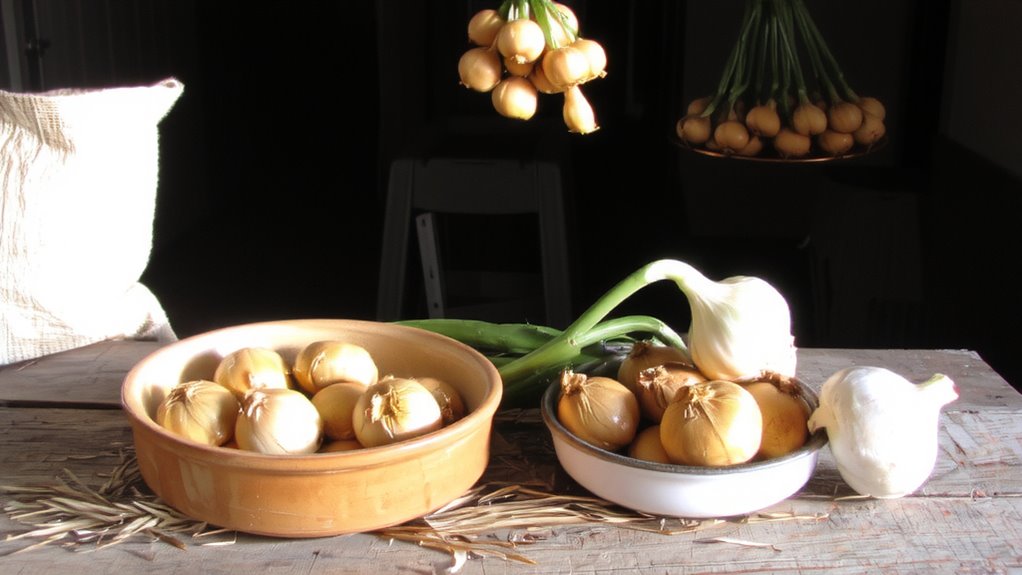
Wild onions start to degrade quickly when left unattended, losing moisture and developing off-flavors within days. You’ll notice soft spots and discoloration setting in fast, especially if they’re exposed to moisture exposure or frequent temperature fluctuations. These conditions speed up spoilage by encouraging mold and bacterial growth. At room temperature, they last only 3–5 days before quality drops. Refrigeration slows decay, but only if you store them dry and airtight-any dampness accelerates breakdown. Temperature fluctuations, like moving them from cold to warm environments repeatedly, cause condensation inside containers, worsening moisture exposure. That leads to slimy textures and sour odors. You’re better off using them fresh or preparing them for long-term storage immediately. Leaving them on the counter or in a damp root cellar without climate control reduces shelf life dramatically. Your best bet is minimizing variables you can’t control.
How to Prepare Foraged Wild Onions for Storage
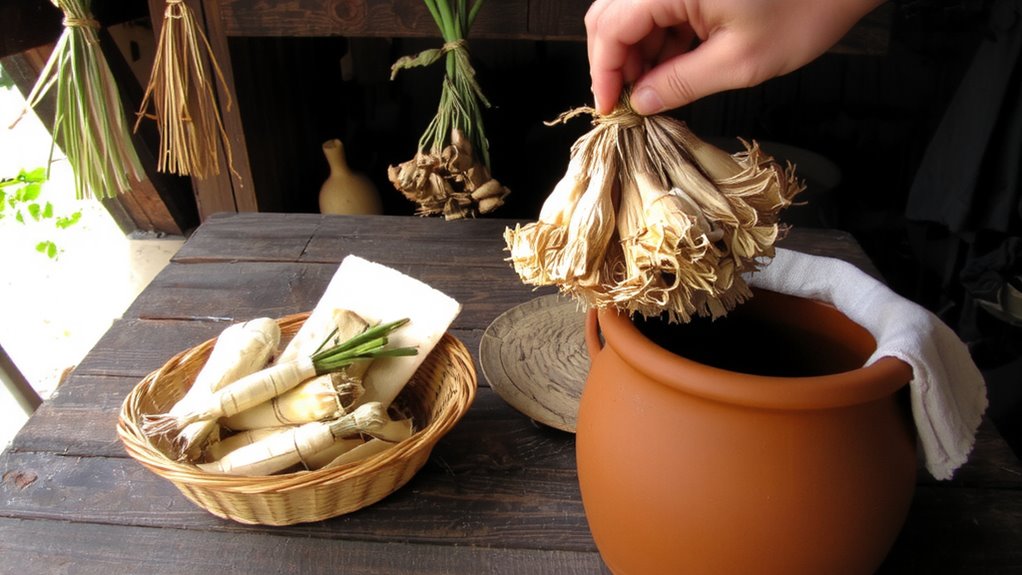
You can’t skip prep if you want your foraged wild onions to last-what you do right after gathering them determines how well they’ll hold up in storage. Proper handling starts with smart foraging techniques: harvest when bulbs are firm and leaves are still green but not overly mature. Immediately remove excess dirt and trim roots, but don’t wash them yet. Different cleaning methods affect longevity-brushing off soil is better than rinsing, which adds moisture that promotes rot. Inspect each onion for bruises or insect damage; compromised ones won’t store well. Let them dry slightly in a shaded, ventilated area for a few hours before moving to full drying. This short curing step stabilizes moisture levels without beginning the full drying process.
| Step | Purpose | Recommended Method |
|---|---|---|
| Harvest | Collect healthy bulbs | Use clean knife; avoid damaged plants |
| Clean | Remove soil safely | Brush, don’t rinse; use soft brush |
| Sort | Guarantee storage quality | Discard soft, moldy, or pierced onions |
How to Dry Wild Onions for Maximum Shelf Life
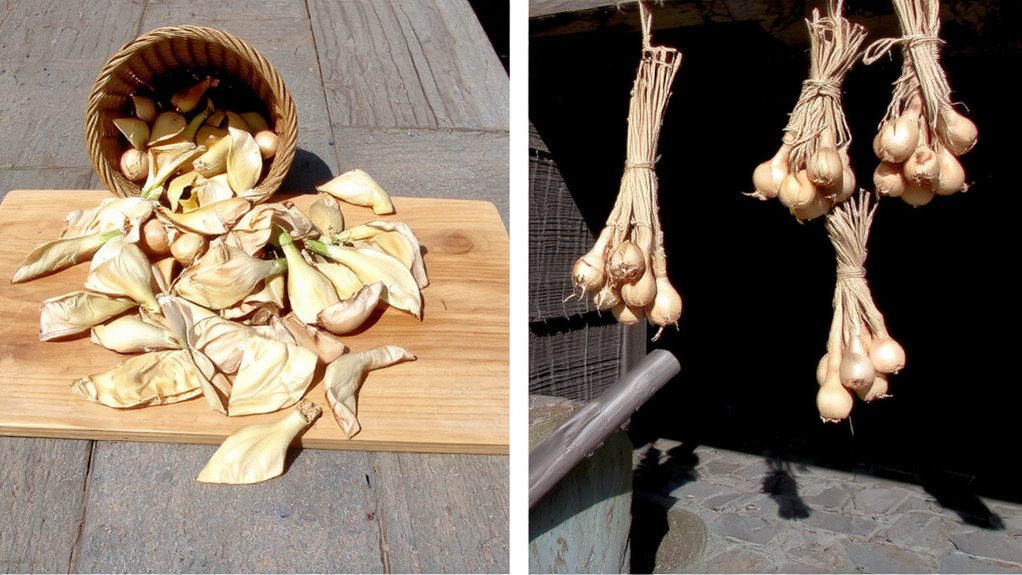
After preparing your wild onions properly, drying them correctly is what ultimately determines how long they’ll last. Use low-temperature drying techniques-like a dehydrator set to 95°F (35°C)-to preserve flavor and nutrients without cooking them. Slice bulbs uniformly, about ¼ inch thick, so they dry evenly. Lay them in a single layer on racks to guarantee consistent airflow optimization, which speeds drying and prevents mold. If using air drying, hang small bunches upside down in a dark, warm room with good ventilation; expect 5–7 days for completion. Check for brittleness-no moisture should remain. Properly dried onions snap cleanly, not bend. Moisture residue leads to rot during storage, regardless of method. Different drying techniques yield similar shelf life if airflow optimization and complete moisture removal are achieved. Time spent drying right pays off in longevity-well-dried onions last up to 12 months when stored properly.
How to Store Wild Onions in the Pantry
A dark, cool pantry keeps dried wild onions fresh for up to a year, provided they’re stored properly. Pantry organization matters-keep onions away from heat and light to prevent sprouting. For container selection, use airtight glass jars or food-grade plastic with tight seals to block moisture and pests. Label each container with the date to track freshness.
| Container Type | Pros | Cons |
|---|---|---|
| Glass jar | Airtight, reusable, no odor retention | Heavy, breakable |
| Plastic tub | Lightweight, stackable | Can absorb odors over time |
| Cloth bag | Breathable, eco-friendly | Not pest-proof, allows moisture |
| Vacuum-sealed | Longest shelf life | Requires extra equipment |
Choose based on your storage space and usage frequency. Rotate stock using older batches first.
When to Refrigerate Wild Onions
Why risk spoilage when a fridge could extend freshness? Refrigerate wild onions if you don’t plan to use them within a few days. Room temperatures encourage sprouting and decay, especially without consistent temperature control. Your refrigerator slows microbial growth and maintains moisture balance, preventing shriveling or mold. Store them in a crisper drawer, ideally at 32–40°F (0–4°C), inside a perforated plastic bag or a container with airflow. This balances humidity without trapping excess moisture. Don’t wash them before refrigerating-doing so adds surface water, disrupting moisture balance and speeding rot. If the onions feel slimy or soft, act fast. For short-term storage under a week, a pantry may suffice, but refrigeration is safer when time or ambient conditions aren’t certain. Temperature control matters most when humidity fluctuates. Refrigerating isn’t always necessary, but when in doubt, err on the cold side.
When to Toss Your Stored Wild Onions
How long can you really keep those wild onions before they turn? You’ll need to check them regularly-most last 2–3 weeks in cold storage, but spoilage signs mean it’s time to toss them. Soft spots, slimy texture, or dark discoloration indicate decay. Mold detection is critical; any fuzzy patches, especially white or green spots, mean the batch is compromised. Don’t risk it-discard immediately. Odor changes are just as telling. Fresh wild onions have a sharp, clean scent. If they smell sour, musty, or just “off,” they’re no longer safe. Sprouting isn’t a reason to throw them out unless the bulb has softened or decayed. Once you see multiple signs-mold, odor changes, texture loss-they’re beyond saving. No amount of trimming fixes systemic rot. Your health isn’t worth the risk. When in doubt, throw it out.
On a final note
You’ve got options, but not all last. Drying gives the longest shelf life-up to a year-if done thoroughly and stored in an airtight container. Pantry storage works short-term, maybe two weeks, in cool, dry spots. Refrigeration slows spoilage but not forever-use within a week. Check regularly. At first sign of softness or sprouting, discard. No method stops decay completely, only slows it. Your best bet? Dry them.