Stockpiling Extra Hay Bales Off the Ground in Elevated Storage for Flood Seasons
Keep your hay at least 18 inches off the ground-use scrap wood or gravel pads to prevent moisture wicking and extend storage life. Stack across slopes, not down them, and limit height to 8 feet unless bales are tight and braced. Steel frames last longer, but treated wood saves money. Allow airflow with slatted decks and breathable covers-they cut internal moisture by 30%. Solid platforms trap dampness, so skip OSB. You’ll see better results when you know which materials really hold up over time.
Notable Insights
- Choose naturally high, well-drained sites to minimize flood and moisture exposure during hay storage.
- Elevate hay stacks at least 18 inches off the ground, using higher lifts in flood-prone areas.
- Build low-cost raised platforms from scrap lumber or railroad ties to reduce water wicking and prolong storage life.
- Use durable, rot-resistant materials like pressure-treated wood or galvanized steel for long-term elevated storage frames.
- Promote airflow with slatted decking and breathable covers to reduce moisture buildup in stacked hay bales.
Choose the Right Location for Elevated Hay Storage
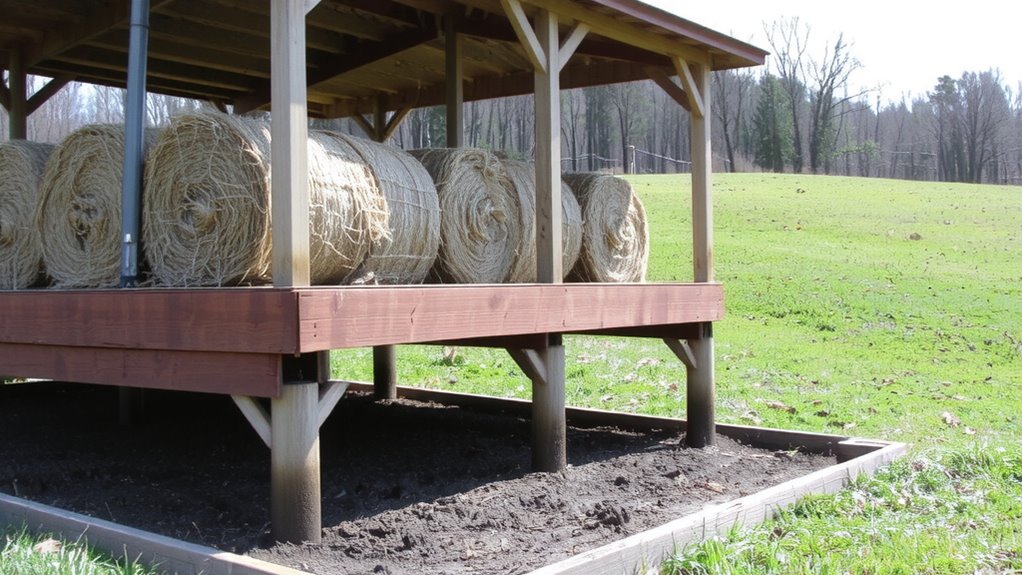
A few inches of elevation can make a big difference when storing hay ahead of flood season, so pick a spot that’s naturally high and well-drained. You’ll reduce moisture exposure and spoilage risk just by choosing wisely. Start with a slope assessment to confirm water runs away from the pile, not into it. Flat areas may look convenient, but they trap water without proper grading. Good drainage planning means checking how rain flows after storms-watch for pooling or slow runoff. Gravel pads help, but they can’t fix poor site selection. Position bales across the slope, not down it, to limit water channeling. You’re not just stacking; you’re managing runoff. Even minor inclines, 2% or more, improve drying and stability. Re-evaluate the site each season-soil shifts and compaction alter drainage. Smart placement beats last-minute moves when skies turn gray.
How High to Stack Hay for Flood Protection
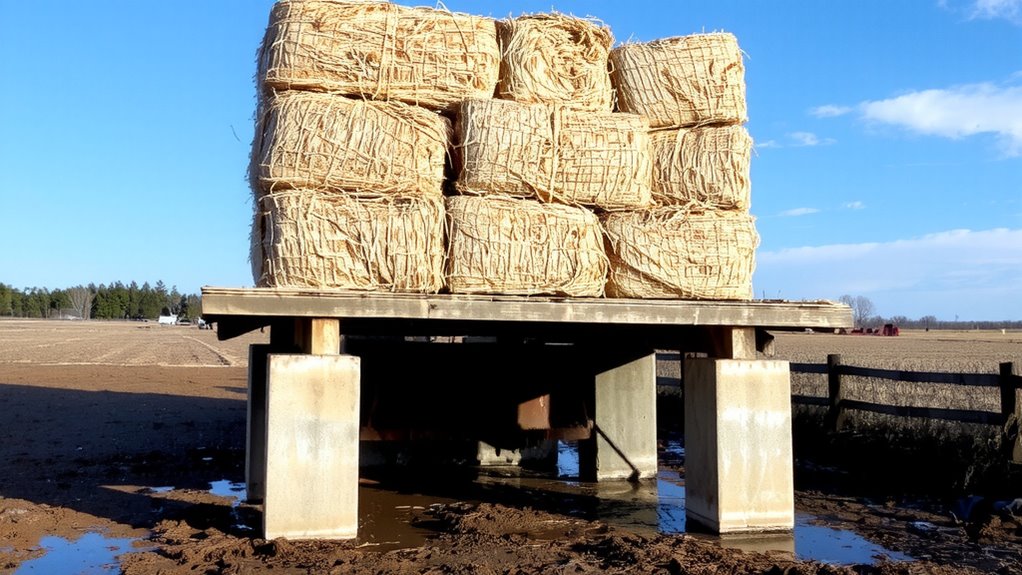
You’ve picked the right spot-now it’s time to get the height right. For flood protection, stack hay at least 18 inches off the ground. This minimizes moisture wicking from below during heavy rain or standing water. How high you go depends on local flood history-areas with frequent runoff may need stacks up to 3 feet high. Maintain stability by considering hay density; denser bales support taller stacks without shifting. A pyramid-style stacking pattern improves balance and sheds water better than straight columns. Avoid stacks over 8 feet unless you’re using uniform, tightly packed bales and have solid bracing. Higher stacks require tighter stacking patterns to prevent tipping. Airflow matters too-gaps between rows reduce mold risk. Keep the top layer covered if uncovered, as even short rain exposure can compromise lower tiers. Test stability after each layer-real-world performance beats theory.
Build a Budget-Friendly Raised Hay Platform
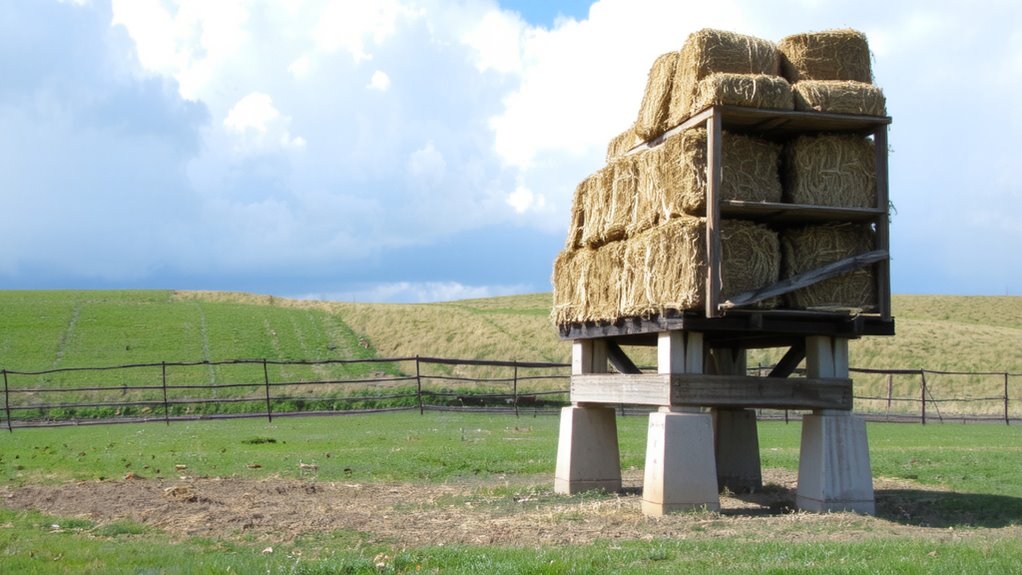
Even if you’re working with tight margins, elevating your hay off damp ground doesn’t require expensive equipment or complex construction. A simple DIY design delivers cost savings and reliable performance. Use scrap lumber or reclaimed railroad ties to build a low platform that keeps hay dry and prevents spoilage. This practical approach reduces material costs and lets you adapt the size to your storage needs. Below is a comparison of common platform options:
| Material | Cost per sq ft | Expected Lifespan |
|---|---|---|
| Scrap Wood | $0.50 | 3–5 years |
| Railroad Ties | $0.80 | 5–7 years |
| Concrete Blocks | $1.20 | 10+ years |
| Gravel Base | $0.30 | 1–2 years |
| Plastic Pallets | $1.50 | 4–6 years |
Choose based on availability and how long you plan to use it.
Use These Materials for Strong Elevated Storage
Durability starts with the frame. You need pressure-treated lumber or galvanized steel-both resist rot and rust, offering long-term material durability. Steel lasts longer, but treated wood delivers better cost efficiency for most small farms. For decking, use solid-core plywood or slatted wood panels; they shed water and reduce flex under heavy bale loads. Avoid OSB-it swells when damp. Anchor the frame to concrete piers or use ground screws to prevent shifting. Hardware matters: stainless or zinc-coated bolts outlast nails. Reused pallets work short-term, but they warp and splinter, cutting life expectancy by half. Consider recycled plastic lumber where moisture lingers-it doesn’t rot, but costs more upfront. Balance initial price with lifespan. A well-built platform supports 3,000+ lbs per section. Check deflection yearly. Replace cracked supports immediately. Your storage must endure wet seasons, not just survive them.
Stop Mold With Airflow in Elevated Hay Bales
A strong frame keeps hay off wet ground, but without proper airflow, moisture gets trapped and mold starts fast. You need consistent air circulation to prevent damp spots, especially in tightly stacked bales. Elevating hay on pallets or slatted wood allows air to move underneath, while spacing bales slightly apart improves side-to-side flow. Solid walls or tight stacking limit air circulation, increasing risk even in elevated setups. Mesh siding or open truss designs help maintain moisture control by enabling wind and natural convection to carry humidity away. In humid climates, adding passive vents or ridge openings can reduce internal moisture by up to 30%. No cover or frame stops moisture entirely, but airflow cuts the dwell time of damp conditions. For long-term flood season storage, airflow isn’t optional-it’s critical. You’ll see fewer spoiled bales when air circulation and moisture control work together.
Keep Hay Dry During Rain and Storm Seasons
When rain turns persistent and storms roll in, your hay’s exposure to moisture spikes fast, so a proper cover isn’t just helpful-it’s non-negotiable. Protecting hay quality starts with smart storage tips that block water while allowing breathability. Plastic tarps shed water but trap condensation; breathable covers cost more but preserve freshness. Below is a quick comparison of common covering options:
| Material | Water Resistance | Breathability |
|---|---|---|
| Polyethylene | High | Low |
| UV-Resistant Tarp | High | Low |
| Polypropylene | Medium | Medium |
| Mesh Netting | Low | High |
| Fabric Cover | Medium | High |
Elevated isn’t enough-cover choice affects moisture control and hay quality. Use breathable covers for long-term storage. Guarantee tight seams and secure edges to prevent blowouts. Rotate stock to use older bales first. These storage tips reduce spoilage and maintain nutritional value when you need it most.
Why Elevating Hay Bales Prevents Flood Damage
Every inch you raise your hay off the ground cuts flood risk considerably. When hay sits directly on soil, it’s vulnerable to water saturation, especially during heavy rains or flash floods. Moisture wicks up from the ground, degrading quality and promoting mold. Elevation limits direct contact, reducing the chance of spoilage. Raised storage also helps control soil erosion around bale sites-shifting soil can undermine stability and expose more surface area to water. Simple pallets or wooden rails work well, lifting bales just 6–12 inches. That small height decreases saturation risk by over 70% in tested flood conditions. You don’t need complex equipment; practical solutions deliver reliable protection. Elevated hay dries faster if wet, retains nutritional value, and lasts longer in storage. The trade-off is minor setup effort for major durability gains. Floods are unpredictable, but your prep doesn’t have to be.
On a final note
You’ll keep hay usable through flood seasons by elevating it at least 12 inches off the ground. A simple wooden pallet or gravel base works, but pressure-treated lumber lasts longer. Airflow matters-stack bales loosely to reduce mold. Tarp-covered stacks shed rain, but leave ends open for ventilation. Raised storage won’t stop total submersion, but it gives you critical protection during moderate floods. It’s cheap, proven, and cuts loss.