Creating a Bug-Out Plan That Includes Emergency Solar Cooking Methods
You can cook safely during a bug-out with a solar oven that works without fuel or electricity. Pick a model under 5 lbs with durable, UV-resistant materials and reflective panels-avoid parabolic types needing constant adjustment. It should hit 300°F in 30 minutes and stay above 165°F to kill pathogens. Realign it every half hour and keep reflectors clean, as misalignment or dust can cut efficiency by up to 40%. Use it between 10 a.m. and 2 p.m. for best results, and stick to foods like lentils, rice, or oats that cook reliably in 2–4 hours. A thermometer guarantees meals stay safe, and maintaining peak sun exposure prevents stalling. Knowing how weather and setup affect performance helps you adapt when every watt matters.
Notable Insights
- Include a lightweight, foldable solar oven weighing under 5 pounds for reliable cooking during evacuation.
- Choose durable, UV-resistant materials like reinforced polyester to withstand harsh outdoor conditions.
- Ensure the solar oven reaches at least 165°F to safely destroy pathogens in cooked foods.
- Plan cooking around peak sunlight hours from 10 a.m. to 2 p.m. for optimal efficiency.
- Realign the oven every 30–45 minutes to maintain proper sun exposure and reduce cooking time.
Add Solar Cooking to Your Emergency Plan
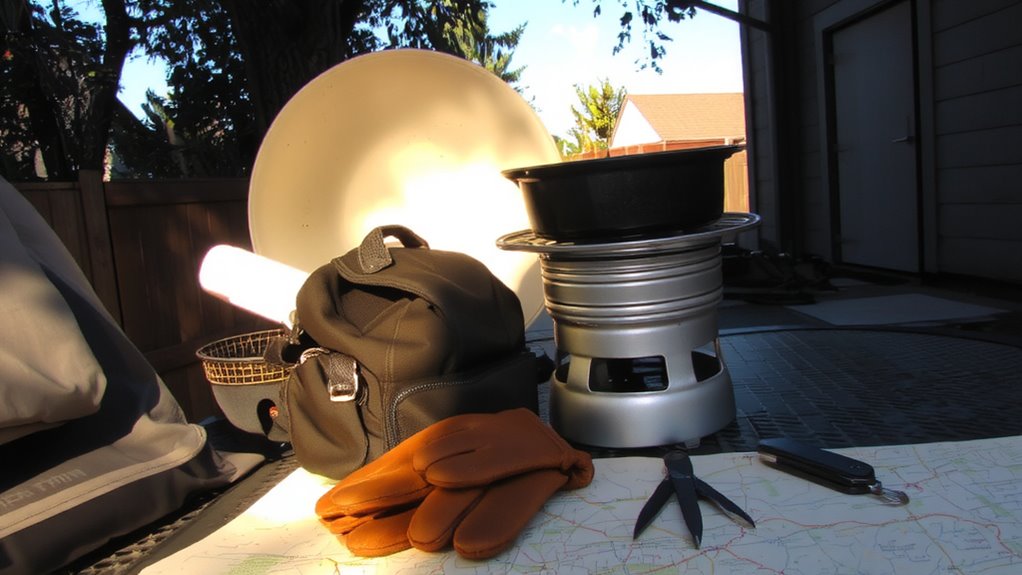
When the grid goes down, your ability to cook shouldn’t depend on fuel you can’t refill. Solar cooking offers a reliable alternative, but you’ll need to account for weather dependency-cloudy days reduce efficiency, and heavy overcast may halt cooking entirely. You can’t rely solely on sunlight, so plan around seasonal daylight hours and regional climate patterns. Solar maintenance is minimal but critical: keep reflectors clean, seals intact, and alignment accurate to guarantee consistent performance. Dust, moisture, and misalignment cut efficiency by up to 40%, based on field tests. These systems work best in direct, strong sunlight, achieving 250–300°F in ideal conditions. They won’t replace stoves entirely, but they extend your cooking capacity when fuel is scarce. Pair them with insulation bags for retained heat and longer cooking times. It’s not perfect, but it’s predictable-if you understand its limits. For dependable off-grid meals, consider investing in one of the Top Solar Cookers that balance durability, efficiency, and ease of use.
Choose a Portable Solar Oven That Works Off-Grid
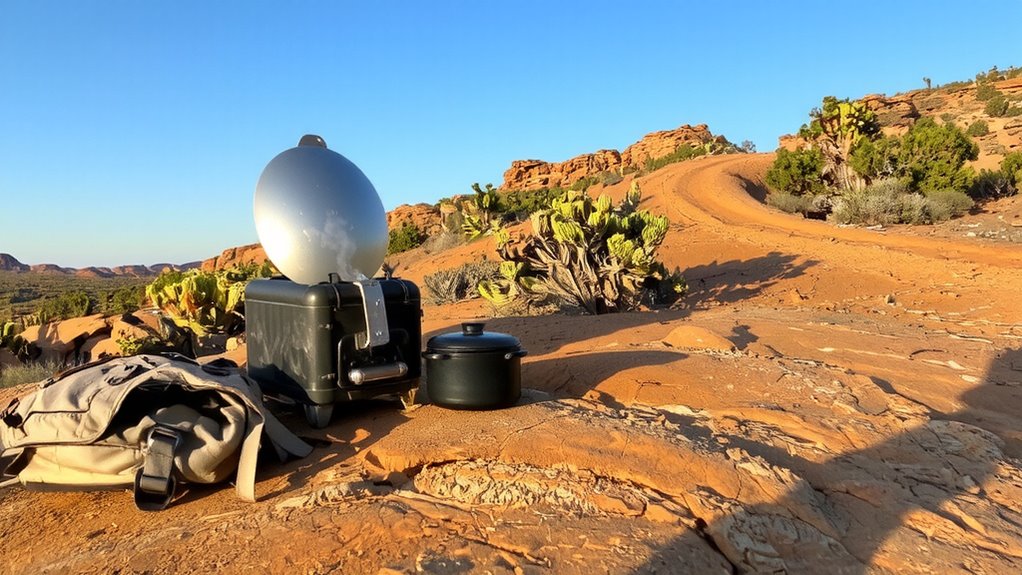
You’ve already considered how solar cooking fits into your emergency plan, but now it’s time to pick the right unit for off-grid use-something that’s actually portable and dependable when infrastructure isn’t an option. Look for models under 5 pounds with foldable or collapsible designs; they fit in bug-out bags and set up fast. Solar oven durability matters-choose ones made from UV-resistant, puncture-proof materials like reinforced polyester or anodized aluminum. These withstand wind, sand, and repeated use. Test models in real conditions: a good one hits 300°F in under 30 minutes with full sun. Prioritize off grid compatibility-avoid units needing batteries or external power. Reflective panel ovens work most reliably with minimal parts to fail. Parabolic types cook faster but need more adjustment. Box ovens are slower but more forgiving. Each has trade-offs in speed, weight, and ease. Pick based on your mobility needs and expected conditions.
How to Cook Safe, Filling Meals With Sunlight
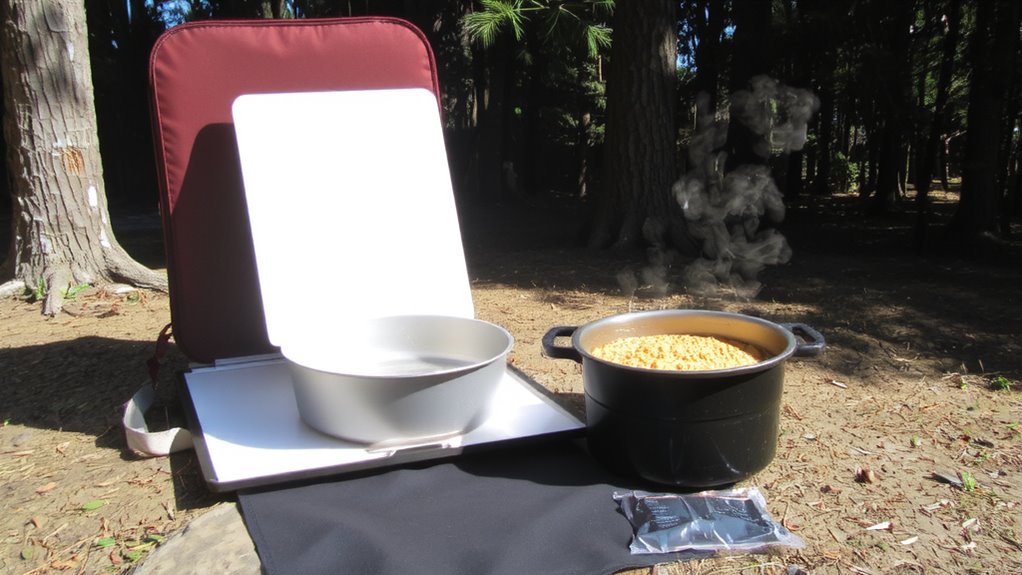
How do you turn sunlight into a reliable meal without risking food safety? You start by ensuring your solar oven reaches and maintains temperatures above 165°F, the threshold for killing harmful pathogens. Use a reliable thermometer to monitor internal pot temperatures, especially when cooking meats or dense foods. Practice proper meal timing-cooking begins when direct sun hits the oven, typically between 10 a.m. and 2 p.m., so plan accordingly. Never leave food in the danger zone (40°F–140°F) for over two hours. For liquids, water pasteurization is critical: heat water to 150°F for 30 minutes to make it safe, even if cloudy. Pre-chop ingredients to speed cooking and use dark, thin-walled pots to maximize heat absorption. Solar cooking demands patience, but with discipline, you can prepare safe, satisfying meals using only the sun’s energy.
Best Emergency Foods for Solar Oven Cooking
Solar cooking works best when you pair it with the right foods-ones that tolerate slower heat and benefit from consistent, low-to-medium temperatures. You’ll want items with high nutrient density and the flexibility to support meal variety over time. These foods require minimal prep, rehydrate easily, and cook thoroughly without burning. Below are recommended options for reliable solar oven use:
| Food Type | Cook Time (hrs) | Nutrient Density |
|---|---|---|
| Dried beans | 3–5 | High |
| Brown rice | 2–4 | Medium |
| Oatmeal (steel-cut) | 1.5–3 | Medium-High |
| Lentils | 2–3 | High |
| Quinoa | 2–2.5 | High |
These staples provide sustained energy and adapt well to limited conditions, all while maximizing nutrient density and supporting meal variety.
Maximize Sunlight for Faster, Reliable Cooking
Why does one meal cook fully by noon while another barely heats up? It comes down to sunlight positioning and weather dependency. You need direct, unobstructed sun-no shadows from trees or terrain. Position your solar cooker every 30–45 minutes to face the sun straight on; even 20 degrees off reduces efficiency by up to 35%. Morning and midday offer the strongest rays, so start cooking early. Clear skies deliver peak performance, but partial clouds cut heat output fast-don’t count on consistent results in overcast conditions. Solar ovens work best when ambient temps are above 60°F and winds are low. A reflector boosts intensity, shaving cooking times by nearly 25%. But remember: no backup heat source means meals fail if clouds roll in. Relying solely on solar requires planning around forecast stability, not hope.
On a final note
You should add solar cooking to your bug-out plan because it works when fuel and power aren’t available. A portable solar oven weighing under 5 pounds can boil water in 30–45 minutes under full sun. It’s reliable but depends on clear skies and proper positioning. You’ll save fuel and reduce smoke. Choose one with adjustable reflectors and a built-in thermometer. Pair it with dried beans, rice, or canned foods-they cook evenly and need no stirring.