Using Oxygen Absorbers in Mylar Bags to Store Dehydrated Wild Greens
You should use oxygen absorbers in Mylar bags to store dehydrated wild greens because they reduce oxygen to 0.01%, preventing spoilage and preserving nutrients for up to 15 years. Make sure greens are fully dry and cool before sealing. Use 500cc absorbers per gallon with 3.5-mil or thicker opaque Mylar for best results. Seal immediately after adding the absorber to avoid air exposure. A dented bag in 24 hours means it’s working-test for leaks by submerging it. Proper prep and materials make long-term storage reliable. You’ll get better shelf life when every detail aligns.
Notable Insights
- Use oxygen absorbers to reduce oxygen to 0.01%, preventing spoilage and extending shelf life up to 15 years.
- Ensure dehydrated wild greens are fully dry and cooled before sealing to avoid moisture buildup and spoilage.
- Choose opaque, 3.5-mil or thicker Mylar bags for superior moisture, UV, and puncture resistance.
- Seal bags with heat immediately after adding oxygen absorbers to maintain freshness and ensure airtight protection.
- Test seal success within 24 hours by checking for vacuum contraction or submerging in water for bubbles.
Why Oxygen Absorbers Keep Wild Greens Fresh
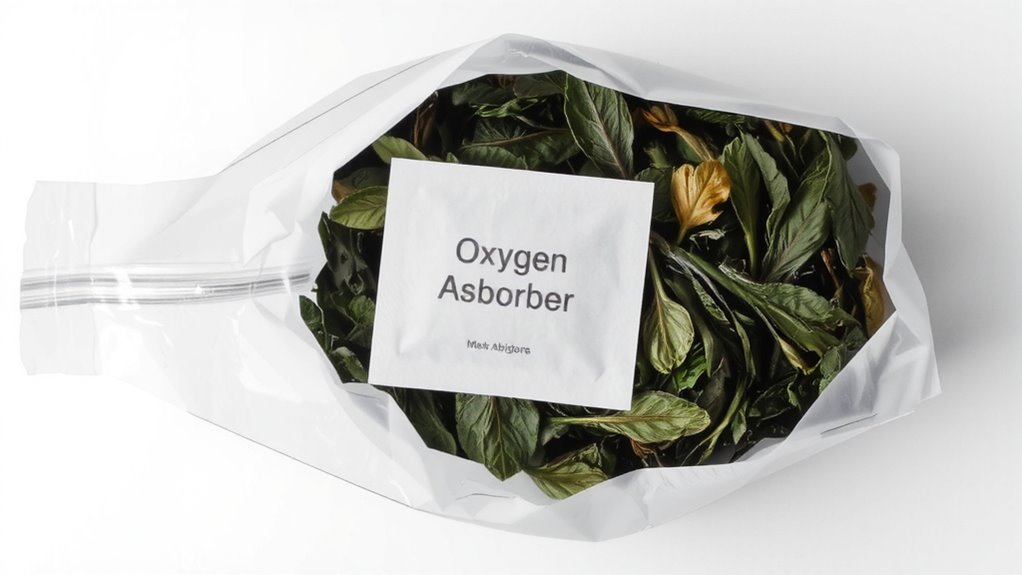
Oxygen is the enemy when it comes to storing wild greens long-term. It degrades nutrients, fades color, and accelerates spoilage. When you seal dehydrated greens in Mylar bags with oxygen absorbers, you remove this threat. The absorbers pull residual oxygen down to 0.01%, creating an inert environment where microbes and oxidation can’t thrive. This gives your greens a longevity boost-properly stored, they last 10 to 15 years without significant deterioration. Flavor retention is also markedly better than in oxygen-exposed storage. You’ll taste the difference when rehydrating greens years later: fresher, greener, more authentic. Without oxygen, volatile compounds in the plant material stay intact. You don’t need refrigeration or vacuum pumps-just correct bag thickness (at least 5 mil) and the right absorber size (typically 500cc per gallon). It’s a reliable, measurable method with proven results in real-world food storage. For optimal protection, use best Mylar bags designed specifically for long-term food preservation.
Prepare Dehydrated Wild Greens Properly
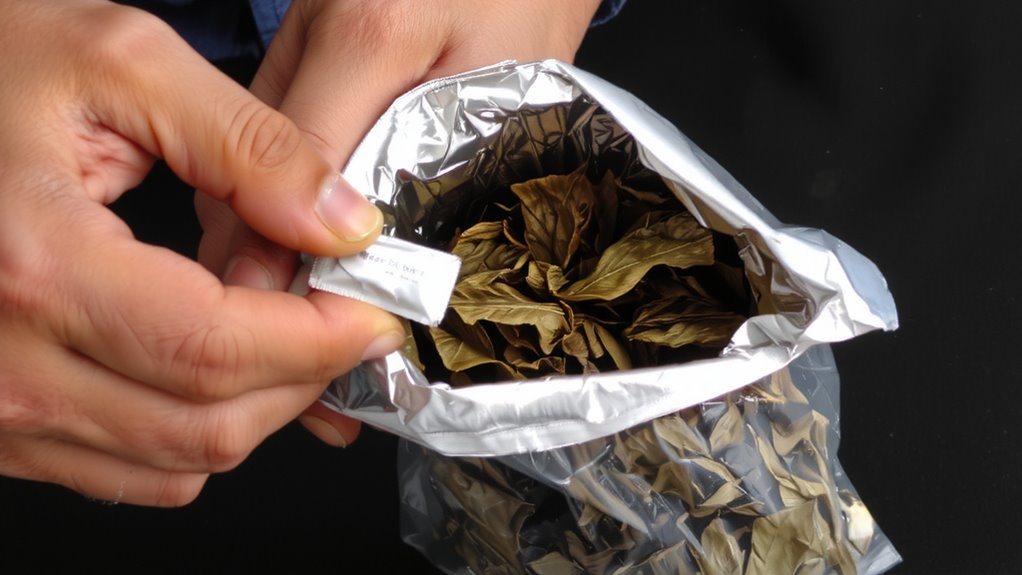
You’ve seen how oxygen absorbers protect dried greens by locking out spoilage and preserving flavor over time, but their effectiveness starts before sealing-your greens must be fully dehydrated and correctly prepped. Harvest timing matters because greens picked too late contain more moisture and degrade faster. You’ll get best results when harvesting young, dry leaves in the morning after dew evaporates. After harvest, wash and pat them dry before dehydrating. Use a food dehydrator or oven at 95°F (35°C) until the greens are brittle-any flexibility means residual moisture. Proper moisture control is essential; even small amounts can encourage mold or ruin oxygen absorber performance. Check final dryness by sealing a sample in a zip-top bag for 24 hours. If condensation forms, re-dehydrate. Cool greens completely before handling. Trapped warmth introduces moisture risk. Proper prep guarantees absorbers work efficiently and storage lasts years. For long-term success, store your sealed greens in high-quality Mylar bags designed for freeze-drying and extended shelf life.
Choose Mylar Bags for Dehydrated Wild Greens
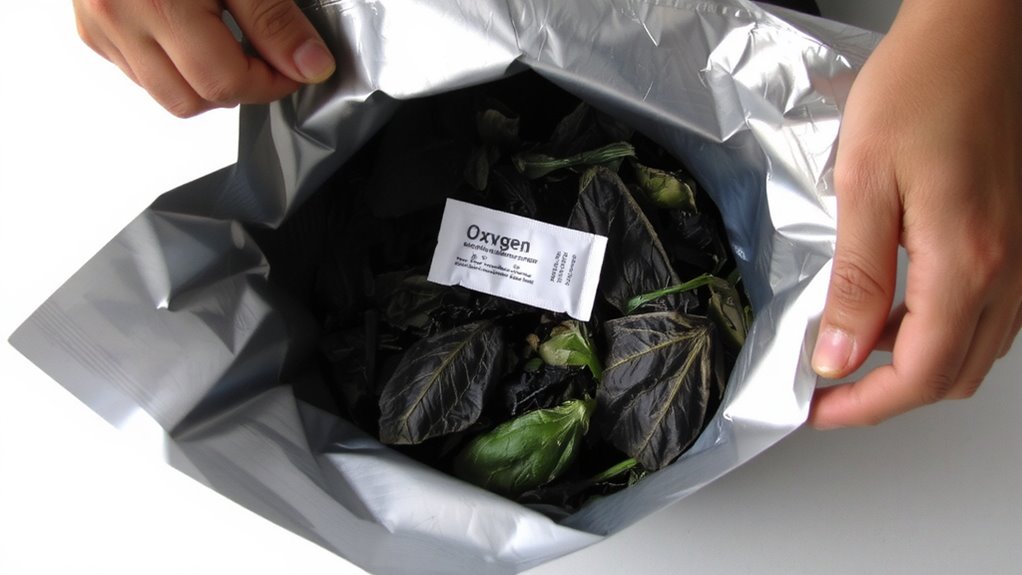
A good Mylar bag makes a noticeable difference when storing dehydrated wild greens long-term. You need one with high moisture resistance to keep humidity from degrading your contents, especially in humid climates or non-climate-controlled spaces. Most quality Mylar bags offer a moisture vapor transmission rate low enough to protect contents for years. Look for at least 3.5-mil thickness-thicker bags often provide better durability and improved barrier protection. Bag clarity matters if you plan to identify contents without opening the package; clear bags let you visually inspect the greens, though they offer less light protection than opaque ones. Opaque Mylar better blocks UV, helping preserve nutrient content. Balance clarity with protection depending on your storage environment. Not all bags perform the same-check for puncture resistance and consistent lamination. Choose based on measurable performance, not packaging claims.
Seal Mylar Bags With Oxygen Absorbers
Putting oxygen absorbers in your Mylar bags before sealing cuts the risk of spoilage and helps dried greens keep their quality over time. You should add the absorber just before sealing-once exposed to air, it starts working immediately, so don’t leave it out. Use heat sealing for a reliable, airtight closure; cold sealing isn’t as durable for long-term storage. A proper heat sealer melts the inner lining of the Mylar, creating a bond that holds. Vacuum packing isn’t required but helps remove excess air, letting you fit more bags in less space. Still, oxygen absorbers handle the residual oxygen that vacuum packing misses. Seal one bag at a time to avoid accidental exposure. Check each seal for gaps or bubbles-weak spots lead to failure. A fully sealed bag with an active absorber will slightly dent over 24 hours as oxygen is removed, confirming effectiveness. For best long-term results, choose top Mylar bags designed specifically for food storage.
Avoid Common Mylar Storage Mistakes
While storing food in Mylar bags can extend shelf life considerably, skipping oxygen absorbers or using the wrong amount undermines the effort-too few absorbers leave oxygen behind, promoting mold and insect eggs, while too many offer no added benefit and waste money. You must also prevent moisture contamination; even small amounts introduce humidity that encourages spoilage, so guarantee your dehydrated wild greens are fully dry before sealing. Excess moisture can compromise long-term storage regardless of proper sealing. Avoid light exposure by storing bags in a dark, cool place-UV and heat degrade nutrients and accelerate oxidation, reducing food quality over time. Standard 7-mil Mylar provides good light blockage, but placing bags inside cardboard bins or dark containers adds extra protection. These steps aren’t optional if you want reliable, long-term results. Cut corners, and you risk losing your entire stash to preventable failures.
Check If Your Seal Stayed Airtight?
How can you be sure your Mylar seal held? Perform a vacuum test 24 hours after sealing. If the bag appears sucked in, the oxygen absorber worked and the seal likely held. Check for leaks using the bubble check method: submerge the sealed bag in water and look for rising bubbles, which indicate air escaping. This simple test reveals flaws you can’t see dry.
| Method | Tool Needed | Detects |
|---|---|---|
| Vacuum test | None | Poor seal, failed absorber |
| Bubble check | Water container | Pinholes, edge leaks |
| Visual exam | Eyes | Crimps, wrinkles |
| Tactile test | Fingers | Puffiness over time |
| Date check | Label | Storage duration |
Both vacuum test and bubble check are essential-each catches different failure types. Skip neither.
Store Dehydrated Greens in Ideal Conditions
You’ve sealed your mylar bags and checked for leaks-now it’s time to store the dehydrated greens where they’ll last. Place them in a cool, dark location, ideally between 50°F and 70°F, to guarantee long term stability. Avoid attics, garages, or near appliances that generate heat. Light and temperature fluctuations degrade nutrients and texture over time. Use sturdy, food-grade storage containers or bins to protect against pests and physical damage. Moisture control is critical-any humidity exposure risks mold and spoilage, even with oxygen absorbers. Don’t refrigerate unless necessary, as condensation can form when bags are moved between environments. Store off concrete floors using pallets or shelves to minimize moisture transfer. Rotate stock using first-in, first-out order. These steps support reliable shelf life up to 10–15 years when done consistently. Conditions matter more than packaging alone.
On a final note
You’ve sealed your dehydrated wild greens in Mylar with oxygen absorbers, and that’s effective. This method cuts oxygen to under 0.01%, slowing spoilage and preserving nutrients for years. Just make sure greens are fully dry-any moisture risks mold. Use 300–500cc absorbers per gallon, depending on packing density. Check seals with hand pressure and store bags in cool, dark places. It’s not foolproof, but it’s proven for long-term storage when done right.