Building an A-Frame Shelter With Pine Boughs in Subarctic Climates
Pick high, flat ground near trees and face the shelter south for warmth. Use spruce or birch poles notched and lashed tight, sloped at 60–70° to shed snow and hold 350–400 lbs. Layer 6–8 inches of green pine boughs from the bottom up, overlapping like shingles to trap heat. Block wind with logs or packed snow on the windward side and insulate underneath-you’ll stay 20°F warmer inside. There’s more to get right for lasting warmth through long nights.
Notable Insights
- Choose a well-drained, elevated site near tree lines, avoiding cold-air pockets in valleys.
- Construct a sturdy frame with spruce or birch poles, notched and lashed securely for snow load support.
- Angle walls 60–70 degrees to shed snow and align entrance southward for solar gain.
- Layer 6–8 inches of green pine boughs from bottom to top for effective insulation and moisture resistance.
- Block wind with natural barriers and insulate beneath your body to retain heat overnight.
Choose the Right Spot for Your A-Frame Shelter
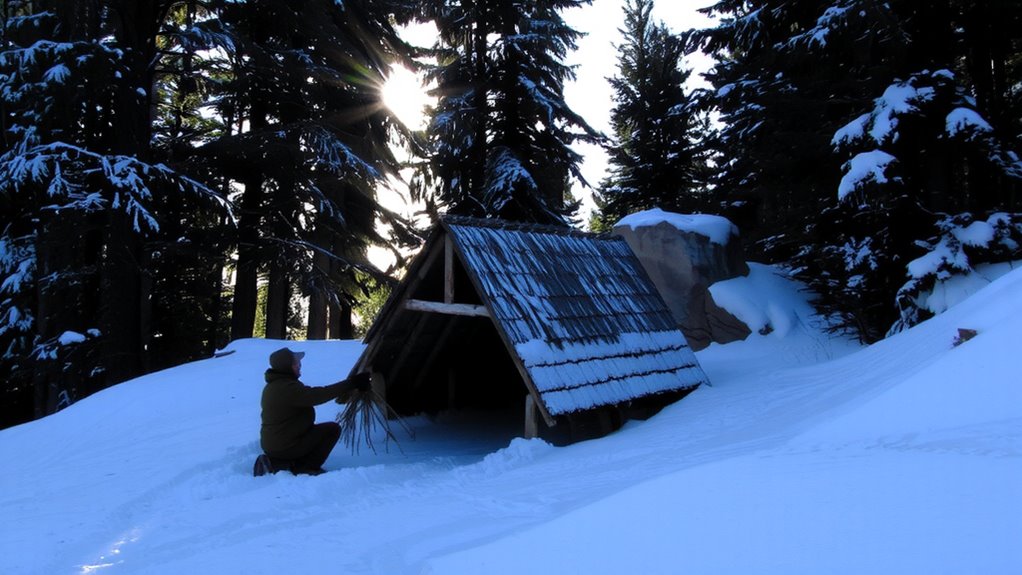
Where you place your A-Frame shelter in subarctic climates makes or breaks its effectiveness-so why gamble with exposure? You’ll want high ground with proper terrain drainage to avoid pooling meltwater or rain runoff. Even slight inclines help direct water away, keeping your floor dry. Position the shelter entrance away from prevailing winds, which in these regions typically come from the north or west. Maximize sun exposure by aligning the open side southward, capturing low-angle daylight that aids warmth and drying. Flat spots near tree lines offer both windbreaks and access to insulation materials like pine boughs. Avoid depressions or valley bottoms-they collect cold air at night. Elevation matters, but not at the cost of wind exposure. Balance terrain drainage and sun exposure carefully. A well-sited shelter retains heat and resists moisture far better than even the sturdiest frame poorly placed. Location is part of the design, not an afterthought. For added protection, consider using a tarp shelter as an outer layer to enhance weather resistance.
Build a Strong Frame for Snowy Conditions
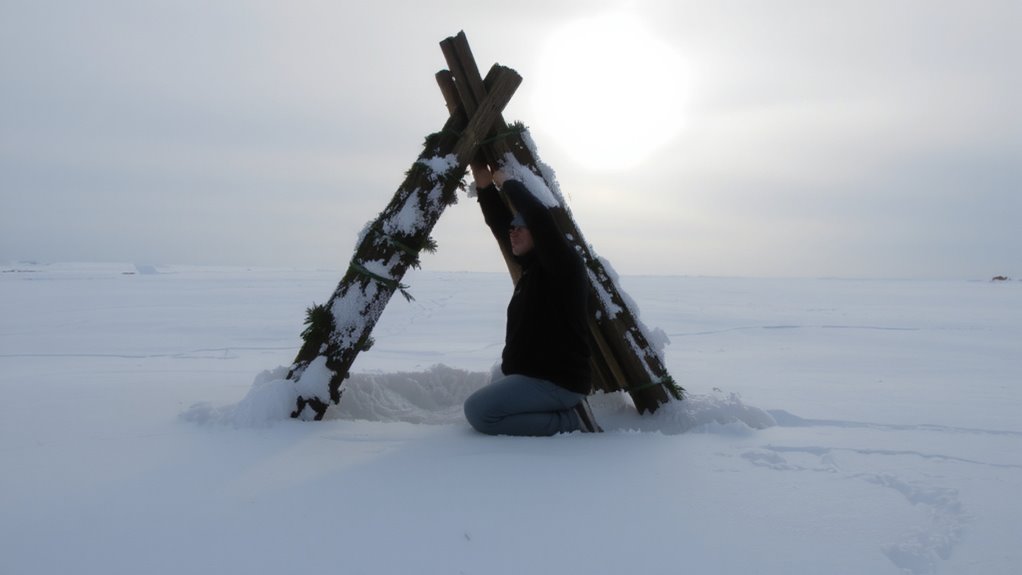
A sturdy A-Frame frame in snowy subarctic conditions needs thick, straight poles-ideally spruce or birch-set deep into the ground to handle heavy snow loads. Secure the ridgepole tightly to prevent sagging; proper frame tension guarantees stability. Use notches or strong lashings to lock joints-this improves load distribution and prevents shifting. Angle the sides between 60–70 degrees to shed snow efficiently. Test the structure by applying pressure; if it wobbles, reinforce the base.
| Pole Type | Strength (lbs supported) | Best Use Case |
|---|---|---|
| Spruce | 400 | Ridgepole, main frame |
| Birch | 350 | Supports, side beams |
| Pine | 300 | Temporary bracing |
Thicker poles and secure anchoring reduce stress points. Poor frame tension leads to failure. Even load distribution keeps snow from accumulating dangerously. Build smart-your shelter’s integrity depends on it.
Layer Pine Boughs for Insulation
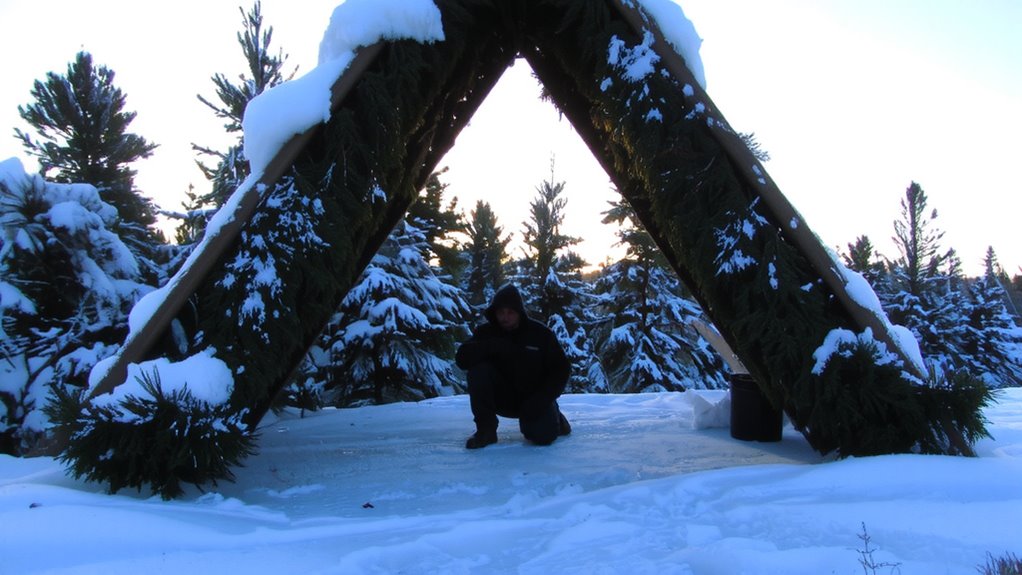
Use green pine boughs to insulate your A-frame shelter-they’re dense enough to trap heat but light enough not to overload the frame. Start layering from the bottom, overlapping each row like shingles to prevent heat loss. Pine insulation works because the needles retain dead air space, slowing conduction. Bough density matters-too sparse, and cold seeps through; too thick, and moisture gets trapped, reducing effectiveness. Aim for 6–8 inches of coverage across the shelter’s sides and roof. Fresh boughs provide better insulation than dry ones, which lose flexibility and density. You’ll feel the difference at night-expect internal temps 15–20°F warmer than outside with proper layering. Recheck seams after a few hours; settling happens. This method isn’t perfect, but it balances weight, availability, and thermal performance in subarctic conditions. Pine insulation is reliable when you’ve got limited tools and time.
Block Wind and Snow With Natural Materials
When it comes to keeping wind and snow out of your A-frame shelter, stacking natural barriers along the windward side works-logs, brush piles, or snow banks all slow airflow and reduce drifting. You can boost protection by packing snow densely against the base; its thermal mass absorbs cold and stabilizes internal temperature fluctuations. Use large logs or rocks at the shelter’s perimeter to anchor materials and block gusts. Pine boughs layered tightly serve as a basic vapor barrier, reducing moisture from snowmelt and wind-driven dampness. Avoid gaps where wind can funnel-fill spaces with moss or packed snow. While not airtight, these natural layers limit penetration better than open sides. The more solid the windbreak, the less heat you lose. Keep in mind: thermal mass won’t help if wind strips warmth faster than it’s stored. Combine blockage with density for best results.
Stay Warm Overnight in Your Pine Bough Shelter
Survival hinges on heat retention, and your body loses warmth fast in subarctic conditions-especially while sleeping. Your pine bough shelter traps heat better than bare ground, but insulation under you matters most. Use extra boughs or a closed-cell foam pad beneath your sleeping bag to reduce conductive heat loss. A quality sleeping bag rated below freezing is essential-down or synthetic, both work if kept dry. Position your shelter close to, but not touching, a steady fire for radiant fire warmth. The reflected heat from flames against a rock or wall boosts warmth by 10–15°F. Avoid placing the fire too close-risk of melting snow on shelter or igniting boughs is real. Ventilate slightly to prevent condensation. Your breath and body moisture can wet insulation, reducing efficiency. Stay dry, stay layered, and conserve metabolic heat-your survival depends on small gains. For reliable warmth, consider a best cold weather sleeping bag that matches your expected temperature range.
On a final note
You’ve built a shelter that sheds snow and traps body heat. The A-frame shape holds under heavy load, and layered pine boughs provide R-2 to R-3 insulation-enough to prevent hypothermia in -20°F winds. Natural materials block drafts but compress over time, so pile extra boughs inside. It won’t replace a tent, but it’s faster and quieter to build. In survival, that trade-off saves energy and keeps you warmer than open exposure.