The Impact of Altitude on Survival Gear Performance and Selection
Your gear works harder at altitude. Batteries lose up to 30% capacity in cold, thin air. Fuel canisters struggle with lower vapor pressure, making liquid-fuel stoves more reliable. Tents need reinforced poles and low profiles to handle 30+ mph winds. Materials turn brittle, so UV-resistant, cold-tested gear is essential. Insulated flasks keep water from freezing, and double-wall tents cut condensation. You’ll want gear that performs when the air’s thin-smart choices here make all the difference later.
Notable Insights
- Lower oxygen levels and extreme cold reduce dexterity and increase dehydration, demanding insulated, easy-to-use gear.
- UV intensity and snow reflection rise with altitude, requiring durable materials and high SPF protection.
- Thin air and cold decrease fuel canister pressure, making liquid-fuel stoves more reliable at high elevations.
- Cold and UV exposure make plastics and seals brittle, compromising gear integrity and increasing failure risk.
- Reduced atmospheric pressure diminishes battery capacity and insulation efficiency, necessitating backup power and ground insulation.
Why Gear Fails at High Altitude
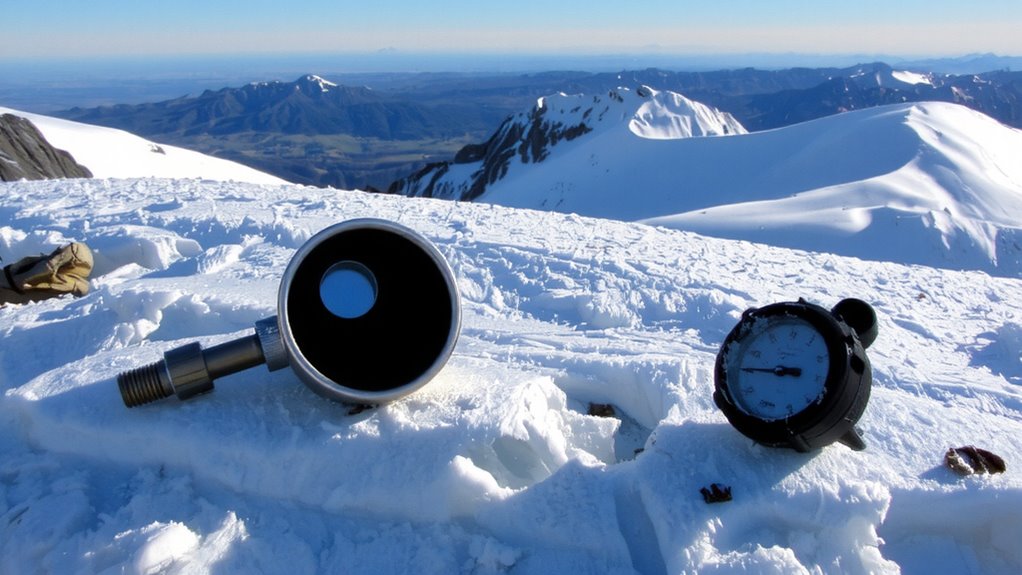
Most survival gear isn’t built to handle the extremes of high altitude, and that’s where failures start. You’ll notice gear material brittleness setting in fast when temperatures drop and UV exposure increases-zippers snap, tent poles crack, and plastic components shatter with minimal stress. These aren’t flaws under normal use, but at elevation, materials lose flexibility and structural integrity. Simultaneously, oxygen deprivation effects impair your coordination and judgment, making simple tasks like assembling a shelter or checking seals more difficult. You can’t rely on dexterity or clear thinking the way you do at sea level. Combined, these factors increase failure risk: brittle gear needs careful handling, but oxygen deprivation effects reduce your ability to provide it. High-altitude survival demands gear tested for cold flexibility, UV resistance, and mechanical resilience-standard models often fall short. Always verify material specs and plan for reduced physical and cognitive performance.
How to Keep Stoves Working in Thin Air
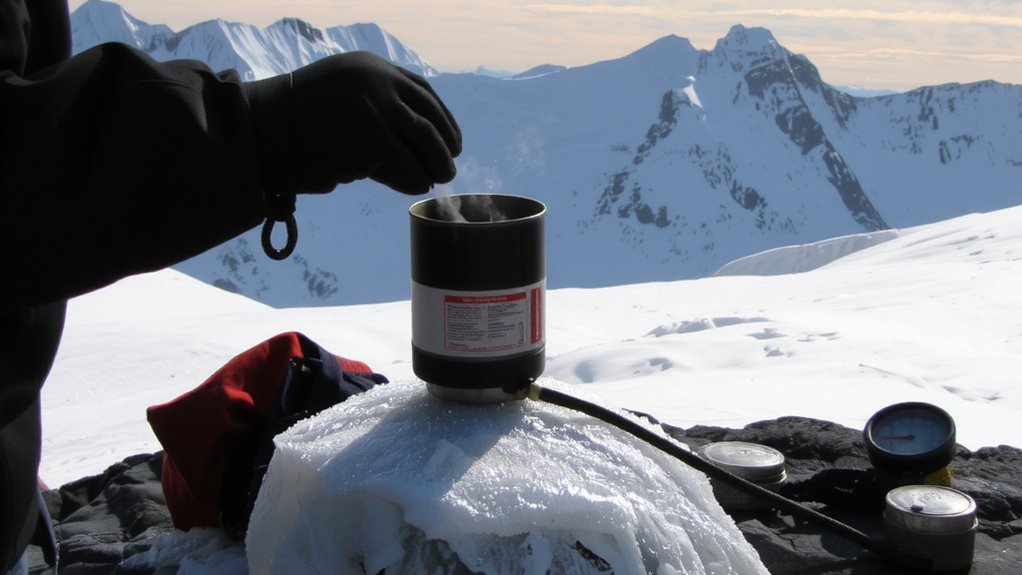
Every high-altitude stove faces trouble above 10,000 feet, and yours won’t be an exception if it relies on unpressurized fuel canisters. As air thins, boiling points drop, but vapor pressure in canisters drops faster, reducing stove fuel efficiency and making ignition reliability spotty. You’ll see weak flames or failed starts, especially in cold conditions. For consistent performance, switch to liquid-fuel stoves like the MSR WhisperLite or older multifuel models-they draw fuel from the side, maintaining pressure and improving combustion. These handle low pressure better and let you preheat the fuel line for easier ignition. Isobutane mix canisters work decently if kept warm, but pure butane fails fast. Real-world tests show liquid-fuel systems deliver 20–30% more boil cycles per ounce of fuel at 15,000 feet. Prioritize designs with proven ignition reliability and manual priming. For reliable options, consider checking out the best emergency stoves based on real-world testing and user feedback. best emergency stoves
Choose Tents That Handle Wind and Snow
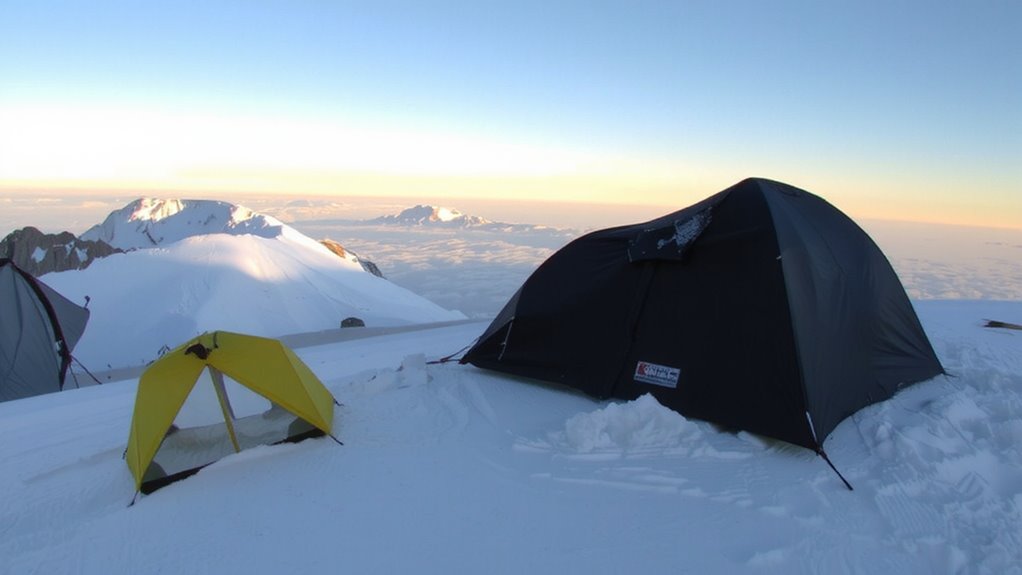
When facing sustained winds above 30 mph and overnight snow loads, your tent needs a frame built for side-loads and down-pressure, not just lightweight shelter. You’re relying on tent durability to keep you safe, so prioritize models with reinforced poles and low-profile designs that resist deformation. Dome or geodesic shapes handle wind better and offer higher snow load capacity, typically supporting 40+ pounds before collapsing. Single-wall tents with coated fabrics reduce flapping but require proper ventilation to limit condensation. Look for guy-out points and sturdy pegs-anchors make a difference when gusts exceed 50 mph. Freestanding designs are convenient, but trekking pole-supported ones often cut weight without sacrificing stability. Weight savings shouldn’t compromise structural integrity. A 3-season tent might survive light dustings, but for alpine conditions, only serious snow load capacity and proven wind resistance guarantee reliable performance. Test setups in wind before relying on them in storms. For extreme weather resilience, consider the best water-resistant tents that combine durable materials with advanced seam sealing and high hydrostatic head ratings to stay dry in driving rain and melting snow. best water-resistant tents
Why Batteries Die Faster at High Altitude
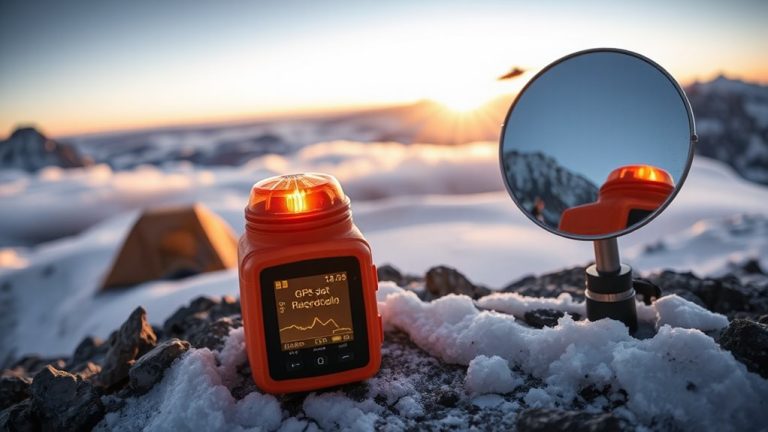
Ever wonder why your GPS dies mid-trail at 12,000 feet? It’s not your gear failing-it’s physics. At high altitudes, air pressure drops, which reduces oxygen availability and weakens battery chemistry performance, especially in lithium-ion cells. Lower pressure disrupts ion flow, cutting efficiency. Cold retention worsens the problem; thin mountain air cools devices faster, and batteries hate cold. Even a brief exposure to subfreezing temps at elevation can drain charge rapidly. Standard batteries lose up to 30% capacity at 10,000 feet when temperatures dip below freezing. You’re not imagining it-your gear works harder up there. To counter this, carry insulated battery cases or hand warmers. Lithium disposables handle cold retention better than recharges. They’re lighter, too. Always pack spares in a warm inner layer. Your survival tools depend on consistent power-don’t trust weak charge when the air’s thin. Plan for half the battery life you’d get at sea level.
UV, Wind, and Skin Protection at Altitude
While UV intensity increases roughly 10% per 1,000 feet of elevation gain, your skin doesn’t adapt any faster-so skimping on protection puts you at real risk. At high altitudes, sun exposure becomes more intense due to thinner atmosphere and increased UV penetration. You’re also dealing with reflective snow, which can nearly double UV exposure by bouncing rays back at you. A broad-spectrum SPF 30 or higher is essential, and reapplying every two hours maintains effectiveness. Lip balm with SPF protects sensitive skin, which burns easily. Wear a wide-brimmed hat and UV-blocking sunglasses-ideally wraparound style with 100% UVA/UVB protection. Lightweight, tightly woven clothing offers consistent coverage without overheating. Wind multiplies skin damage, especially on exposed cheeks and neck, so consider a buff or face guard. Gear won’t stop physiological risks, but proper protection reduces your odds of sunburn, long-term skin damage, and impaired performance.
Sleep Warm at High Altitude
How well you sleep at high altitude often comes down to one thing: staying warm without overheating. Your choice of thermal layers and sleeping gear directly affects insulation efficiency. Too many layers trap moisture; too few let heat escape. Use breathable base layers, a quality down bag rated below expected temperatures, and a sleeping pad with an R-value of 5 or higher.
| Layer | Material | Purpose |
|---|---|---|
| Base | Merino wool | Moisture management |
| Mid | Fleece | Thermal layers |
| Insulation | Down | High insulation efficiency |
| Shell | Nylon ripstop | Wind/light moisture barrier |
| Sleep system | Down + pad | Retain radiant and convective heat |
Down loses efficiency when damp, so consider synthetic in humid conditions. Your setup must balance warmth, weight, and condensation control. Always test gear at elevation before relying on it. For reliable performance in extreme conditions, choose a 4-season sleeping bag with a temperature rating suited to the environment.
Stay Hydrated at High Altitude
You lose moisture faster at high altitude, even when you’re not moving, because cold, thin air increases respiratory water loss and boosts urine output. This accelerated fluid loss creates serious hydration challenges, raising your risk of dehydration, which impairs cognitive function and physical performance. You need at least 3 to 4 liters of𝐖𝐚𝐭𝐞𝐫 daily above 8,00,00 feet, more if active. Standard water bottles freeze easily; insulated or soft flasks stored upside down prevent nozzle icing. Hydration bladders offer convenience but are harder to monitor and clean at altitude. You can’t rely on thirst-you must drink regularly. Boiling or chemical treatment adds time but guarantees water safety. Weigh the trade-offs: weight versus purification speed, ease of access versus freeze resistance. Your system must support consistent intake despite environmental demands. Prevent fluid loss from undermining your endurance or judgment. Choose gear that works when you need it, not just when conditions are easy.
On a final note
You need gear that works in thin air, not just high marks on paper. Stoves lose efficiency above 10,000 feet; pressure-regulated models fix that. Tents must shed snow and resist 50-mph gusts. Lithium batteries last 30% longer in cold, high altitudes than alkalines. UV exposure doubles every 5,000 feet-sunglasses and sunscreen aren’t optional. Down sleeping bags lose loft; choose high-fill-power versions. Water intake needs rise-aim for 4 liters daily.