First Aid for Extreme Circumstances: A Practical Guide to Treating Injuries in Hazardous Environments
You assess danger first-never rush in. Look for live wires, unstable structures, or traffic. Stop severe bleeding with a tourniquet, high and tight, even over clothes. Use sticks and cloth to splint fractures securely but not too tight. For hypothermia, get to shelter, remove wet clothes, warm the core. In heatstroke, cool the body fast with water and shade. Keep injured persons flat, warm, and calm to prevent shock. More life-saving steps follow.
Notable Insights
- Always assess scene safety first to avoid becoming a victim yourself in hazardous environments.
- Control severe bleeding immediately using a tourniquet or direct pressure with available materials.
- Immobilize fractures with improvised splints to prevent further injury during evacuation.
- Treat hypothermia by warming the core and protecting from cold; cool heatstroke victims rapidly.
- Prevent shock by keeping the person warm, lying flat, and monitoring vital signs continuously.
Assess Danger Before Helping
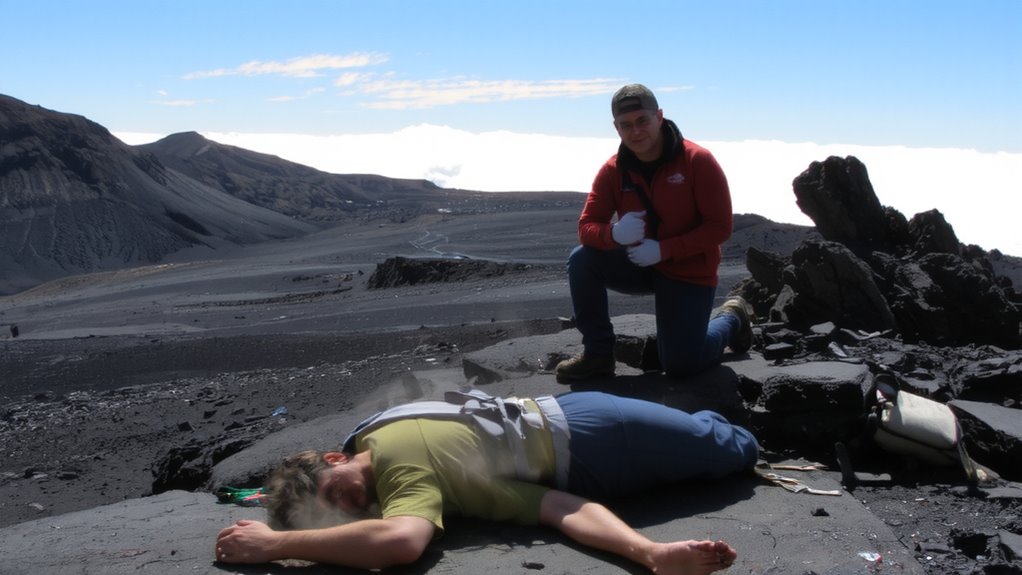
If you rush in without checking the scene first, you could end up a victim yourself-so pause and scan for hazards before taking action. Scene safety isn’t optional; it’s the first step in any rescue. Look for live wires, unstable structures, traffic, or chemical leaks-immediate threats that could injure you or the casualty. A risk evaluation takes seconds but prevents chain-reaction accidents. You can’t help if you’re down. If smoke, noise, or movement distracts you, reassess. Some risks are silent, like carbon monoxide or structural fatigue. Use all senses. No specialized gear? That’s fine-your eyes and ears are reliable. Prioritize distance or shielding if danger’s present. Move only if necessary, and signal for backup early. Your safety determines whether the response succeeds or worsens. Effective first aid starts with a冷静 head and honest risk evaluation-not heroics.
Stop Severe Bleeding With Minimal Gear
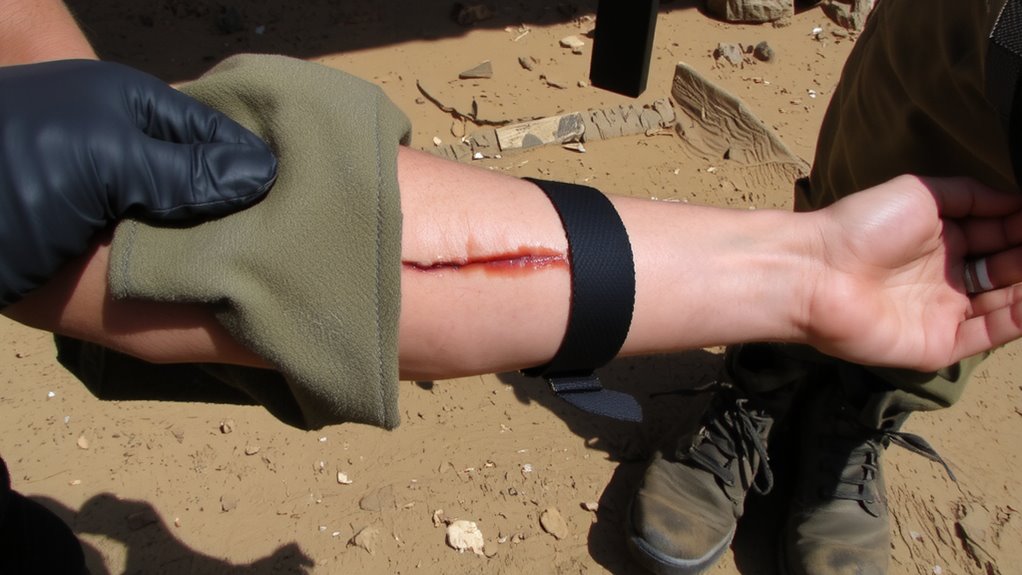
Blood loss kills fast-within minutes in severe cases-so your response has to be immediate and effective. If you see spurting blood or soaked clothing, apply a tourniquet high and tight on the limb-over clothing if needed-and tighten until the bleeding stops. Commercial tourniquets work best, but a belt or strong cloth with a stick can suffice. Tourniquet application isn’t optional; it’s a life-or-death step. For deep wounds without limb access, wound packing is your only option. Use clean gauze or cloth, pack it firmly into the cavity, and apply direct pressure. No gauze? Use your hand. Keep pressure until help arrives. Tourniquets can cause tissue damage but are better than fatal blood loss. Wound packing won’t stop arterial spurts-know when each method applies. Practice both techniques ahead of time. Success depends on speed, force, and correct placement. A well-stocked wilderness first aid kit should include essentials like gauze, tourniquets, and trauma dressings to handle severe bleeding effectively in remote settings. wilderness first aid kit
Splint a Broken Bone With What You Have
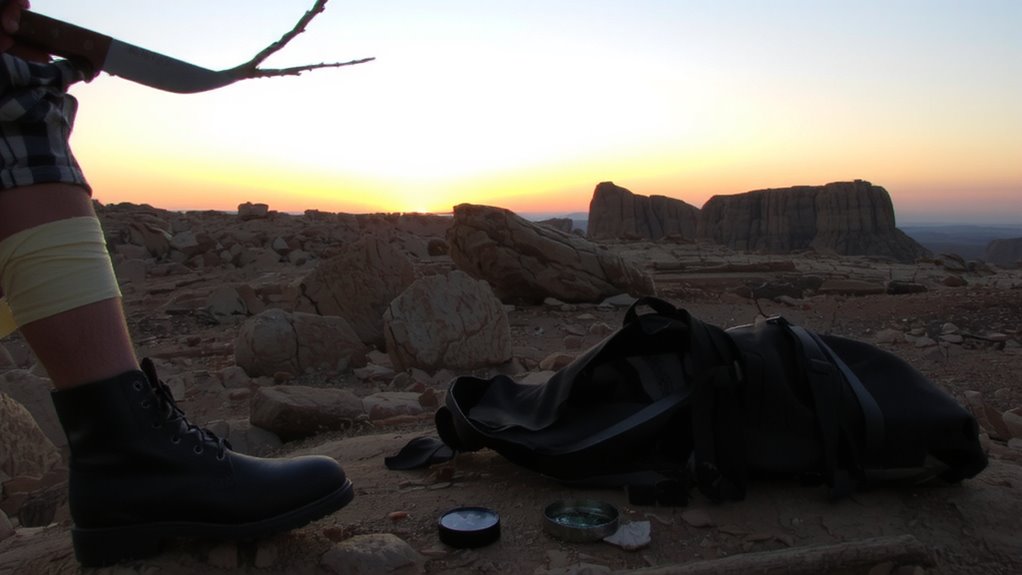
Since broken bones won’t wait for proper medical supplies, you’ll need to stabilize the injury using whatever’s on hand. Use improvised materials like sticks, ski poles, or rolled clothing to form a splint. Secure them on either side of the limb with cloth, belts, or straps-avoid tying directly over the fracture. Proper tension distribution is essential; fasten snugly but not so tight that circulation is cut off. Check capillary refill in fingers or toes after securing. If the limb is deformed, align it gently before splinting, but don’t force it. Immobilize the joints above and below the break to reduce movement. A well-secured splint reduces pain and prevents further damage during transport. Test stability by lightly jostling-minimal motion means effective support. Improvised solutions work when applied correctly, buying vital time until evacuation.
Handle Hypothermia and Heatstroke Fast
You’ve stabilized the break, but now the body’s core temperature could be the real threat-hypothermia and heatstroke don’t wait, and your response has to match the pace. Hypothermia drops core temperature below 95°F; shivering, confusion, and slurred speech are early signs. Move the person to shelter, remove wet clothing, and apply heat to the chest, neck, and groin. Insulated layers and body-to-body contact can slow further heat loss from environmental exposure. For heatstroke, core temperature exceeds 104°F; symptoms include hot skin, rapid pulse, and altered mental state. Move them to shade, remove excess clothing, and cool with water, fanning, or wet cloths. Monitor breathing. Avoid giving fluids if unconscious. Both conditions worsen quickly with prolonged environmental exposure. Rapid action improves outcomes. Delay risks organ failure or death.
Prevent Shock in Remote Emergencies
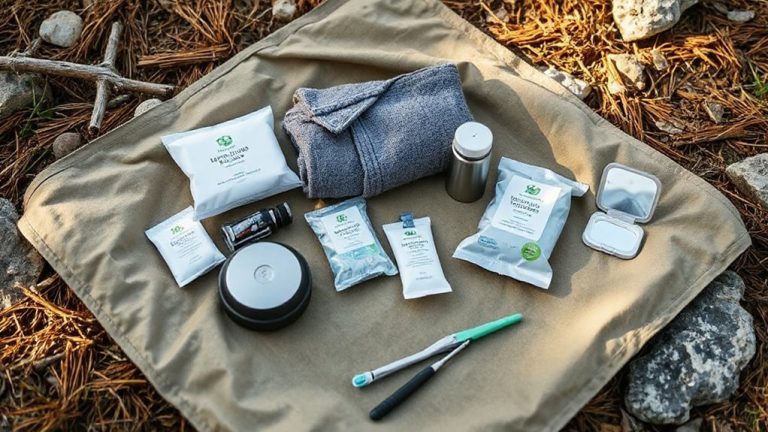
If the body can’t maintain circulation after trauma, shock becomes a silent killer in remote settings where help is hours or days away. You must act fast. Lay the person flat, elevate legs slightly unless there’s a head, spine, or leg injury. Keep them insulated from the ground and covered to retain body heat. Monitor breathing and pulse every few minutes. Shock can worsen rapidly, even if the injury seems stable. Adrenaline management is critical-stay calm so you don’t amplify panic. Your emotional resilience directly affects their response. Avoid letting fear dictate actions. Use slow, clear speech to reassure them. Check for blood loss; control bleeding without restricting circulation elsewhere. Hydration helps, but don’t give food or large fluids if nausea is present. Your steady presence and methodical care improve survival odds more than most tools in a kit. A well-stocked first aid kit can make a critical difference in managing shock and other emergencies when professional help is delayed.
Get Help When You’re Stranded
Staying put and managing shock buys time, but survival tightens its grip if no one knows where you are. Your priority is signaling for help. If you have an emergency beacon, activate it immediately-GPS-enabled models send location data to rescue teams within minutes, cutting search time by up to 90% compared to passive methods. Test beacons annually and check battery expiry dates; older models may fail mid-signal. If electronics fail, build a signal fire. Use dry tinder and green wood to create thick smoke visible up to 20 miles. Keep it ready to ignite-three fires in a triangle are universally recognized as distress. Place signal mirrors or bright fabric nearby to boost visibility. A fire requires constant fuel, so conserve resources. An emergency beacon works in poor weather, while a signal fire demands line of sight. Use both when possible. Waiting without signaling limits odds-initiate contact early. Including a comprehensive disaster preparedness kit can provide critical tools like first aid supplies, fire starters, and signaling devices essential for extended survival situations.
On a final note
You’ve got limited tools, so focus on what works. Stop bleeding fast with direct pressure and available cloth-effectiveness depends on consistency, not gear. Immobilize fractures using sticks or trekking poles; stability matters more than perfect alignment. Treat temperature extremes early-shivering and confusion signal urgent needs. Prevent shock by keeping the person insulated and lying down. Signal for help using mirrors or sound-simple methods often work best when nothing else is available.