Orienting Yourself Using Moss Growth and Wind Patterns in Northern Forests
Moss doesn’t always point north-it grows where it’s shady and damp, which can be any side of a tree. In northern forests, it’s often on the north face, but don’t rely on it alone. Instead, check tree lean: trees typically tilt away from prevailing winds. Look for wind-pruned branches and canopy gaps pointing in the same direction. Combine moss with wind and tree clues to reduce errors. You’ll get a clearer fix when multiple signs align-there’s more to the story where patterns match.
Notable Insights
- Moss often grows on shaded, moist sides of trees, which in northern forests frequently face north due to reduced sunlight.
- Moss alone is unreliable for navigation; always verify with other signs like wind patterns and tree lean.
- Prevailing winds shape tree growth, causing branches to extend away from the wind and trunks to lean downwind.
- Consistent tree lean and canopy gaps across multiple trees indicate prevailing wind direction, aiding orientation.
- Combine moss distribution, tree lean, bark texture, and canopy features for more accurate navigation in dense northern forests.
Does Moss Really Point North?
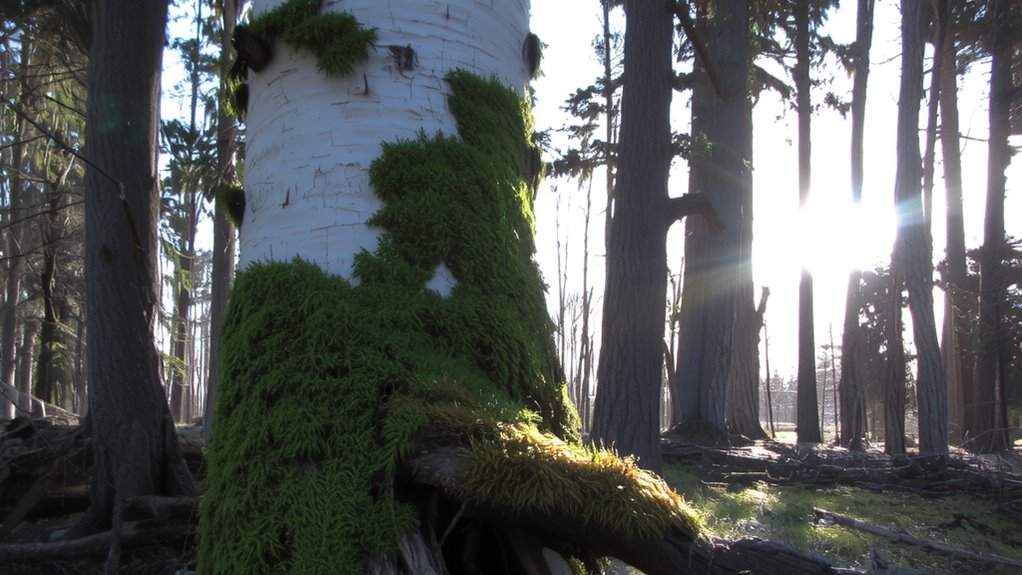
Moss doesn’t reliably point north, and counting on it to do so can get you lost. You might see moss thick on one side of a tree and assume direction, but that’s risky. Moss texture varies by species and environment-some are velvety, others coarse-and growth depends more on shade and moisture than cardinal points. In dense forests, moss grows all around trunks where humidity stays high. Seasonal changes also affect growth patterns; in wetter months, moss spreads more, often shifting coverage. During dry periods, it turns brittle and recedes, making old growth indicators obsolete. Sun exposure, wind, and tree bark texture play bigger roles than north-south alignment. If you rely solely on moss, you ignore these variables. It’s not a compass. In survival situations, misreading these cues can cost time and energy. Use multiple navigation methods instead of trusting moss alone.
How to Use Moss to Find Direction
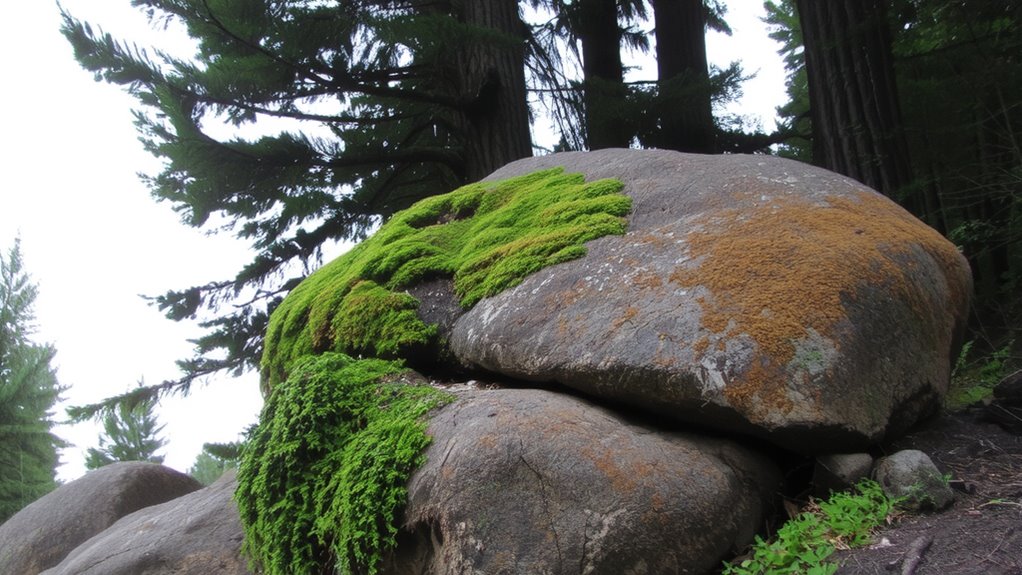
You’ve probably heard moss can help you find north, but that idea’s more myth than method. Moss grows on shaded, moist sides of trees-often north in northern forests-but it’s not reliable alone. Use it alongside other cues like bark color and tree lean. Look for consistent patterns across multiple trees. Moss texture varies: thick and lush on damp sides, thin or patchy where exposed. Bark color is often darker and less weathered where moisture lingers.
| Feature | Shaded Side | Sunny Side |
|---|---|---|
| Moss texture | Thick, soft | Sparse, dry |
| Bark color | Dark, moist | Light, cracked |
| Tree trunk | Cooler to touch | Warmer, drier |
| Growth pattern | Even, continuous | Patchy, minimal |
Check several trees. Relying solely on moss leads to errors.
Spotting Prevailing Winds in the Forest
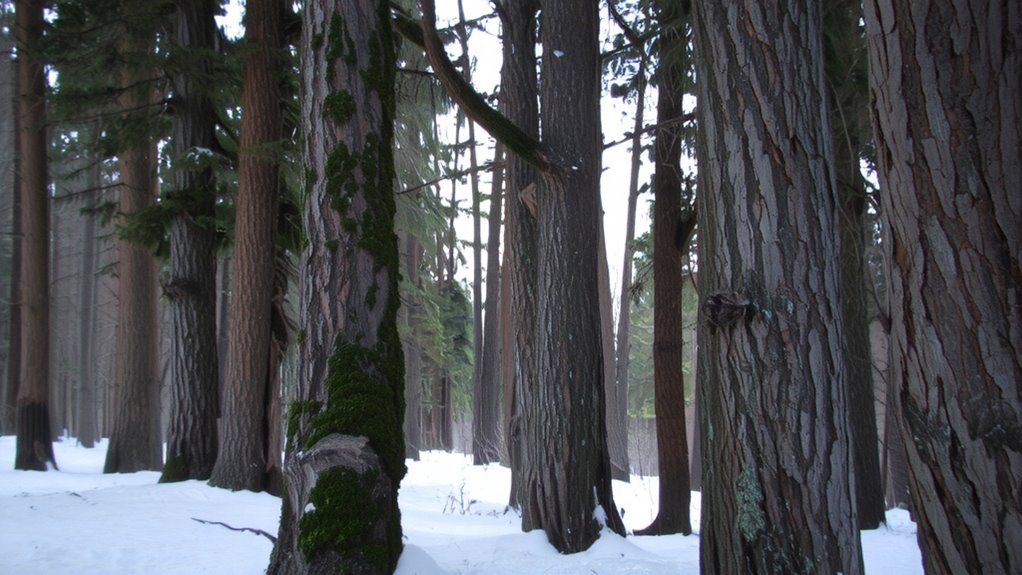
While moss might hint at direction, wind tells a more consistent story if you know how to read it. In northern forests, prevailing winds shape the environment in visible ways. You’ll notice canopy gaps often align with wind patterns-trees fall where the wind pushes hardest. These openings aren’t random; they frequently point downwind, especially after storm damage. Look for clusters of downed trees or snapped trunks; they reveal the dominant wind direction over time. Older storm damage, now regrown, still leaves clues in uneven canopy lines. Wind-pruned branches also point away from the prevailing flow, though this is subtle. Canopy gaps created recently are most telling, particularly when found repeatedly on the same side of slopes or ridges. You can use these patterns to orient yourself when moss is absent or misleading. It’s not perfect, but combined with terrain knowledge, it’s reliable.
Reading Tree Lean for Natural Navigation
Because trees often grow at an angle in response to long-term wind exposure, you can use their lean as a directional clue in northern forests. Prevailing winds push trees over time, causing them to lean away from the windward side. This affects tree symmetry, making growth denser and shorter on the side facing the wind, while the leeward side stretches upward. Look across multiple trees to spot consistent lean direction, which often aligns with the prevailing wind pattern. Root exposure on one side of the trunk supports this clue-roots may be scoured or raised on the windward side due to soil erosion. However, avoid relying on single trees; terrain and obstacles cause exceptions. Multiple samples improve accuracy. Tree lean works best in open or edge areas where wind force is unimpeded. In dense forest, the signal weakens. Use it alongside other natural indicators, but don’t treat it as fail-proof.
Combine Moss and Wind for Accuracy
If you’re relying on moss alone, you’re not getting the full picture-combining it with wind indicators sharpens your navigation accuracy in northern forests. Moss density is often highest on the shadier, more humid sides of trees, usually north-facing, but terrain and canopy gaps can skew this pattern. Wind exposure shapes both tree lean and moss distribution, so reading both gives better results. For instance, strong prevailing winds strip moisture and limit moss growth on exposed sides. Use this table to cross-reference clues:
| Direction | Moss Density | Wind Exposure |
|---|---|---|
| North | High | Low |
| South | Low | High |
| East | Moderate | Moderate |
| West | Low to Medium | Very High |
Correlating moss density with wind exposure reduces error. You won’t always see perfect patterns, but consistency across multiple trees improves reliability.
Common Mistakes in Wild Navigation
Relying too heavily on a single natural sign, like moss on trees, can put you off course-this is one of the most frequent errors in wild navigation. You might assume moss always grows on the north side, but that’s a false assumption; it thrives where moisture and shade are, which varies by tree and terrain. Wind patterns help, but using them alone ignores local shifts caused by topography or weather. Outdated myths, like “trees lean north,” aren’t reliable across regions. You need multiple indicators-moss, wind scars, sun exposure, and landforms-to reduce error. Trusting one cue leads to poor decisions. Even consistent signs fail in dense forests or disturbed areas. Real accuracy comes from cross-checking clues, not memorized rules. You won’t survive on folklore. Combine observations, test them, and adjust as conditions change. Navigation isn’t about certainty-it’s about minimizing risk with what’s verifiable.
On a final note
You can use moss and wind patterns to orient yourself, but don’t rely on either alone. Moss often grows on shaded, moist sides of trees, which in northern forests usually means north, but local conditions vary. Trees may lean away from prevailing winds, giving a second clue. Combine both signs for better accuracy. Misreading microclimates or sheltered spots leads to errors. Cross-check with other navigation methods when possible. It’s free and fast, but not foolproof.