How to Store Water in Repurposed Grain Silos With Food-Grade Coatings
You’ll need to clean and fully drain your silo, then check for rust or cracks-repair any damage with food-grade materials. Apply a certified 100% solids epoxy like EP-120, which offers 15+ years of protection and resists moisture better than shorter-lived options. Make sure the surface is sandblasted to SSPC-SP 10 standard and coated 30–40 mils thick. Test water monthly and maintain seals to keep contaminants out. This method works long-term when done right-there’s more to get right if you’re relying on it.
Notable Insights
- Drain and clean the silo completely, then assess structural integrity for rust, cracks, and deformation before conversion.
- Repair damage using food-grade welds or potable water-approved patches to ensure leak-free storage.
- Prepare the surface to SSPC-SP 10 near-white metal standard with a 2.5 to 4 mil anchor profile.
- Apply a 100% solids food-grade epoxy like EP-120 or HydraGuard FG in 30–40 mil passes using a plural-component spray system.
- Test water monthly and inspect coatings, seals, and vents every three months to maintain safety and integrity.
How to Safely Convert a Grain Silo to Water Storage
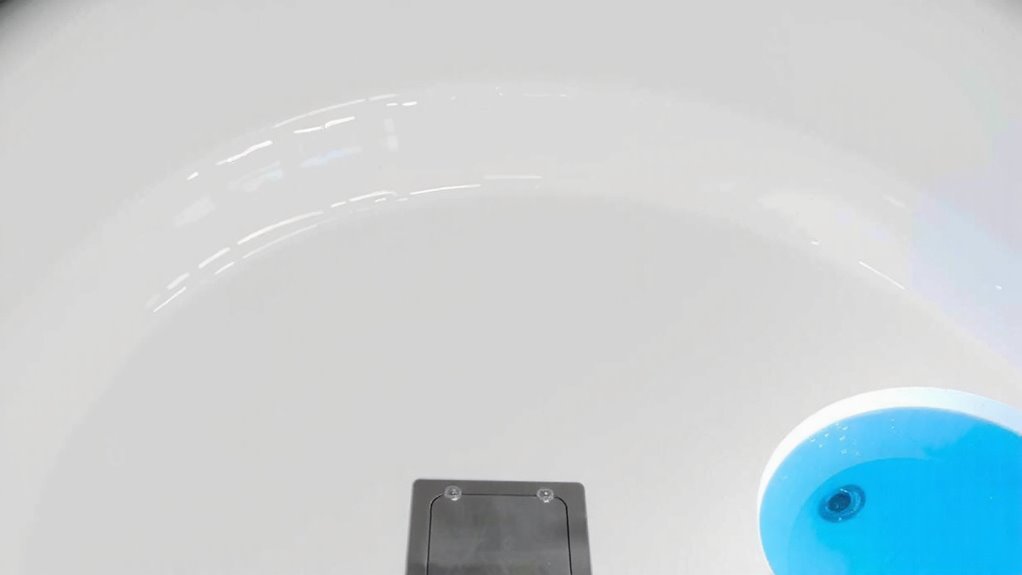
While grain silos weren’t built for water storage, you can convert one safely if you follow strict structural and hygiene protocols. First, assess the structural integrity-check for rust, weld cracks, and wall deformation. Water exerts lateral pressure, so any weakness risks failure. You’ll need reinforced steel or retrofitting if corrosion exceeds 10% of original thickness. Next, verify foundation stability-shifts or settling can compromise seals and supports. Use a laser level to detect unevenness; if movement exceeds 1 inch over 10 feet, stabilize with concrete piers. Drain and clean the silo thoroughly, removing all organic residue. Test welds and seams under low pressure before full use. You’re adapting industrial equipment, not installing a purpose-built tank-so margins matter. Cut corners, and you risk contamination or collapse.
Pick the Best Food-Grade Coating for Your Silo
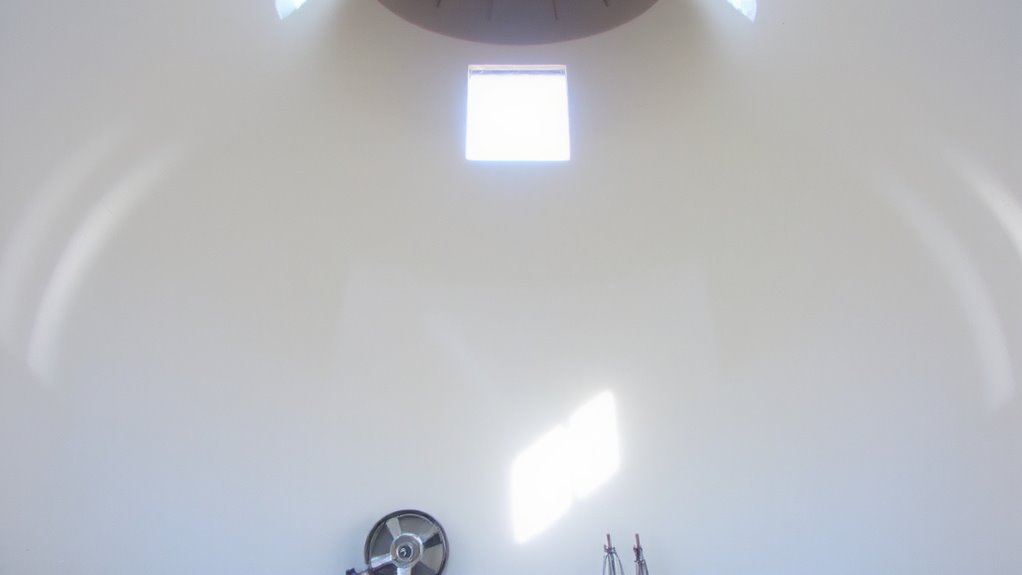
A food-grade epoxy coating is your best bet for lining a converted grain silo, and you’ll want one with NSF/ANSI 61 certification for potable water contact. This guarantees safety and compliance for drinking water storage. When choosing, prioritize coating durability and moisture resistance-both are critical in preventing leaks, delamination, and microbial growth over time. Below is a comparison of top-performing epoxies:
| Product | Coating Durability (years) | Moisture Resistance |
|---|---|---|
| EP-120 | 15+ | Excellent |
| AquaShield 50 | 10 | Very Good |
| HydraGuard FG | 12 | Excellent |
| SafeTank 61 | 8 | Good |
EP-120 offers the longest service life and highest resistance, making it ideal for harsh environments. HydraGuard FG balances performance and cost. Avoid products with less than 10-year durability or poor moisture ratings-they won’t hold up under constant hydrostatic pressure.
Prepare Your Silo for Coating: Clean and Repair
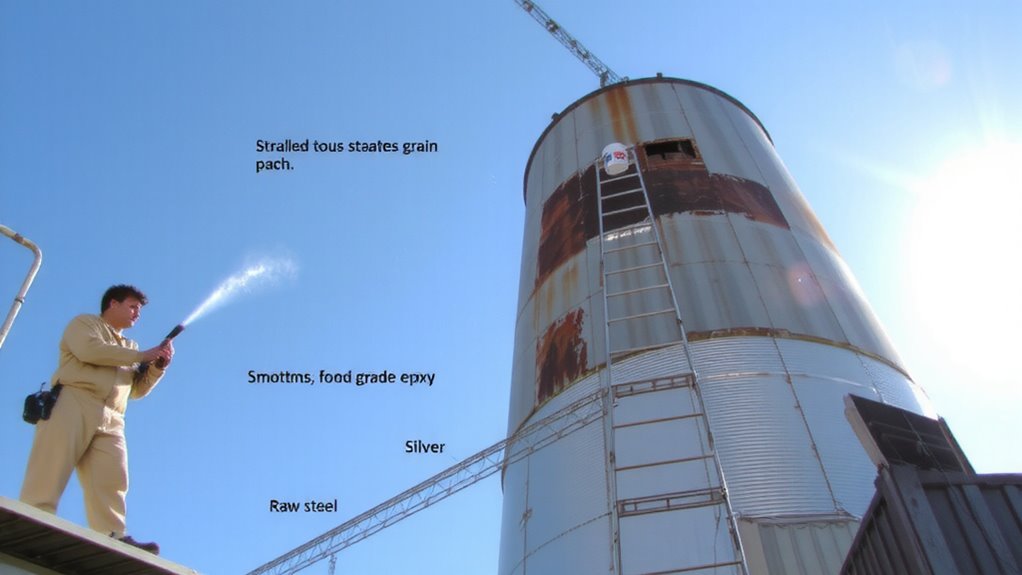
You’ve picked your coating-now it’s time to get the silo ready. Start by removing all dust, rust, and old debris with a pressure washer or abrasive blasting. Any contaminants will weaken adhesion, so thorough cleaning is non-negotiable. Once clean, conduct a structural assessment to check for cracks, corrosion, or weak seams that could compromise integrity under water pressure. Repair metal damage with food-grade welds or patches approved for potable water contact. Then perform a surface evaluation: the steel must be near-white metal (SSPC-SP 10) for proper coating bond. Use a profilometer to verify surface profile-typically 2.5 to 4 mils is required. Address pitting or uneven areas by grinding them smooth. Moisture testing is also critical; the surface must be completely dry before proceeding. Skipping these steps risks coating failure and contamination. Preparation isn’t optional-it’s what separates temporary fixes from lasting, safe water storage.
Apply Epoxy or Polyurea Coating Step by Step
Since the silo’s surface is clean, dry, and properly profiled, start by selecting a 100% solids epoxy or polyurea coating rated for potable water-these materials resist water degradation and meet NSF/ANSI 61 certification, which is non-negotiable for safe storage. Apply the coating with a plural-component spray rig to guarantee consistency and avoid lap marks. Maintain a uniform application thickness-typically 30 to 40 mils per pass-to guarantee full coverage and long-term integrity. Too thin, and the coating won’t bridge micro-cracks; too thick, and it risks cracking during cure. The ideal surface texture after blasting (SSPC-SP 10/NACE No. 2) provides anchor profile of 2.5 to 4 mils, which helps adhesion. Work top to bottom, overlapping passes slightly, and monitor ambient temperature and humidity to prevent pinholes or blisters. Recoat within the manufacturer’s specified window to guarantee inter-coat adhesion. Never dilute the product-doing so compromises performance.
Keep Water Safe in Your Coated Silo
Once the coating’s cured and passed inspection, your focus shifts to keeping the water inside clean and safe over time. Regular water testing is essential-you should test monthly for bacteria, pH, and contaminants to guarantee it remains potable. Use EPA-compliant test kits or send samples to a certified lab; skipping this risks health and compliance. For leak prevention, inspect seals, welds, and the coating surface every three months for cracks or wear. Even small breaches can compromise structural integrity and water quality. Install a secure lid to block debris and pests, and keep the area around the silo graded to divert runoff. Don’t overlook vent filters-they reduce airborne contamination without restricting airflow. Temperature fluctuations can stress coatings over time, so monitoring helps catch issues early. Your system’s reliability depends on consistency: a strict routine of water testing and leak prevention means you’re not just storing water-you’re safeguarding it.
Fix Common Coating and Storage Problems
What happens when a once-reliable coating starts blistering or peeling after two years? You’ve likely got moisture intrusion beneath the surface, a common cause of coating delamination in repurposed grain silos. When water seeps into micro-cracks or poorly prepared substrate, it compromises adhesion. You’ll see bubbles first, then flaking. Fix it by fully removing the damaged coating, drying the steel, and reapplying a food-grade epoxy rated for potable water. Make sure surface prep hits SSPC-SP10 standards-near-white metal blast-before recoating. Regular inspections every six months catch problems early. If you neglect it, rust forms, and water quality drops. Ventilation and proper drainage reduce future moisture intrusion. Not all coatings handle cyclic wet-dry conditions the same; tested epoxies last 10+ years. Cheaper options fail sooner, increasing long-term costs.
On a final note
You’ve sealed your silo with a tested food-grade epoxy or polyurea coating, meeting NSF/ANSI 61 standards. This setup holds water safely for years if maintained. Inspect annually for cracks or delamination. Avoid UV-exposed polyureas without topcoats. Epoxy lasts longer in direct sunlight. Coating thickness matters-aim for 20–30 mils. Thin spots lead to leaks. Proper prep and application beat expensive materials every time.