Creating a Water Reserve That Supports Year-Round Survival Education Camps
You’ll need 3 gallons per person daily for drinking, cooking, and hygiene-plan your reserve by multiplying that by your group size and days without resupply. Use food-grade polyethylene tanks rated for UV and freezing; they last over 20 years and handle 500–5,000 gallons. Pair rigid tanks with gravity-fed filters to reduce pump reliance. Test water weekly, especially after rain, and rotate every six months. Sealed, insulated storage cuts contamination risks and sets the stage for what comes next.
Notable Insights
- Calculate water needs based on 3 gallons per person per day for drinking, cooking, and hygiene.
- Use durable, food-grade polyethylene tanks resistant to UV, heat, and freezing for long-term storage.
- Elevate tanks for gravity-fed water pressure to reduce reliance on pumps during power outages.
- Test water weekly for contaminants and use ceramic or hollow fiber filters for reliable purification.
- Train campers in purification, rationing, and maintenance to ensure system resilience year-round.
Calculate Your Camp’s Water Reserve Needs
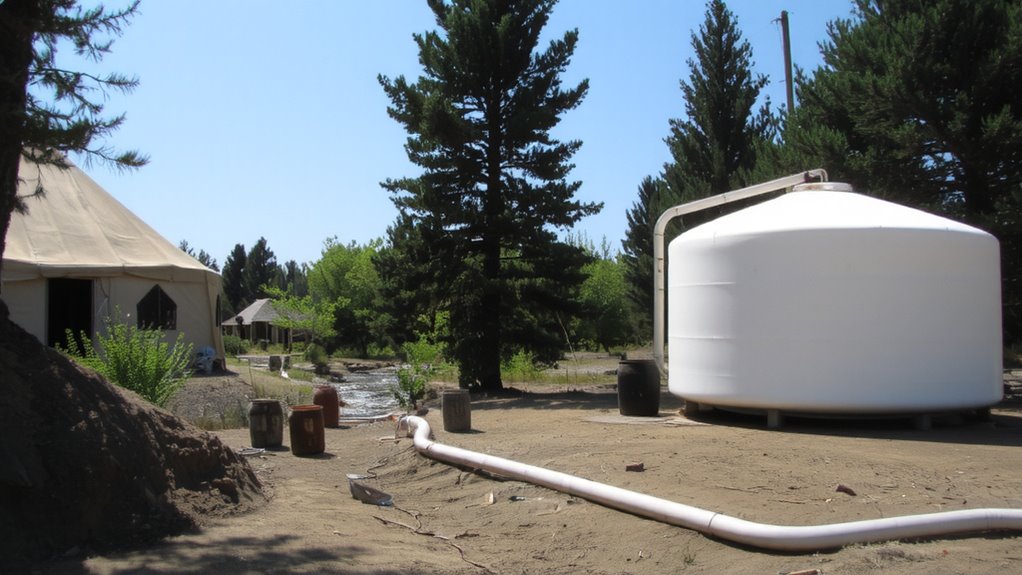
Water matters most when the tap runs dry. You need to calculate your camp’s water reserve needs with precision. Start with demand planning: count your campers and staff, then estimate daily use-3 gallons per person covers drinking, cooking, and minimal hygiene. Multiply that by the number of days you’ll operate without resupply. That total tells you the water capacity required. For a 10-person team over 5 days, you’ll need 150 gallons minimum. Not every container fits that need, and overestimating wastes space. Underestimating risks shortages. Use sealed, UV-resistant tanks with spigots or pumps for reliable access. Measure your storage space and match it to container dimensions before buying. Rotate water every six months to maintain quality. Demand planning isn’t just math-it’s survival prep. Water capacity without a plan is just weight. Plan right, store right, stay ready. Consider using food-grade plastic containers to ensure safe, long-term water storage.
Choose All-Season Water Storage That Works
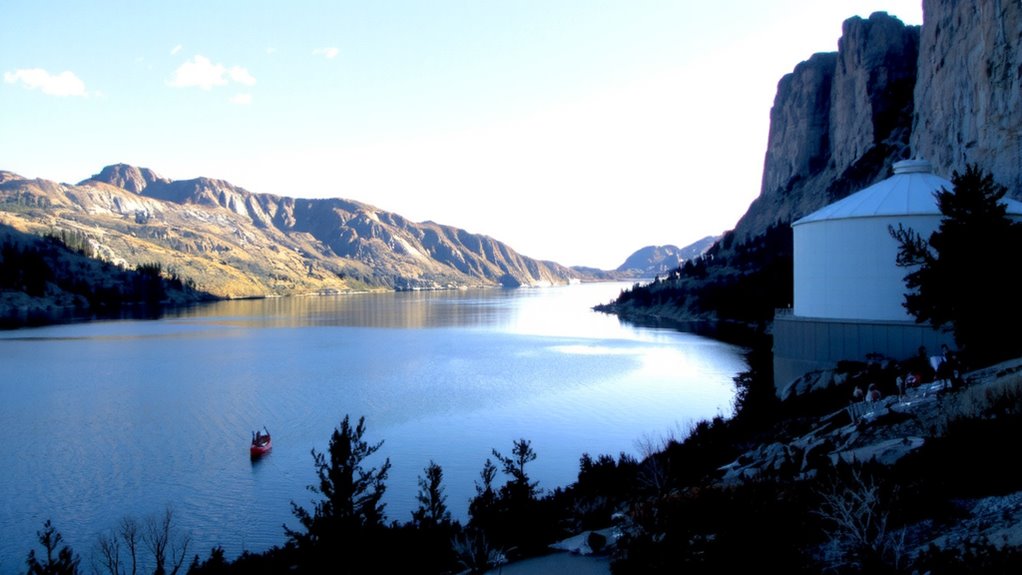
Plastic durability matters when your water storage faces sun, cold, and rough handling. You need containers that resist cracking in winter and UV damage in summer. Insulated tanks help maintain water temperature and prevent freezing during extended cold snaps. Pair them with freeze resistant valves to guarantee reliable access without constant monitoring. These components work together to keep your supply functional across seasons. For home use, consider best water storage tanks that combine these features for reliable, long-term performance.
Keep Water Safe Year-Round: Testing and Treatment
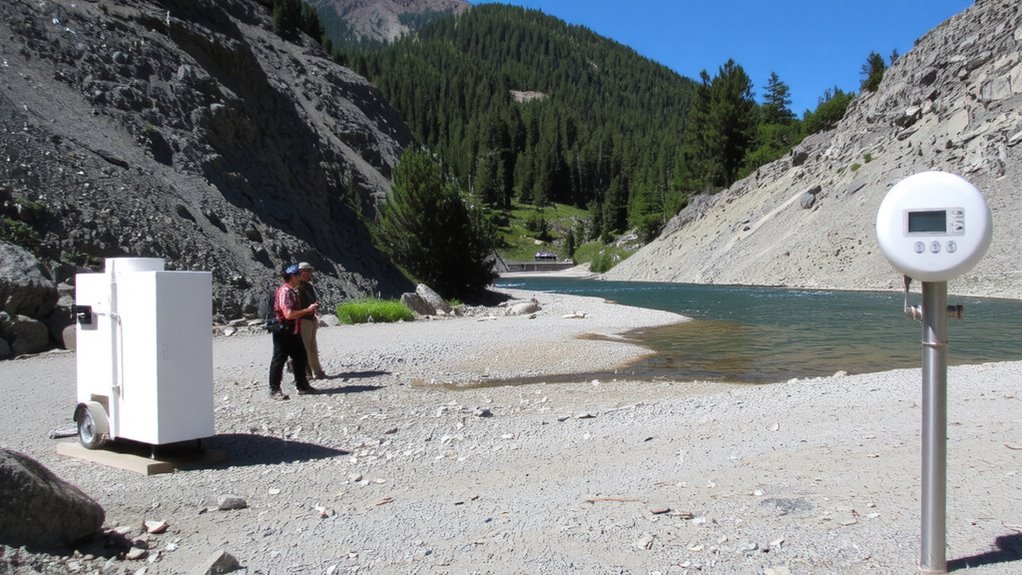
A reliable test kit is your first defense against contamination-because even clear water can carry harmful microbes or chemicals. You should test weekly, more often after heavy rain or snowmelt, when seasonal contamination risks rise. Common issues include bacteria from animal runoff in spring and algae blooms in summer. Your kit should detect pH, nitrates, coliform, and chlorine levels-basic indicators of safety. Pair testing with a proven water filtration system: ceramic or hollow fiber filters remove 99.99% of bacteria and protozoa. UV purifiers are fast but need batteries; gravity filters work passively and handle larger volumes. In freezing months, warm filters indoors before use-cold can crack components. Chemical treatments like chlorine dioxide tablets back up filtration but leave a taste. No single method covers all threats, so combine testing with layered treatment. This routine keeps your reserve safe regardless of season. For long-term preparedness, consider investing in one of the top water filters recommended for durability and performance in varying conditions.
Use Your Water System to Teach Survival Skills
While your water system keeps reserves safe, it also serves as a hands-on teaching tool for critical survival skills. You can use it to demonstrate water purification methods and practice emergency rationing under real conditions. Trainees learn how long filtration takes, how much water is needed daily, and how quickly supplies dwindle without careful planning. Below are common skills practiced with a managed water reserve:
| Skill | Practical Application |
|---|---|
| Water purification | Test filters and compare boil times |
| Emergency rationing | Limit use to 1 gallon per person daily |
| Leak detection | Identify and repair system faults |
| System maintenance | Clean tanks and check pumps monthly |
| Usage tracking | Record consumption for 7-day cycles |
These exercises build competence without guesswork. You see exactly how much water a group uses and where losses occur. The system doesn’t just store water-it teaches self-reliance through direct, measurable experience.
Why Reliable Water Storage Matters for Survival Camps
Because survival camps operate under conditions where resources are limited and external help isn’t guaranteed, having a reliable water storage system isn’t just convenient-it’s essential. You need consistent water sourcing to maintain hydration, sanitation, and cooking, especially when natural sources dry up or become contaminated. Without dependable storage, you risk service interruptions that compromise health and training integrity. Reliable tanks or bladder systems guarantee emergency access during extreme weather or infrastructure failure. Most tested durable polyethylene tanks last over 20 years and hold 500–5,000 gallons, giving you flexibility in setup and location. Elevated storage provides gravity-fed pressure, reducing reliance on pumps. You’ll also cut down on transport costs and logistical strain. While rigid tanks offer longevity, collapsible bladders save space when not in use. Either way, your system must be sealed to prevent algae and contamination. Water storage isn’t optional-it’s foundational to camp resilience and safety.
On a final note
You need clean, accessible water year-round, so size your storage to handle peak demand and seasonal shortages. Use UV-stabilized, food-grade tanks that resist freezing and algae. Test water quarterly and use filtration plus chlorine for consistent safety. A simple gravity-fed system with a hand pump works reliably and doubles as a teaching tool. Overbuild capacity by 20%-it’s cheaper than emergency fixes.