Using Vacuum Ovens to Dehydrate Heat-Sensitive Wild Plant Compounds
You preserve heat-sensitive compounds by drying at 35–45°C under 25–100 mTorr, cutting boiling points without frying terpenes. Vacuum ovens retain 70–85% terpenes and 90–95% alkaloids, outperforming air and conventional drying. They prevent oxidation, reduce degradation, and avoid case hardening. Pre-trim biomass, use single-layer trays, and control temperature tightly. Poor settings or overcrowding ruin potency fast. Get the details right, and you’ll see exactly how much better it performs.
Notable Insights
- Vacuum ovens dehydrate heat-sensitive plant compounds at low temperatures by reducing pressure to lower water’s boiling point.
- Operating between 35°C and 45°C preserves thermolabile terpenes and alkaloids during drying.
- Pressure settings of 25–100 mTorr minimize oxidation and prevent thermal degradation of active constituents.
- Vacuum drying retains up to 85% of terpenes and 95% of alkaloids compared to fresh biomass.
- Uniform, single-layer drying in a controlled environment prevents case hardening and ensures compound stability.
Why Heat Damages Potency in Vacuum Drying
While vacuum ovens reduce boiling游戏副本
How Vacuum Ovens Preserve Terpenes and Alkaloids
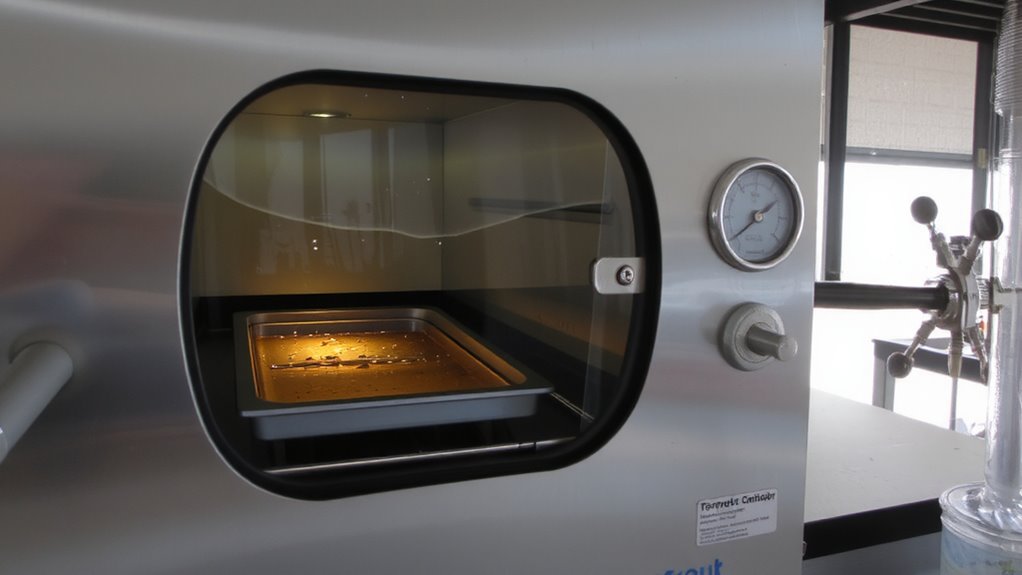
You already know heat can degrade sensitive compounds during drying, even under reduced pressure. Vacuum ovens reduce boiling points, letting water evaporate at lower temperatures, which directly supports terpene stability. Most terpenes degrade above 35–45°C, but vacuum ovens operate effectively at 30–40°C, preserving volatile aromatics and flavor profiles. Alkaloid degradation also slows under cooler, oxygen-poor conditions. With pressure typically held at 25–30 inHg, oxidation risks drop markedly. You maintain compound integrity not by eliminating heat entirely, but by minimizing exposure time and intensity. Real-world tests show 70–85% terpene retention versus 40–50% in conventional drying. Alkaloid levels remain within 90–95% of fresh biomass post-drying. The trade-off? Longer drying cycles-often 8–12 hours-but that’s a fair cost for preserving active constituents. It’s not magic; it’s physics. You get measurable, repeatable protection for sensitive plant chemistry.
Vacuum vs. Air vs. Oven: Best Drying Method Compared
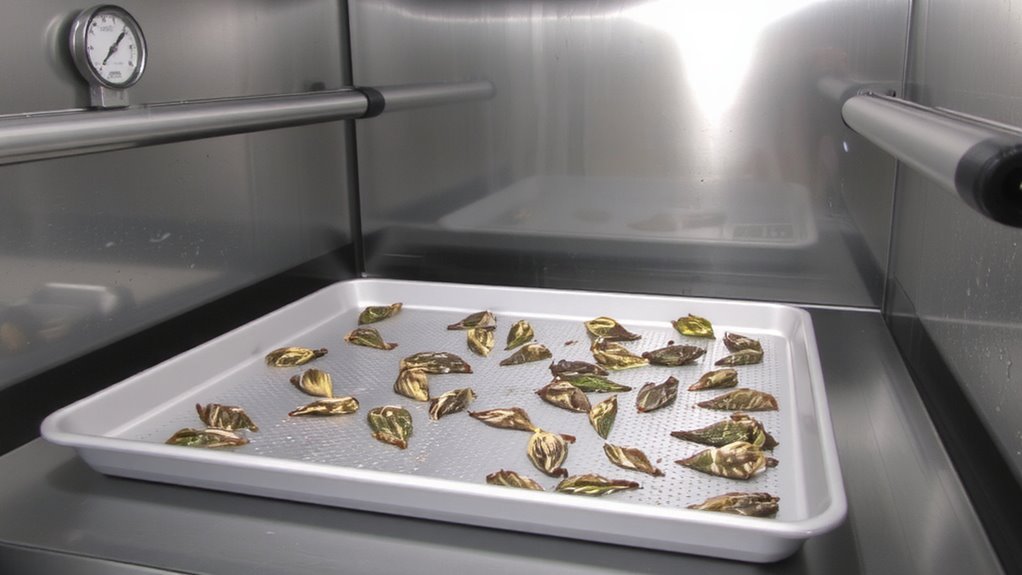
Since preserving active compounds hinges on temperature and exposure time, vacuum drying outperforms air and conventional oven methods in critical ways. You’ll find that vacuum ovens operate at lower temperatures, reducing thermal degradation while shortening drying time. Unlike air drying, which can take days and lacks drying uniformity, vacuum systems pull moisture evenly from plant tissues, ensuring consistent results batch after batch. Conventional ovens, though faster, expose material to high heat, risking compound loss. Vacuum drying also offers better energy efficiency-less heat input needed means lower operating costs over time. Air drying is cheap upfront but inconsistent; ovens are fast but harsh. Vacuum strikes the balance, maintaining potency while optimizing process control. You’re not buying just convenience-you’re investing in stability, reproducibility, and lower long-term energy use with each run.
Preparing Plant Material for Vacuum Drying
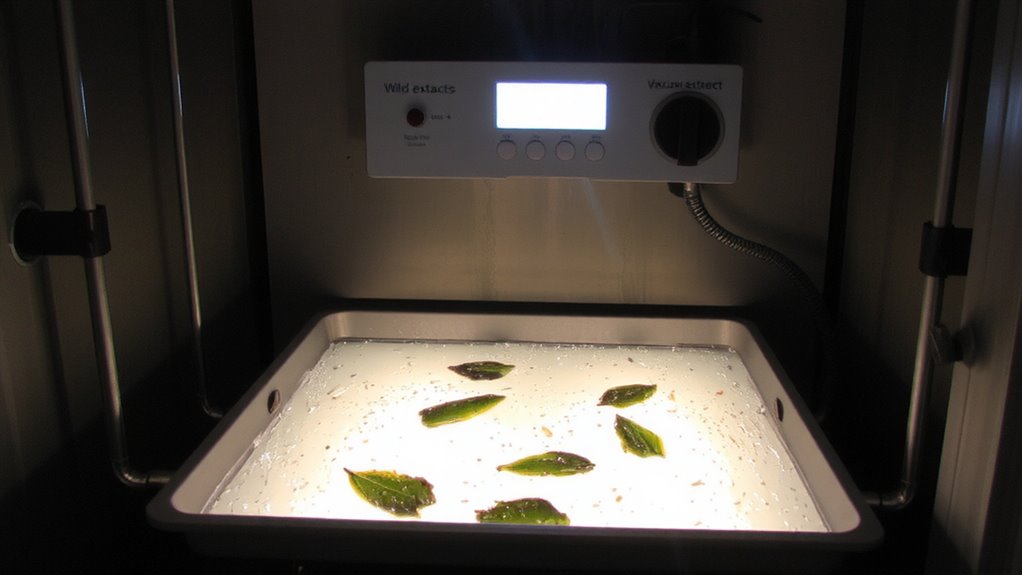
Start by harvesting plant material at peak maturity, when active compound concentrations are highest. Your plant selection directly impacts yield and potency-choose healthy, blemish-free specimens. Immediately after harvest, begin proper material handling to preserve integrity. Trim excess stems and avoid bruising leaves or flowers. Spread samples in a single layer on trays to prevent moisture traps during vacuum drying.
| Effort | Outcome |
|---|---|
| Careful harvesting | Preserves compound integrity |
| Rapid processing | Reduces enzymatic degradation |
| Clean tools | Minimizes contamination risk |
| Gentle handling | Prevents physical damage and loss |
Rushing these steps risks degradation, even under ideal vacuum conditions. Proper preparation isn’t optional-it’s the foundation of effective dehydration. You’re not just drying plant matter; you’re stabilizing volatile compounds. Skip shortcuts. Your results depend on what you do before the material enters the chamber.
Optimal Temperature and Pressure Settings
Once the plant material is properly prepped and loaded into the vacuum oven, attention shifts to setting the right conditions for drying without degrading sensitive compounds. You’ll want to keep temperatures between 35°C and 45°C-high enough to promote moisture removal but low enough to preserve thermolabile constituents. At this range, you maintain better material texture, avoiding brittleness or case hardening. Pair this with a pressure setting of 25–100 mTorr, which lowers water’s boiling point and supports gentle, even drying. This combination improves drying uniformity across trays, especially with irregular plant matter. Too much heat or too little vacuum risks uneven dehydration and structural damage. Too little heat slows the process unnecessarily. Balancing both settings guarantees efficient sublimation while protecting compound integrity. Monitor batch consistency to confirm results.
Mistakes That Ruin Potency (And How to Avoid Them)
You might think drying plant material is straightforward, but even small errors can greatly reduce potency. Running the vacuum oven too hot degrades thermolabile compounds-stick to recommended temperature ranges. Pulling vacuum too quickly causes foaming or bumping, which exposes material to air and heat spikes. Let the process stabilize gradually. Once dried, you’ll compromise your results with improper storage. Moisture and oxygen degrade active compounds over time. Always use containers with adequate sealing-glass jars with O-ring lids work better than plastic with loose fits. Store in cool, dark places to limit oxidation. Don’t leave material exposed after drying; rehydration begins fast in humid environments. Even brief delays before sealing reduce stability. Test moisture levels post-drying with a hygrometer to verify dryness. Each step affects final potency, so consistency matters more than speed. Mistakes aren’t always obvious, but they show in reduced efficacy.
On a final note
You get better potency with vacuum ovens because they dry at lower temperatures and reduce oxidation. Most terpenes and alkaloids degrade above 40°C, but vacuum drying works at 30–35°C under 25–29 inHg, preserving these compounds. Air drying risks mold; conventional ovens exceed safe temps. Avoid overloading trays or skipping material prep-both cause uneven drying. It’s not foolproof, but with correct settings, vacuum drying outperforms other methods for heat-sensitive plants.