Using a Hand Lens to Focus Sunlight on Amadou Fungus for Fire Starting
Use a 10x–15x glass lens, not plastic-it focuses better and ignites faster. Hold it steady with the sun behind you, creating a tiny, bright focal point on dry, thumb-sized amadou pieces. Ignition takes 30–60 seconds in full sun; overcast cuts success by half. Double-convex lenses perform best, especially when angled correctly. Even slight misalignment or damp tinder causes failure. Test your gear at noon to confirm performance-because knowing what works when it counts changes everything.
Notable Insights
- Use a 10x–15x glass lens for optimal light focus and ignition efficiency on amadou.
- Prepare amadou until dry and leather-like to ensure it catches a spark effectively.
- Position the lens perpendicular to sunlight, creating the smallest, brightest focal point on the amadou.
- Hold the lens steady with both hands to maintain focus and ignite smoldering in 30–60 seconds.
- In weak light or wind, shield the ember with hands or rocks to sustain ignition.
Pick a Hand Lens That Can Start a Fire
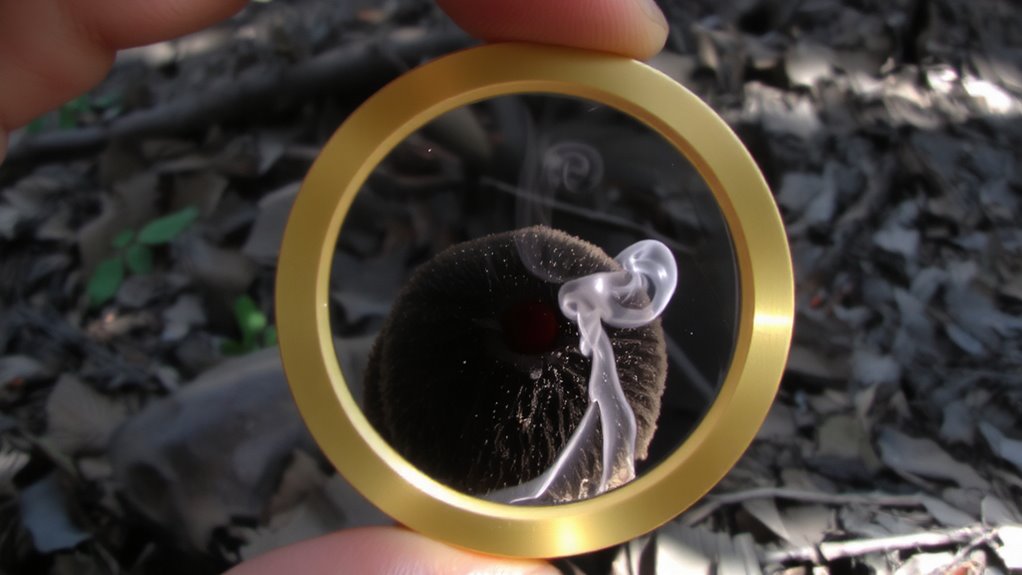
A good hand lens isn’t just about magnification-it’s about focus and heat intensity. You need one that concentrates sunlight into a tight, hot spot fast. Lens quality determines how sharply it focuses; cheaper plastic lenses often scatter light, reducing heat. Glass lenses with at least 10x magnification perform better under variable sunlight intensity. A double-convex design improves efficiency, especially when the sun isn’t directly overhead. Size matters too-lenses around 1–1.5 inches in diameter balance portability and light-gathering ability. In weak sunlight, a high-quality lens can still raise temperatures enough to ignite amadou, while lower-quality ones fail. You’re not just buying magnification-you’re buying the ability to convert sunlight intensity into ignition. Test it on dry paper in midday sun; if it smokes within 30 seconds, it’s likely sufficient. Choose function over form.
Prepare Amadou for Use With a Hand Lens
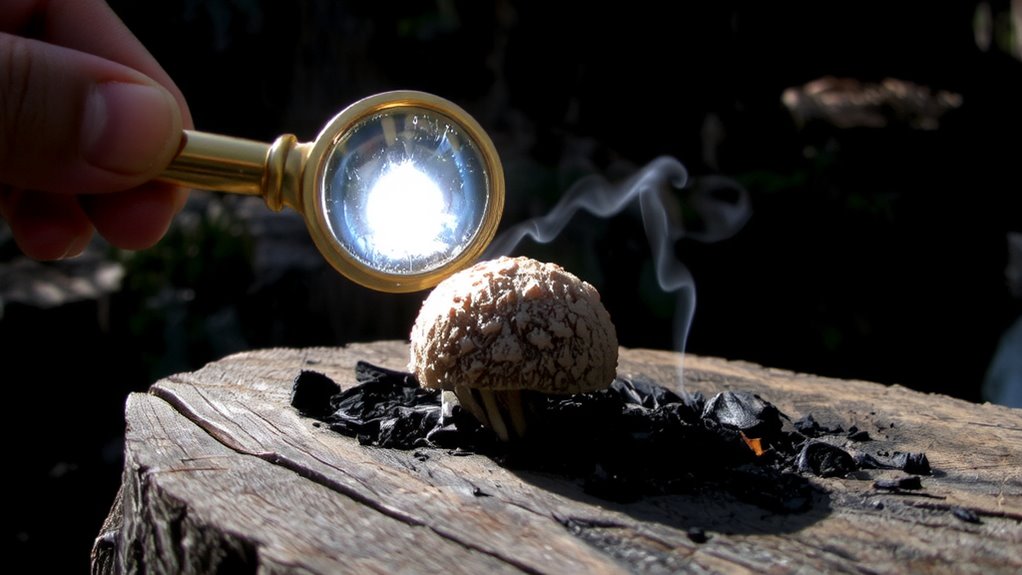
Success starts with the right amadou prep-moisture and density matter. If it’s too wet, it won’t catch; too dry, and it collapses under pressure. You need consistent amadou drying to reach a leather-like texture. Break it into thumb-sized pieces, then compress lightly to increase density without blocking ember retention. Store in a breathable container to maintain condition-plastic bags trap moisture, defeating proper amadou storage. Use it within a few weeks for best results, though fully dried amadou lasts months if kept dry.
| Form | Drying Time (hrs) | Storage Lifespan |
|---|---|---|
| Shaved thin | 4–6 | 1–2 weeks |
| Strips | 8–12 | 4–6 weeks |
| Compressed puck | 12–24 | 3–6 months |
Focus Sunlight to Ignite Amadou
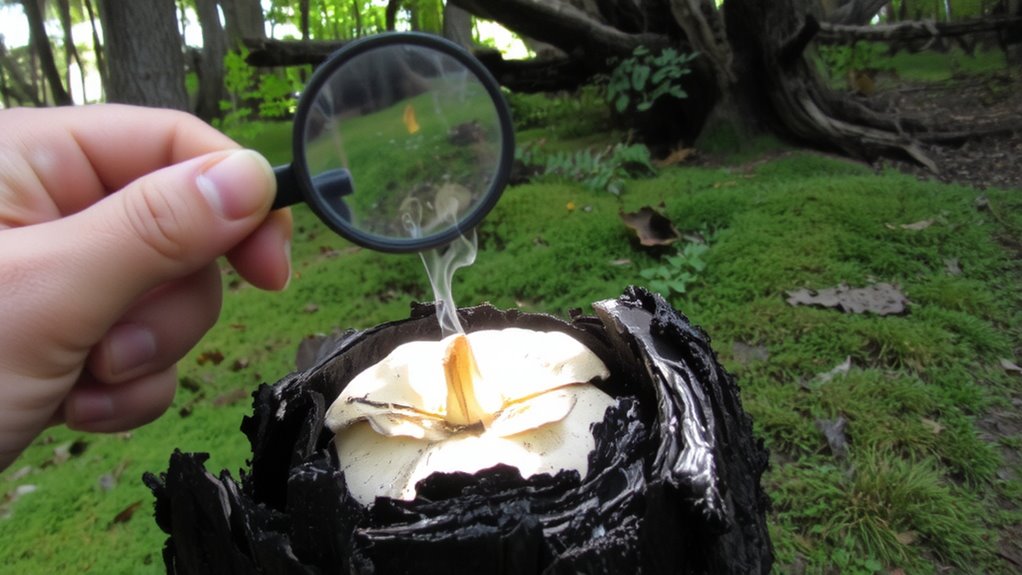
Sunlight is your ignition source, and its intensity determines whether amadou catches or fails. You need direct, bright sun-anything less than clear skies reduces success. Position yourself so the sun is behind you, then hold the lens steady between it and the amadou. Adjust the distance until you form the smallest, brightest focal point possible-that’s lens calibration. A well-calibrated lens focuses sunlight intensity into a concentrated dot that heats the amadou rapidly. Poor alignment or shaky hands spread the light, lowering temperature and delaying ignition. Use both hands for stability. The amadou should begin smoldering within 30 to 60 seconds under ideal sunlight intensity. Don’t move the lens once ignition starts. Hold it steady until smoke thickens and a coal forms. A 2–3 inch diameter lens with short focal length performs best for quick catch. Efficiency depends on alignment, lens quality, and available sunlight.
Fix Common Lens Fire-Making Failures
Why isn’t your lens catching, even in full sun? Poor lens positioning is usually the culprit. You need the focal point dead center on the amadou, with the lens held steady and perpendicular to the sunlight. Even a slight angle scatters the beam, reducing heat. Sunlight intensity matters too-overcast skies or mid- to late-day sun lack the necessary output, no matter how perfect your setup. A 2–3 inch lens diameter works best; smaller units struggle regardless of positioning. Plastic lenses often underperform due to optical imperfections. Glass lenses with 10x–15x magnification focus light more effectively. Test your gear at noon in direct sun to benchmark performance. If ignition fails despite good conditions, adjust distance until the smallest, brightest point forms. That’s your sweet spot-hold it there. For reliable ignition, consider preparing your own DIY fire starters using natural materials like amadou and waterproof containers.
Use Lens and Amadou in Tough Conditions
Even with a high-quality glass lens and properly prepared amadou, starting a fire gets harder when conditions aren’t ideal-something you’ve likely faced if you’ve tried ignition on a hazy morning or under shifting cloud cover. Amadou’s weather resistance helps, but weak light reduces beam intensity, slowing ignition. You’ll need steady hands and precise focus to maintain the hot spot. Overcast skies cut UV transmission, so aim during brief sunbreaks. Wind shielding is essential-you can’t sustain a glow if drafts cool the ember. Cup your hands or use natural barriers to block gusts. A small rock or fire steel can create a micro-windbreak. Damp amadou may smolder but not catch; keep it in a sealed container until use. Performance drops when humidity exceeds 80%, so act quickly. Real-world tests show success rates fall from 95% in full sun to 40% under light overcast-even with a 10x triplet lens. Prepare accordingly.
Why Amadou Works Better Than Other Tinder?
Resilience matters when your fire depends on one successful ignition. Amadou’s chemical composition makes it ideal-you get slow, sustained ember formation even under weak sunlight. Its ignition threshold is lower than most natural tinders, meaning less focused heat is needed. Once lit, it holds a coal reliably, giving you time to shift to larger fuels.
| Tinder Type | Ignition Threshold (°C) |
|---|---|
| Amadou | ~200 |
| Dry Grass | ~250 |
| Birch Bark | ~350 |
| Cedar Shavings | ~300 |
| Paper | ~233 |
You don’t get second chances in survival, and amadou’s consistency outperforms alternatives. Its fibrous structure traps heat, while the chemical composition resists immediate combustion, favoring glowing embers over flames. That delay is critical when working with a hand lens-the slow burn lets you control the process. Other tinders flare fast and die, but amadou gives you time to react. It’s not magic; it’s measurable performance under real conditions.
Harvest and Use Amadou Responsibly
You’ve seen how amadou outperforms other tinders with a lower ignition threshold and sustained ember retention, but getting it right starts before the fire-with responsible harvest. You should practice sustainable harvesting by taking only what you need and leaving young or damaged fruiting bodies to mature. Amadou comes from the *Fomes fomentarius* fungus, which grows slowly on living or dead birch trees, so overharvesting harms future availability. Cut sparingly, using a knife to remove only the outer layers, guaranteeing the host tree remains unharmed. Ethical foraging means respecting ecosystems-avoid protected areas and never strip a tree completely. Harvesting in moderation guarantees regrowth and maintains ecological balance. Using amadou responsibly extends beyond collection: dry it thoroughly, store it in breathable containers, and avoid wasteful testing. Your survival depends on reliability, and long-term access depends on restraint. Responsible practices today keep amadou viable for future use.
On a final note
You can start a fire with a hand lens and amadou even on cool, sunny days. A 1.5-inch diameter lens with 10x magnification works reliably in diffuse light. Amadou ignites at around 200°C, making it faster than cotton or dry grass. Properly dried amadou catches an ember in 30–60 seconds under midday sun. It holds the ember well, giving you time to transfer to a tinder bundle. Other tinders need drier conditions or hotter sparks. With practice, this method is repeatable and dependable.