Building a Water Storage System With Dual-Filter Redundancy at Outlets
Use a tank with a bottom-mounted filtered outlet to access nearly all stored water and avoid sludge. Pair a 5-micron sediment filter with an activated carbon filter to remove particles and improve taste. Install dual, identical filter sets at each tap for redundancy. This setup maintains flow if one clogs and cuts contamination risk. You’ll see less than 3 psi drop at 2 gpm. Replace both filters every six months. A labeled system keeps performance consistent over time-next steps follow logically.
Notable Insights
- Select storage tanks with low-positioned filtered outlets to maximize water drawdown and prevent sludge buildup.
- Use FDA-approved polyethylene tanks for durability, algae resistance, and long-term water safety.
- Install a dual-filter system with 5-micron sediment and activated carbon filters to remove particles and contaminants.
- Place redundant filter sets at each tap to maintain protection during clogs or filter failures.
- Perform biannual maintenance by replacing both filters simultaneously and inspecting seals and connections.
Choose a Tank Built for Filtered Outlets
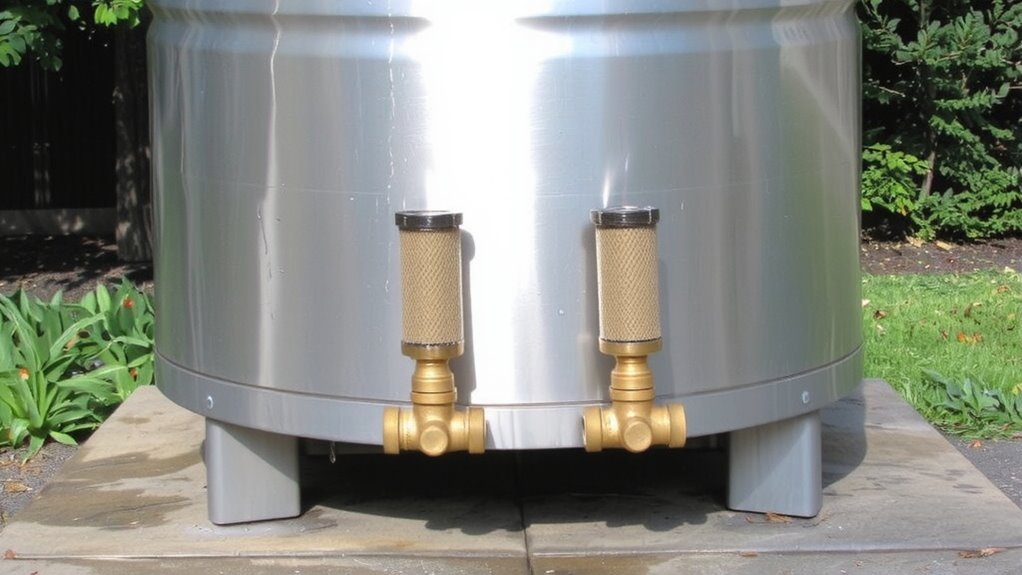
When picking a tank, the outlet design matters just as much as capacity-go with one built specifically for filtered outlets. You’ll need low outlet placement to guarantee maximum water drawdown without trapping sludge. Standard tanks often position outlets too high, leaving gallons inaccessible, but filtered-outlet models route water through integrated ports that sit near the base, reducing waste. The right tank material, like FDA-approved polyethylene, resists algae and corrosion, which keeps your filtered water safe over time. Stainless steel works too, though it’s heavier and costlier. Outlet placement also affects filter efficiency-placing the valve below the sediment line means you’re pushing water upward slightly, but that’s a small trade-off for avoiding settled debris. Retrofitting standard tanks often leaks or fails under pressure, so don’t risk it. Purpose-built designs last longer, perform better under load, and integrate cleanly with filter housings. Choose the right foundation first, and the rest follows. For portable setups, consider pairing your system with one of the best water containers for camping to maintain filtration integrity on the move, such as models designed with dual-filter redundancy.
Pick the Right Dual-Filter Combo: Sediment + Carbon
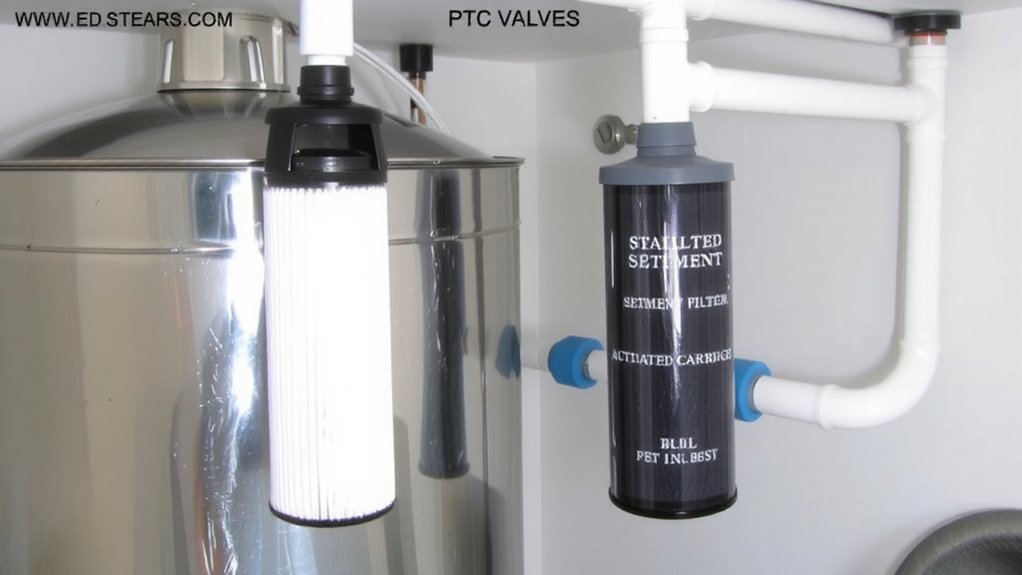
Now that you’ve got a tank designed for filtered outlets, the next step is setting up the filters themselves-start with a sediment-carbon combo. This filter pairing tackles both particles and contaminants, boosting water purity effectively. A 5-micron sediment filter captures rust, dirt, and sand before they reach the carbon stage. The activated carbon filter then reduces chlorine, bad tastes, and organic chemicals. Used together, they offer balanced protection without overcomplicating the system.
| Filter Type | Removes |
|---|---|
| Sediment (5μm) | Dirt, rust, sand |
| Carbon (activated) | Chlorine, odors, VOCs |
This combo is proven in real-world use, requiring minimal maintenance and delivering consistent results. It’s not perfect-won’t remove heavy metals or microbes-but it’s practical for general water purity needs. Choose quality housings and replace cartridges every 6–12 months. For optimal performance, select from the best water filter cartridges based on independent testing and filtration efficiency.
Install Redundant Filters at Every Water Tap
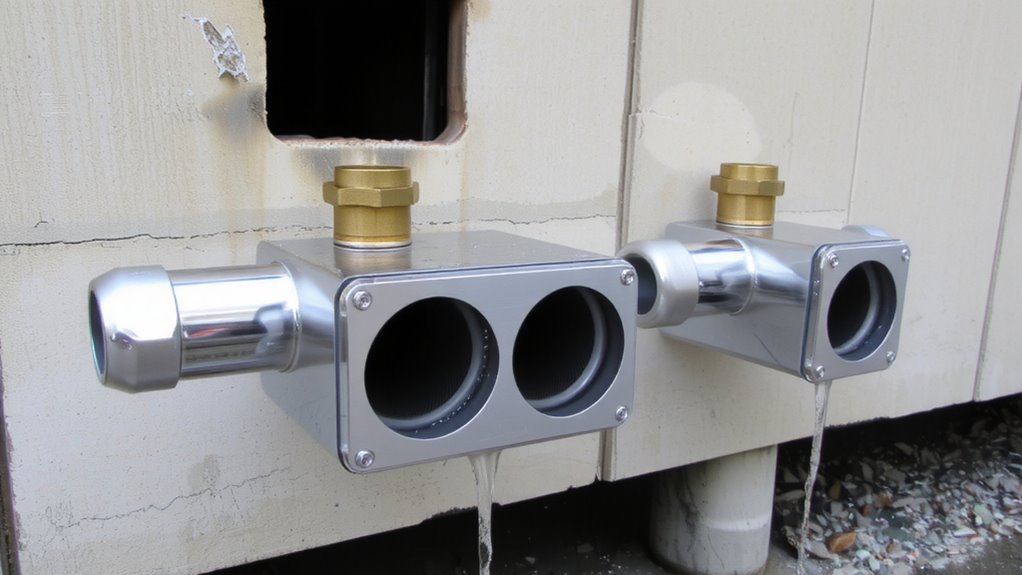
Though one filter stage helps, you’ll want backup at each tap to maintain consistent water quality. Redundant filters guarantee continued protection if one fails or clogs. Proper filter placement matters-install both stages close to the tap to minimize untreated water exposure in downstream lines. Match the filter housing size to your tap design so the setup fits without straining connections or obstructing access. Space is often tight, so compact housings with standard 10-inch cartridges work reliably. Use quick-connect fittings to simplify future changes. A dual-canister mount keeps units aligned and secure. Thread seals should be rated for potable water and checked periodically. This setup adds minimal pressure drop-testing shows less than 3 psi loss at 2 gpm. It’s not flashy, but it’s effective. Redundancy at the point of use means you’re covered when it counts.
Why Two Filters Beat One for Safety
Because one filter can fail without warning, relying on a single stage puts your water safety at risk. Dual filters catch problems the first might miss, especially during sudden filter failure or sediment overload. You’re not just adding backup-you’re reducing the chance of cross contamination from compromised media or bacteria breakthrough.
| Risk | Single Filter | Dual Filter |
|---|---|---|
| Filter failure exposure | High | Low |
| Cross contamination chance | Moderate | Minimal |
| Flow interruption | Likely if clogged | Unlikely |
| Maintenance margin | Narrow | Flexible |
You get consistent protection even if one unit degrades. Both filters don’t need replacing at the same time, but they work together every time you turn on the tap. Two stages don’t guarantee perfection, but they substantially lower system vulnerability under real-world conditions. Choosing the right top water filter models ensures compatibility and effectiveness in dual-filter setups.
Maintain Your System Every 6 Months
You should inspect and service your dual-filter water storage system every six months to guarantee reliable performance. A routine system inspection helps detect wear, leaks, or housing cracks before they cause failure. Check all seals, connections, and filter housings for integrity-small flaws can lead to contamination or pressure loss. Over time, filter media degrade and lose effectiveness, so scheduled filter replacement is critical, even if water appears clean. Use manufacturer specs to confirm the right filter type and micron rating for your setup. Skipping replacement risks microbial contamination or reduced flow. Both filters should be replaced simultaneously to maintain redundancy. Label filters with installation dates to track service intervals. This maintenance schedule assures consistent water quality and extends the life of your system. No exceptions-reliability depends on consistency.
Fix Low Pressure or Clogs in Dual Filters
A well-maintained dual-filter system should deliver steady pressure and consistent flow, but if you’re noticing a drop, the issue likely stems from clogs or filter saturation. Start by isolating each filter to check for flow imbalance-uneven output signals one side is blocked. Remove and inspect both filter cartridges; look for debris buildup or filter corrosion, especially if metal components are exposed to hard water. Clean or replace clogged elements immediately. Plastic housings resist corrosion but can still harbor biofilm if neglected. Verify o-rings are intact and seated properly-leaks here reduce pressure. Test flow rates post-maintenance. If imbalance persists, verify filter specs match; mismatched micron ratings disrupt flow. A temporary fix isn’t enough-consistent performance depends on equalized, clean filters. Address root causes like sediment load or water chemistry to prevent repeat issues. Routine checks prevent downtime.
On a final note
You get safer water with dual-filter redundancy at each tap. A sediment filter catches particles, while the carbon filter reduces contaminants and odor. Together, they outperform single filters, especially in variable water conditions. You’ll need to replace both every 6 months for consistent flow and protection. Yes, it’s slightly more upkeep, but the trade-off is reliable, filtered water at every outlet-no guesswork, just results.