Purifying Water Using a Portable Reverse Osmosis Pump at Sea
You use a portable reverse osmosis pump at sea because it reliably produces 1–2 gallons per hour of drinkable water from seawater, removing 98% of salt with a high-pressure membrane. It needs regular pre-filter cleaning and 55–60 psi pressure to work right. Marine-grade materials resist corrosion, and 12V models draw 3–5 amps. Manual backups help when power fails. System longevity depends on flushing after use and seal maintenance-knowing these details keeps you prepared.
Notable Insights
- Portable reverse osmosis pumps purify seawater by forcing it through a semi-permeable membrane at high pressure to remove salt and contaminants.
- Pre-filtration with a 5–20 micron filter removes sediment and plankton to protect the membrane and extend its lifespan.
- A high-pressure pump generating at least 55 psi is required to overcome osmotic pressure and achieve up to 98% salt rejection.
- Regular maintenance, including filter cleaning and seal inspection, ensures consistent performance and prevents pressure loss or low flow.
- After use, flush the system with fresh water to prevent salt buildup and maintain long-term reliability in marine environments.
How a Portable Reverse Osmosis Pump Works at Sea
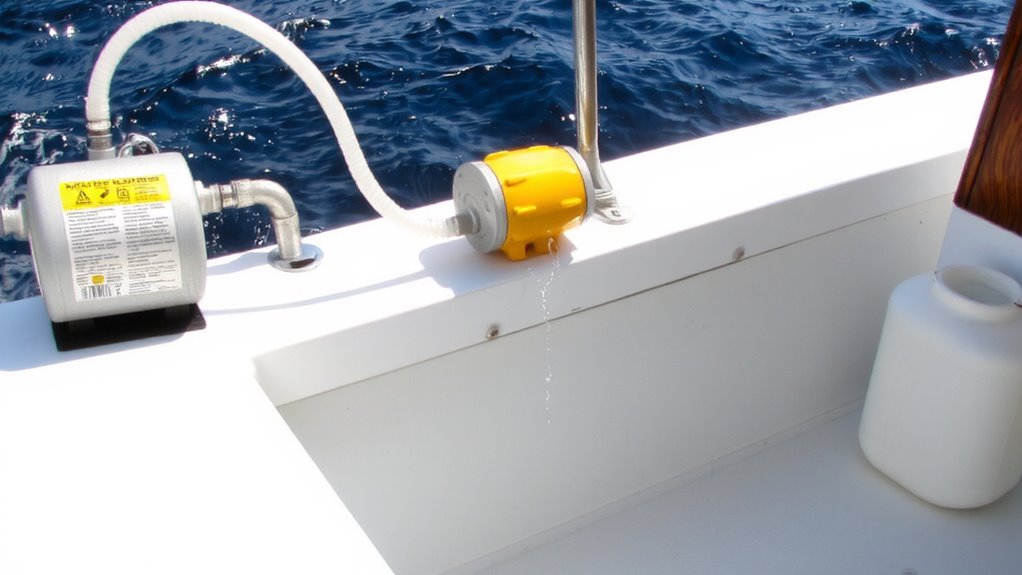
While you’re out on the open water, turning seawater into drinkable water relies on a simple but critical process-reverse osmosis. You push saltwater through a semi-permeable membrane using a portable pump, which applies pressure to overcome natural osmotic pressure. The membrane filters out salt and contaminants, delivering fresh water. You can expect around 98% salt rejection, meaning nearly all sodium and minerals are removed. Filtration efficiency stays high under proper conditions, but performance drops if the membrane clogs or pressure falls below 55 psi. Prefilters help prolong membrane life by catching sediment. These systems typically produce 5 to 10 gallons per hour, depending on pump strength and water temperature. They’re not fast, but they’re reliable when weight, power, and space are limited. You’ll trade output speed for portability and consistent purity. Real-world use confirms they work-if maintained.
Choosing the Right Reverse Osmosis Pump for Your Boat
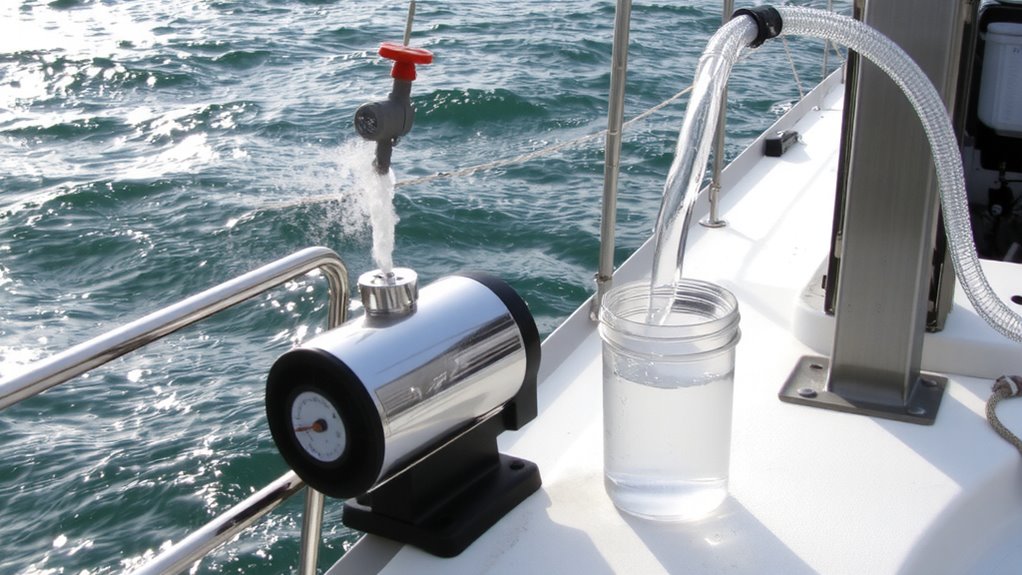
How do you pick a reverse osmosis pump that actually works when you’re hundreds of miles offshore? Start by checking pump durability-your system faces constant saltwater exposure and vibration, so look for corrosion-resistant materials like reinforced polymers or marine-grade aluminum. A reliable pump should handle at least 800–1,000 hours of continuous operation under real sailing conditions. Water salinity varies by region, and higher salinity demands greater pressure, typically 800 psi or more. Choose a pump rated for your sailing zone-tropical oceans have higher salinity than coastal or temperate waters. Match the flow rate to your crew size; 10–20 gallons per hour is practical for most boats. Manual backups are smart, as electric pumps can fail. Don’t overlook serviceability-units with user-replaceable seals and filters save time and cost. Prioritize tested performance over listed specs.
Step-By-Step: Turning Seawater Into Drinking Water
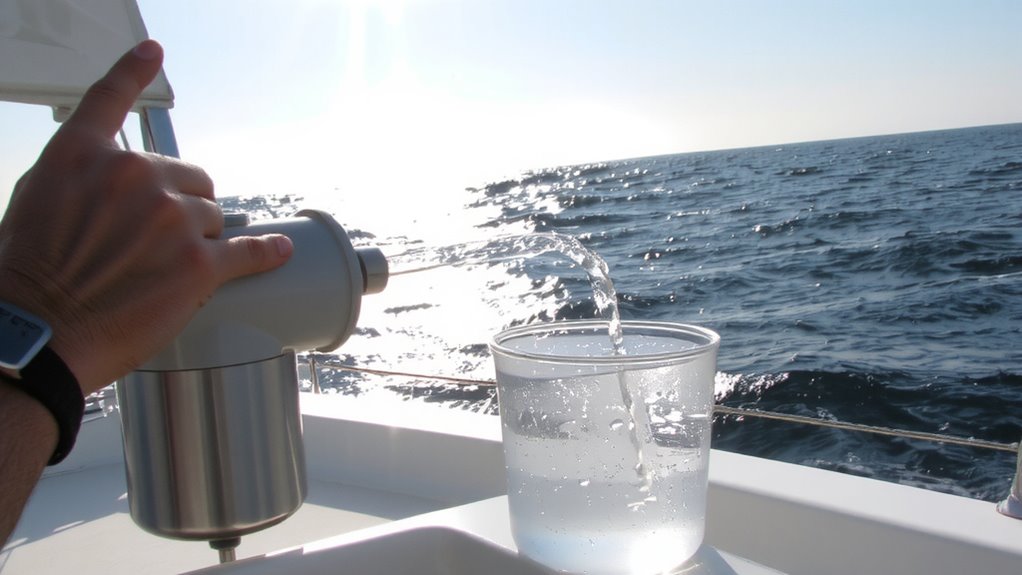
If you’re running a reverse osmosis (RO) system offshore, turning seawater into drinkable water boils down to a clear sequence that starts with pre-filtration. You’ll first remove sand, debris, and plankton using a 5–20 micron filter-this protects the membrane and improves water quality. Next, your high-pressure pump forces seawater through the RO membrane, rejecting salts and contaminants. The result is fresh water stored in a clean tank, while brine gets discharged. For best water quality, flush the system with fresh water post-use. Energy efficiency depends on your pump’s design; piston pumps typically offer better output per watt than diaphragm types. A 12V system drawing 3–5 amps can produce 1–2 gallons per hour. Output rates vary with temperature and seawater conditions. Proper setup guarantees reliable performance without wasting power.
Maintaining Your Pump for Peak Performance
Your RO system’s pump powers every gallon of fresh water you produce, so keeping it in top shape directly affects output and efficiency. Regular filter cleaning prevents clogs that reduce flow and strain the motor. Perform pressure checks weekly to catch early signs of performance drop. A well-maintained pump delivers consistent pressure, typically 55–60 psi for efficient desalination.
| Task | Frequency | Purpose |
|---|---|---|
| Filter cleaning | Every 5–7 uses | Prevents debris buildup |
| Pressure checks | Weekly | Guarantees peak pump output |
| Seal inspection | Monthly | Avoids leaks and pressure loss |
Skipping maintenance leads to slower production and premature wear. You’ll notice reduced output or fluctuating pressure if issues arise. Clean filters and accurate readings keep the system reliable. This isn’t about perfection-it’s about consistency. Stick to the schedule, and the pump will handle extended use without failure.
Common Issues and How to Fix Them Onboard
What happens when your portable reverse osmosis unit suddenly slows to a trickle mid-voyage? You’re likely dealing with membrane clogging or pressure loss. Salt and debris build up over time, especially if pre-filtration is skipped, reducing flow and efficiency. Check the intake filter first-clean or replace it if fouled. If output remains low, flush the system with fresh water; this often clears minor clogs. Persistent issues suggest advanced membrane clogging, which calls for a chemical clean using manufacturer-approved solutions. Pressure loss can stem from leaks in hoses or worn seals-inspect all connections and replace damaged parts. A pressure gauge reading below specs confirms the problem. Don’t wait until performance drops. Addressing these issues early keeps output stable and extends the unit’s working life at sea.
Manual vs. Electric Portable RO Systems: Which Is Right for You?
How do you decide between pumping by hand or plugging in for power? It comes down to your power source and priorities. Manual systems don’t need electricity, making them reliable when batteries die or solar fails. They’re lighter and simpler, but require steady effort-about 40–60 strokes per liter. If you’re solo or on a short trip, that’s manageable. Electric models run on 12V or battery packs, offering better ease of use with hands-free operation. They produce water faster-some up to 1.5 liters per minute-but depend on consistent power. A failed battery leaves you stranded unless you’ve got backups. Manual units weigh 2–4 lbs; electric ones add 1–2 lbs for the motor. Real-world testing shows electric wins for volume, manual for dependability. Choose based on your trip length, crew size, and how much you value ease of use versus self-reliance.
Safety Tips for Drinking Purified Seawater at Sea
Even though RO systems remove 99% of salt and contaminants, you still need to treat purified seawater as potentially unsafe without proper post-filtering and testing. You’re at risk of waterborne pathogens if the pre-filter fails or the membrane is damaged, so always inspect seals and housing before use. Use a UV sterilizer or iodine tablets as a backup to kill bacteria and viruses the RO unit might miss. Salt toxicity is rare with functioning systems, but drinking too much purified water too fast can disrupt your electrolyte balance. Limit intake to 0.5–1 liter per hour to avoid hyponatremia. Test output with a TDS meter-readings above 500 ppm mean it’s unsafe. Portable RO units aren’t foolproof; performance drops if you skip maintenance or use worn membranes. Replace filters as scheduled, and flush with fresh water after each use.
On a final note
You’ll get reliable freshwater with a portable RO pump if you pick one that matches your power supply and water needs. Manual models save energy but take effort; electric ones are faster but need battery support. Regular flushing prevents salt buildup, and pre-filters extend membrane life. Test output salinity monthly. A well-maintained unit delivers 1–2 gallons per hour, enough for small crews. It’s proven gear-just know its limits.