Safe Methods for Dehydrating Wild Strawberries Without Sugar
Pick firm, fully ripe wild strawberries with deep red color and no soft spots. Wash gently, pat dry, and slice larger berries evenly. Use a dehydrator at 135°F for 6–10 hours for reliable results, or an oven below 200°F with the door propped open if needed. Sun drying works in hot, dry climates but takes longer. Check dryness by sealing cooled berries in a jar-if no condensation forms and the center isn’t moist, they’re done. Store in airtight, moisture-proof containers with oxygen absorbers in a cool, dark place. Ideal shelf life is up to 12 months when humidity stays under 60%. You’ll find details on maintaining peak quality through each step with clear comparisons of drying methods and real-time monitoring tips.
Notable Insights
- Harvest fully ripe, firm wild strawberries with no mold, and pick in early morning after the dew dries.
- Wash berries gently in cool water, pat dry, and use a stainless steel knife to slice larger ones evenly.
- Dehydrate at 135°F in a dehydrator for 6–10 hours until leathery or crisp with no moist centers.
- Use oven drying at under 200°F with the door propped open if a dehydrator is unavailable.
- Test for dryness by sealing cooled berries in a jar for 12 hours and checking for condensation.
Pick the Best Wild Strawberries for Drying
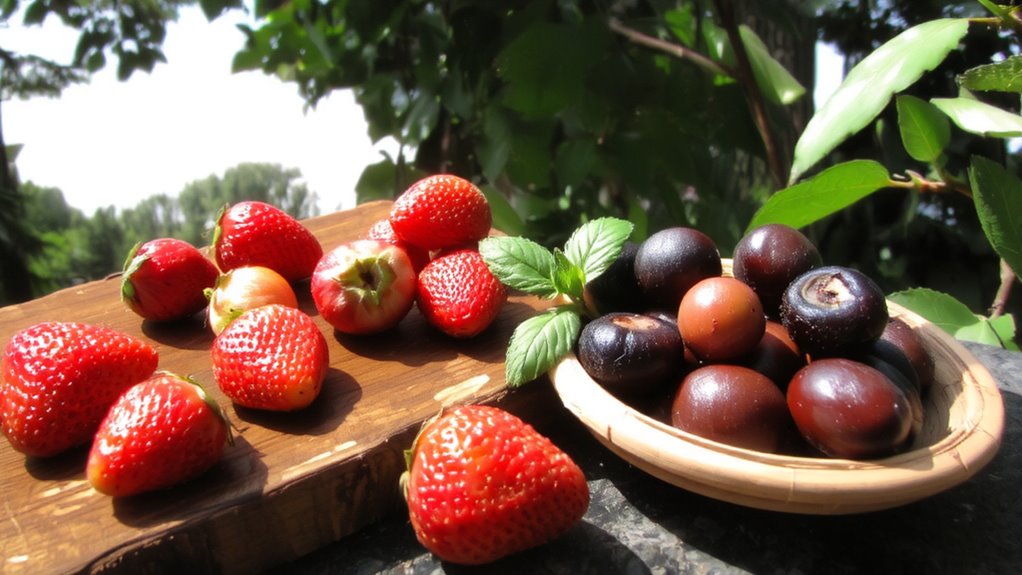
The best wild strawberries for drying are fully ripe but still firm, with deep red color and no signs of mold or soft spots. You’ll get better results when harvest timing aligns with peak ripeness-early morning, after the dew dries, is ideal. Picking too early or too late affects sugar concentration and drying efficiency. Berry size matters: aim for uniform medium to large berries. Smaller berries dry faster but yield less usable product; larger ones take longer but offer more flesh per piece. Avoid oversized or misshapen berries, as they may dry unevenly. Consistent berry size guarantees even dehydration, reducing risk of spoilage. You’re not looking for perfect looks-you’re after function. Wild strawberries vary naturally, so sort carefully. This isn’t about presentation. It’s about preserving usable, nutritious dried fruit with reliable shelf life. Skip damaged or underripe ones-they won’t improve with drying.
Prepare Berries to Preserve Flavor and Nutrition
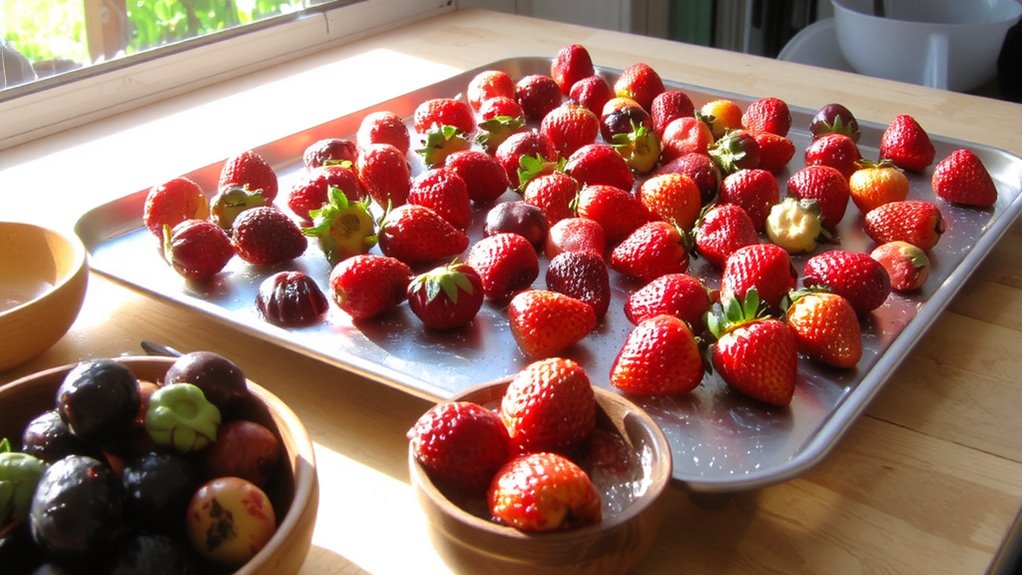
While you’re aiming to lock in both taste and nutrients, rinsing the berries gently under cool running water removes field debris without driving off water-soluble vitamins. Pat them dry with a clean cloth-excess moisture slows drying and risks spoilage. Leave the stems on until after washing to prevent water absorption, which can dilute flavor and reduce nutrient retention. Slice larger berries evenly, but keep small ones whole to minimize surface exposure and support flavor preservation. Thinner slices dry faster but may sacrifice some texture and aroma. Use a stainless steel knife to avoid oxidation that degrades nutrients. Work quickly and avoid soaking-the longer they sit in water, the more vitamins leach out. Prepping just before dehydration guarantees peak freshness, maintains color, and optimizes both nutrient retention and flavor preservation without additives or sugar. This method delivers reliable results for long-term storage.
Dry Wild Strawberries in a Dehydrator, Oven, or Sun
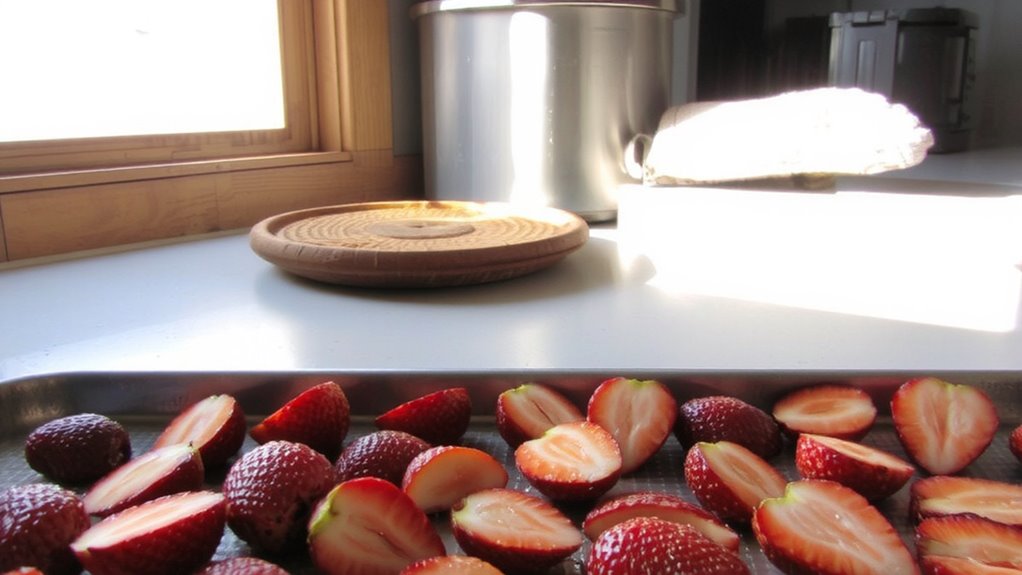
Now that your wild strawberries are prepped-clean, dry, and sliced with care-it’s time to remove moisture efficiently. Using a dehydrator is your most reliable option; set it to 135°F and allow 6–10 hours. It offers consistent airflow and better energy efficiency than an oven. Check for even drying, and clean trays afterward-proper equipment maintenance guarantees longevity and safe operation. If using an oven, prop the door open slightly and set it to the lowest temperature, ideally under 200°F. This method consumes more energy and requires closer monitoring. Sun drying works only in arid climates with low humidity and temperatures above 90°F; it’s the least energy-efficient and slowest method, taking 2–4 days. Protect berries with mesh covers to keep out insects and debris. Each method removes moisture effectively, but results vary in time, control, and power use.
Check If Berries Are Fully Dry
Dryness means safety and shelf life-your wild strawberries must be fully dehydrated to prevent mold and spoilage. Check each berry carefully before packing them away. Perform moisture testing by letting a few cool completely, then sealing them in a jar for 12 hours. If condensation forms, they’re not dry. For texture evaluation, the berries should be leathery or crisp, not soft or sticky. Split one open-a moist center means more drying time. Under-dried fruit spoils fast, even in storage. Over-dried fruit loses flavor and texture but remains safe. Aim for the middle ground. Wild strawberries vary in size and water content, so drying time isn’t uniform. Check smaller ones first. Rotate trays if using a dehydrator. Relying on time alone is unreliable. Use both moisture testing and texture evaluation. These methods give clear, immediate feedback. Trust results, not guesses.
Store Sugar-Free Dried Strawberries for Long Shelf Life
After confirming your wild strawberries are fully dry, proper storage is critical to maintaining quality and preventing spoilage. Exposure to moisture or air degrades texture and promotes mold. For maximum shelf life, control both storage humidity and container airtightness. Use glass jars or vacuum-sealed bags with oxygen absorbers. Keep contents below 60% relative humidity to prevent reabsorption. Store in a cool, dark place-like a pantry or cellar-away from heat sources.
| Factor | Recommended Standard |
|---|---|
| Storage humidity | Below 60% RH |
| Container airtightness | Fully sealed, moisture-proof |
| Light exposure | Minimal to none |
| Temperature | 50–70°F (10–21°C) |
| Shelf life (ideal conditions) | Up to 12 months |
Check seals monthly. Even slight leaks compromise longevity. Rotate stock to use oldest first.
On a final note
You’ve got dried wild strawberries without sugar, and that’s what matters. They’ll last months if stored airtight in a cool, dark place. Dehydrator drying beats oven or sun for consistency and speed. Berries must be brittle, not leathery, to prevent spoilage. No sugar means less shelf stability, so check for moisture now and then. It’s not fancy, but it works when done right.