Community Water Sharing Systems for Neighborhood Survival Networks
You can set up a community water sharing system by mapping local sources and installing food-grade rainwater barrels-each 1,000 sq ft of roof yields about 600 gallons per inch of rain. Use first-flush diverters and mesh covers to maintain quality. Distribute fairly: 4–8 gallons daily per household, plus extras for medical needs or infants. Keep transparent logs, rotate collection duties, and test water monthly. Trusted rules and local knowledge improve reliability. There’s a proven way to scale this securely.
Notable Insights
- Map local water sources and involve households in a shared network to ensure collective access during emergencies.
- Install rainwater harvesting systems using food-grade barrels, first-flush diverters, and elevated tanks for reliable supply.
- Distribute water fairly by household size and medical needs, using clear daily rationing guidelines.
- Build trust through written agreements, usage logs, and transparent rules co-created by the community.
- Conduct monthly drills, maintain equipment seasonally, and use local knowledge to improve system resilience.
Start Your Community Water Sharing Network
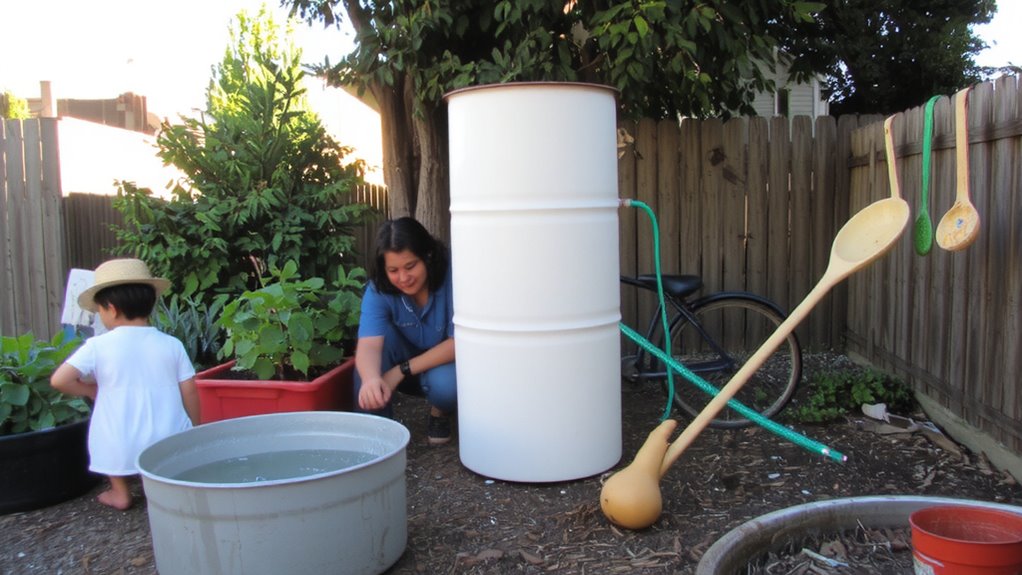
How do you begin building a reliable water sharing network when every gallon counts? You start by mapping local water sources and identifying households willing to participate. Each member must commit to water safety protocols, including regular testing and secure storage using food-grade containers. Establish clear guidelines for distribution, prioritizing needs without favoritism. Conduct monthly emergency drills to test response speed and reveal gaps in communication or supply. These drills improve coordination and reinforce roles under stress. Assign a contact list with backup communicators in case phones fail. Use low-cost filtration systems proven in field tests-gravity filters with 0.1-micron pores remove bacteria and cysts reliably. Balance ease of use with durability. Shared records of water levels and maintenance build trust. A functional network isn’t about equipment-it’s about consistent practice, verified safety, and readiness validated through real-world conditions. For reliable field performance, consider including one of the top-rated water filtration survival kits in your shared resource pool.
Set Up Shared Rainwater Harvesting Systems
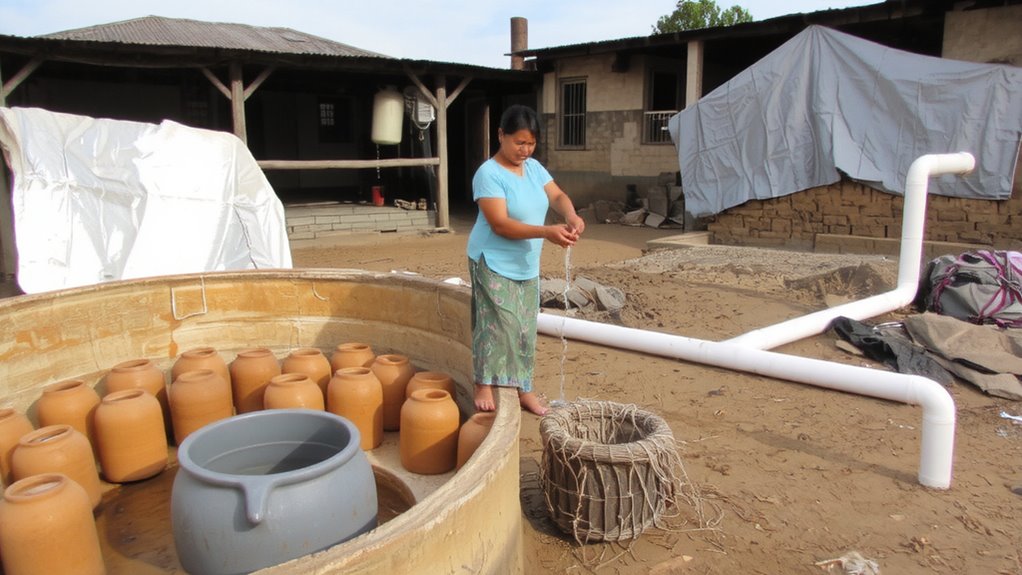
Why rely on unpredictable sources when you can capture what falls freely from the sky? You can start simple: direct downspouts into food-grade barrels with mesh covers to keep debris out. Each 1,000 square feet of roof collects about 600 gallons per inch of rain. Use gutters and first-flush diverters to improve water collection quality. For storage solutions, 50- to 1,000-gallon tanks work, depending on space and demand. Polyethylene tanks resist UV and last longer than metal. Elevate containers for gravity-fed access. Connect multiple barrels in parallel to increase capacity. In dry periods, stored rainwater covers basic needs if used wisely. Maintenance includes cleaning gutters and checking for leaks every season. You won’t get perfect water, but with basic filtration, it’s usable for non-potable purposes. This setup balances cost, effort, and reliability.
Distribute Water Fairly During Emergencies
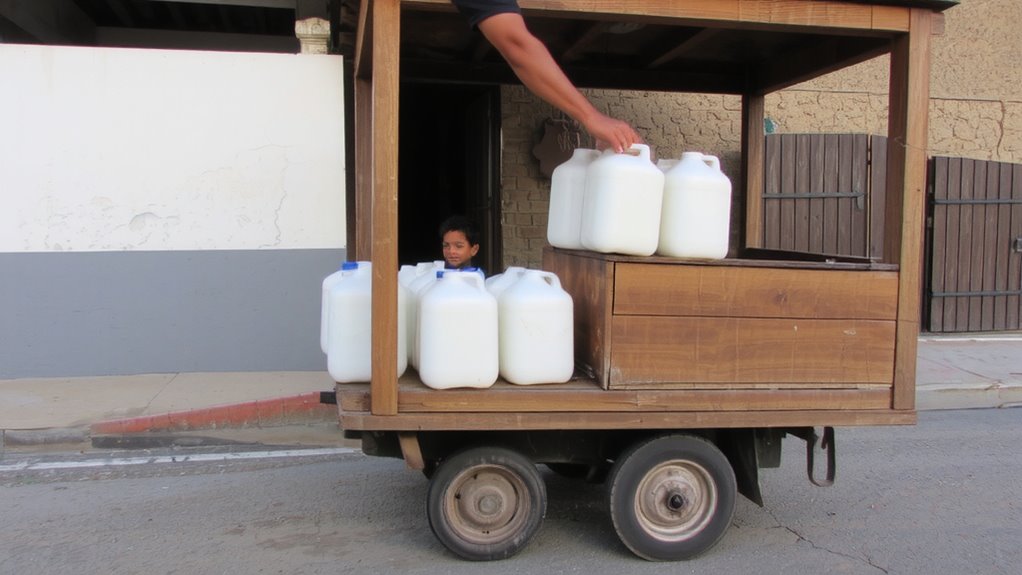
You’ve collected rainwater, stored it, and maintained the system-now what happens when supply runs short during an emergency? Water rationing becomes necessary to stretch limited reserves. Emergency allocation must be fast, clear, and based on household need. Without fairness, panic follows. Use a simple rotation log to track distribution and prevent overuse. Choosing durable water storage containers can ensure your supply remains safe and accessible during prolonged emergencies.
| Household Size | Daily Water Allowance (gallons) |
|---|---|
| 1–2 people | 4 |
| 3–4 people | 6 |
| 5+ people | 8 |
| Medical need | +2 |
| Infant care | +1 per child |
This method balances equity and practicality. Larger families get more, but limits prevent hoarding. Extra allowances account for health needs. Track each delivery with timestamps. Water rationing works only if everyone sees it as consistent and objective. Emergency allocation isn’t about preference-it’s about survival.
Build Trust With Clear Sharing Rules
While rules alone won’t refill a dry tank, they do keep tensions low when water’s tight. You need clear, written agreements so everyone knows their water rights and responsibilities. Define how much each household can use and when, based on need and supply. These rules prevent conflicts more effectively than any verbal promise. Require households to maintain daily usage logs-simple records showing how much water they take and for what purpose. Logs make usage visible and accountable. They help you spot problems early, like leaks or overuse. When people see others following the rules, trust grows. You don’t need complex enforcement-just transparency and consistency. Revise rules as conditions change, but only with group input. Fairness isn’t assumed; it’s built through repeatable, observable actions. Clear rules and logs aren’t perfect, but they’re reliable tools for stability.
Use Local Knowledge to Strengthen Your System
Local knowledge is one of the most reliable tools you have for keeping your water system functional and fair. You can identify reliable water sources by talking to long-time residents who understand seasonal patterns and terrain. Traditional practices, like rainwater catchment timing or storage in clay pots, have been tested over generations and often outperform modern shortcuts in reliability. Indigenous methods, such as swales or natural filtration using local plants, integrate with the environment instead of fighting it. These approaches reduce maintenance and increase resilience. Mapping local springs or drainage routes with community elders improves system design. Ignoring this knowledge risks inefficiency and conflict. You don’t need high-tech solutions when proven, low-cost methods already exist nearby. Use what’s been tested by time and terrain. Combine local insight with clear rules to build a system that’s not only practical but sustainable. It works because it’s rooted in real experience, not theory.
On a final note
You’ll need gutters, storage tanks, and a first-flush diverter for effective rainwater collection. A 1,000-gallon tank serves about 4 people in dry months. Shared systems cut individual costs by 30–50%. Clear rules prevent disputes-rotate access, track usage. Local knowledge improves placement and maintenance. Trust grows when everyone sees fair, consistent delivery. During outages, tested systems deliver 80% of basic needs. No system is perfect, but tested setups outperform bottled reliance.