Identifying High-Calorie Wild Plants for Emergency Foraging in Temperate Forests
You’ll find cattail and burdock roots in wet areas, each giving around 260–270 calories per pound when cleaned and processed. In forests, acorns, hickory, and beechnuts deliver 600–700 calories per 100 grams but need leaching or quick gathering to avoid spoilage. Hazelnuts and pine nuts offer similar energy density and store well if dried. Proper drying and cracking techniques preserve calories. Mistaking water hemlock for edible plants can be fatal-accurate ID is non-negotiable. There’s a reliable way to verify safety before consumption.
Notable Insights
- Cattail and burdock roots offer over 260 calories per pound and grow in wetlands from spring to fall.
- Acorns, hickory nuts, and beechnuts provide 600–700 calories per 100 grams but require prompt gathering and proper processing.
- Hazelnuts, walnuts, and pine nuts are calorie-dense forest foods available in late summer through fall.
- Process wild roots by peeling, slicing, and drying to improve digestibility and preserve caloric value.
- Avoid toxic lookalikes by using field guides and the Universal Edibility Test before consuming any wild plant.
Cattail and Burdock: High-Calorie Roots in Wet Areas
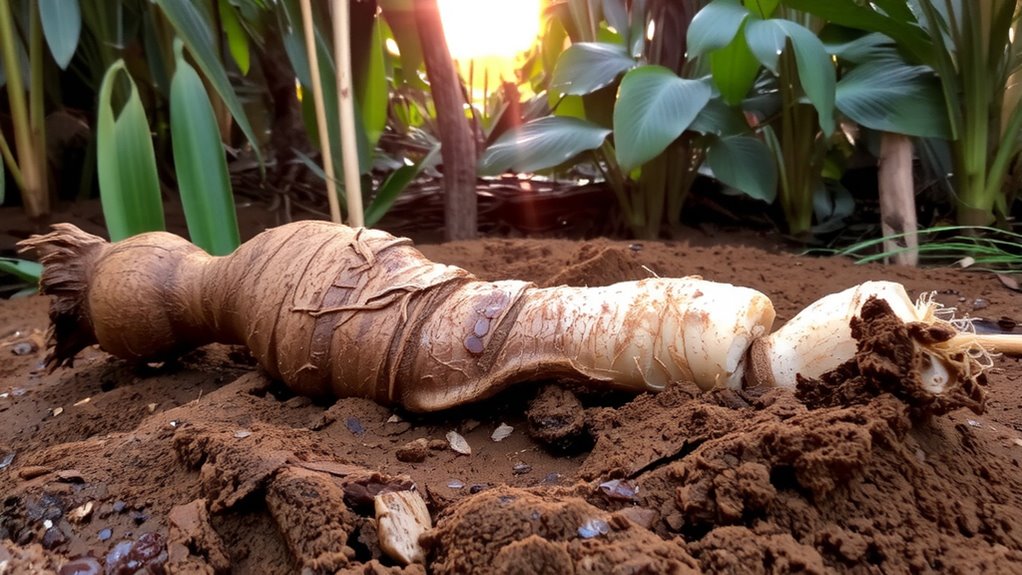
You’ll find cattail and burdock thriving in wet, marshy areas, and their roots offer some of the highest calorie yields among wild plants. Cattail roots provide about 270 calories per pound, while burdock roots deliver around 260, making both valuable during root harvesting. Wetland foraging requires identifying firm, green shoots for cattail and large basal leaves for burdock. Digging in soft mud is labor-intensive, but yields are reliable from spring through fall. You’ll need a sturdy knife or digging stick, as roots are buried 6–12 inches deep. Rinse thoroughly-mud and sediment cling tightly. Cattail rhizomes can be boiled or dried into flour; burdock roots cook like parsnips. Both lose energy value if left too long, so harvest young growth. Root harvesting reduces portability due to moisture weight, but the trade-off in calories justifies the effort. Wetland foraging isn’t fast, but it’s effective when calories are critical.
Acorns, Hickory, and Beechnuts: Calorie-Rich Forest Nuts
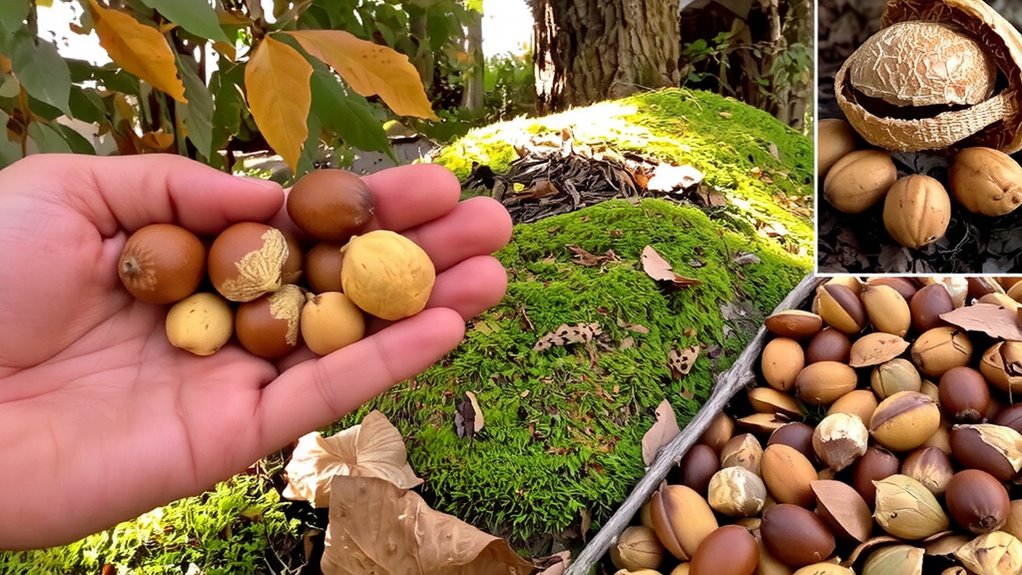
Moving from wetlands to wooded areas, a different kind of calorie source becomes available in the form of forest nuts-acorns, hickory nuts, and beechnuts. You’ll find these offer high nutrition density, packing 600–700 calories per 100 grams, mostly from fats and complex carbs. Acorns require leaching to remove tannins, but once processed, they’re edible and energy-rich. Hickory nuts crack open easily and deliver the highest fat content of the three. Beechnuts are smaller but abundant in good years. All three rely on seasonal availability, typically ripening in late fall. You can gather them then, but you must act quickly before wildlife does. Store them in dry, cool conditions to prevent mold. While they don’t provide complete protein, their caloric yield makes them reliable when other food is scarce. Their real value lies in dependable energy when you need it most.
Hazelnuts, Walnuts, and Pine Nuts: Edible Nuts That Fuel Survival
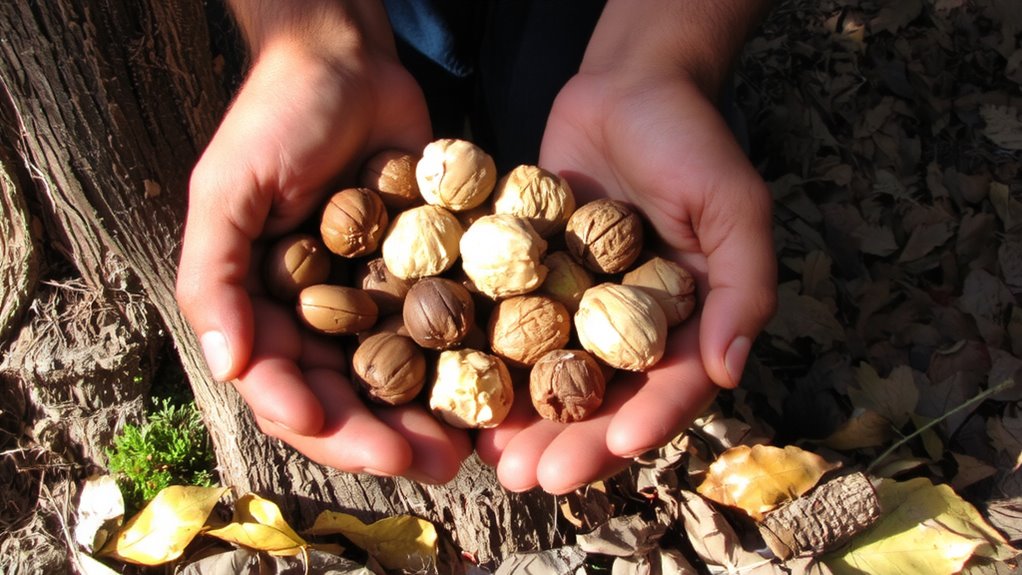
Nutrition counts when calories are scarce, and hazelnuts, walnuts, and pine nuts deliver where it matters. These wild nuts offer high nutrition density, packing fats, proteins, and essential micronutrients in compact forms. Hazelnuts grow in clusters on shrubs and provide around 650 calories per 100 grams, making them reliable for energy storage. Black walnuts, though harder to crack, yield rich, oil-dense kernels that sustain caloric needs efficiently. Pine nuts, harvested from certain pine cones, are smaller but exceptionally calorie-dense, with some species offering over 670 calories per 100 grams. All three support long-term survival by balancing caloric yield with portable weight. You’ll find them in temperate forests from late summer through fall. Their natural oil content boosts energy storage in your body, helping maintain stamina when food is limited. Prioritize mature, unfilled shells to avoid spoiled kernels.
Processing Wild Nuts and Roots for Maximum Calories
A good rule of thumb is to process wild nuts and roots soon after harvest to preserve their caloric value. You lose energy content if they sit too long, especially in damp conditions. For nuts, drying methods like sun-drying or low-heat air-drying reduce moisture and prevent mold, concentrating usable calories. Shell them only when needed to minimize spoilage. Roots benefit from peeling and slicing before drying or roasting, which breaks down fibrous material and increases digestibility. You can boost caloric availability further by using fermentation techniques-lacto-fermenting crushed nuts or grated roots over several days breaks down anti-nutrients and improves calorie extraction. Fermentation also extends shelf life without equipment. Drying methods like fire-heated stones or solar racks work in the wild, but take care not to burn. Both approaches increase net energy gained, but fermentation requires more time and stable temperatures. Choose based on your environment and urgency.
Edible Pine Parts: How to Harvest and Use Inner Bark and Needles
Pine trees offer two edible parts worth considering in survival: the inner bark and needles. The inner bark, found beneath the rough exterior, is edible in spring when it’s softer and richer in calories. Peel a section carefully with a knife, slice it thin, and eat it raw or dried into flour. It’s not calorie-dense like nuts, but it provides usable energy when little else is available. Pine needles are less caloric but rich in vitamin C. Steep them in hot water to make a tea that prevents scurvy. Avoid boiling, which destroys nutrients. You’ll also encounter pine resin-stickier and bitter, yet valuable for its medicinal uses, such as sealing wounds or treating minor infections. Collect resin carefully; it’s best used topically. Needles and inner bark from healthy trees pose little risk when properly identified. Harvest sparingly to avoid killing the tree. Not a calorie powerhouse, but reliable in prolonged emergencies.
Avoiding Deadly Look-Alikes When Foraging Wild Plants
You might feel confident spotting edible pine inner bark or brewing needle tea, but misidentifying plants can turn a survival tactic into a deadly mistake. Deadly lookalikes are common in temperate forests, and confusing them with safe species risks severe poisoning. For example, water hemlock resembles wild carrot but kills with just a small dose. Accurate plant identification isn’t optional-it’s essential. Use multiple features: examine leaf shape, stem structure, scent, and root color. When in doubt, apply the Universal Edibility Test, though it takes time and still carries risk. Field guides with clear photos and range maps help, but only if used correctly. Never rely on memory or single traits like color or smell. Some toxic plants mimic nutritious ones, such as fool’s parsley versus Queen Anne’s lace. Double-check every specimen. Confidence comes from repeated, verified practice-not guesswork. Survival depends on precision, not hope.
On a final note
You’ll survive longer on cattail and acorns than most wild plants because they pack 200–350 calories per 100 grams. Processing matters-leaching acorns removes bitterness and improves digestibility. Hazelnuts and pine nuts offer portable, high-fat fuel but require effort to gather. Avoid look-alikes like poison hemlock by verifying key traits. Focus on wetland roots and forest nuts-they’re dependable. Prioritize calorie density and safety; yield and prep time vary, but these balance availability and energy.