Using a Solar Fire Starter to Ignite Dry Grass in Midday Sun
You can ignite dry grass in under 30 seconds with a solar fire starter using a 2.5-inch glass lens under direct midday sun. Position the lens to focus a sharp, bright dot onto the tinder and hold it steady. Dry grass works fast but burns quickly, so have larger fuel ready. Success depends on precise alignment, a clean lens, and sun angle. Performance drops if the lens is scratched or the light is indirect. Clear skies and a steady hand are essential for reliable results-knowing the right conditions and setup makes all the difference.
Notable Insights
- Use a 2.5-inch glass lens solar fire starter for optimal focus and faster ignition in midday sun.
- Position the device to create a sharp, bright focal point directly on dry grass for maximum heat concentration.
- Ensure the sun is at a high angle (75–90 degrees) between 11 a.m. and 2 p.m. for best results.
- Dry grass ignites quickly due to its high surface-area-to-volume ratio but requires steady, unobstructed sunlight.
- Shield the setup from wind while allowing airflow to prevent disruption of the forming ember.
How Solar Fire Starters Actually Work
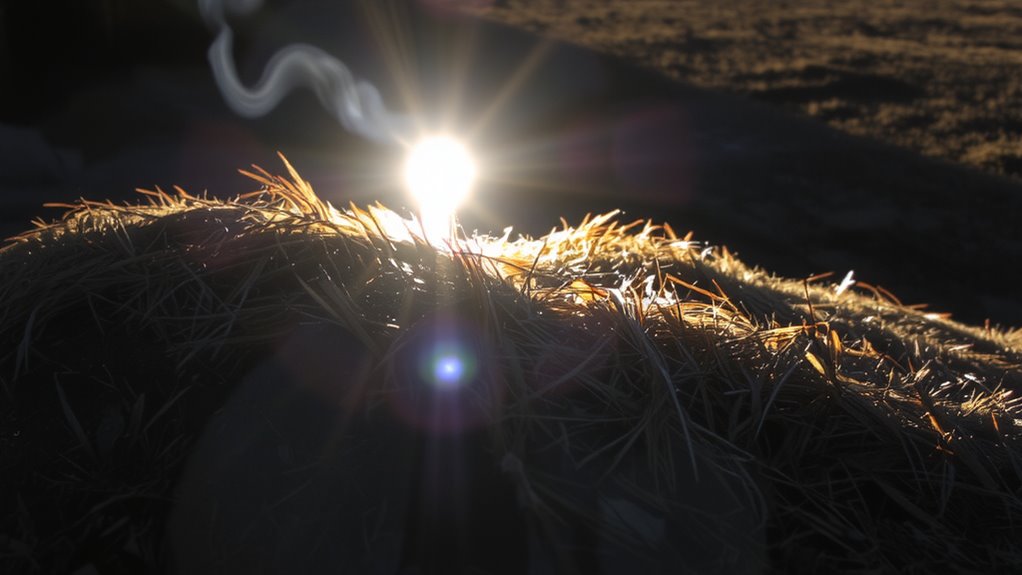
While the sun might seem like an unreliable tool for starting fires, solar fire starters actually work by concentrating its rays into a small, intense spot using a lens or reflective surface-basically turning sunlight into a focused beam of heat. You rely on clear alignment to achieve sufficient focal intensity, which determines how quickly tinder ignites. The lens material matters: polycarbonate lenses are durable but scratch easily, reducing efficiency over time, while glass offers better optical clarity and longevity but is more fragile. In direct midday sun, a 2.5-inch glass lens can reach ignition temperatures in under 30 seconds when held steady. Focal intensity drops considerably with cloud cover or improper angle, so precision in positioning is critical. These devices won’t work at dawn or dusk, and effectiveness varies by geographic location and time of year. Overall, they’re lightweight and fuel-free, but their performance depends heavily on conditions and build quality.
Use the Best Natural Tinders for Fast Ignition
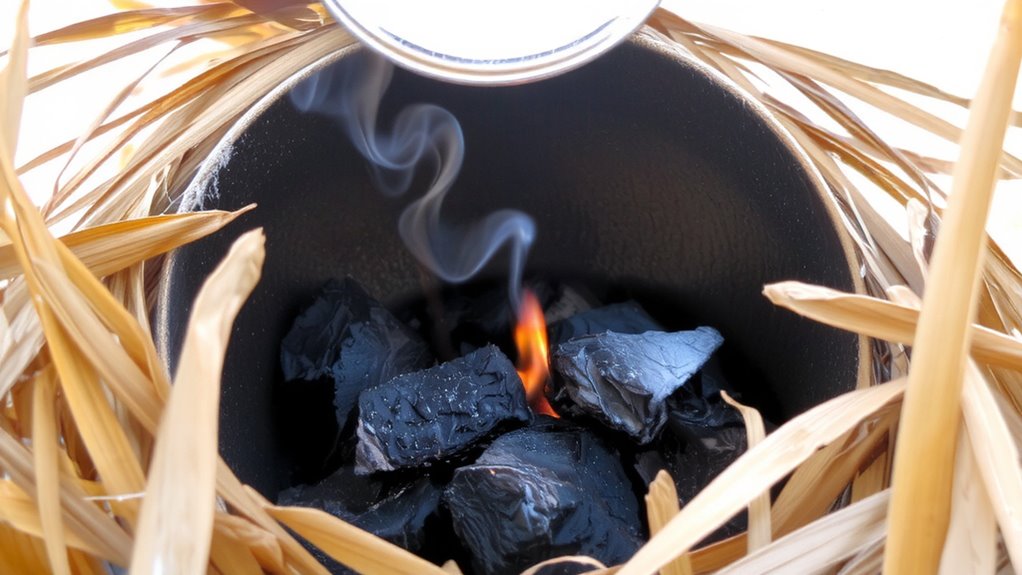
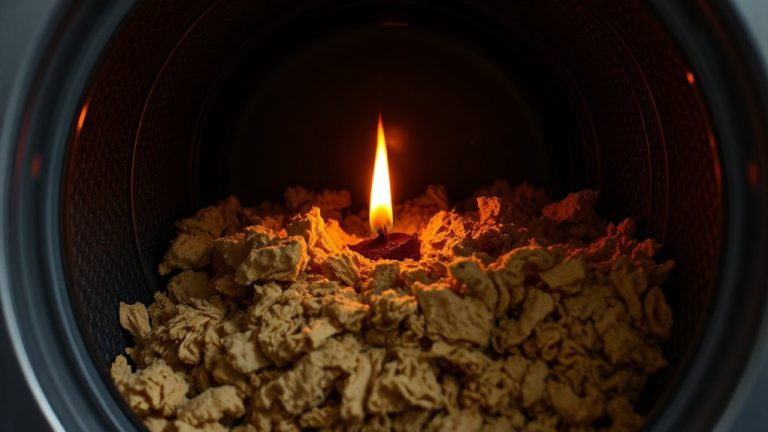
Sunlight’s your ally, but without the right tinder, even a perfect beam won’t catch. Your tinder selection directly affects ignition speed and success. Dry grass ignites fast but burns quickly-good for initial flame, not sustaining it. Birch bark contains oils that boost flammability and work even when slightly damp. It catches fast and holds flame longer than most. Cedar bark shreds easily into fine fibers, increasing surface area and cutting ignition time. Cattail down is light and combustible, often igniting in under 30 seconds with focused sunlight. Avoid green or moist materials-they sap heat and delay catching. Fine, dry, and fluffy is the rule. Ignition speed improves with tinder that’s low density and high surface-area-to-volume ratio. Pair rapid-ignition tinders like cattail with longer-burning bark to bridge to kindling. You’ll get reliable starts when both quality and structure are prioritized. For even more dependable results, consider making DIY fire starters using household materials and natural tinders.
Light a Fire With a Solar Starter: Step-By-Step
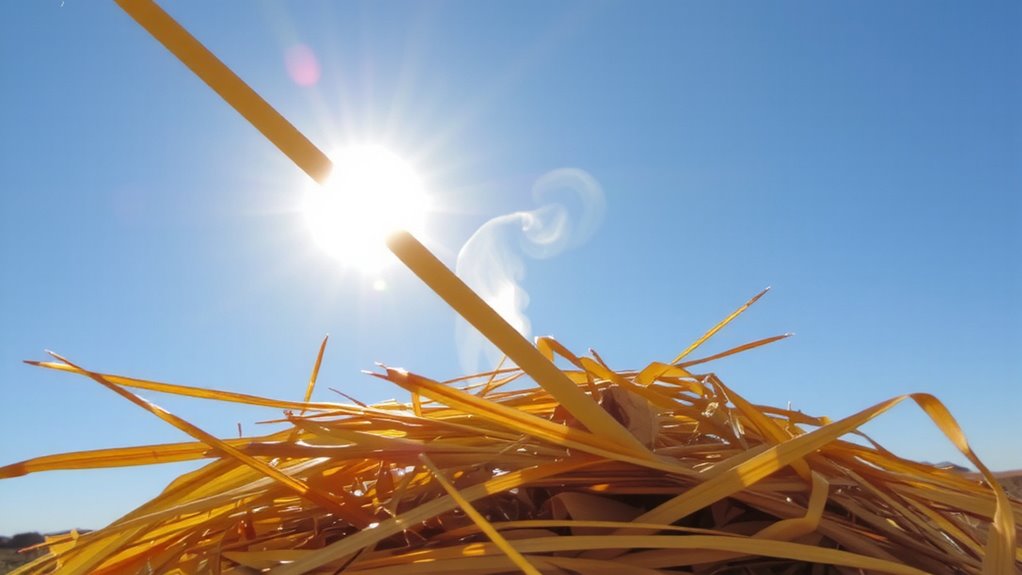
You’ve gathered the right tinder-dry, fluffy, and primed to catch-but now you need to get that first spark from the sun. Position your solar fire starter so the lens focuses sunlight into a sharp, bright dot on the tinder. Hold it steady-movement breaks concentration and delays ignition. Fire placement matters: choose a spot shielded from wind but with enough airflow to support combustion. Timing considerations are key; aim for midday when the sun is highest, ideally between 11 a.m. and 2 p.m.
| Factor | Recommendation |
|---|---|
| Sun angle | 75–90 degrees (direct) |
| Lens size | 2.5–3 inches for fast focus |
| Fire placement | Level, dry, wind-protected |
| Timing considerations | Midday, clear sky only |
Avoid These Solar Fire Starter Mistakes
Why do some attempts with a solar fire starter fail even in strong sunlight? You’re likely making avoidable mistakes. Improper lens alignment is a top issue-unless the lens focuses sunlight into a tight, bright spot on your tinder, ignition won’t happen. Even slight misalignment spreads heat too thin. Another common problem is weak sunlight positioning. You must angle the device directly at the sun, adjusting frequently as the sun moves. Holding it steady for several minutes is essential. Shaded areas or indirect angles drastically cut efficiency. Many users underestimate how precise the positioning needs to be. A high-quality fire starter helps, but only if used correctly. Don’t assume bright sky means ideal light-check the beam focus. Eliminating these errors increases success in less than five minutes under ideal conditions. Practice improves consistency.
Start a Fire in Windy or Cloudy Weather
Even when clouds thin or wind gusts, a solar fire starter can still work if you optimize exposure and protect the ignition point. Success depends on wind protection and cloud penetration. Shield your tinder with rocks or a reflector to block gusts, and angle the lens to concentrate weak light. Dark, dry tinder increases absorption when sunlight is diffuse. Here’s how three common survival tools compare:
| Tool | Wind Protection | Cloud Penetration |
|---|---|---|
| Solar fire starter | High (with shielding) | Moderate to high |
| Lighter | Low (fuel blows out) | Unaffected |
| Matches | Very low | Unaffected |
A solar starter demands patience in overcast or breezy conditions but beats flame-based tools when wind protection is possible. It won’t ignite tinder instantly under clouds, but steady focus can exploit brief beams. Performance drops without direct sun, yet modern lenses still achieve ignition at 60–70% cloud cover. Rely on it only when you can manage exposure and block airflow.
On a final note
You can start a fire with a solar fire starter in midday sun if the lens focuses a tight beam and the tinder’s fine and dry. Grass ignites fastest when the sun’s direct and the starter’s held steady. Wind or clouds reduce success. It’s reliable in ideal conditions but slower than a lighter. Carry backup ignition. Practice improves results.