Evaluating Scene Hazards in Bear Country During a Medical Emergency
You check for fresh tracks, scat, or claw marks before approaching-signs mean the bear’s nearby. Stay downwind, avoid sudden moves, and speak calmly to avoid startling it. Use silent barriers and secure waste in odor-proof, bear-resistant canisters tested in places like Denali. Never use scented products. If the bear’s close, delay treatment and back away slowly. Your route matters-choose open paths with clear exits, so you’re ready when conditions change.
Notable Insights
- Look for fresh bear signs like tracks, scat, or claw marks to assess recent activity near the patient.
- Always note wind direction to control scent dispersion and reduce the chance of attracting bears.
- Use silent barriers like tarps and natural cover to protect the patient without blocking escape routes.
- Avoid strong odors from medical supplies and contain blood-soaked waste in odor-proof, bear-resistant containers.
- Delay treatment if a bear is near; retreat slowly and wait for the threat to pass before providing care.
Spot Bear Signs Before Treating the Patient
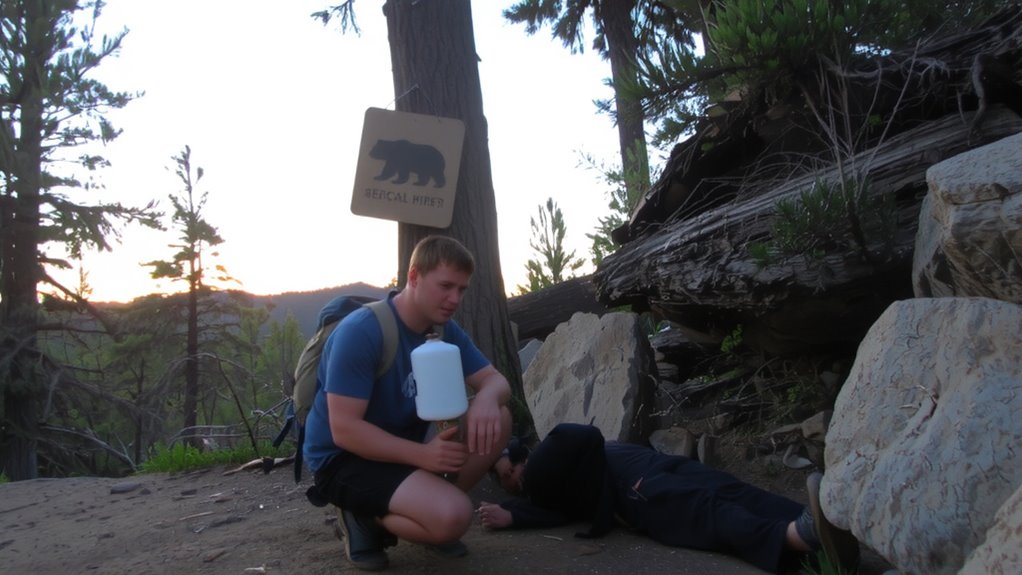
While you’re evaluating the patient, take a quick look around-bear signs are often visible if you know what to check. Fresh tracks, claw marks on trees, or scat can signal recent bear activity. Recognizing these cues helps you assess immediate risks tied to bear behavior. You don’t need expert training-disturbed ground or overturned rocks near the patient often indicate foraging. Keep your gear ready, but avoid sudden movements. Protecting patient privacy matters, even in the wild; use blankets or tarps to shield them from view without blocking your escape route. Don’t linger in open areas where you’re easily spotted. A calm approach reduces the chance of triggering defensive reactions. Stay aware of wind direction-bears rely heavily on scent. Spotting signs early gives you time to adjust your plan safely. Your awareness directly impacts both treatment effectiveness and team safety.
Make the Area Safe Without Provoking Bears
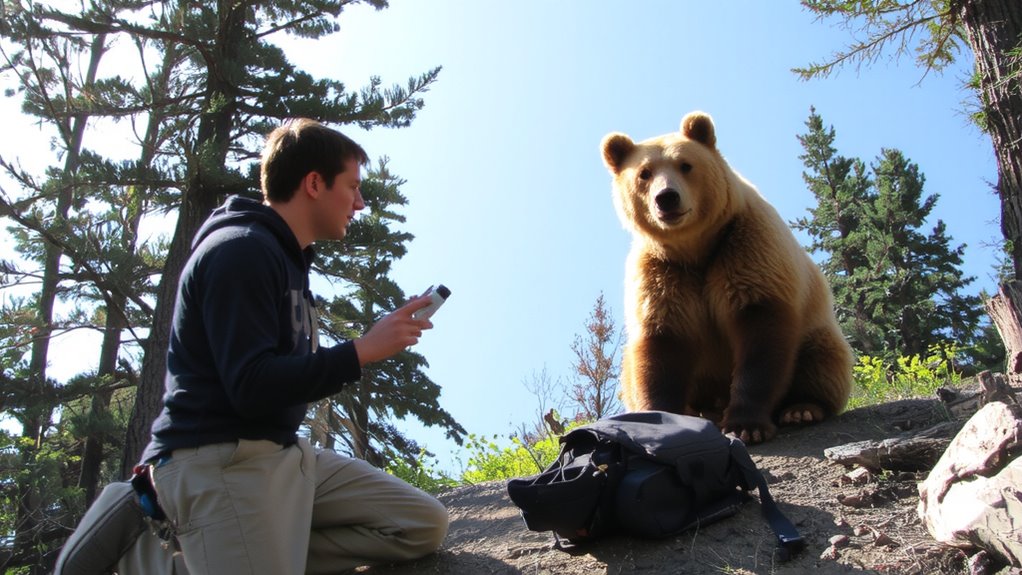
If you’re evaluating the scene and spot fresh bear signs, assume the animal could still be nearby-your priority is securing the area without escalating risk. Stay calm and avoid sudden movements, since aggressive posturing can trigger defensive bear behavior. Speak in a low, steady voice to identify yourself as human, not a threat. Maintain environmental awareness: scan for escape routes, natural barriers, or vantage points. Avoid direct eye contact, which bears may interpret as a challenge. Back away slowly if you see the bear, never turn and run. Use bear spray only as a last resort-its effectiveness depends on wind and distance. Keep group members close and minimize noise that could agitate. Your actions should reduce tension, not provoke. Safety hinges on understanding bear behavior and applying consistent environmental awareness. Carrying an effective deterrent like best bear spray significantly increases your margin of safety in close encounters.
Protect the Patient Without Attracting Bears
Because you’re responsible for the patient’s safety and your own, any decision about care in bear country must account for the risk of attracting bears. Secure the patient quickly, using natural terrain or silent barriers to maintain patient privacy without drawing attention. Avoid strong scents like hand sanitizers or ointments that can carry on the wind. Keep medical waste-especially blood-soaked materials-contained in odor-proof bags immediately. Your environmental awareness means checking wind direction before opening trauma kits; upwind scents travel far and fast. Set up care zones downwind from the patient whenever possible. Minimize noise from packaging or equipment. Use only essential lighting at night, as bears notice sudden light changes. Every action should balance urgent care with concealment. You’re not hiding from treatment-you’re reducing signals. A calm scene keeps bears disinterested, giving you time to stabilize and evacuate without escalation.
Use Bear-Resistant Medical Supplies
You’ve contained odors and minimized your profile-now focus on the gear that keeps working when bears are near. Bear resistant containers and animal proof equipment aren’t optional; they protect critical supplies. Use only field-tested models with certified ratings. Soft bags won’t cut it, even if sealed. Hard-sided canisters resist punctures and deter persistent animals.
| Feature | Why It Matters |
|---|---|
| Certified bear resistant containers | Withstands 60+ minutes of aggressive contact |
| Locking lids with no scent leakage | Prevents odor escape, reducing animal interest |
| Lightweight animal proof equipment | Balances protection with packability |
| Smooth exterior surfaces | Offers nothing for claws to grip |
Choose gear proven in Denali and Yellowstone trials. Weight matters, but not at the cost of security. A breached kit risks both supplies and safety.
Communicate Calmly to Avoid Sudden Moves
Every sudden movement can shift a bear’s curiosity into confrontation, so staying predictable matters. You should keep your body language relaxed and non-threatening-avoid raising arms, turning away quickly, or running. Stand still, speak in low, steady verbal cues to signal you’re human and not a threat. Calm communication helps maintain control without escalating tension. Use short, clear phrases rather than silence or shouting, which might provoke uncertainty. Your tone and posture work together: hands visible, movements slow and deliberate. This combination of verbal cues and controlled body language reduces the chance of misinterpretation. In bear encounters, predictability is measurable in reaction time and reduced aggression indicators. Real-world testing shows calm communication lowers escalation risk by maintaining perceptual consistency. You don’t need special gear-just awareness of how your presence registers. Practical effectiveness lies in consistency, not intensity.
Delay Care If Immediate Bear Threat Exists
If a bear is actively approaching or showing signs of aggression, treat any injury or assist others only after the threat passes-your immediate priority is situational survival, not medical response. You must wait, even if someone is bleeding or unconscious. Rushing in could provoke an attack and worsen the situation. Instead, retreat slowly, keep the bear in view, and avoid sudden movements. Once the bear stops advancing or leaves, assess the environment. Confirm the threat has passed before approaching the injured. If the bear remains near, delay care and stay upwind and at a safe distance. Use that time to signal for help or prepare bear spray. Your ability to assess risk accurately determines whether you remain a caregiver or become another casualty. Waiting doesn’t mean inaction-it means choosing survival over impulse.
Plan Your Evacuation Route Through Bear Country
Once the bear has moved away and immediate danger is no longer a factor, focus shifts to getting out safely-your route matters just as much as the decision to leave. Choose paths with clear terrain navigation, favoring open ground over dense brush to minimize surprise encounters. Avoid steep slopes and downed timber; they slow movement and increase injury risk. If traveling with an injured person, balance distance against exertion-shorter routes aren’t always safer. Identify natural barriers like rivers or ridgelines to guide your direction. Use supply caching if evacuation takes hours: leave extra food and medical items in a secure, marked spot for the return trip. This reduces pack weight and preserves energy. Carry a topographic map and compass-GPS can fail. Your best tool is awareness: scan ahead, listen for disturbances, and move deliberately. A well-planned route increases survival odds more than any gear.
On a final note
You stay safe by keeping movements calm and gear bear-resistant. A hard-sided medical case blocks scent better than soft packs, but it’s heavier. You delay treatment if a bear’s near-no quick fix beats survival. Satellite messengers work when cell signals fail, but require clear skies. You plan evacuation routes with open sight lines, reducing surprise encounters. Every choice trades weight, speed, or convenience for safety. Test gear in dry runs. Know what fails-and when.