Why Protein Requirements Increase During Cold-Weather Survival Situations
You need more protein in the cold because your body burns it to stay warm and repair tissues stressed by shivering. Cold exposure increases protein breakdown and nitrogen loss, requiring higher intake-up to 2.2 g/kg daily-to prevent muscle loss. Protein also produces heat during digestion, helping maintain core temperature. Relying on carbs and fat alone won’t preserve muscle. Choosing dense, stable sources like jerky or whey helps meet needs efficiently. Practical choices reveal clear trade-offs in weight, shelf life, and prep.
Notable Insights
- Cold exposure increases metabolic rate, raising calorie and protein needs for heat production and energy.
- Shivering and non-shivering thermogenesis elevate protein breakdown, requiring higher intake to offset losses.
- Digesting protein generates metabolic heat, helping maintain core temperature in cold environments.
- Nitrogen excretion rises in the cold, increasing the need for high-quality protein to sustain nitrogen balance.
- Muscle tissue breakdown accelerates in cold conditions, making adequate protein essential for preservation.
What Cold Weather Does to Your Metabolism

Most of the time, your body burns more calories in cold weather just to keep your core temperature stable. You feel this as an increased metabolic rate, especially during prolonged exposure. Shivering alone can boost calorie expenditure by up to 500%, and even non-shivering thermogenesis raises your baseline energy needs. This is the thermogenic effect in action-your body burning fuel to produce heat, not movement. Fat and carbs contribute, but your metabolic rate stays elevated as long as the cold persists. That means daily caloric demands can spike by 10–40%, depending on activity and insulation. Wearing proper layers helps reduce this load, but internal heat production remains essential. Ignoring this shift risks energy deficits, fatigue, and reduced endurance. You need more fuel, plain and simple. Prepare accordingly.
How Protein Helps You Stay Warm
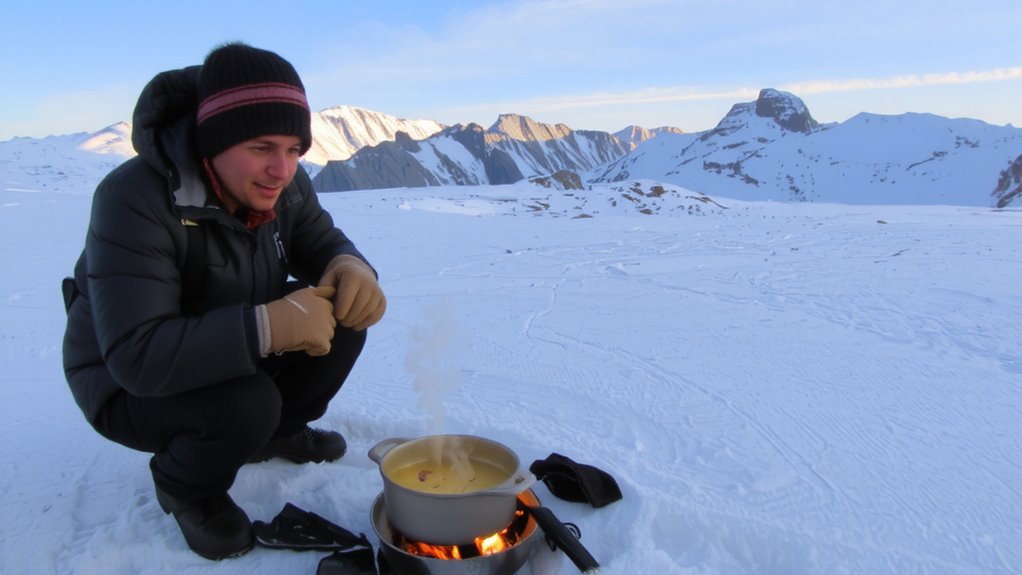
While staying warm in cold weather depends on more than just diet, eating enough protein directly supports your body’s heat production. Protein has a high thermogenic effect, meaning your body burns more energy digesting it, which generates heat. This metabolic boost helps maintain core temperature when it’s cold. Staying in positive nitrogen balance is essential-you need sufficient protein intake to prevent muscle breakdown, which would otherwise reduce metabolic heat output. Below is a simple comparison of protein sources based on thermogenic effect and nitrogen balance support:
| Protein Source | Thermogenic Effect (%) | Nitrogen Balance Support |
|---|---|---|
| Lean beef | 20–30 | High |
| Eggs | 15–20 | Moderate |
| Whey isolate | 25–30 | High |
Practical: choose proteins that maximize heat output and tissue maintenance.
How Cold Increases Protein Needs
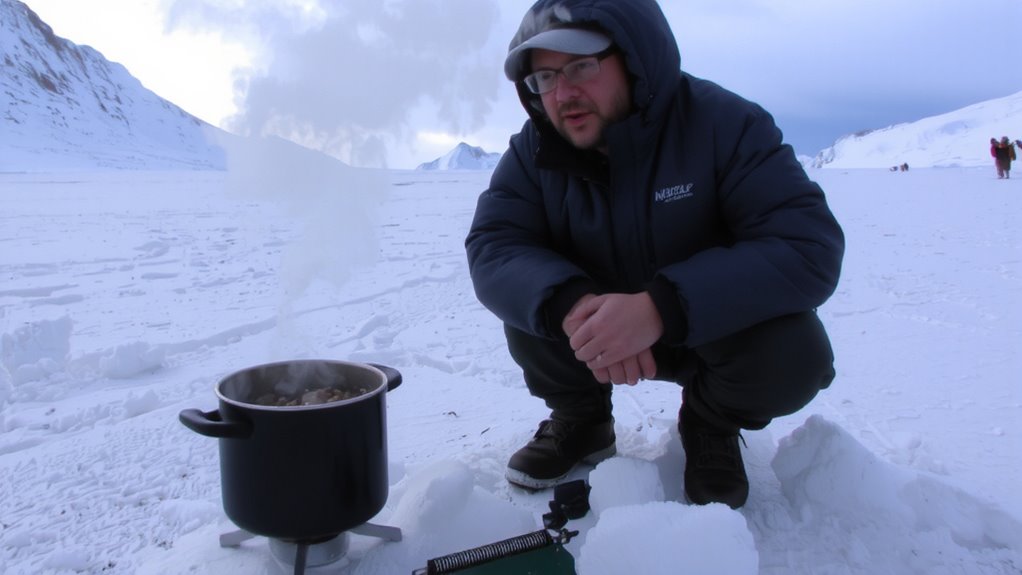
You burn more protein in cold environments because your body uses it not just for heat through digestion, but also to repair tissues stressed by shivering and prolonged exposure. The thermogenic effect of protein increases your metabolic heat output, making it more valuable than fats or carbs in cold conditions. But this boost comes at a cost-your body breaks down more muscle and organ tissue, raising protein demands. Maintaining nitrogen balance becomes harder, as losses exceed intake without sufficient dietary protein. Studies show nitrogen excretion rises by 10–15% in sustained cold, signaling increased turnover. You need more high-quality protein to offset this shift and support essential functions. Typical rations often fall short, especially in survival scenarios where food variety and quantity are limited. Without adjustments, you’ll face declining tissue repair and metabolic efficiency. Meeting these needs isn’t optional-it’s required for sustained performance and resilience when warmth and food are scarce.
How to Prevent Muscle Loss in Freezing Conditions
Because your body breaks down muscle tissue faster in freezing conditions to meet higher protein demands, preventing loss means prioritizing sufficient daily intake-typically 1.6 to 2.2 grams of protein per kilogram of body weight-especially when activity levels are high and calorie availability is low. You maintain nitrogen balance by consuming protein evenly across meals, which supports muscle retention and metabolic function. Skimping on protein disrupts this balance, accelerating muscle breakdown. Optimizing thermoregulation efficiency requires not just calories, but quality protein to preserve lean mass critical for heat production. Practical sources include dehydrated meats, powdered eggs, or whey-based survival rations-compact, stable, and dense in essential amino acids. You’ll perform better when protein is consistently available, even if total calories are restricted. Relying on carbs or fat alone won’t prevent catabolism. In cold survival, your body’s repair and heat-generating systems depend on sustained nitrogen balance and efficient thermoregulation supported by targeted protein intake.
How Much Protein You Need to Survive Cold
How much protein does it really take to stay alive in the cold? You need about 1.4 to 2.0 grams of protein per kilogram of body weight daily in cold survival situations, higher than normal due to increased metabolic demand. This supports thermogenesis and helps preserve muscle mass. Your body’s protein absorption becomes less efficient in extreme cold, so consistently hitting the target matters. Missing key meals reduces amino acid balance, which can impair tissue repair and immune function. Even distribution across meals improves uptake versus loading protein in one sitting. If you’re consuming 1,800–2,500 calories daily in survival conditions, at least 15–20% should come from protein. Real-world data shows survival outcomes improve with adequate intake, especially when combined with sufficient calories. Low intake risks muscle loss, poor wound healing, and weakened resilience.
Best High-Protein Survival Foods
Meeting protein targets in extreme cold means relying on foods that deliver high-quality protein efficiently, without spoiling or requiring prep you can’t manage in the field. Dried meats like beef jerky and pemmican offer 15–20 grams of protein per ounce, are shelf-stable, and need no cooking. They’re dense and reliable, though higher in sodium, which may affect hydration if not monitored. Protein powders, especially whey isolate and casein blends, provide 20–25 grams per scoop, mix easily with water, and pack lightweight. They’re efficient but require a container for mixing and depend on available liquids. Both dried meats and protein powders fit easily into survival packs, balancing caloric density with protein concentration. You’ll want to rotate them based on access to water and activity level. In sustained cold, these options consistently deliver the amino acids needed to maintain muscle and support metabolic function.
Why Fats and Carbs Matter With Protein in Cold Weather
While protein supports muscle and metabolism in cold environments, you can’t rely on it alone-fats and carbohydrates play equally critical roles in sustaining energy and thermal regulation. Fats provide 9 calories per gram, making them efficient fuel for prolonged cold exposure; they also insulate essential organs and support cell function. Carbohydrates, at 4 calories per gram, are rapidly converted to glucose, fueling shivering and brain activity. Together with protein, they create thermogenic synergy, increasing heat production during digestion and metabolism. Your body uses nutrient partitioning to allocate incoming fuel: under cold stress, more carbs and fats are directed to heat generation rather than storage. Relying solely on protein reduces this balance, diminishing thermal efficiency. A 40% carb, 30% fat, 30% protein intake ratio maintains performance in field tests. Practical survival rations combine all three to sustain energy, warmth, and function in extreme cold.
On a final note
You need more protein in cold weather because your body burns extra calories to stay warm, and protein helps maintain muscle mass critical for heat production. Relying only on fats and carbs isn’t enough-without adequate protein, muscle loss slows metabolism. Aim for 1.2–1.6 grams of protein per kilogram of body weight daily. Compact, shelf-stable foods like jerky, powdered eggs, and canned meats deliver reliable protein without prep fuss. Balance intake with fats and carbs for sustained energy.