Conducting a Rapid Trauma Assessment After a Rockfall Accident
Check the slope for movement or cracks before you approach-30% of injuries happen during unsteady rescues. Tap the person and shout; if no response, get help and an AED. Keep their head, neck, and spine aligned, and clear the airway with a jaw-thrust, not a head tilt. Look for breathing, listen for air sounds, feel for a pulse. Watch for unequal pupils, fast heart rate, or rigid belly-these hint at brain or internal injury. Stabilize fractures without straightening. Prioritize airway, bleeding, and shock. More details follow.
Notable Insights
- Ensure scene safety by scanning for slope movement, debris, or cracks before approaching the victim.
- Check responsiveness by tapping the shoulder and shouting, then call for emergency help immediately if unresponsive.
- Maintain cervical spine alignment and use the jaw-thrust maneuver to open the airway safely.
- Assess breathing by looking for chest rise, listening for airflow, and checking carotid pulse for circulation.
- Identify life-threatening injuries first, prioritizing airway, breathing, severe bleeding, and signs of internal trauma.
Ensure Scene Safety Before Helping
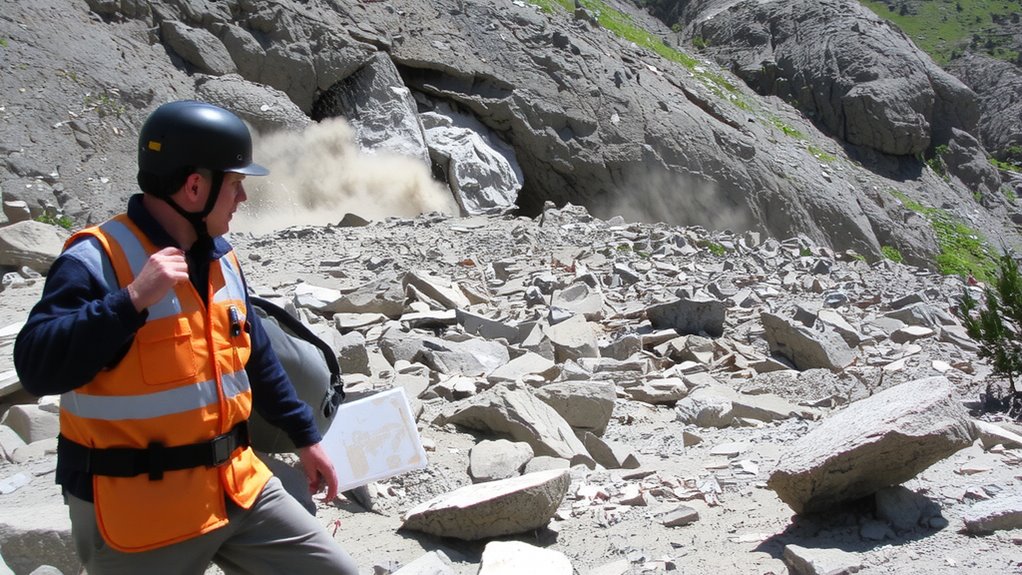
While it might be tempting to rush over and help right away, you need to stop and check if the area’s still dangerous-another rock could dislodge at any moment. Scan the slope for movement, loose debris, or stress cracks. If the scene isn’t stable, you become another victim. Establish bystander coordination-assign one person to monitor the environment, another to assist only when safe. Don’t assume gear is ready; conduct an equipment check. Verify that helmets are secured, gloves are on, and rescue tools are accessible and functional. A harness without a proper buckle test is useless. Rope strength matters only if it’s correctly anchored. Real-world rescue data shows 30% of injuries occur during uncoordinated responses. Efficiency beats speed when survival’s at stake. Clear roles and verified tools reduce risk. Stay alert. Move only when the path is confirmed safe. Reaction time improves with preparation, not panic.
Check Responsiveness and Call for Help
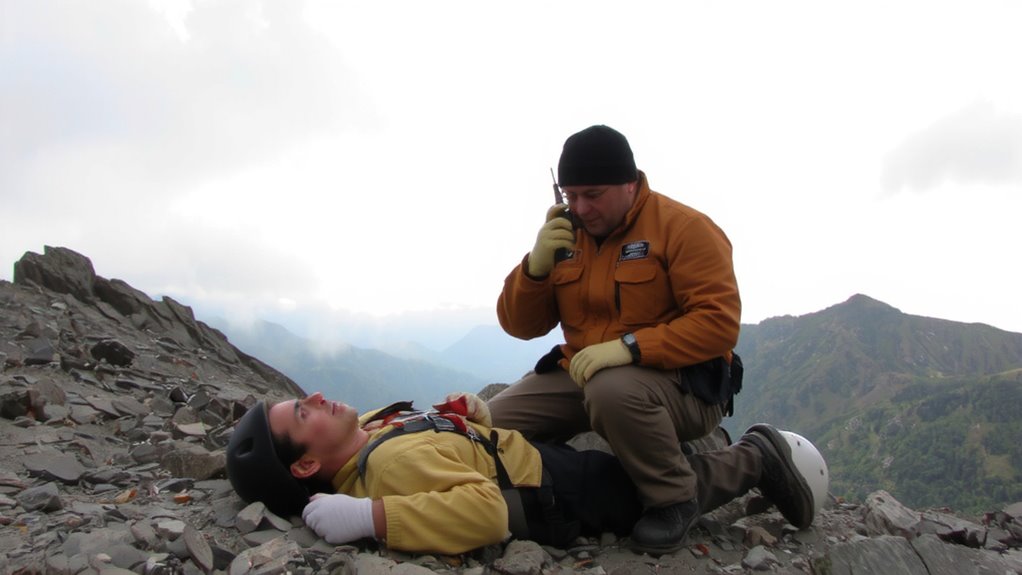
If the scene’s secure, tap the victim’s shoulder and shout, “Are you okay?” to check responsiveness-this takes seconds but confirms whether they can hear and follow commands. If there’s no response, they may be unconscious, and you need to act fast. Check consciousness quickly: look for eye movement, speech, or limb motion. Don’t waste time. If unresponsive, call for help immediately. Yell for nearby people to dial emergency services and get an AED if available. Time reduces survival odds, so alert others instead of leaving the victim alone. A single rescuer can’t manage everything-delegating speeds response. If no one’s around, use your phone on speaker while staying close. Every second counts. Responsiveness dictates your next move: if they’re alert, keep them calm and still. If not, prepare for life-threatening issues. This step is critical-delayed help increases risk.
Clear Airway, Stabilize the Neck
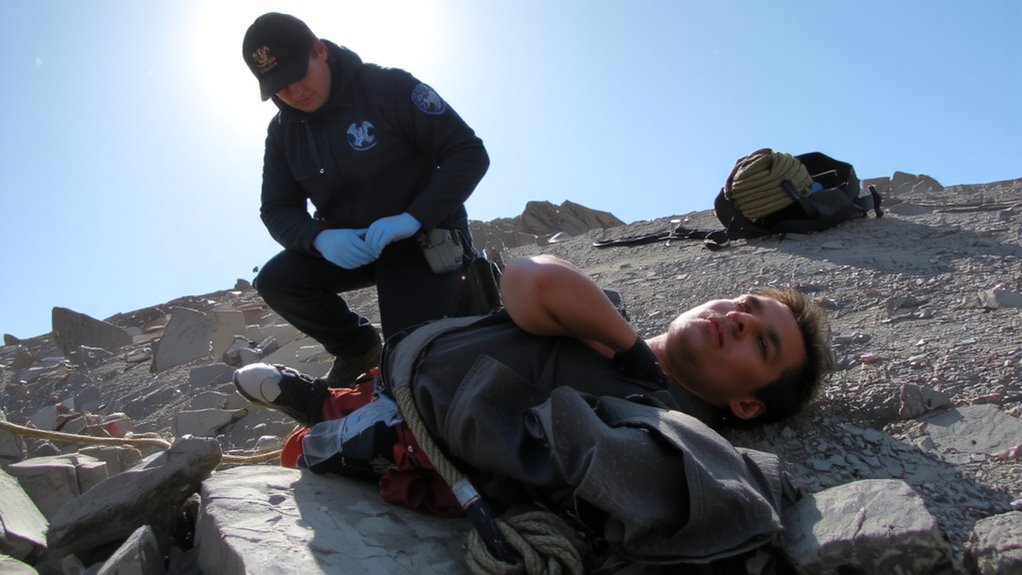
Start by keeping the head and neck aligned with the body-don’t twist or bend the spine, especially after a rockfall where neck injuries are likely. Perform cervical immobilization immediately using your hands or a rigid collar if available to prevent movement that could worsen spinal damage. Gently open the airway using a jaw-thrust maneuver instead of tilting the head back, which could compromise the spine. You’ll then assess for obstructions, blood, or debris requiring removal-this is airway clearance. Keep the neck stabilized throughout. Even minor movement can turn a survivable injury into paralysis. If a cervical collar isn’t available, maintain manual stabilization until help arrives. Success depends on consistent technique, not equipment. Your priority is preventing secondary injury while ensuring the person can breathe. Avoid improvising head elevation or rolling maneuvers unless absolutely necessary. Every action must balance risk and benefit. Be sure to include a wilderness first aid kit with essential supplies like trauma dressings and cervical immobilization tools when preparing for remote excursions.
Check Breathing and Pulse
You’ll usually check breathing and pulse right after securing the airway because delay can cost precious minutes in a trauma situation like a rockfall. Keep spinal precautions in place-don’t move the person unless absolutely necessary. Breathing should be regular and deep; shallow or absent breaths signal trouble. Check the carotid pulse for at least 5 seconds to confirm circulation.
| Action | Purpose |
|---|---|
| Look for chest rise | Confirm breathing |
| Listen for air sounds | Detect airway obstructions |
| Feel for pulse | Assess heart function |
| Note skin color | Identify shock symptoms early |
| Monitor rate | Track deterioration over time |
Shock symptoms like pale skin, rapid pulse, and shallow breaths mean the body’s losing control. Early identification improves survival. Always maintain spinal precautions-even subtle neck movement can worsen injury. Your calm, quick actions set the outcome.
Look for Brain Injury and Internal Bleeding
What signs give away a serious head injury or internal bleeding after a rockfall? You need to act fast. Look for confusion, slurred speech, or loss of consciousness-these point to cognitive impairment. Unequal pupils, seizures, or weakness on one side suggest neurological deficits. Vomiting, especially repeatedly, or a worsening headache can signal brain swelling. Watch for clear fluid or blood from the ears or nose. Internally, pale, cool skin, rapid pulse, and low blood pressure mean possible bleeding. The person may feel lightheaded or grow restless. Abdominal rigidity or swelling hints at internal trauma. Don’t wait for all symptoms. Early signs are subtle. You won’t always see bruises or wounds. Assess every victim thoroughly, even if they seem fine at first. Delayed symptoms can be deadly. Trust your checks, not assumptions.
Spot Wounds, Sprains, and Broken Bones
Injuries from a rockfall often leave behind visible clues-cuts, swelling, or misaligned limbs-that demand your immediate attention. You should check each person head to toe for wounds, sprains, and broken bones. Look for visible fractures where bone pierces the skin or causes unnatural angles. These are urgent and can’t wait. Swollen joints suggest sprains or internal damage, even if no cut is present. Don’t ignore them. Use gentle touch to compare limbs side to side; symmetry helps spot breaks. If a limb looks crooked or a joint balloons quickly, treat it as serious. Stabilize the area without realigning. Stop bleeding with direct pressure, but don’t probe wounds. Your goal now is accurate spotting-not treatment. Every second counts, so stay focused, move fast, and keep your assessment systematic and thorough.
Prioritize Care Until Rescue Arrives
Time is the critical factor when deciding who needs help first. You must identify life-threatening injuries quickly-airway blockages, severe bleeding, or chest trauma-and treat them immediately. Prioritize victims showing signs of shock: pale skin, rapid pulse, shallow breathing. Perform shock management by laying them flat, elevating legs if no spinal injury is suspected, and keeping them warm. Apply direct pressure to control bleeding. Reassess every few minutes. If someone is conscious, provide emotional support with clear, calm communication-don’t minimize their fear, but focus them on breathing. Avoid giving food or water. Monitor airway, breathing, and circulation until help arrives. Your actions stabilize, not cure. Stay efficient. Every decision must balance urgency and practicality. Rescue teams will take over, but your rapid, measured response improves survival odds substantially. A well-equipped emergency medical kit can provide essential supplies for managing critical injuries on the scene.
On a final note
You’ve checked the scene, cleared the airway, and assessed breathing, pulse, and injuries. You’re monitoring for shock and internal bleeding while immobilizing suspected fractures. This field evaluation keeps the victim stable until professional help arrives. Your actions bridge the gap between accident and advanced care. No gear or tool replaces vigilance and speed. Prioritize life-threatening issues first-airway, breathing, circulation-then prevent further harm.