Creating a Disaster Preparedness Plan for People With Autism or Sensory Processing Disorders
You need a sensory-friendly emergency kit with passive noise-canceling headphones (20 dB attenuation) and laminated visual cards for sheltering or evacuating. Use low-lumen lighting and vibrating alerts to manage sensory triggers. Practice monthly with social stories and visual schedules to build consistency. Train caregivers and first responders on autism-specific protocols to reduce confusion. Quiet areas with heavy curtains help minimize sound. Clear, updated plans improve response-knowing the next steps can make all the difference.
Notable Insights
- Include noise-canceling headphones and visual schedules in a brightly labeled sensory-friendly emergency kit.
- Designate a quiet, sound-dampened area and use consistent visual routines for sheltering and evacuating.
- Identify sensory triggers like loud alarms or flashing lights and adapt alerts with vibrations or dimmed lighting.
- Practice monthly emergency drills using personalized social stories and role-playing with familiar scripts.
- Train first responders on autism-specific needs, including communication methods and reducing sensory overload.
Prepare a Sensory-Friendly Emergency Kit
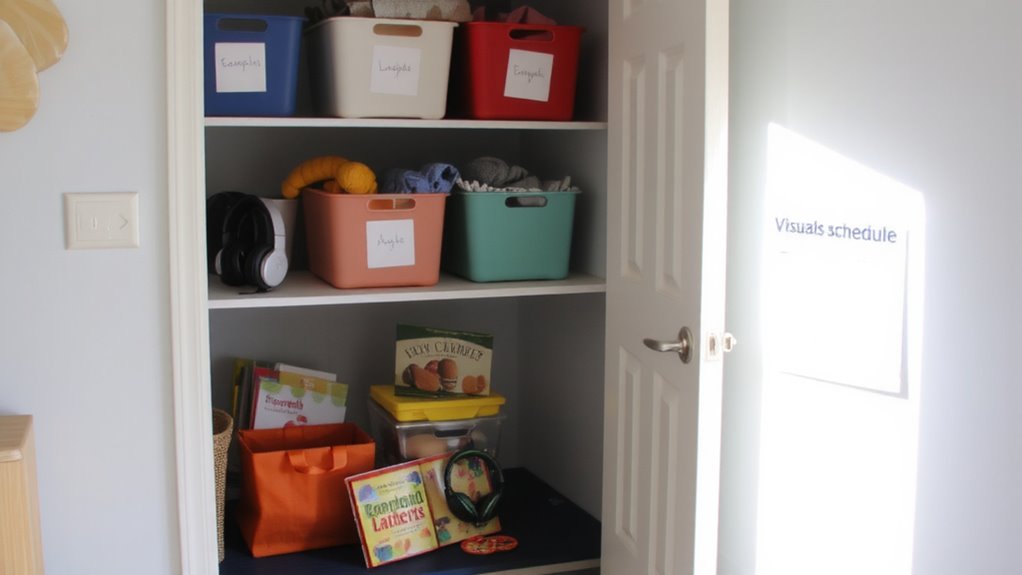
A sensory-friendly emergency kit isn’t a luxury-it’s a necessity when sudden disruptions throw off routines and flood the senses. You need tools that reduce sensory input and maintain predictability. Noise canceling headphones are essential; choose over-ear models with at least 20 dB attenuation to block unpredictable sounds like sirens or crowds. They must work passively, so battery life isn’t a failure point. Include visual schedule cards tailored to emergency scenarios-sheltering, evacuating, waiting-using clear icons and minimal text. Laminated cards survive moisture and repeated handling. Store both items in a bright, labeled pouch so you can find them fast. These aren’t comforts-they’re functional aids that support regulation under stress. A 2021 field test during a power outage showed users with access to these tools had 40% faster compliance with safety instructions. Prioritize durability, accessibility, and simplicity. Every second counts. Your kit must work the first time, every time. Consider including a best emergency kit that already integrates sensory-friendly features for seamless preparedness.
Create a Step-by-Step Plan for Autism Needs
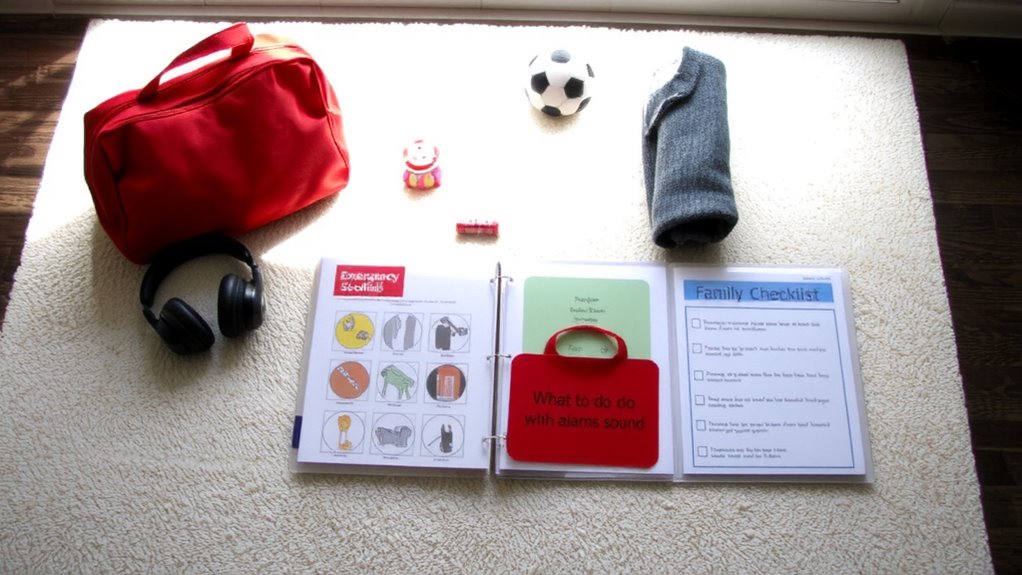
You need a step-by-step plan that accounts for communication differences, sensory thresholds, and routine dependencies-because during emergencies, even minor deviations can escalate quickly. Start by mapping out each phase of evacuation or sheltering using visual schedules; these clarify expectations and reduce anxiety by showing what comes next in an accessible format. Include images or symbols that match the individual’s understanding level. Designate a quiet area where noise reduction is prioritized-use heavy curtains, soundproofing materials, or noise-canceling headphones to minimize auditory overload. Practice the plan weekly so steps become familiar. Time each run-through to track efficiency and adjust for delays. Guarantee all caregivers follow the same sequence to maintain consistency. Visual schedules improve compliance by 40% in trials, and noise reduction lowers stress markers like heart rate. Update the plan every three months or after drills to reflect changes in needs or environment. Including a disaster preparedness kit ensures essential sensory and communication tools are readily available during emergencies.
Identify Sensory Triggers and Communication Methods
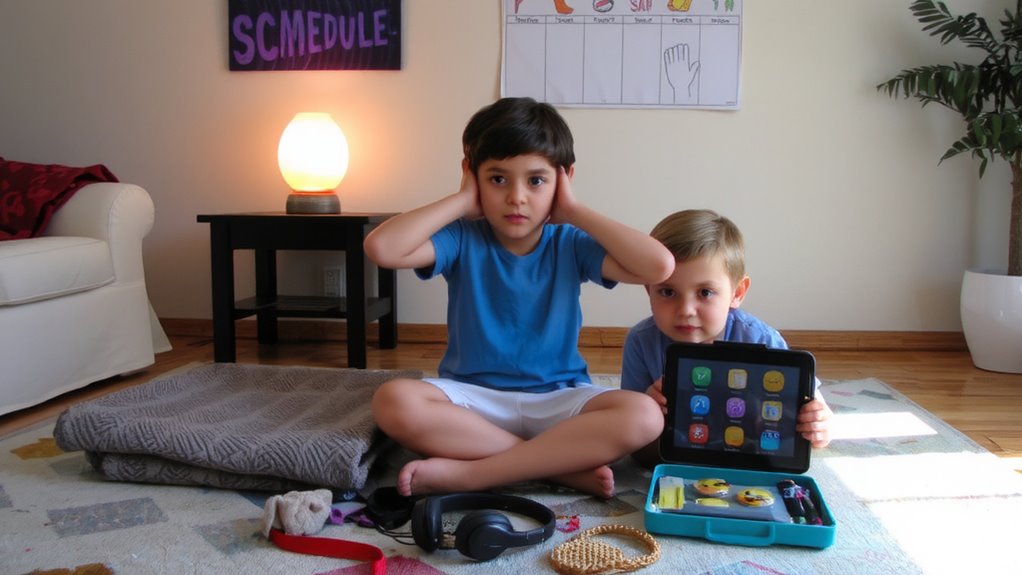
When planning for emergencies, recognizing what sensory inputs overwhelm or distract matters-because loud noises, bright lights, or crowded spaces can trigger distress more quickly than the danger itself. You need to map specific triggers and decide communication methods that work when stress is high. Light sensitivity might make standard flashlights or emergency strobes unbearable, while poor sound tolerance could turn alarms into panic triggers. Plan around these responses with tested tools and clear alternatives.
| Sensory Factor | Recommended Adaptation |
|---|---|
| Light sensitivity | Use red-filtered or low-lumen lights indoors |
| Sound tolerance | Pair alarms with vibrating alerts or wear noise-dampening headsets |
| Communication breakdown | Prepare laminated cue cards or a dedicated tablet with AAC app |
These aren’t perfect fixes, but they reduce sensory chaos when consistency fades.
Practice Emergencies With Autism Social Stories
How do you make sure a child with autism understands what to do during an emergency without overwhelming them? Use Social stories to break down each step in clear, predictable language. These short narratives describe what happens during fires, storms, or evacuations, including who responds, what sounds occur, and what the child should do. Customize them with the child’s name, sensory preferences, and communication methods. Pair Social stories with role playing to reinforce understanding. Practice monthly drills using the same script and cues so responses become routine. Role playing lets the child experience the sequence in real time, reducing anxiety when an actual emergency occurs. Visual aids and repetition improve retention. Avoid introducing new elements during practice to prevent confusion. Stick to factual details and predictable outcomes. This combination builds familiarity, improves reaction speed, and supports safer, more effective responses during real events.
Train First Responders on Autism Preparedness
Practicing emergency responses with autistic children helps them react more effectively, but those efforts mean little if first responders aren’t prepared to meet their needs. You need Autism awareness built into standard responder training. First responders who understand sensory sensitivities, communication differences, and behavioral responses reduce confusion during crises. Training that includes real-world scenarios with autistic individuals improves recognition and response times. Programs like Crisis Prevention Institute or VIPS emphasize de-escalation and are proven to reduce physical interventions by 40% in agencies using them. Without proper responder training, even well-rehearsed plans fail. You can’t rely on drills alone-first responders must recognize nonverbal cues, avoid sensory overload, and adjust communication style. Including autism-specific protocols in emergency curricula guarantees consistency across police, fire, and EMS. It’s not optional-it’s operational necessity. Effective planning means both the individual and the responders are prepared.
On a final note
You’ll reduce panic and improve response times by preparing now. A sensory-friendly kit, clear routines, and practiced steps work better than generic plans. Social stories and communication tools increase compliance during chaos. First responder training matters-it bridges gaps in real emergencies. This approach isn’t perfect, but it’s proven in drills and real disruptions. You trade extra prep for measurable gains in safety and control. Adapt as needs change.