Creating a Fireproof Zone Around Your Home to Prevent Wildfire Spread
Create a fireproof zone by dividing your property into three zones: 0–30 ft, 30–100 ft, and beyond 100 ft. Clear dry leaves, pine needles, and wood piles near the house. Use fire-resistant plants with low oil content and space them widely. Install 1/8-inch metal mesh on vents and seal gaps around windows. Use gravel, brick, or concrete near structures. Maintain each zone seasonally-debris and dry growth increase risk. Proper spacing and materials outperform total vegetation removal. Details on optimizing each zone follow.
Notable Insights
- Create defensible space with three zones: 0–30 ft, 30–100 ft, and beyond 100 ft, each with specific fuel reduction measures.
- Remove dry leaves, pine needles, dead branches, and wood piles near the house to eliminate ignition sources.
- Use fire-resistant plants with high moisture content and low resin, spaced to prevent flame spread.
- Seal vents with 1/8-inch metal mesh and close gaps around windows, doors, and eaves to block embers.
- Maintain all zones seasonally by clearing debris, trimming vegetation, and inspecting hardscaping and vents.
Define the 3 Defensible Space Zones
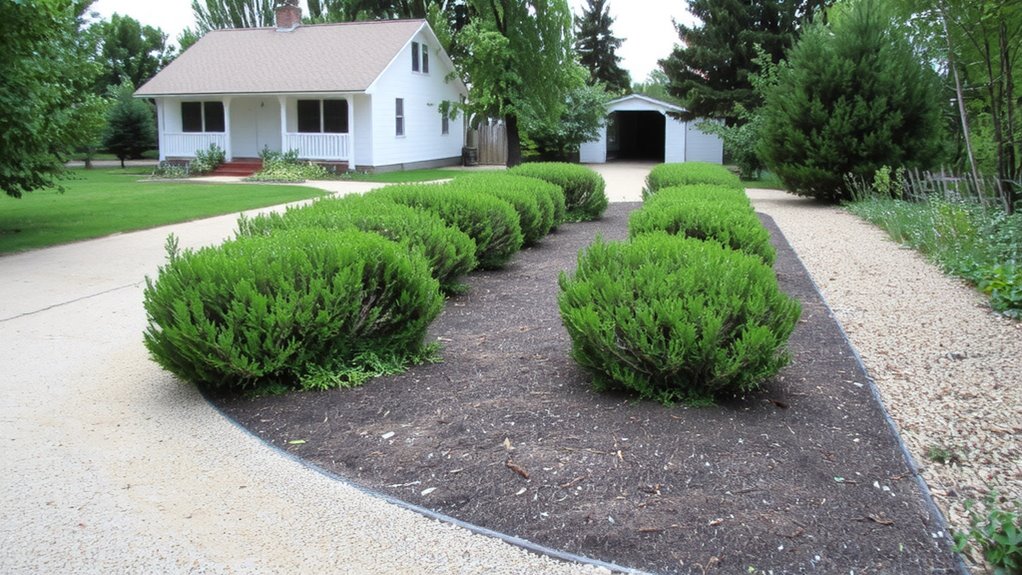
While you might think a fire-safe area around your home is just about clearing brush, it’s actually divided into three specific zones, each with its own purpose and requirements. Zone 1 extends 0 to 30 feet from your home, where you need tight ember barriers and minimal vegetation to stop ignition. Zone 2 runs 30 to 100 feet out, requiring spaced plants and defined spark gaps to slow flame spread. Zone 3 goes beyond 100 feet, focusing on reducing fuel density without eliminating all greenery. Each zone builds defense in layers, improving your home’s chance of surviving a wildfire. Proper spacing, material choices, and maintenance matter more than complete removal. You don’t need perfection-just measurable reductions in risk. Embers travel far, so spark gaps between objects and effective ember barriers are essential across all zones. Simple, consistent actions in each zone offer the best protection.
Remove Flammable Plants and Yard Debris
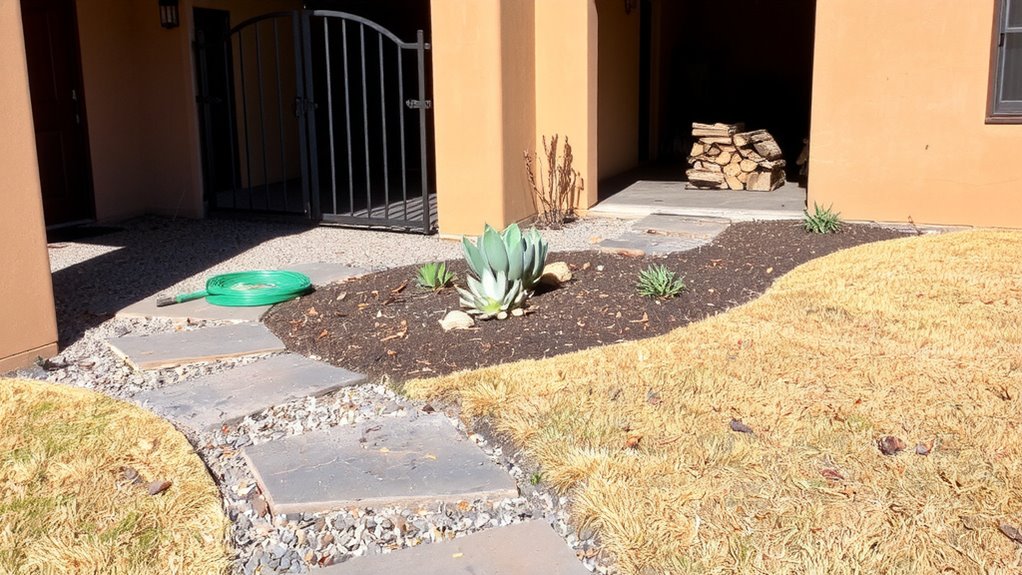
Flammable vegetation and accumulated yard debris are prime fuel for wildfires, so clearing them is non-negotiable for home safety. You need to eliminate dry leaves, overgrown shrubs, and other combustible materials within 30 feet of your home. These items catch fire easily and spread flames quickly under high heat.
| Item | Location | Action |
|---|---|---|
| Dry leaves | Near foundation | Rake and remove weekly |
| Overgrown shrubs | Close to house | Trim or remove entirely |
| Pine needles | Roof and gutters | Clean every season |
| Dead branches | Lawn and garden | Dispose of promptly |
| Wood pile | Adjacent to deck | Relocate beyond 30 feet |
Regular maintenance reduces ignition risks. You can’t afford to overlook these hazards. Clearing them isn’t optional-it’s essential.
Use Fire-Resistant Plants and Materials
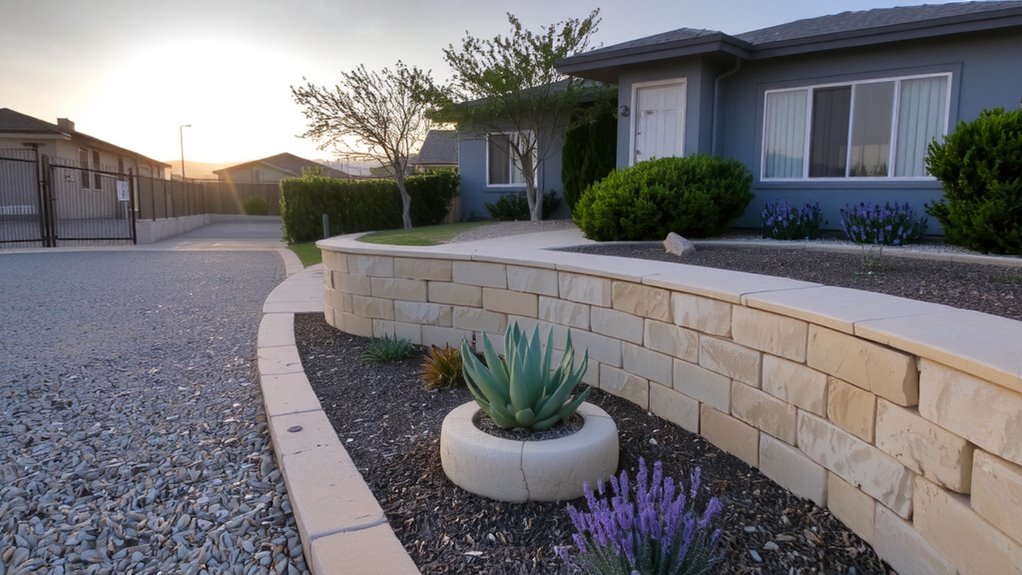
Fire-resistant landscaping isn’t about creating a barren yard-it’s about choosing plants and materials that won’t fuel a wildfire. Your plant selection should focus on species with high moisture content, low oil or resin, and minimal leaf litter-like dwarf fruit trees, rockrose, or sedum. These plants ignite less easily and slow fire spread. Space them properly to prevent flame travel. For hardscaping, use materials with proven material durability: concrete, brick, or gravel. They don’t burn and resist ember impact better than wood mulch or decks. Avoid dry meadows or dense shrubs near the house. Instead, replace flammable elements with compact, irrigated beds and non-combustible surfaces. These choices won’t stop a direct flame front, but they reduce ignition risk from radiant heat and embers. The goal is to create defensible space using practical, tested options. Make smart trade-offs: a slightly less ornamental yard is a safer one. You’re not designing for beauty-you’re building resilience.
Seal Vulnerable Spots Where Embers Strike
Since embers can travel over a mile ahead of a wildfire and ignite homes long before flames arrive, sealing vulnerable entry points is critical. You need to block ember entry through gaps in construction. Embers as small as 1/8 inch can penetrate openings, so sealing them improves your home’s survival odds. Install 1/8-inch metal mesh for vent screening-standard 1/4-inch mesh isn’t sufficient. Pair it with exterior-rated caulk to seal joints around windows, doors, and siding. Box in open eaves and deck undersides to eliminate nesting spots. Use metal flashing where wood meets the foundation. These measures reduce ignition risk without altering your home’s appearance. Testing shows homes with sealed vulnerabilities resist ignition up to 50% longer. You’re not fireproofing completely, but you’re removing easy targets. Every sealed gap lowers risk. Do it now-before fire season arrives.
Maintain Your Zone Every Season
You’ll need to inspect and refresh your defensible space every season to maintain its effectiveness. Seasonal inspections help you spot accumulating debris, overgrown plants, or new ignition risks near your home. Each season brings different weather impacts-spring rains fuel fast-growing grass, summer heat dries materials quickly, fall leaves add fuel, and winter winds carry embers farther. Clearing vegetation, trimming shrubs, and removing dead material within 30 feet of your home should be routine. Check that rock or gravel borders remain intact and spaced at least 5 feet wide. Replace mulch that decomposes or blows into piles. Make sure vents stay covered and decks stay free of flammable items. These steps don’t guarantee safety, but they reduce risk. Regular upkeep balances effort and protection. Neglect increases vulnerability more than any single design flaw. Plan for maintenance as part of your fire readiness, not an afterthought.
On a final note
You’ve reduced wildfire risk by creating defensible space. Clearing zones, using fire-resistant materials, and sealing entry points stop embers from igniting your home. Maintenance matters-debris builds up, plants grow back. These steps don’t guarantee safety, but they lower odds markedly. No solution is perfect, but this approach is proven in real-fire conditions. Follow guidelines yearly, prioritize gaps, and adjust as needed. It’s practical, not foolproof, but it’s your best line of defense.