How to Dry and Store Wild Fish for Year-Round Protein Access
Pick lean, firm-fleshed fish like perch or pike-they dry evenly and resist spoilage. Gut and fillet right after catching, then brine in a 10–15% salt solution below 40°F for 6–12 hours. Dry using air or smoke at 70–90°F with low humidity and steady airflow; protect from insects with mesh. Check by bending-fish should crack, not fold. Store in vacuum-sealed bags with oxygen absorbers in a cool, dark place below 60°F. Proper prep means you’ll get safe, shelf-stable protein for up to a year-details on each step follow.
Notable Insights
- Choose lean, firm-fleshed fish like perch or pike for best drying results and long-term storage.
- Gut and fillet fish immediately, then brine in a 10–15% cold salt solution for 6–12 hours.
- Dry fish using air-drying, sun-drying, or smoking at 60–85°F with low humidity and good airflow.
- Test for full dryness by bending-fish should crack, not fold, and feel leathery and brittle.
- Store dried fish in vacuum-sealed bags with oxygen absorbers in a cool, dark, dry place.
Pick Lean Fish for Best Drying Results
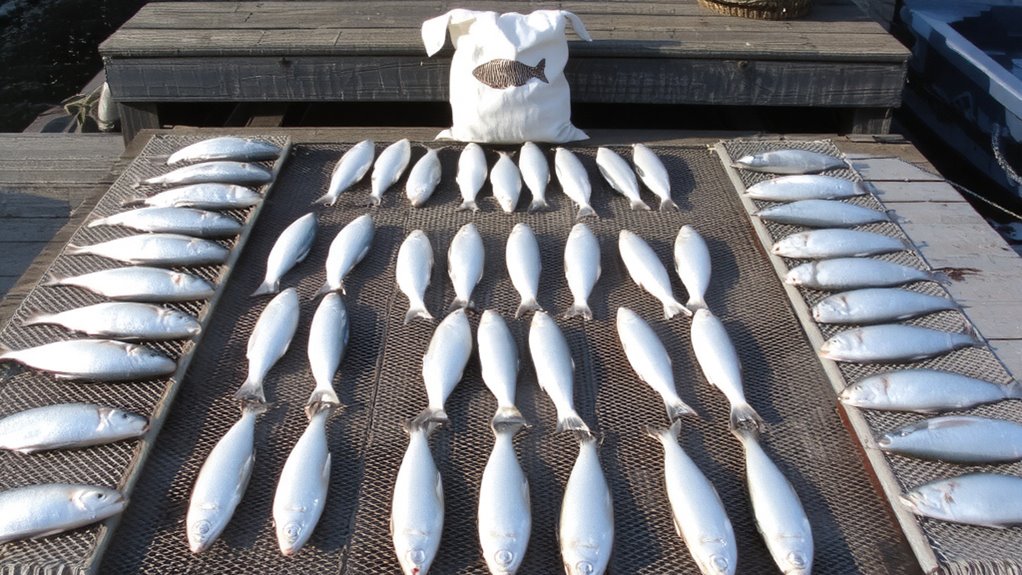
Lean fish like perch, pike, and walleye work best for drying because they’ve got less fat, which means they’ll last longer without spoiling. Your fish selection directly impacts how well the meat responds to drying methods-high-fat fish go rancid faster, even when fully dehydrated. Choose firm-fleshed species that hold their structure during prolonged drying. Smaller fish dry more evenly, but larger ones provide more yield if sliced uniformly. Air-drying, sun-drying, and smoker drying all work, but each has different moisture removal rates and contamination risks. Smokers offer better temperature control, reducing spoilage during humid conditions. Air-drying works in consistently dry, warm climates but requires mesh protection from insects. Your environment shapes which drying method fits best. Improper fish selection or inconsistent drying methods compromise shelf life. Stick to lean, fresh-caught fish. Monitor drying progress by texture-done means leathery and snap-free.
Gut, Fillet, and Brine Fish Before Drying
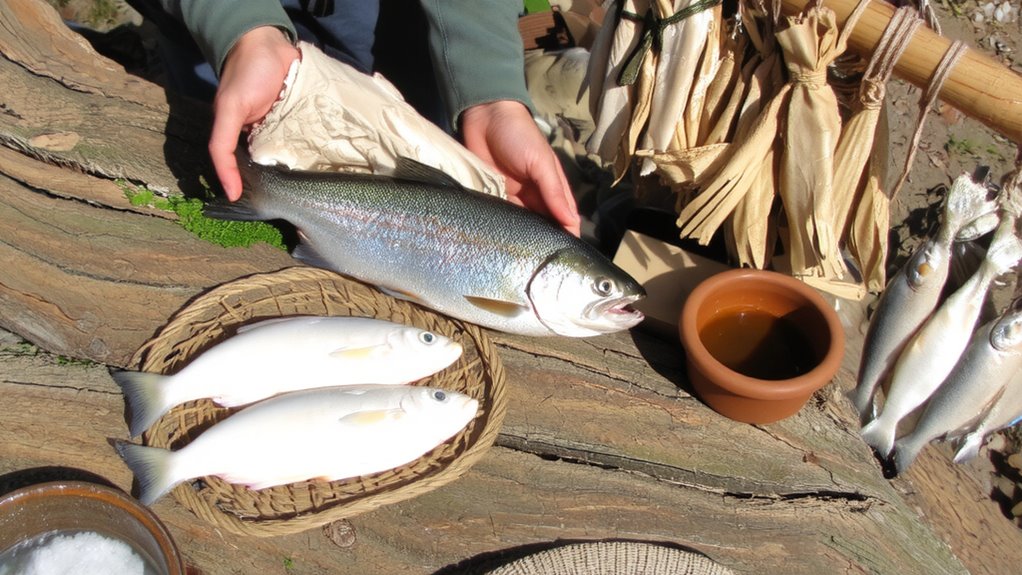
Once you’ve got your fish, gut and fillet them right away to prevent spoilage-keeping the meat clean and cool is critical for safe drying. Use a sharp knife and follow the natural lines of fish anatomy to remove entrails and separate fillets efficiently. Trim off dark meat and damaged tissue, which can spoil faster. After filleting, soak the pieces in a brine solution to stabilize moisture and deter bacteria. The salt concentration should be around 10–15%-too low and it won’t protect the fish; too high and the meat becomes overly stiff and salty. Brining for 6–12 hours, depending on thickness, balances preservation with edibility. This step slows microbial growth and prepares the fish for consistent drying. Cold brining (below 40°F) prevents early spoilage in warm conditions. Prepping properly now guarantees a safer, longer-lasting dried product.
Air-Dry or Smoke Fish Safely
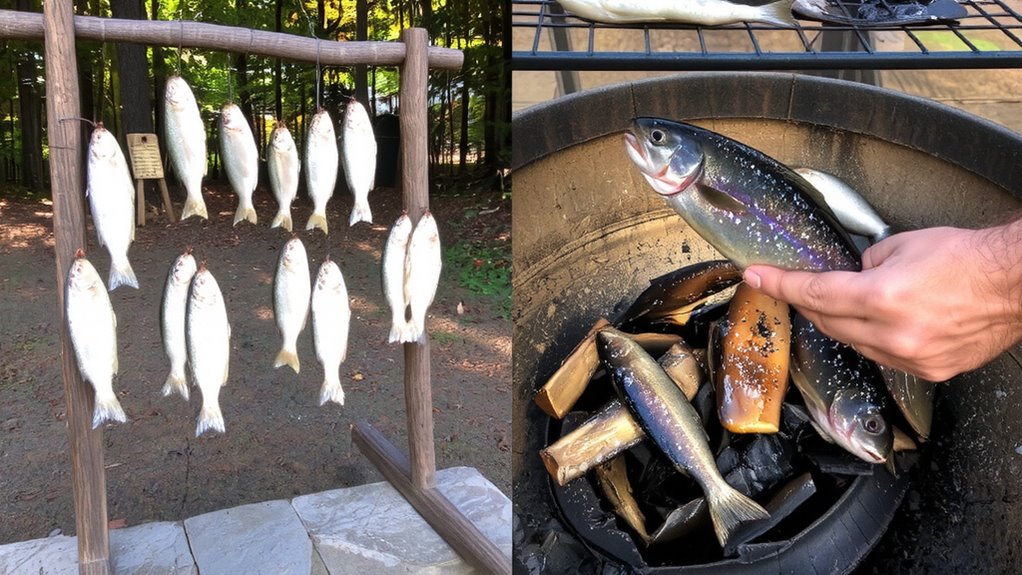
If you’re set on drying fish without refrigeration, air-drying or smoking are your two reliable options, each with clear requirements for safety and effectiveness. Safe curing starts with consistent temperatures and adequate airflow. Air-drying works best in low-humidity areas with temps between 70–90°F. Smoking adds flavor and preservation, but cold smoking requires precise control below 85°F to prevent bacterial growth while allowing gradual moisture loss. You’ll need reliable fuel and a steady draft. Below is a quick comparison:
| Method | Temp Range (°F) | Time Required |
|---|---|---|
| Air-drying | 70–90 | 6–12 hours |
| Cold smoking | 60–85 | 6–24 hours |
| Safe curing | Below 90 | Varies |
Choose based on your climate and gear. Both methods work when done right.
Check Dryness to Prevent Spoilage
While you’re aiming to store fish long-term, skipping the dryness check risks spoilage no matter which method you used. You need to verify low moisture content before storage-any remaining water supports bacterial growth. Test by bending a piece; it should crack, not fold. If it feels leathery or soft, it’s not done. Touch the surface: it must be dry, never tacky. High moisture content compromises shelf life and invites mold detection during storage. Inspect all surfaces, especially along bones and thick muscle areas, where dampness lingers. Use a food dehydrator with a timer if air-drying in humid climates, since uneven drying is common. Smoke-dried fish also needs this check-smell and color don’t guarantee dryness. Confirm complete dehydration with physical tests, not assumptions. Your fish must be brittle to prevent spoilage. Skipping this step wastes effort and risks food safety.
Store Dried Fish Long-Term
Since dried fish must stay dry to prevent spoilage, you’ll need airtight containers with moisture barriers-like vacuum-sealed bags or heavy-duty ziplocks with oxygen absorbers-to lock in quality and keep out humidity. Vacuum sealing removes air, reducing oxidation and microbial growth, which extends shelf life. Use food-grade containers or mylar bags for added protection. Store containers in a cool, dark place-light and heat accelerate rancidity. Climate control matters: temperatures below 60°F slow spoilage, and stable humidity below 60% prevents rehydration. Uncontrolled environments, like sheds or garages, risk quality loss. Rotate stock every 6–12 months. Vacuum-sealed dried fish in climate-controlled storage lasts up to a year; without it, shelf life drops to 3–6 months. No method stops degradation entirely, but combining vacuum sealing with climate control maximizes longevity. Inspect regularly for mold or off-odors. These steps guarantee reliable protein without refrigeration.
On a final note
You’ve got lean fish cleaned, brined, and dried-now store them right. Keep dried fish in airtight containers in a cool, dark place; vacuum sealing adds shelf life. Moisture ruins batches, so check for brittleness before storing. Properly dried and stored, fish last 6–12 months. Rotate stock, inspect often. It’s not fail-safe, but with care, it’s reliable protein when fresh food isn’t an option.