Using Hazelnuts to Create a Sustained-Energy Survival Butter
You’re using hazelnuts because they pack 180 calories per ounce, mostly from stable monounsaturated fats that resist rancidity. Their natural oils support sustained energy without spiking insulin. Roast and grind fresh, firm nuts for reliable butter texture. Add MCT oil or crushed peanuts to boost calories efficiently. Preserve with rosemary extract and vacuum sealing-extends shelf life to two years. Store in dark, cool conditions. You’ll see how proper prep and storage maximize yield and longevity under stress.
Notable Insights
- Hazelnuts provide sustained energy due to high monounsaturated fats, protein, and 180 calories per ounce.
- Dry-roast fresh, firm hazelnuts to improve oil release and ensure optimal butter texture.
- Use a hand-crank grinder or food processor to make butter off-grid with minimal equipment.
- Boost caloric density by blending in coconut oil, MCT oil, or crushed nuts like peanuts or almonds.
- Preserve butter up to two years using vacuum sealing, oxygen absorbers, and rosemary extract in dark, cool storage.
Why Hazelnuts Excel in Survival Diets
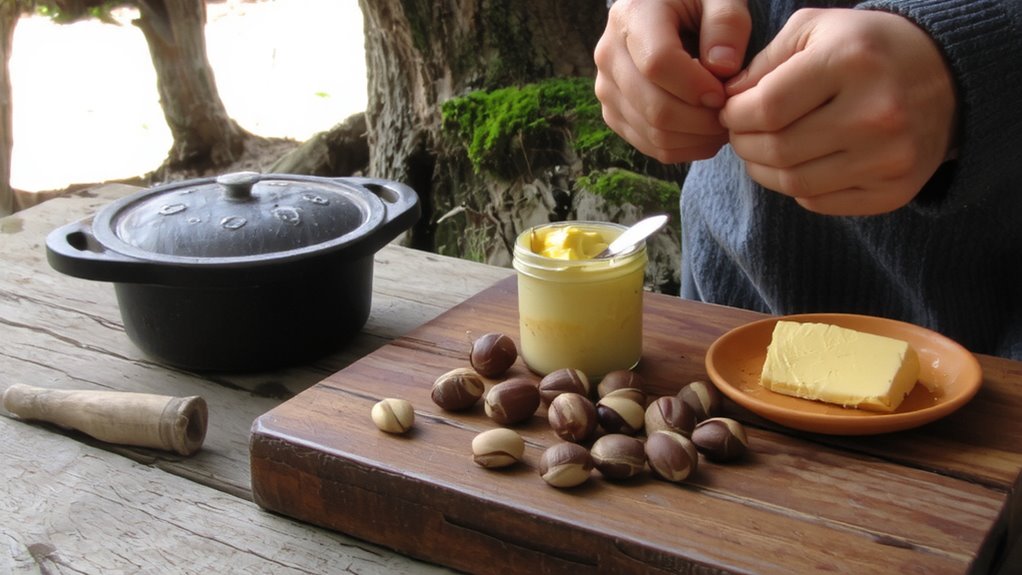
Nutrition counts when survival’s on the line, and hazelnuts deliver. You need nutrient density, and hazelnuts provide it-packed with healthy fats, protein, fiber, and essential vitamins like E and B6. Each serving offers around 17 grams of fat, mostly monounsaturated, supporting cell function and energy stability. With roughly 180 calories per ounce, they supply sustained fuel without sharp insulin spikes. Their natural oils resist rancidity longer than other nuts, aiding shelf life in field conditions. Unlike simple carbs, hazelnuts keep energy levels steady over hours, reducing hunger pangs and mental fatigue. You’ll maintain focus and physical endurance longer. They’re lightweight, compact, and don’t require refrigeration, making them practical for emergency packs. While not a complete protein, they complement other survival foods well. In real-world tests, hazelnut-based rations improved caloric retention and morale over weeks. For dependable nutrient density and energy stability, few wild-harvestable foods match their balance.
Choose and Prepare Fresh, High-Quality Hazelnuts
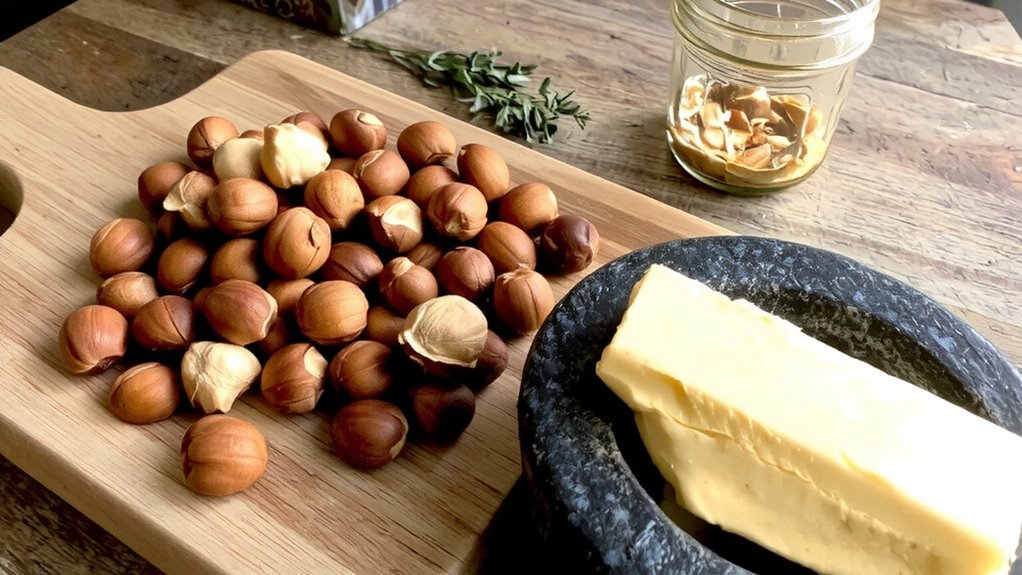
Look for plump, firm hazelnuts with smooth shells and no cracks-quality starts at harvest. Your nut selection directly affects butter yield and shelf life. Avoid shriveled or lightweight nuts; they indicate age or poor storage. When possible, perform freshness testing by cracking open a sample. Fresh kernels are crisp and creamy, not rubbery or discolored. If nuts smell musty or stale, skip them-oxidation degrades fats and reduces energy density. Choose in-shell hazelnuts when you can; they stay fresh longer than shelled ones. Store them in a cool, dark place until use. Moisture and heat are the main threats to quality, so keep nuts dry. Airtight containers help, especially in humid environments. You won’t need lab tests-trust your senses. Good nut selection means better texture, longer storage, and reliable performance when you need it most.
Make Survival-Grade Hazelnut Butter in 5 Steps

With the right tools and technique, turning fresh hazelnuts into survival-grade butter takes just five steps. First, dry-roast the nuts to enhance oil content and ease of blending. Cool slightly, then blend in a sturdy processor-this step demands patience as the oils release. Scrape the sides often to guarantee even consistency. Finally, store in an airtight container. Your equipment needs are minimal: a reliable food processor, baking sheet, and storage jars. For off-grid scenarios, consider a hand-crank grinder; it’s slower but works without power. Pair this with basic foraging tips-harvest nuts in late summer when they drop naturally, and check for firmness and absence of mold.
| Step | Purpose |
|---|---|
| Roast | Enhance oil release |
| Grind | Break down cell walls |
| Store | Preserve freshness |
Boost Energy With High-Calorie Add-Ins
A handful of high-calorie add-ins can push your hazelnut butter from nutritious to survival-ready without much effort. You should consider ingredients with high calorie density to maximize energy per gram. Adding crushed peanuts or almond butter increases fat content, boosting available energy sources. Each tablespoon of oil-like coconut or MCT-adds about 120 calories, making it a compact option. Ground flaxseed or chia seeds contribute healthy fats and fiber, though they offer slightly less calorie density than oils. Honey increases calories and enhances palatability, but use it sparingly to avoid rapid blood sugar spikes. These add-ins aren’t just fillers-they extend sustained energy output. When weight and space matter, prioritize ingredients delivering the most calories per ounce. Test combinations ahead of time to confirm texture and stability under stress. Properly blended, your butter stays practical and efficient in real survival scenarios.
Extend Shelf Life With Natural Preservation
If you’re storing hazelnut butter long-term, oxidation and moisture are your main concerns, so choosing the right natural preservatives makes a real difference in shelf stability. Rosemary extract and vitamin E (tocopherols) slow rancidity by inhibiting lipid oxidation, with studies showing a 40–60% delay in spoilage when used effectively. These additives don’t eliminate the need for proper packaging but improve resistance during storage. For best results, combine them with vacuum sealing, which removes 95–99% of air, reducing oxygen exposure. Add oxygen absorbers rated at 300cc per quart jar to capture residual O₂ and maintain freshness longer. Vacuum sealing also prevents moisture ingress, which could promote microbial growth. Using both methods together extends shelf life more than either alone. Glass jars with oxygen absorbers outperform plastic due to lower permeability. You’ll notice less oil separation and off-flavors over time. This approach isn’t foolproof, but it’s proven under real storage conditions.
Store Hazelnut Butter for Long-Term Emergencies
For long-term emergency storage, vacuum-sealed glass jars with oxygen absorbers offer the best protection for hazelnut butter, extending shelf life up to 18–24 months when stored at 70°F or below. You’ll want to use opaque or amber glass to block light and reduce oxidation, which degrades quality over time. Metal lids with oxygen-barrier seals work better than plastic, ensuring no air gets in. Once opened, refrigerate and use within three months. While plastic containers are lighter and less breakable, they allow more oxygen transfer than glass, making them less ideal for long-term storage methods. Mylar bags with oxygen absorbers are another option, though they’re harder to reseal after opening. When choosing container types, prioritize airtight seals and chemical resistance. Always label jars with dates and lot numbers so you rotate stock properly. Cold storage extends life further, but isn’t required if conditions stay cool and stable. For maximum durability and moisture resistance, consider using best Mylar bags designed specifically for long-term food preservation.
Use Hazelnut Butter in Survival Meals and Snacks
Think shelf-stable energy: hazelnut butter packs 190 calories per ounce and delivers 7 grams of heart-healthy monounsaturated fats, making it a compact choice when every bite counts. You can spread it on whole-grain crackers or stir it into oatmeal for sustained fuel during extended power outages or evacuations. It integrates easily into emergency rations because it doesn’t require refrigeration and resists spoilage. For flavor pairing, combine it with dried fruit or dark chocolate to boost palatability without sacrificing nutrition. Use it in DIY energy bars with oats and seeds-just mix, press, and slice. It adds dense calories and helps bind ingredients without cooking. In real-world tests, hazelnut butter maintains texture and taste after six months in sealed containers. It’s heavier than peanut butter, so consider weight if packing for mobility. Still, its nutrient profile and versatility make it a reliable option when planning meals that must last.
On a final note
You’ve got a reliable, high-energy food source when you make hazelnut butter the right way. It delivers 180 calories per ounce, supports sustained stamina, and lasts up to six months refrigerated. Adding honey or salt improves palatability and shelf life, but increases weight. Store it in vacuum-sealed jars to limit oxidation. Use it in meals or straight from the jar. It’s efficient, calorie-dense, and field-tested for real scenarios.