Weatherproofing Roof Shingles Before Peak Storm Season Begins
Check your shingles now for curling or granule loss-they’ll fail under storm stress. Clear debris from gutters and roofs to prevent water backup. Seal gaps around vents and chimneys with durable, weather-resistant sealant and replace corroded flashing. If ice dams are common, install an ice and water shield along eaves; it lasts over 20 years and blocks seepage. For widespread damage or exposed underlayment, bring in a pro-DIY fixes risk leaks. More details follow on long-term protection.
Notable Insights
- Inspect shingles for curling or granule loss to identify vulnerabilities before storms.
- Clear leaves, branches, and debris from roof and gutters to prevent water buildup.
- Seal gaps around vents and chimneys with weather-resistant sealant to block water intrusion.
- Install ice and water shield along eaves in cold climates to prevent ice dam leaks.
- Hire a licensed roofer for significant damage or signs of storm-related structural issues.
Inspect Shingles for Damage Before Storm Season
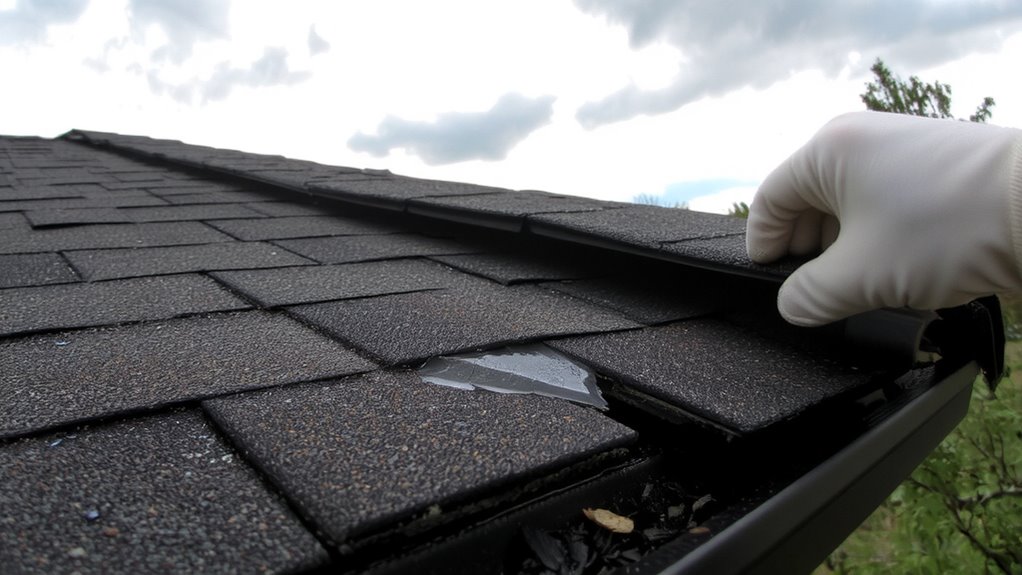
Before storm season hits, it’s smart to walk the roof line and check for shingle damage, since even small issues can lead to big problems under heavy wind or rain. You’ll want to look for shingle curling-edges lifting or warping-which compromises the seal and lets water sneak in. Granule loss is another red flag; if you see bald spots or gutters filling with gritty residue, the shingles are eroding and less effective. Both signs suggest reduced lifespan and weaker weather resistance. Older roofs show these issues more, but even newer installations can develop flaws due to poor ventilation or installation errors. Spotting curling or granule loss early means you can plan repairs before leaks start. Don’t wait for storms to expose weaknesses-inspect now, document problem areas, and decide whether patching or full replacement makes sense. Prevention beats emergency fixes when the wind picks up.
Remove Leaves and Branches From Roof and Gutters
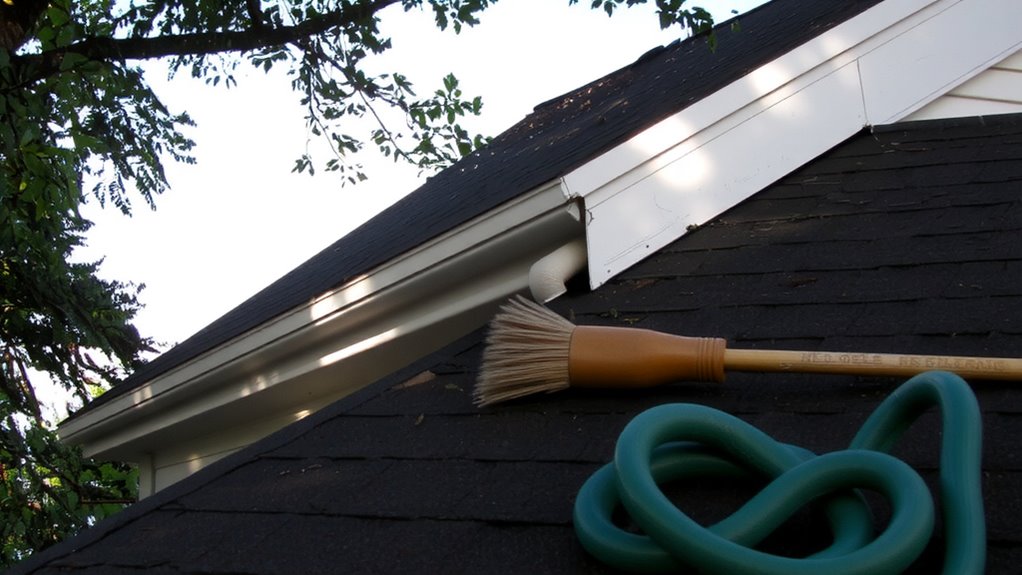
You’ve checked the shingles for curling and granule loss, and now it’s time to clear the roof and gutters of leaves and branches. Leaf buildup retains moisture, promoting rot and moss-both compromise shingle integrity. Branch debris adds weight and traps water, increasing the risk of leaks. Remove material promptly to maintain proper drainage.
| Item | Risk Level |
|---|---|
| Wet leaves | High |
| Broken twigs | Medium |
| Large branches | High |
| Packed debris | Critical |
Use a soft rake or blower to avoid damaging shingles. Clean gutters thoroughly to prevent clogs that lead to overflow. Persistent leaf buildup demands routine checks, especially after storms or high winds. Branch debris near vents or seams creates entry points for water. Clearing both roof and gutters improves longevity and performance without costly interventions. Prevention takes less time than repair.
Seal Gaps Around Vents and Chimneys
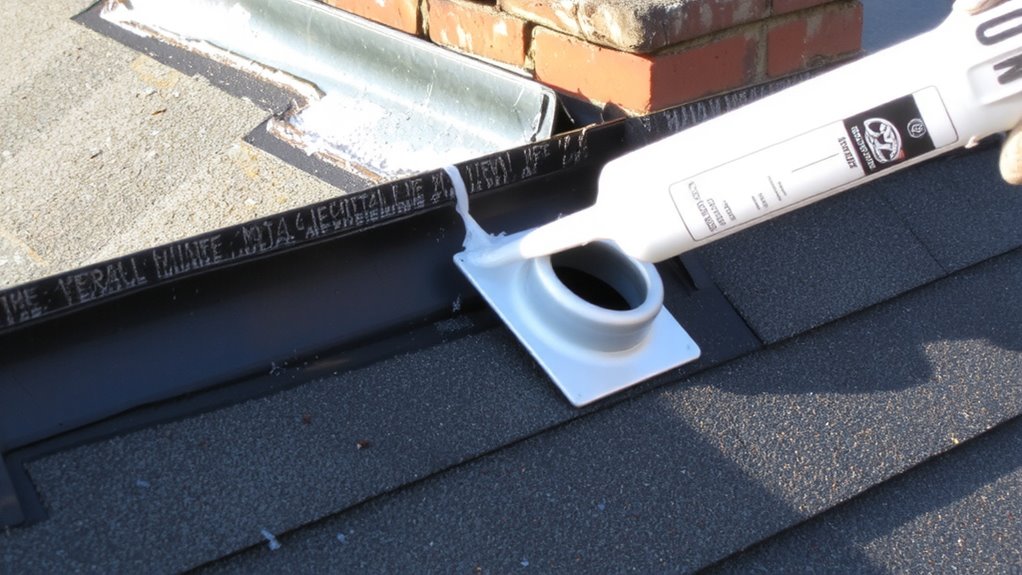
A roof’s weakest links often sit where vents and chimneys meet the shingles-small gaps there let water sneak in, especially during driving rain or snow melt. You need reliable flashing repair to close those joints. Metal flashing can corrode or shift over time, so check for rust, warping, or separation. Reattach loose pieces and replace damaged sections with corrosion-resistant aluminum or galvanized steel. Once flashing is secure, apply a high-quality, weather-resistant sealant around the edges. Use a silicone- or polyurethane-based product rated for roofing-it lasts longer than acrylic. A thick, continuous bead guarantees better adhesion and gap closure. Avoid skimping on sealant application; thin layers crack prematurely. Inspect these areas annually. Proper sealing blocks moisture while allowing for minor thermal expansion. It’s not flashy work, but it stops leaks before they start.
Add Ice and Water Shield If You Get Ice Dams
When ice dams are a recurring problem, an ice and water shield is your best defense along eaves, valleys, and other vulnerable areas. This self-adhering membrane seals around nails and blocks water from seeping under shingles. For effective ice dam prevention, install it at least 24 inches past the interior wall line in cold climates. It’s not a standalone fix-pair it with proper attic insulation to reduce heat loss that contributes to snow melt and refreeze cycles. Without enough insulation, warm air rises, melts roof snow, and forms dams at the edges. The shield handles water intrusion; insulation addresses the root cause. Together, they offer a balanced defense. Most shields meet ASTM D1970 standards and last 20+ years. You can install it yourself if your roof is accessible, but guarantee full adhesion and no gaps.
Know When to Hire a Roofing Pro
What separates a solid repair from a costly mistake? Attempting complex shingle fixes without the right skills often leads to leaks or structural damage. If you’re unsure after a basic roof inspection, call a pro. A professional assessment identifies hidden issues like rot, compromised flashing, or inadequate ventilation-problems DIY checks miss. You should hire a roofing pro when shingles are curling, buckling, or missing in multiple areas, especially if underlayment is exposed. Storm damage, sagging sections, or signs of water intrusion inside the attic mean immediate expert attention. Professionals use safety gear and industry-standard methods that reduce risk and guarantee lasting results. A licensed roofer provides warranties, proper materials, and code compliance-critical for long-term performance. Don’t gamble with weatherproofing. When in doubt, a professional assessment costs less than emergency repairs. Hiring a pro isn’t overkill-it’s damage control.
On a final note
You’ve checked the shingles, cleared debris, sealed gaps, and added ice and water shield where needed. These steps meet basic storm prep standards and improve roof resilience. But if damage is widespread or flashing is compromised, repairs exceed DIY limits. A pro inspection costs money but prevents costly failures. Material quality and installation matter more than extra layers. Simple, proper fixes beat temporary hacks when winds hit 60 mph.