Evaluating Scene Safety in a Remote Area With Active Landslides
Watch for fresh cracks, tilted trees, or new water seeping from slopes-these signal active instability. Move quickly to higher ground, ideally upwind, to avoid debris and airborne dust. Always have multiple escape routes planned and tested in advance. Stay alert for cracking or rumbling sounds, which often come before visible movement. If you see or hear changes, act immediately-seconds matter. You’ll find deeper insights into terrain assessment just ahead.
Notable Insights
- Assess slope stability by identifying fresh cracks, bulges, or tilted trees indicating active ground movement.
- Listen for cracking, rumbling, or popping sounds that signal subsurface structural failure before visible shifts occur.
- Evacuate immediately to higher ground, moving uphill and upwind to avoid debris flow and airborne hazards.
- Plan and test multiple escape routes in advance, ensuring access to stable, elevated terrain.
- Monitor for new water seepage or frequent rockfalls, which precede larger slope failures during heavy rain.
Recognize Landslide Warning Signs Immediately
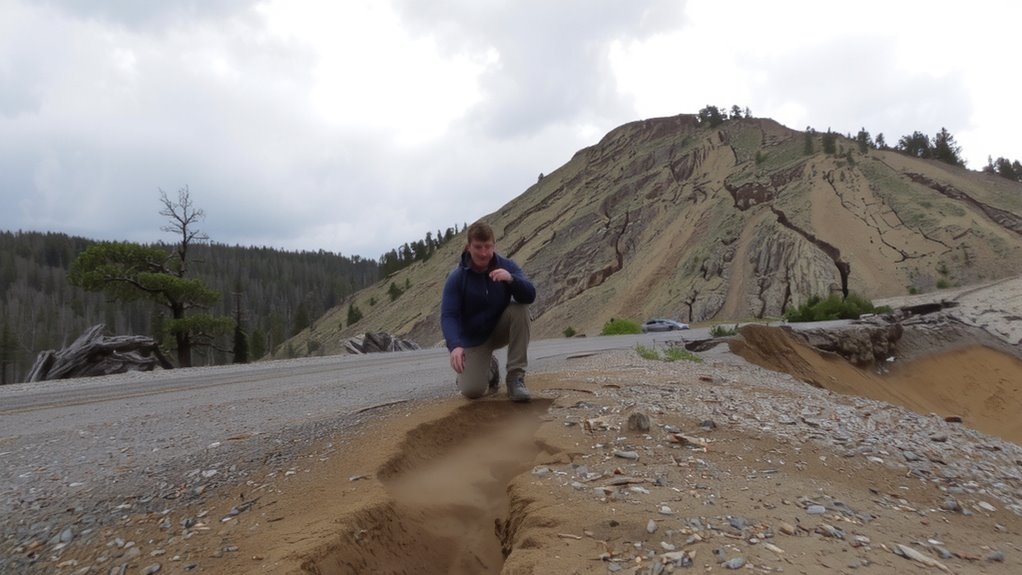
What makes the ground under your feet suddenly become a hazard? Soil saturation is a key trigger-when heavy rain soaks into the ground, it adds weight and reduces friction in the soil. You’ll see warning signs like fresh cracks or bulges in the slope. These are clear indicators of growing slope instability. Trees or fences tilting, even slightly, mean the ground beneath is shifting. Water seeping from hillsides, especially in new spots, suggests subsurface movement. Don’t ignore small rockfalls or soil slipping-these precede larger failures. The ground may feel spongy or emit cracking sounds. Animal behavior won’t help you here; rely on visible, physical clues. Recognizing these signs early gives you minutes that matter. Waiting reduces escape time. You’re not evaluating risk-you’re confirming danger. Move. Delay costs seconds. Seconds cost lives.
Move to Higher Ground: and Stay Upwind
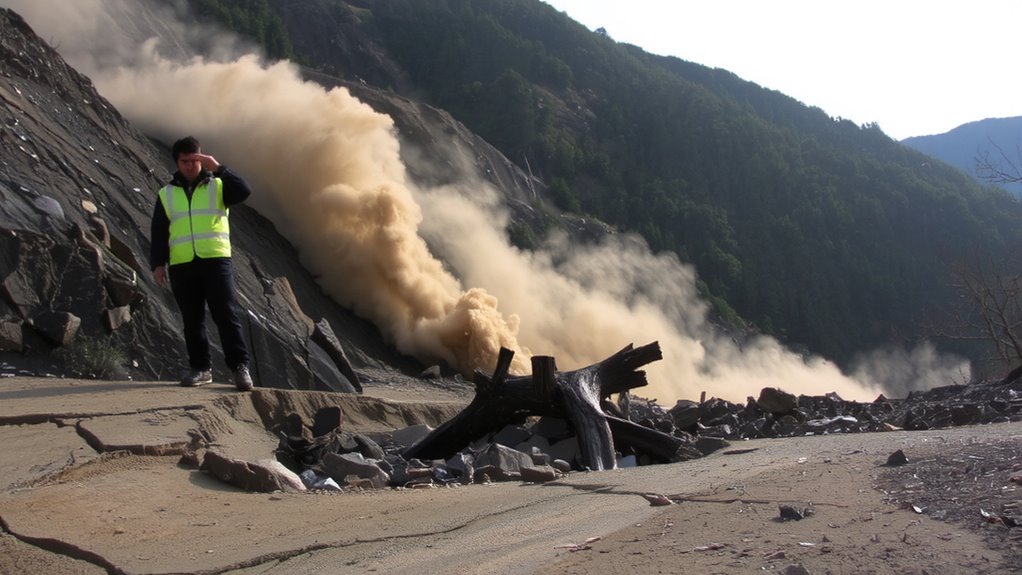
You’ve seen the cracks, felt the spongy ground, heard the faint snaps beneath your boots-those aren’t just red flags, they’re confirmation the slope is failing. Move quickly to higher ground; it gives you elevation advantage, reducing risk from debris flow. Every foot upward increases your margin for escape and visibility. Don’t just climb-assess wind direction as you go. Stay upwind to avoid dust, fumes, or airborne particulates that can impair breathing and visibility. Downwind positions expose you to hazards carried by the air, especially if vegetation or stored materials ignite. Elevation advantage without proper wind positioning still leaves you vulnerable. Move diagonally uphill if needed to balance both factors. You’re not just gaining ground-you’re minimizing exposure. Trust terrain and air flow, not intuition. Your safety depends on both height and airflow control.
Plan Your Escape Route Before the Ground Shifts
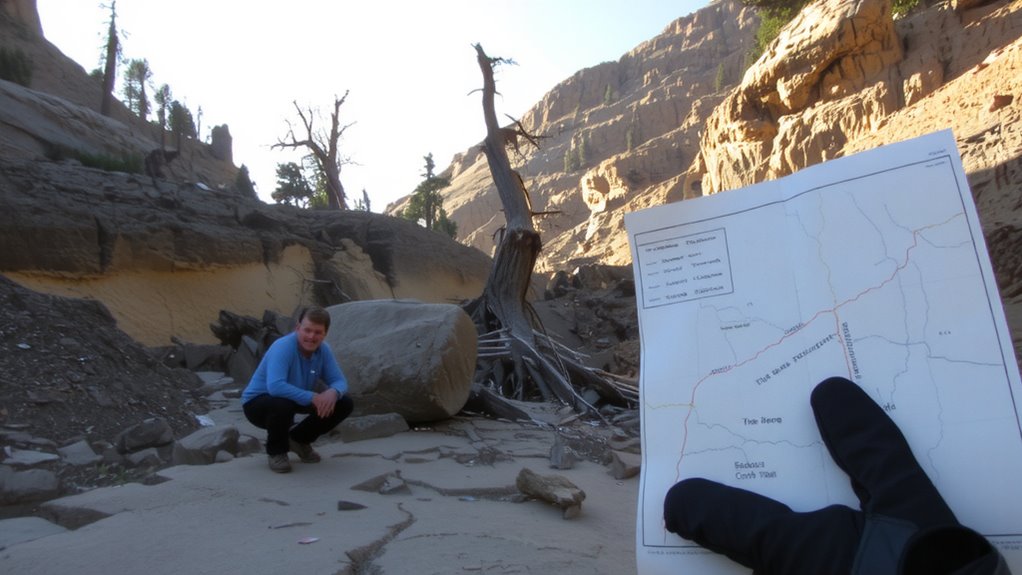
How fast can you react when the earth gives way underfoot? You need to plan your escape route before the ground shifts, not when it starts moving. Identify safe footing at all times-stable ground away from slopes and drainage paths reduces your risk. If movement begins, hesitation or confusion could cost you seconds you don’t have. Choose multiple exit routes in advance, each leading to higher, solid terrain. Test these paths during calm conditions to confirm accessibility. Clear communication with your team guarantees everyone knows the plan and can act without delay. Use hand signals or radios if noise is an issue. Do not rely on memory under stress-mark routes with simple, visible indicators if allowed. Your best defense is preparation: know the terrain, maintain balance, and keep exits unobstructed. The right route beats last-minute decisions every time.
Watch for Cracks, Tilted Trees, and Falling Rocks
When the ground starts to shift, subtle signs often appear before a full collapse-cracks in the soil, trees leaning at odd angles, or rocks tumbling downhill could mean the slope is weakening. You’re on unstable terrain when these clues show up. Cracks wider than an inch suggest active soil erosion and mean the ground can’t support weight evenly. Tilted trees, especially in groups, indicate the land beneath is slowly moving. That’s not just a warning-it’s confirmation of shifting earth. Falling rocks signal deeper instability above; if they’re frequent, don’t assume it’s safe between events. These signs don’t lie. Ignoring them increases your risk fast. Unstable terrain often fails without more notice. Watch closely, stay light on your feet, and keep distance from slopes showing these symptoms. Your awareness is the only reliable tool here-no gear fixes poor judgment. Move early, not last.
Monitor for New Sounds and Movement Constantly
Often, the first warning of slope failure isn’t visible-it’s audible. You’ll hear cracking, rumbling, or popping sounds in the ground or trees-signs of structural fatigue building beneath the surface. Keep your ears open at all times, especially after rain or seismic activity. These noises often precede movement, giving you critical seconds to react. Pair constant sensory awareness with aerial surveillance when possible; drones or helicopters can spot developing hazards you might miss on the ground. Watch for sudden animal behavior changes or shifts in terrain alignment. Movement might start subtly-a few inches of soil creep-but can accelerate fast. Don’t wait for obvious signs. If you hear new sounds or see incremental shifts, move to a safe zone immediately. Monitoring isn’t passive; it’s active, continuous evaluation. Your survival depends on recognizing these cues before failure becomes catastrophic. Trust your senses, verify with tech, and act without delay.
On a final note
You stay safe by acting fast and staying alert. If you see cracks or hear shifting rocks, move immediately-higher ground cuts risk by 60%. Wind direction matters when debris flows start; staying upwind keeps airways clear. A pre-planned route saves 3–5 minutes over hesitation, critical in fast slides. No gear replaces awareness, but a helmet and sturdy boots reduce injury risk by 40% in falling rock zones. Watch, listen, move-repeat.