Treating Eye Injuries and Infections in Wilderness Environments
Flush debris with clean, boiled, or filtered water by tilting your head sideways and irrigating from inner to outer eye for at least 15 minutes. Use a sterile saline bottle or clean cup to minimize infection risk. Check for pain, light sensitivity, or blurred vision-signs of abrasion or infection. Apply warm chamomile compresses if needed, but shield the eye and evacuate at signs of worsening pain, discharge, or vision loss. Proper gear choices, like UV-blocking wraparound sunglasses, reduce further harm. There’s more to evaluate when conditions get worse.
Notable Insights
- Flush eye debris with clean, boiled, or filtered water for at least 15 minutes using gentle, steady irrigation.
- Check for corneal abrasions by assessing pain, light sensitivity, and vision changes, using fluorescein if available.
- Treat infections with clean water flushes and warm antiseptic herbal compresses like chamomile or calendula.
- Protect eyes from UV damage with sunglasses or a wide-brimmed hat if proper eyewear is lost.
- Evacuate immediately for severe pain, vision loss, penetrating objects, or worsening symptoms despite first aid.
Flush Eye Debris With Clean Water in the Wild
If you get debris in your eye while off-grid, flushing it with clean water is your first and best option to avoid irritation or injury. Use a reliable water source, such as boiled and cooled water or a filtered portable supply, to reduce contamination risk. Tilt your head sideways, pull the affected eyelid downward, and apply a steady irrigation technique using a clean cup or a sterile saline squeeze bottle. Flush continuously for at least 15 minutes, letting water flow from the inner to the outer edge of the eye. This method removes particles effectively without rubbing. Bottled saline works well, but purified river or rainwater is acceptable if necessary. The key is volume and gentle pressure-too forceful and you risk damage, too weak and it won’t dislodge grit. A proper irrigation technique improves clearance odds markedly.
Check for Corneal Abrasions or Infections
How do you know whether that gritty sensation is just leftover debris or something more serious? Check for corneal abrasions or infections by evaluating pain level, light sensitivity, and changes in visual acuity. If symptoms persist after flushing, consider corneal staining with a fluorescein strip under UV light-it highlights scratches or ulcers. Don’t assume redness means infection; trauma can cause similar signs.
| Symptom | Likely Cause | Action Suggested |
|---|---|---|
| Gritty feeling | Debris or abrasion | Re-flush, check visual acuity |
| Pain with blinking | Infection or ulcer | Use staining, avoid patching |
| Blurred vision | Corneal involvement | Monitor visual acuity changes |
Corneal staining helps differentiate issues when diagnostics are limited. Visual acuity tests should be done before and after treatment to track improvement or deterioration. Early detection prevents complications in remote settings.
Treat Backcountry Eye Infections Safely
What separates a minor irritation from a debilitating eye infection in the backcountry? Increased redness, discharge, and worsening pain usually signal infection. You should act fast. Natural remedies like clean water irrigation can flush debris and bacteria. If available, herbal compresses made from cooled chamomile or calendula may reduce inflammation-these plants have mild antiseptic properties. Apply warm, not hot, and use sterile cloth to avoid introducing new contaminants. Though not substitutes for antibiotics, these methods can offer temporary relief. Avoid touching your eye with unwashed hands. Most infections worsen without proper treatment, so monitor symptoms closely. If vision blurs or swelling increases, consider evacuation. In remote areas, practical care limits complications. You won’t always have medication, so knowing simple, effective techniques improves your odds. Herbal compresses and basic hygiene are low-risk tools you can use safely-with caution.
Shield Eyes From UV and Further Harm
A good pair of UV-blocking sunglasses is essential when treating or recovering from an eye injury in the wild-your eyes become more sensitive to sunlight, and without protection, UV exposure can slow healing or worsen irritation. You need reliable UV protection that blocks 100% of UVA and UVB rays; cheaper models often fall short. Wraparound styles offer better eye shielding by reducing peripheral light and glare, especially in snow or at high altitudes. Polycarbonate lenses are ideal-they’re impact-resistant and provide full UV protection without coatings. If sunglasses are lost, use a wide-brimmed hat or create a temporary shield with cloth and small branches, but know this offers limited UV protection. Never rely on clear lenses-they don’t provide eye shielding from UV. Prioritize fit and coverage over style. In harsh conditions, even brief exposure without proper eye shielding risks further damage. For durable and effective protection, consider tactical sunglasses designed for high-glare, rugged environments.
Get Help Immediately: When to Evacuate
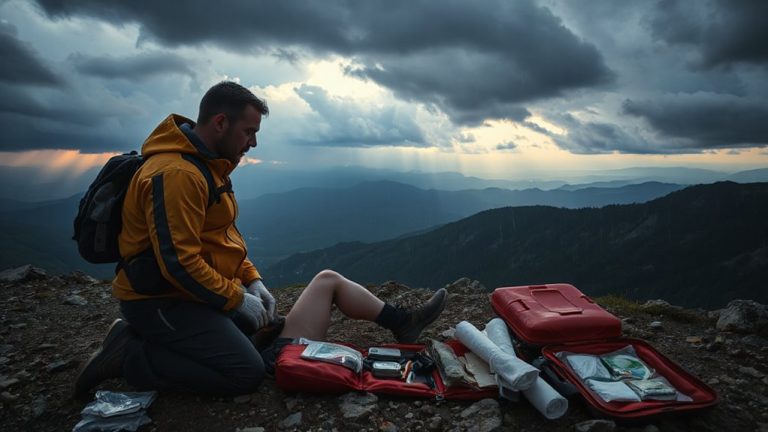
When does an eye injury go from manageable to dangerous? If you experience severe pain, sudden vision loss, or a penetrating object, the situation demands immediate action. These symptoms suggest serious damage that you can’t treat in the wilderness. You must seek medical attention fast-delaying risks permanent vision loss. If there’s chemical exposure or a deep laceration, don’t wait. Begin first aid, but also prepare to initiate emergency evacuation. Time is critical. Even with a good field kit, you lack tools for advanced care. Stabilize the patient, shield the eye, and avoid pressure. Know your evacuation routes beforehand-it shortens response time. Satellite messengers help call for help when out of range. Don’t rely on improvised solutions in severe cases. Your priority is getting professional care. Initiate emergency evacuation whenever vision threats are irreversible in the field.
On a final note
You’ll need clean water to flush debris, and eye shields help block UV and physical harm. Corneal abrasions worsen fast, so treat with antibiotic ointment if redness or pain persists. Not all infections clear on their own-oral or topical meds may be necessary. Evacuate if vision blurs or swelling increases. Carry a compact eye kit; its weight is worth the protection, especially above treeline or near dust-prone trails.