Using Biodegradable Bags Instead of Plastic to Reduce Litter in Wilderness Areas
You cut plastic pollution by swapping regular bags for certified biodegradable ones on hikes, since standard plastic lasts decades while biodegradable options break down in months with microbial action, moisture, and warmth. Choose bags rated ASTM D6400 or EN 13432, with at least 20 MPa tensile strength and 3 N puncture resistance for reliability. Carry waste out if composting bins aren’t available-breakdown isn’t guaranteed in cold, dry trails. Performance depends on conditions, and proper disposal matters just as much as the material. There’s more to contemplate about real-world effectiveness and certifications.
Notable Insights
- Biodegradable bags break down safely in composting environments, reducing long-term litter compared to persistent plastic bags.
- Choose certified biodegradable bags (ASTM D6400 or EN 13432) to ensure proper decomposition and avoid false claims.
- Dispose of biodegradable bags in designated compost bins, never leave them on trails or in wilderness areas.
- Carry waste out if composting facilities are unavailable, as biodegradable bags degrade slowly in cold, dry wild settings.
- Use durable, lightweight biodegradable bags (0.9–1.2 mil) to balance strength, packability, and environmental safety.
Why Plastic Bags Harm Trails and Wildlife
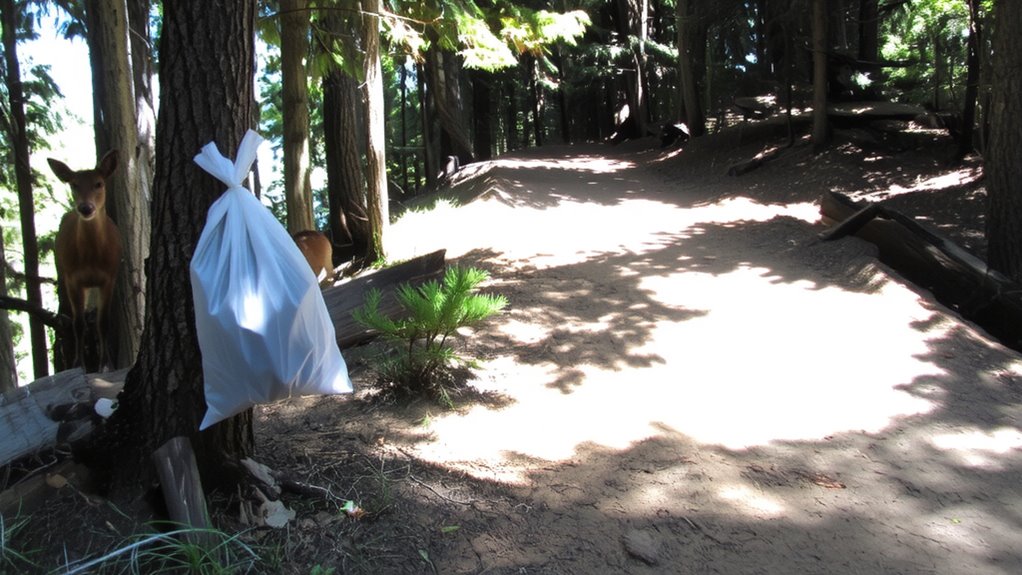
Plastic bags are a persistent problem on trails and in natural habitats, and they’re not breaking down anytime soon. You’ll see them caught in brush, floating in streams, or buried in soil-each one contributing to long-term plastic pollution. These bags don’t just fragment; they remain in the environment for decades, harming ecosystems. Wildlife often mistakes them for food, leading to animal ingestion that can block digestive tracts or leach toxins. Birds, deer, and small mammals are especially vulnerable. Unlike natural materials, plastic bags offer no breakdown pathway animals can process. Their durability becomes a liability in wilderness areas, where even one discarded bag can travel miles and impact multiple species. Cleanup efforts rarely catch every piece, so prevention matters. Standard plastic simply doesn’t belong where nature dominates. Switching to alternatives reduces visible litter and lowers risks to animals that can’t distinguish waste from habitat.
How Biodegradable Bags Break Down Safely
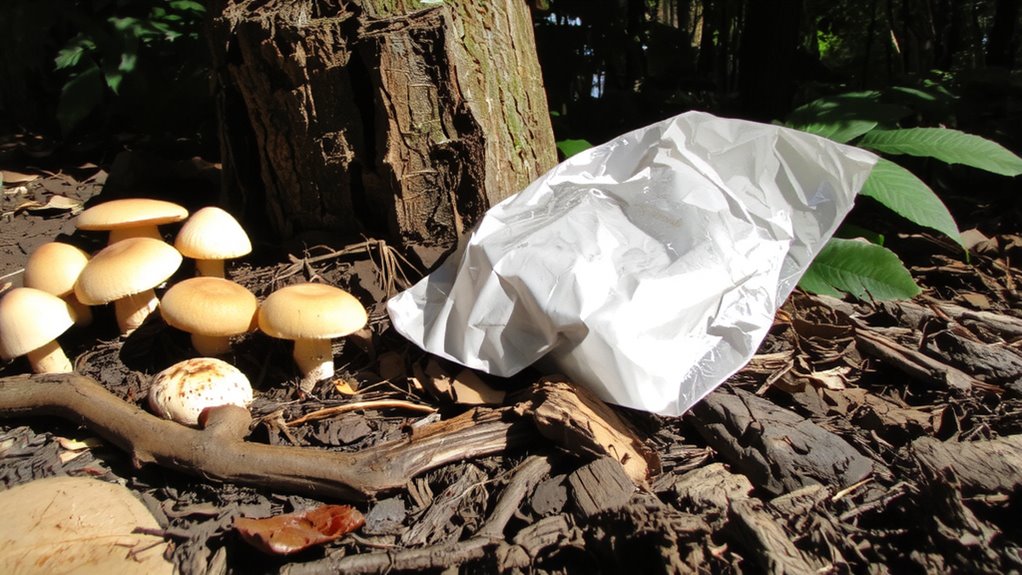
You’ve seen how plastic bags stick around, doing more harm than most realize once they hit the trail. Biodegradable bags break down differently-safely and completely-when disposed of properly. The process starts with microbial activity: microbes in soil or compost recognize the bag’s material as food. They secrete enzymes that drive enzymatic degradation, breaking long polymer chains into water, carbon dioxide, and biomass. This usually takes 3–6 months in commercial composting, though slower in cold or dry wilderness conditions.
| Condition | Result |
|---|---|
| In compost | Fully decomposes |
| In ocean | Breaks down slowly |
| In soil | Supports microbial activity |
| Left on trail | Degrades with time |
| Buried shallow | Enzymatic degradation occurs |
These bags won’t vanish overnight, but they won’t persist like plastic either.
Smart Habits for Using Biodegradable Bags Outdoors
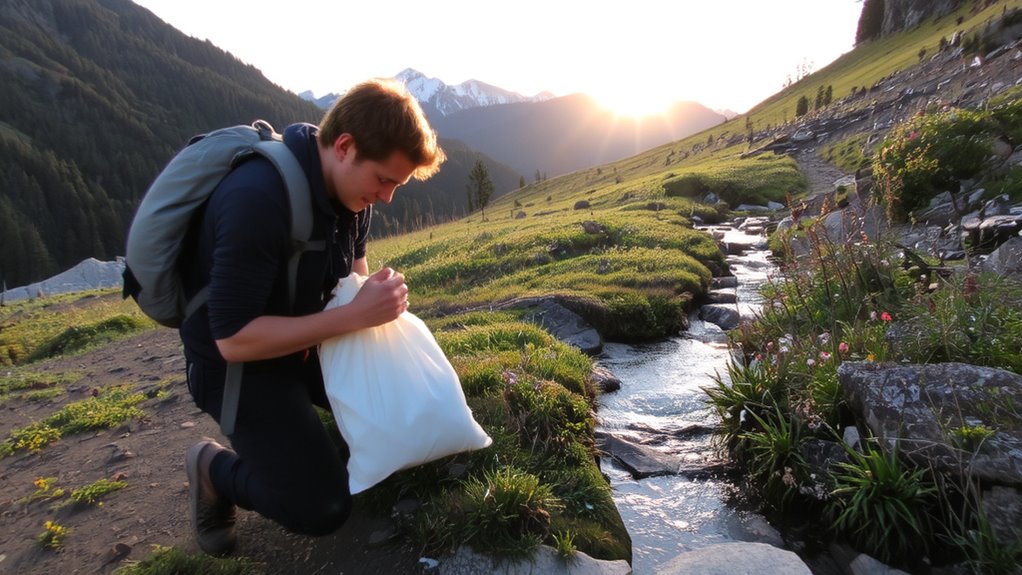
A biodegradable bag’s performance depends on how you use it, not just its material. You need to take into account bag thickness-too thin, and it tears when carrying heavy waste; too thick, and it resists breakdown even under ideal conditions. Most reliable bags range from 0.9 to 1.2 mil, balancing durability and decomposition. Always practice proper disposal: leave bags in designated compost bins or waste stations, not on the trail. Biodegradable doesn’t mean invisible-abandoned bags still litter until they break down. Carry waste out if no composting option exists. Exposure to sunlight, moisture, and microbes speeds degradation, but sealed landfills slow it. Don’t count on wilderness conditions to handle your trash. Use each bag fully-double-bagging or underloading wastes material. Smart habits mean you’re not just switching bags, you’re changing behavior. Effectiveness comes from use, not just purchase.
How to Choose the Best Biodegradable Bag for Hiking
Picking the right biodegradable bag for hiking means balancing strength, weight, and decomposition speed without assuming all bags work the same. You need a bag that holds up during your hike but won’t linger for decades. Check the bag durability-look for a minimum tensile strength of 20 MPa and puncture resistance above 3 N, as weaker bags tear when loaded with food wrappers or waste. Lightweight bags (under 10 grams) save pack space but may sacrifice toughness. Opt for ones certified to ASTM D6400 or EN 13432 to guarantee proper breakdown in natural settings. A reliable bag supports trail cleanliness by containing waste until disposal, preventing micro-litter. Some brands use cornstarch blends that degrade in six months under ideal conditions, but in dry or cold woods, breakdown slows. Choose based on your hiking environment-high moisture? Faster decomposition. Carry a repair tape backup for long trips. Performance matters more than marketing.
Debunking Common Biodegradable Bag Myths
Why do some people think biodegradable bags vanish overnight? Because they misunderstand degradation timelines. These bags don’t disappear on their own-they need specific conditions. Most break down only in industrial composting facilities, not in backpacks or trailside piles. At home, where composting limitations include lower heat and moisture, breakdown takes much longer. Some bags labeled “biodegradable” may persist for months in cold or dry wilderness environments. Real-world testing shows many require controlled settings to fully degrade. You can’t just toss them and expect results. They’re not magic, and they won’t vanish faster than regular plastic without the right environment. Understanding these timelines helps you use them responsibly. A biodegradable bag’s performance depends on where and how you dispose of it. Know the facts before relying on them in remote areas.
Where to Buy Trusted Biodegradable Bags for Camping
Where can you actually find biodegradable bags that hold up in the backcountry? You’ll need ones with verified compost certifications like BPI or TUV Austria’s OK Compost, which confirm they break down under real conditions. Not all bags labeled “biodegradable” meet these standards, so check packaging carefully. Retail availability has improved-major outdoor retailers like REI and online stores like Amazon carry trusted brands such as BioBag and United Sacks. These bags resist tearing when packed full but won’t persist for centuries like plastic. They’re heavier than standard trash bags, which is a trade-off for durability and compostability. In field tests, they performed well in dry conditions, though prolonged moisture can weaken them. Choose high-strength variants if hauling wet waste. Always carry used bags out until you reach composting facilities-don’t rely on wilderness breakdown.
On a final note
You’ll reduce trail litter and protect wildlife by switching to biodegradable bags. They break down within months in compost conditions, unlike plastic that lasts centuries. Not all biodegradable bags perform equally-look for ASTM D6400 certification and 50+ micron thickness for durability. They cost slightly more, but the environmental trade-off is measurable. Carry them in a dry pocket to prevent premature breakdown. Use them consistently, and you’ll see less waste on long hikes.