Constructing a Raised Bed Shelter With Bamboo Poles
Use mature, thick-walled bamboo like *Phyllostachys edulis* for durability and resistance to rot. Set poles at least 18 inches deep and space crossbeams every 24 inches to guarantee stability. Reinforce joints with galvanized wire and diagonal braces, especially in windy areas. Cover with 85–90% light-transmitting row fabric or polycarbonate panels for weather and pest protection. Anchor all edges tightly and inspect connections seasonally. A 30% shade cloth cuts heat by up to 30%. With proper drainage and annual non-toxic treatment, your shelter stays functional for years-details on optimizing each layer follow.
Notable Insights
- Use mature, thick-walled bamboo poles like *Phyllostachys edulis* with consistent 2.5 cm diameter for durability.
- Bury vertical bamboo poles 18 inches deep and ensure they are plumb for a stable raised bed shelter frame.
- Connect horizontal beams with lashing or weather-resistant zip ties, reinforcing joints with galvanized wire.
- Cover the structure with row cover fabric or polycarbonate panels to protect plants while allowing light and airflow.
- Conduct seasonal inspections, reapplying non-toxic preservatives and reinforcing joints to prevent rot and structural damage.
Choose the Right Bamboo and Tools for Your Raised Bed Shelter
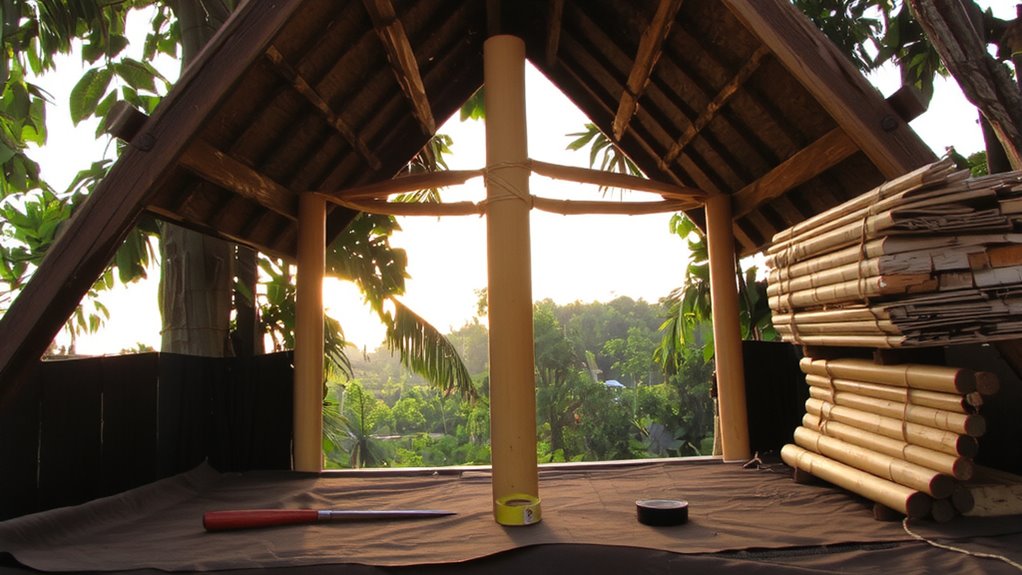
While you can technically use any sturdy bamboo, opting for mature, thick-walled poles like *Phyllostachys edulis* or *Dendrocalamus asper* gives better structural support and lasts longer in damp conditions. Proper bamboo selection means checking for consistent diameter (at least 2.5 cm) and straightness-avoid splits or signs of insect damage. Mature poles, harvested after three to five years, resist decay better than younger growth. For tool preparation, you’ll need a sharp handsaw for clean cuts, gloves for grip and protection, and a power drill with 5 mm bits if pre-drilling for fasteners. A measuring tape and string line help keep layout accurate. Don’t overlook a heavy-duty knife for trimming or splitting when needed. Using the right tools minimizes damage during assembly and guarantees precise fits. Both bamboo selection and tool preparation directly impact durability and assembly efficiency-corner-cutting here compromises the whole shelter.
Build a Sturdy Bamboo Frame Step by Step
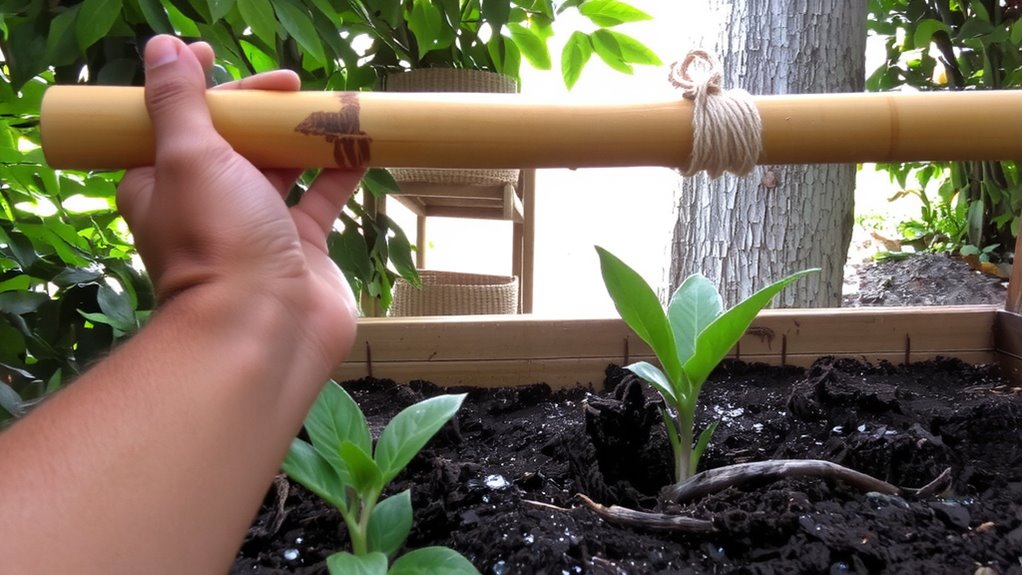
You’ve picked strong, mature bamboo and gathered the right tools, so now it’s time to start assembling your frame. Begin by setting vertical poles into the ground at each corner, bury Logo 18 inches deep for solid foundation stability. Use a level to guarantee each is plumb-any tilt compromises structural integrity. Connect horizontal beams across the top with lashing or weather-resistant zip ties, focusing on joint reinforcement at every intersection. Overlap joints where possible and secure with galvanized wire for added durability. Space crossbeams no more than 24 inches apart to maintain rigidity. If wind is common in your area, angle diagonal braces inward and anchor them firmly. Test joint strength by applying firm pressure-any wobble means it needs tighter binding. The frame must resist lateral and vertical stress equally. A well-secured joint and deep-set foundation stability guarantee the shelter lasts through seasons.
Cover Your Raised Bed for Weather and Pest Protection
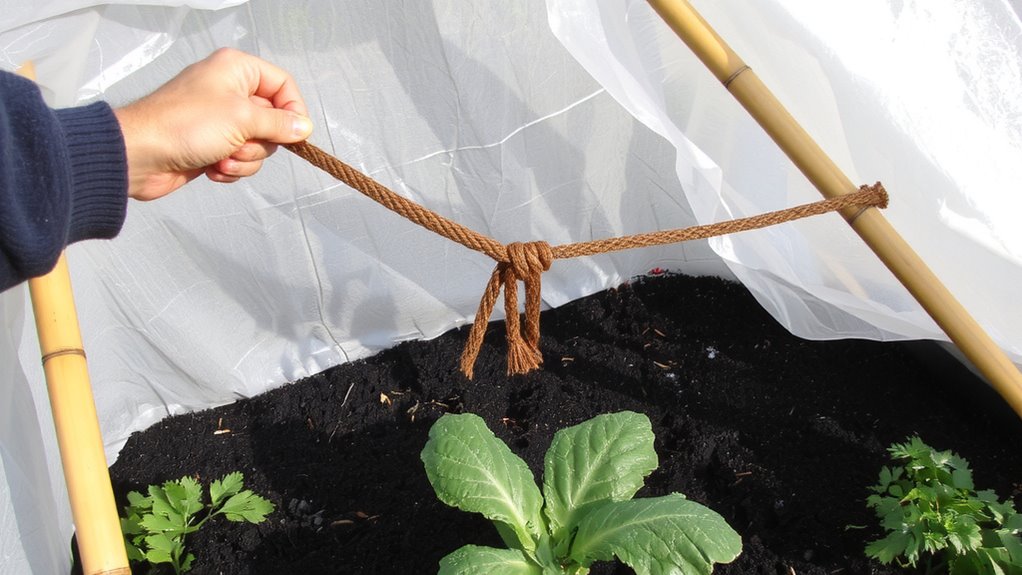
Since protecting your crops from sudden rain or hungry insects matters just as much as soil quality, covering the frame you built is a necessary next step. Choose your pest barrier materials and ventilation options based on season and crop needs. Lightweight row covers block most insects and allow rain through but need side anchoring. Polycarbonate panels shed heavy rain and raise temperatures, making ventilation options critical. Netting offers airflow but won’t stop light frost.
| Material | Lifespan (Years) | Light Transmission (%) |
|---|---|---|
| Row cover fabric | 1–2 | 85–90 |
| Shade cloth (30%) | 3–5 | 70 |
| Bird netting | 2–4 | 80 |
| Polycarbonate | 5–10 | 80–88 |
| Clear poly film | 1–2 | 90 |
Secure edges tightly and monitor condensation.
Keep Your Bamboo Shelter Strong Through the Seasons
A solid cover won’t help if the frame underneath can’t handle wind, rain, or the weight of winter snow. Bamboo is strong but degrades over time, especially when exposed. You’ll need regular structural inspections to catch weak joints or cracked poles before failure. Check connections every season-reinforce or replace any compromised sections. Seasonal maintenance keeps the frame aligned and stable. After heavy rain or snow, inspect for sagging or leaning. Bamboo’s natural resistance helps, but it’s not immune to rot or insect damage. Treat poles with a non-toxic preservative every spring to extend life. In areas with strong winds, stake corner poles deeper or add cross-bracing. Monitor soil moisture near supports-persistent dampness speeds decay. Routine checks take minutes but prevent collapse. Assume degradation will happen and plan for it. Strong seasonal maintenance means your shelter stays functional, not just for one year, but several.
Add Trellises, Doors, or Shade Cloth for Extra Function
Trellises, doors, and shade cloth aren’t just add-ons-they’re functional upgrades that increase your shelter’s versatility and protection. You can support climbing plants with sturdy trellis designs or block excess sun with effective shade solutions. A bamboo door adds security and wind resistance, while shade cloth reduces interior temperatures by up to 30%. Each addition should serve a measurable purpose-blocking UV, improving airflow, or increasing crop yield.
| Feature | Benefit |
|---|---|
| Trellis | Supports vines, maximizes vertical space |
| Door | Controls access, retains warmth |
| Shade Cloth | Lowers temp, prevents plant burn |
| Trellis Design | Improves air flow, reduces mold risk |
Choose components based on durability and climate needs. Shade solutions should have at least 30% density for most gardens. Trellis designs must withstand local wind loads without collapsing.
Customize for Style Without Sacrificing Durability
You’ve secured function-now consider form. Modern aesthetics don’t require sacrificing strength. Stain bamboo poles in earth tones for a clean, cohesive look that also boosts UV resistance. Use food-safe sealants to extend lifespan without toxic runoff. Creative finishes like carved patterns or woven accents add visual interest but must not compromise structural joints. Test any decorative cut into a spare pole-load it for two weeks to confirm it won’t split. Painting ends seals against moisture ingress, a small step with measurable impact on durability. Match your garden’s style, but prioritize pole thickness-1.5 inches minimum for vertical supports-regardless of appearance. Wire mesh buried 6 inches around the base prevents rodent damage, even with polished exteriors. Style matters, but only if it lasts. Balance design with proven materials and tested methods. Your shelter should look good the second year, not just the first.
On a final note
You’ve built a shelter that lasts. Bamboo poles, when properly dried and secured, withstand wind and rain for years. This frame supports covers, trellises, and shade cloth without sagging. It resists rot when elevated off wet soil. Replacing a damaged pole takes minutes. The design balances cost, strength, and ease. It works in dry and humid zones. No metal fasteners mean no rust. You can adapt it to any bed size. It performs.