Assessing Scene Safety in a Remote Area With Active Hurricanes
Check for leaning walls, sagging roofs, or cracking sounds-these mean your shelter may fail. Avoid mobile homes and flooded roads; seek high ground with sturdy, reinforced buildings. Watch for flying debris, falling trees, and water pooling near foundations. Use a compass and topo map if GPS fails. Keep trauma kits handy and stay dry to prevent hypothermia. Safe zones exist, but conditions shift fast-knowing where to go next could save your life.
Notable Insights
- Check for structural instability by observing leaning walls, sagging roofs, or cracking sounds indicating imminent collapse.
- Avoid environmental hazards like falling trees, flash floods, and storm surge in low-lying or poorly drained areas.
- Seek shelter in sturdy, elevated buildings with reinforced walls and minimal window exposure; avoid mobile homes.
- Use a compass and topographic map for navigation when GPS and cell service are unavailable or unreliable.
- Keep emergency medical supplies accessible and treat injuries immediately to prevent complications during prolonged isolation.
Take These First Steps When Trapped in a Hurricane
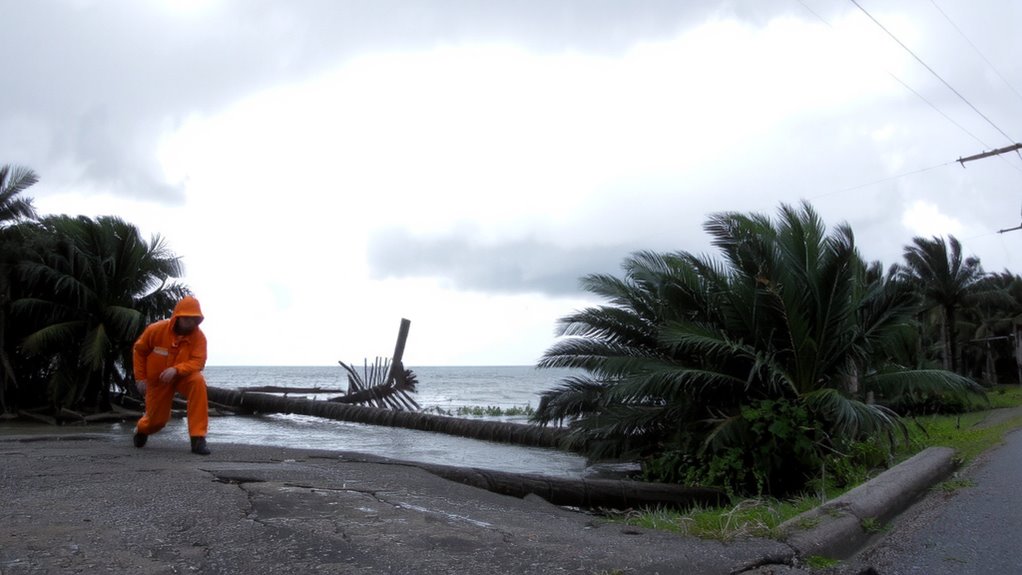
How do you stay safe when a hurricane traps you inside? You rely on storm preparedness. Move to an interior room without windows. Secure doors and seal gaps to reduce wind and water entry. Use a battery-powered weather radio to monitor updates. Keep your emergency signaling tools ready-whistle, flashlight, or signal mirror-each proven effective in debris-rich environments. A charged phone helps, but networks often fail, so don’t count on it. Store water in clean containers-one gallon per person per day. Avoid candles; use LED lights instead. Fuel-powered devices go outside to prevent carbon monoxide buildup. You’ve practiced your plan, so stick to it. Reaction time drops under stress. Good storm preparedness reduces risk. Emergency signaling only works if done early and repeatedly. Conserve supplies. Wait for official all-clears before moving out. Safety depends on actions taken before the wind hits. A reliable communication tool like a weather radio with NOAA alerts can provide critical real-time updates during prolonged outages.
Identify Immediate Threats in High Winds and Rain
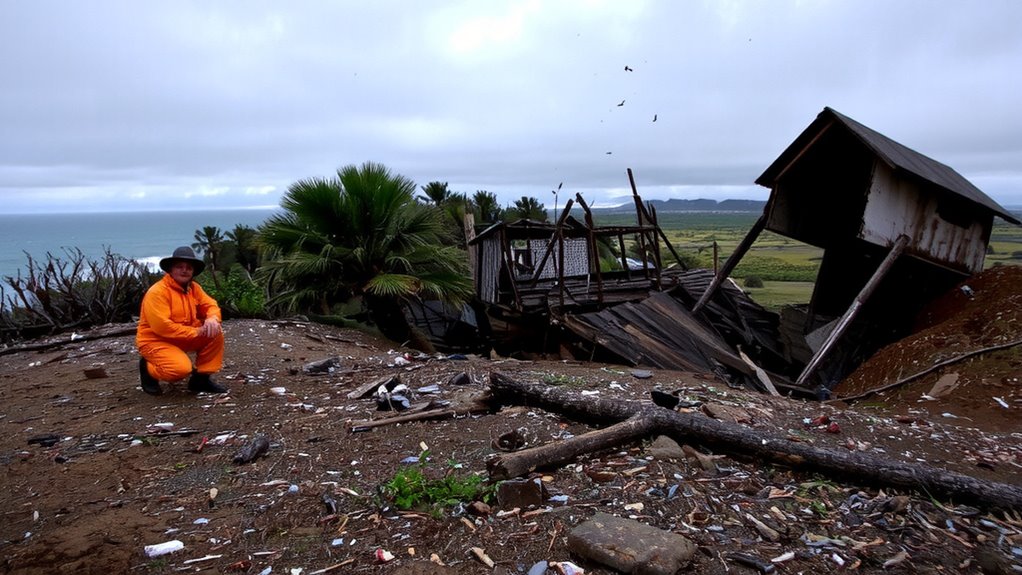
While wind and rain intensify, you’ll need to recognize threats that can compromise your shelter fast. Look for signs of failing structural integrity-walls leaning, roofs sagging, or repeated impacts from debris. These aren’t just cosmetic issues; they mean load-bearing points are weakening. Monitor nearby trees and branches; saturated soil increases risk of vegetation collapse, especially with sustained winds over 70 mph. A single falling limb can breach a roof or block escape routes. Don’t wait for total failure-act at the first warning signs. Water pooling near foundations undermines stability, accelerating structural failure. Metal connectors may hold longer than wood joints, but constant vibration loosens fasteners. Visibility drops in heavy rain, so listen for cracking sounds or sudden shifts in howling wind, which might signal imminent collapse. You can’t control the storm, but spotting these threats early improves your odds.
Find Safe Shelter in Remote Hurricane Zones
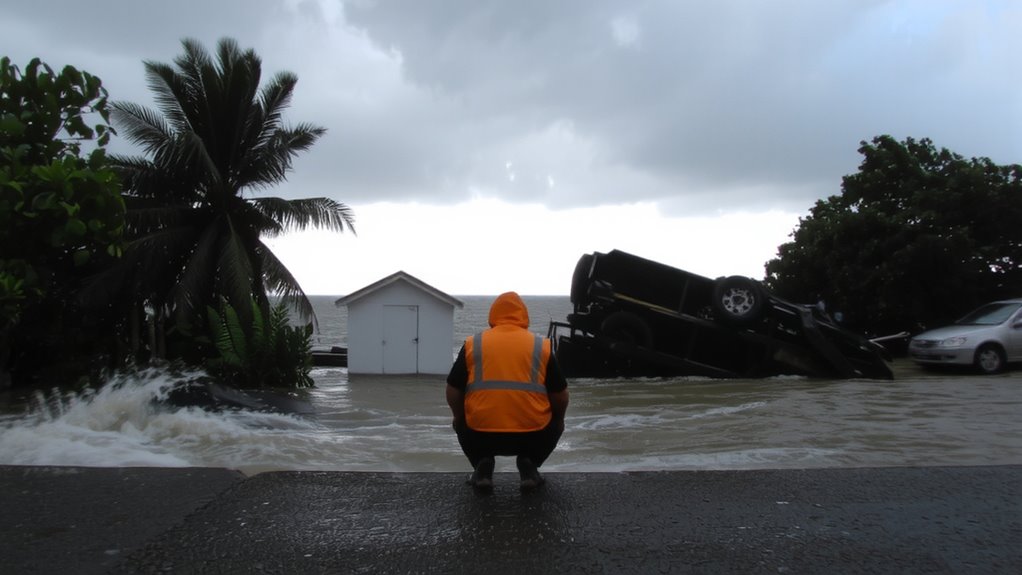
You’ve already assessed immediate threats like structural damage and falling trees, but if you’re in a remote hurricane zone, your next step is finding shelter that can withstand prolonged exposure when help won’t arrive quickly. Prioritize buildings on high ground to avoid storm surge risks, which can overwhelm low-lying areas even after the wind slows. A solid roof and intact walls are essential, but you must conduct a structural integrity assessment-check for cracks in load-bearing walls, foundation shifts, and roof attachment points. Avoid structures with wide overhangs or unreinforced masonry. Mobile homes, even anchored, offer poor protection. Instead, seek reinforced concrete or well-maintained wood-frame buildings with minimal window exposure. If no buildings are viable, a dense stand of uniform trees may reduce wind speed, but won’t protect from flooding. Your shelter must balance wind resistance, elevation, and stability-no single factor overrides the others.
Decide When to Evacuate on Foot
If the storm surge is rising and your shelter’s elevation won’t keep you above flood level, then walking out may be your only viable option-but only if the wind has dropped below 30 mph and the roads aren’t blocked by debris. Prioritize terrain assessment before committing to foot travel. Steep slopes, flooded roads, and unstable ground increase risk and slow progress. Consider your physical condition and available supplies. Below is a quick reference for terrain types and their impact on foot travel:
| Terrain Type | Travel Difficulty |
|---|---|
| Flat, dry land | Low |
| Flooded road | High |
| Dense forest | Moderate |
| Muddy slope | High |
| Debris-strewn path | Extreme |
Foot travel demands realistic pacing and constant reassessment. Move only when conditions clearly support it.
Navigate Without Power or Cell Service
When GPS fails and cell towers go down, your ability to navigate depends on tools that don’t rely on signal or battery life-like a durable compass and a waterproof topographic map. You’ll need to practice compass navigation before conditions worsen; accuracy matters when landmarks are obscured. A baseplate compass with a declination adjustment gives 1-degree precision, which is enough for route-finding in dense terrain. Pair it with a 1:24,000 scale map to identify ridgelines, valleys, and bearings. Signal mirrors, while primarily for rescue, can confirm direction using sunlight reflections off distant features. They weigh under two ounces and work up to 10 miles in clear conditions. Don’t rely on memory or digital backups. Real-world testing shows users lose orientation within three hours in unfamiliar, storm-affected areas. These tools aren’t foolproof, but they’re dependable when electronics fail-just keep them accessible and dry. For reliable navigation performance, consider a top-rated hiking compass that balances durability, accuracy, and ease of use in extreme conditions.
Avoid Floods and Flying Debris
Though floodwaters and windborne debris pose some of the deadliest threats during a hurricane, staying clear of them comes down to terrain awareness and timing-not gear. You’re safest if you avoid low-lying areas where flash floods develop quickly, often within minutes of heavy rain. Even six inches of moving water can knock you off your feet. Elevated ground isn’t always the answer if wind gusts exceed 70 mph-those can turn unsecured objects into dangerous projectiles. Stay indoors if possible, away from windows, and monitor storm progress to anticipate danger shifts. Flying debris is most likely during peak wind gusts, so moving even short distances increases risk. Don’t underestimate flat terrain: without natural barriers, wind maintains speed and carries debris farther. Flash floods can also undermine roads, making evacuation routes unstable. Your best defense is positioning before the storm hits, using topographic maps to identify safe zones. Reacting during the storm reduces your margin for error. Consider carrying one of the best emergency maps to maintain situational awareness when digital systems fail.
Provide Emergency Care During a Hurricane
You’ve secured your location and avoided flood zones and flying debris, but if someone gets hurt during the storm, you’ll need to act fast with limited resources. Power outages mean no lights or medical devices, so headlamps and battery-powered first aid kits are essential-they work when the grid fails. Treat injuries promptly; delayed care worsens outcomes, especially if evacuation isn’t possible. Use waterproof supplies to stay ready during a storm surge, which can trap you for hours. Don’t move the injured unless necessary-shifting conditions make transport risky. Prioritize breathing, bleeding, and broken bones using basic protocols. A whistle or signal mirror helps if communication systems fail. Keep emergency blankets on hand; hypothermia is a real threat when wet clothes and wind combine. Your prep level directly affects survival-test gear before the season. A well-stocked, accessible trauma kit improves response under pressure.
On a final note
You’ve got limited options in a remote hurricane, so focus on what works. A waterproof tent won’t hold in 100 mph winds-rely on sturdier structures if available. Carry a GPS with extra batteries; phones fail. Water filters handle debris-laden runoff better than tablets. Prioritize shelter over movement-walking in storm conditions increases exposure. Every choice trades risk: staying puts you in danger, but leaving may worsen it.