How to Identify Disaster Risks for People With Hearing Impairments
You’re at higher risk when emergencies rely only on sound, like sirens or high-pitched alarms, since 40% of people with hearing loss won’t wake to standard smoke detectors. Flashing lights (177+ foot candles) and vibrating devices (80+ dB equivalent) are proven alternatives. Auditory-only systems fail in noisy environments, so visual and tactile alerts are essential. Real-time captioning and sign language in alerts reduce confusion. Without these, delays happen. Better solutions are already in use.
Notable Insights
- Auditory-only alerts like sirens fail to reach individuals with hearing loss, increasing their risk during disasters.
- High-frequency hearing loss can prevent detection of standard 3,000 Hz smoke alarm beeps.
- Many deaf or hard-of-hearing individuals do not wake to conventional alarms without visual or vibrating alternatives.
- Lack of real-time captioning and sign language in emergency broadcasts creates critical communication gaps.
- Inadequate inclusion of deaf individuals in emergency planning leads to inaccessible evacuation procedures and delays.
How Hearing Loss Raises Disaster Risks
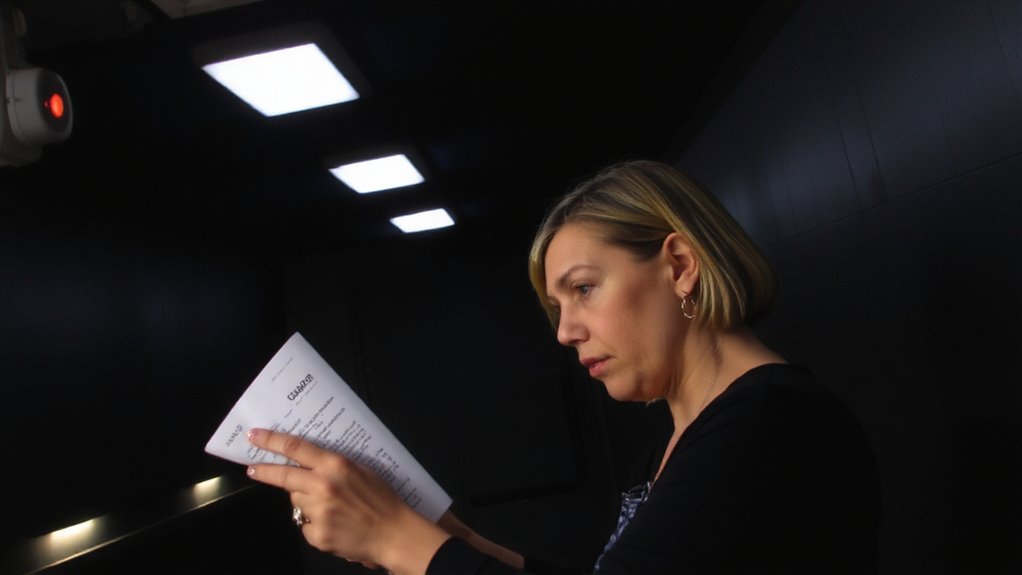
While you might not immediately link hearing ability to disaster safety, the truth is that undetected alerts can leave you dangerously unaware during emergencies. If you have hearing loss, auditory-only warnings-like sirens or public address systems-won’t reach you, increasing your risk during fires, storms, or evacuations. This communication gap often leads to social isolation, as you may miss group warnings or community updates others rely on. Without timely information, you’re more likely to experience mental stress, especially when unsure if danger is near. You might also delay escape due to confusion or lack of cues others react to instinctively. Relying solely on sound-based systems creates a measurable vulnerability, especially in fast-moving disasters. Practical solutions must compensate for this sensory gap. Safety plans should include visual or tactile alerts to reduce risk and improve response time.
Spot Auditory-Only Emergency Alerts
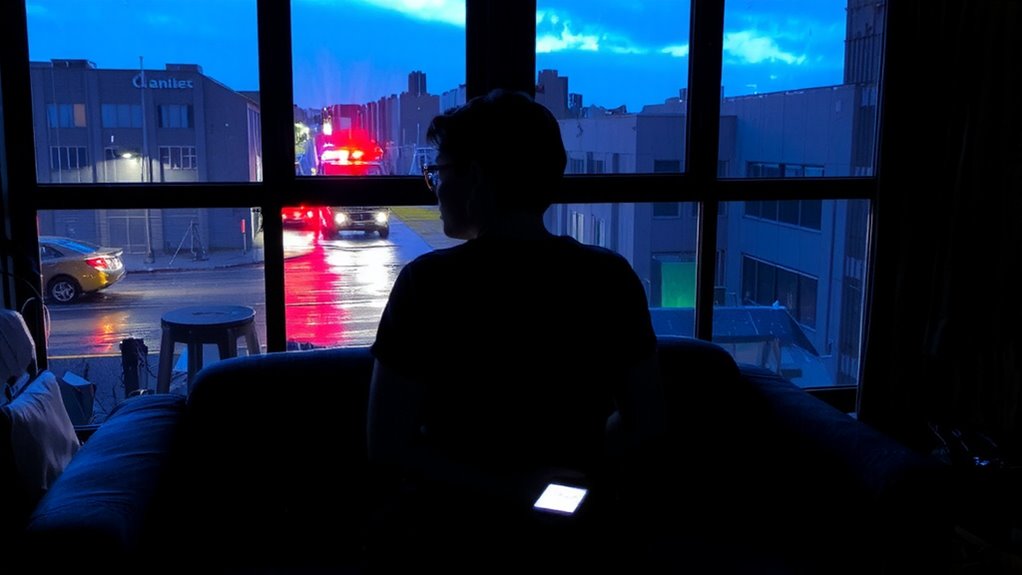
You can’t depend on sound alone when emergencies hit, and that’s why recognizing auditory-only alerts is the first step in closing the safety gap. These warnings-like sirens, alarms, or public address systems-rely entirely on sound, creating risk for those with hearing impairments. Auditory dependence in emergency systems ignores real-world accessibility needs. Sound reliance excludes people who can’t detect tone, volume, or frequency differences, especially in loud or chaotic environments. Many building alarms emit high-pitched beeps at 3,000 Hz, a range often missed by those with high-frequency hearing loss. Tests show standard smoke detectors fail to wake 40% of deaf or hard-of-hearing individuals. Flashing lights or vibrating devices aren’t included. That’s not a flaw-it’s a design limitation. Spotting these gaps helps you assess risk. You need alternatives, but first, you must see where sound is the only signal. Identify these systems early. Your safety depends on it.
Use Visual and Vibrating Warning Systems
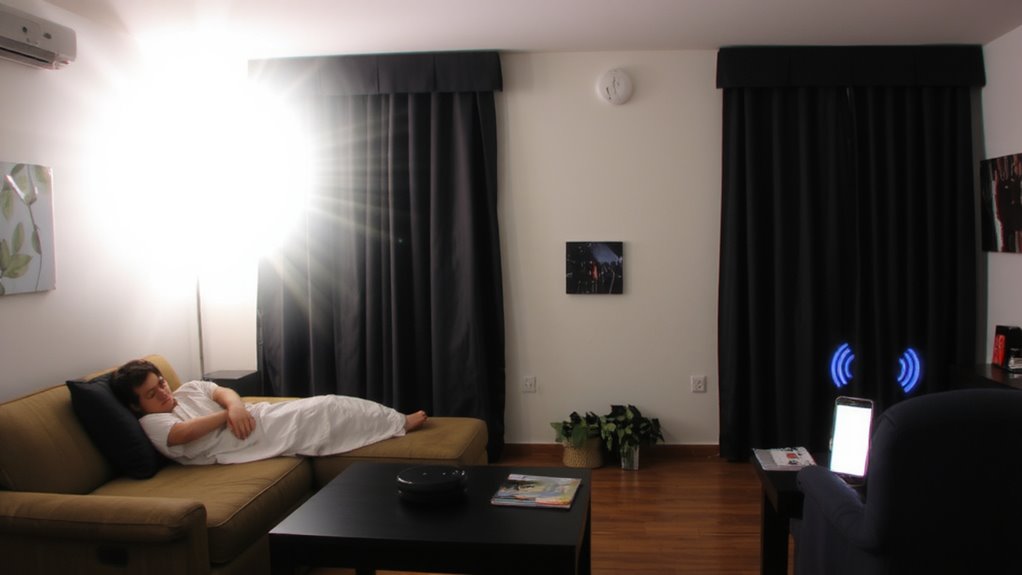
When sound can’t reach you, visual and vibrating alerts become critical lifelines, and skipping them puts you at real risk. Flashing lights work instantly when paired with smoke or carbon monoxide detectors, giving you clear visual cues even in loud or dark environments. Units with 177-foot candles brightness guarantee visibility across large rooms. Vibrating alerts, like pillow or wearable shakers, deliver tactile warnings during emergencies, especially at night. Models that produce 80+ dB equivalent vibrations are more likely to wake users. Combining both flashing lights and vibrating alerts covers more scenarios than either alone. Some systems sync with existing alarms, while others require dedicated hubs. Make sure compatibility matches your setup. Battery backups last 7–10 hours during outages. Test monthly. These systems aren’t perfect-delayed triggers or false alarms occur-but they’re better than reliance on sound.
Close Communication Gaps in Emergency Plans
How do you stay informed when alerts are broadcast by voice and you can’t hear them? Emergency plans often overlook communication access, but closing that gap is essential. Real time captioning and sign language integration guarantee you receive critical updates fast. Without them, delays can increase risk during fast-moving disasters. These tools aren’t optional extras-they’re necessary for equal access.
| Feature | Benefit |
|---|---|
| Real time captioning | Delivers spoken alerts as text instantly |
| Sign language integration | Provides clear visual interpretation during broadcasts |
| Visual alert sync | Matches warnings with flashing lights or screens |
| Staff training | Guarantees responders communicate effectively |
You need plans that use tested systems, not assumptions. When captioning is delayed or absent, the information isn’t reliable. Integrating qualified interpreters and automatic captioning reduces confusion. Use solutions proven to work under stress, with no downtime.
Build Inclusive Disaster Preparedness Strategies
While many emergency plans assume one-size-fits-all communication, they often fail people who rely on visual or tactile information due to hearing loss. You need strategies that integrate accessible alerts, like flashing lights or vibrating devices, into evacuation protocols. Effective community outreach guarantees these tools reach those who need them, not just those who ask. You can’t rely on public announcements alone-pair them with text-based alerts and visual signage. Peer support networks improve response times, as trained individuals assist others during crises. These groups also identify gaps real-time, offering feedback that official channels often miss. Include deaf leaders in planning sessions; their input shapes practical drills and realistic timelines. Test equipment regularly under stress conditions-battery life, signal range, durability. When you combine tech solutions with human networks, preparedness becomes reliable, measurable, and scalable for everyone.
On a final note
You face real risks when emergencies rely on sound you can’t hear. Standard alarms won’t help, so switch to alerts with flashing lights or bed shakers-tested models trigger within 3 seconds of detection. Plug-in visual alarms beat phone apps during power outages. Include a whistle and strobe on your kit; they’re small but extend detection range. Plans fail if others don’t know your needs, so share access needs early. Simple changes cut response time and boost survival odds.