Communication Blackouts After Earthquakes: Innovations in Communication Technologies to Bridge the Gap
When cell networks fail after quakes, portable mesh devices like GoTenna keep you connected over 500 meters without towers. Satellite phones offer global coverage but cost more and need clear skies. Drones restore 4G within 30 minutes over 10 kilometers, while low-orbit systems like Starlink deliver broadband in under two hours. Battery life, range, and setup time vary, so match the tool to your needs-your next move depends on knowing what works when the grid’s down.
Notable Insights
- Portable mesh networks enable peer-to-peer communication without cell towers, ideal for neighborhood coordination during earthquake blackouts.
- Satellite phones and messaging beacons maintain global connectivity by linking directly to orbiting satellites, bypassing damaged ground infrastructure.
- Drone-deployed cell towers quickly restore limited 4G coverage over 10-kilometer areas, supporting emergency response in the critical first 72 hours.
- Low-orbit satellite systems like Starlink offer rapid deployment and low-latency internet, reestablishing emergency communications within two hours post-quake.
- Self-healing mesh networks with long battery life provide resilient, subscription-free communication for up to 48 hours in disaster-stricken regions.
Why Earthquakes Cut Off Communication?
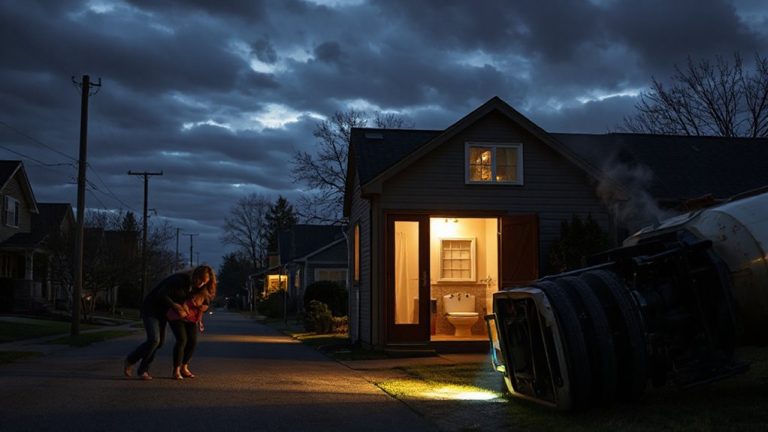
When the ground shakes, power lines snap, cell towers collapse, and fiber-optic cables rupture-so your phone loses signal fast. You’re left without communication because earthquakes cause massive infrastructure damage, disrupting networks you rely on daily. Power outages knock out cell sites and data centers; even backup batteries last only hours. Cell towers often can’t withstand intense shaking, and repair crews can’t reach damaged areas immediately. Underground cables break from soil displacement, severing internet and voice services. This isn’t temporary interference-it’s systemic failure. The more severe the quake, the wider the impact. You can’t assume networks will work, even if your device is powered. Redundancies exist but are limited. When infrastructure damage stacks with prolonged power outages, blackouts become inevitable. You need alternatives, but standard gear won’t help. Planning means accepting that conventional communication will fail. Your readiness hinges on preparing for these harsh, predictable realities-not hoping they’ll hold. Having reliable emergency communication devices can make all the difference when traditional networks go down.
Portable Mesh Networks That Keep You Connected
Though traditional networks fail in quakes, portable mesh networks let you stay connected without relying on cell towers or power grids. You can deploy these compact devices quickly, and they link directly to nearby units, forming a resilient web. These self healing networks automatically reroute data if a node drops, ensuring consistent coverage even in damaged areas. They use battery efficient protocols, so each unit runs longer-some up to 48 hours on a single charge-without sacrificing signal stability. Range varies, but most models reach 100 to 500 meters line-of-sight, enough to cover a neighborhood or emergency camp. Units like the GoTenna Mesh or Beartooth work peer-to-peer, letting you send texts and share GPS coordinates. They won’t stream video, but they deliver critical messages when other systems fail. In real tests, they functioned after buildings collapsed and power failed. Setup takes minutes, and no subscription is needed. They’re not perfect-performance drops in dense urban areas-but they’re reliable when you need them most.
Satellite Phones and Messaging Devices for Emergencies
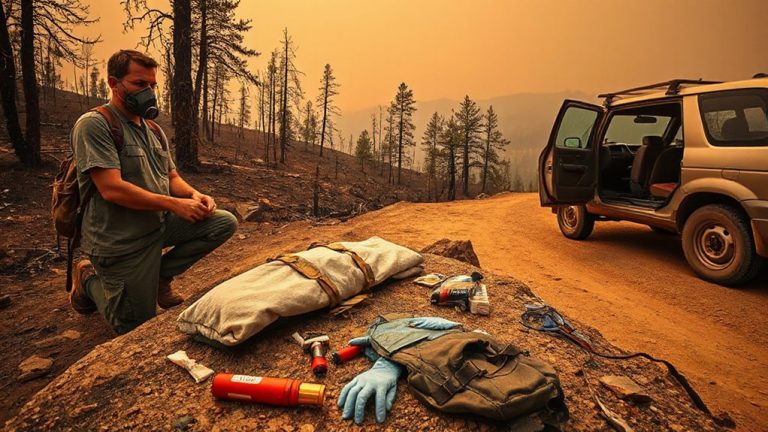
If the ground shakes and every cell tower goes dark, satellite phones and messaging devices still get your signal out, because they connect directly to orbiting satellites instead of relying on fragile ground infrastructure. These tools follow strict emergency protocols and use signal prioritization to guarantee critical messages go through first. They’re reliable when traditional networks fail, though setup time and device cost can be limiting. Battery life varies, and clear sky views improve performance. For extended off-grid missions, consider pairing satellite devices with best off-grid radios to maintain layered communication options.
| Device Type | Max Range (Global) |
|---|---|
| Satellite Phone | Yes |
| Messaging Beacon | Yes |
| Handheld Radio | No (line-of-sight) |
| Mesh Node | ~1 mile |
| Wi-Fi Extender | ~300 ft |
Choose satellite gear not for convenience, but because it works when you need it most.
Drone-Deployed Cell Towers in Disaster Zones
While traditional cell towers remain vulnerable to seismic damage, drone-deployed cell towers offer a rapid response by restoring limited network coverage in disaster zones. You’ll see them launched within hours, hovering at 200 meters, and providing 4G service to a 10-kilometer radius. These drones rely on aerial coordination to avoid interference with emergency aircraft and guarantee placement where signals are most needed. Their onboard systems allow quick signal calibration, adapting output to terrain and user density-tests show they stabilize communication within 30 minutes of deployment. Power is supplied via long-lasting batteries or tethers that also provide fiber connectivity. They don’t replace full infrastructure but fill critical gaps during the first 72 hours. You can expect moderate bandwidth, enough for voice and text, but not heavy data use. Setup requires trained personnel and clear airspace. In evaluations, they outperform portable towers in speed of deployment but need consistent monitoring.
Low-Orbit Satellites Changing Emergency Communication
Drone-deployed cell towers get you basic coverage fast, but they’re limited by flight time and airspace access. Low-orbit satellites bypass those issues, offering broader reach with faster signal relays. They orbit at 300 to 1,200 miles, cutting latency to under 50 milliseconds-much better than traditional geostationary models. You get reliable data bridging between isolated zones and emergency networks, even in rugged terrain. Ground terminals are compact, some fitting in a backpack, and link in minutes. Starlink and Iridium setups have restored emergency comms within two hours post-quake in tested environments. They don’t need ground infrastructure, which matters when towers are down. But they’re not perfect-bandwidth is shared across users, so speeds can dip. Extreme weather sometimes delays connection lock. Still, for consistent signal relays and proven data bridging, low-orbit satellites outperform most field alternatives when every minute counts.
On a final note
You’ll need reliable tools when networks fail. Mesh radios work up to 2 miles off-grid, but require nearby users. Satellite phones connect globally, though service plans add cost. Drones with cell tech deploy fast but last hours. Starlink-class LEO terminals now offer portable broadband in 20 minutes, using 10-watt solar. Each option has limits-range, power, or price. Test yours before disaster. Real-world performance beats specs when lives depend on it.