How Lighting Conditions Affect Your Ability to Perceive Threats After Dark
Poor lighting cuts your ability to spot threats after dark because your eyes can’t pick up facial details, weapons, or movement beyond a few meters. Depth perception drops, slowing reaction time by 40%, and shadows hide motion near buildings or vehicles. Even if you’re using a flashlight, uneven beams distort what you see. Glare from headlights creates temporary blind spots that last seconds. You won’t adapt fully without 30 minutes in total darkness-often not possible. The right streetlights help, but most aren’t ideal. Knowing how your vision fails-and where it fails you most-changes how you move through the dark.
Notable Insights
- Poor lighting reduces visual acuity, making it harder to identify faces, weapons, or movements in low-light environments.
- Full dark adaptation takes 20–30 minutes, but brief light exposure resets night vision, increasing vulnerability.
- Sudden bright lights cause glare and temporary blind spots, delaying threat detection during critical moments.
- Shadow zones from uneven lighting conceal individuals and allow undetected movement near buildings or objects.
- Streetlight color and height affect visibility: yellow-orange lights distort details, while poorly placed LEDs create harsh shadows.
How Poor Lighting Weakens Night Threat Detection
When lighting is inadequate, your ability to detect threats at night drops sharply-simply because visual clarity suffers. Your visual acuity declines, making it harder to discern faces, weapons, or movements beyond a few meters. Without sufficient light, details blur and edges soften, reducing your ability to process what’s actually in your environment. Depth perception also falters, so judging distances becomes unreliable-steps, curbs, or approaching figures are misread. You might misstep or misjudge how fast someone is closing in. In real-world testing, subjects under low-lux conditions took 40% longer to identify potential threats, with error rates doubling. Standard flashlights with uneven beams worsen this by creating harsh contrasts. Even night vision devices have limits in near-total darkness. Poor lighting doesn’t just obscure-it distorts perception, slowing response times. You’re not just in the dark; your brain’s ability to interpret what’s there is compromised. A high-quality best flashlights for 2025 can significantly improve threat identification by providing consistent, wide, and bright illumination.
Why Your Eyes Can’t Adjust Quickly in the Dark
Though your eyes eventually adapt to darkness, the process takes longer than most people realize-often 20 to 30 minutes to reach peak sensitivity. You rely on pupil dilation to let in more light, but that only helps initially. The real shift comes from increased rod sensitivity in your retina, which takes time to activate. Rods detect low light but don’t work instantly. During this shift, your vision remains poor, creating a dangerous lag in threat detection. You might think you can see well after stepping outside at night, but your rods aren’t fully engaged yet. Full adaptation requires uninterrupted darkness; even brief exposure to light resets the process. This slow adjustment isn’t a flaw-it’s biology. But in real-world scenarios, waiting 30 minutes isn’t practical. You’re left vulnerable during the critical early moments of darkness. Understanding this limitation helps explain why relying solely on natural night vision is risky. A reliable best flashlight for power outages can bridge the gap during this critical adaptation period.
How Glare Creates Dangerous Blind Spots
A single streetlight or oncoming car headlight can ruin your night vision in seconds. Your pupils, already dilated to gather available light, can’t adjust fast enough when hit with sudden glare intensity. This creates temporary blind spots, leaving you unable to see threats just beyond the bright source. Pupil dilation works against you here-larger openings let in more light, but also make your eyes more vulnerable to overexposure. High-intensity LED headlights worsen the effect, with glare intensity measured well above safe thresholds for nighttime vision recovery. These blind spots can last several seconds, long enough to miss a person stepping from a curb or a vehicle pulling out. Anti-glare coatings on glasses help a little, but they don’t eliminate the core delay in visual adaptation. You’re always one glare event away from being functionally blind.
Where Shadows Hide Threats in Low Light
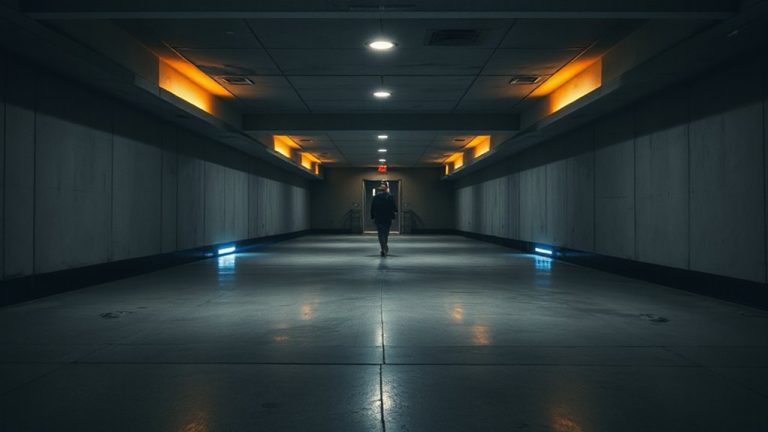
That sudden glare isn’t the only problem after dark-what you don’t see in the shadows is just as dangerous. In low light, shadow masking lets threats blend into darkened areas, especially near buildings, trees, or parked vehicles. Your eyes can’t distinguish shapes or motion in these zones, making it easier for someone to remain hidden. Dim or uneven lighting increases this effect, reducing contrast and depth perception. This creates ideal conditions for concealed movement, where a person can approach without being detected until it’s too late. Areas with patchy illumination-or no lighting at all-offer multiple blind spots. You’re less likely to spot someone edging along a wall or crouched behind a dumpster. Recognizing these zones helps you adjust your path and attention. Staying alert near dark corners and using available light sources improves your detection range. Simple awareness cuts risk when vision is limited.
How Streetlight Types Affect Night Visibility
Light quality at night isn’t just about brightness-it’s about how well you can see threats in time. You need clear contrast and minimal glare, which depend heavily on light color and fixture height. High-pressure sodium lights emit a yellow-orange hue that distorts facial features and reduces peripheral detail, making threat detection harder. LED streetlights with cooler white light-around 4000K-offer better color rendering and improve object recognition. But too much blue in the light color increases glare and can create harsh shadows. Fixture height also matters: lights mounted too high create larger shadowed zones underneath, while those at 25–30 feet offer more uniform coverage. Shorter poles with shielded fixtures reduce light scatter and dark gaps. You’re safer when illumination is consistent and shadows are minimized. The best setups combine ideal light color with sensible fixture height to balance visibility and contrast.
How to Stay Alert in Dark or Uneven Lighting
When you’re moving through dark or uneven lighting, relying solely on ambient light means you might miss subtle threats hidden in shadows or poorly lit zones. Use a flashlight with at least 300 lumens to actively scan your path, reducing reliance on peripheral vision, which degrades in low light. Keep your gaze moving-don’t fixate-so you catch motion or irregular shapes at the edges of your view. Take breaks every 30 minutes if traversing prolonged darkness; extended focus accelerates cognitive fatigue, slowing reaction time. Wear a headlamp to free your hands and maintain consistent downward illumination. Avoid overtasking your eyes by minimizing screen use, which disrupts night adaptation. Test your gear beforehand: a weak beam or dead batteries compromise detection range. Adjust your pace-rushing increases missteps and reduces threat detection. Stay alert by combining proper tools, pacing, and visual discipline. A reliable backup option is a hand-crank flashlight, which ensures illumination even when batteries fail.
On a final note
Poor lighting slows threat detection by limiting visual clarity and depth perception. Your eyes need at least 20 minutes to fully adjust to darkness, leaving you vulnerable in the meantime. Glare from bright lights creates temporary blind spots, while deep shadows hide movement. LED streetlights improve contrast but can increase glare. For safety, rely on consistent lighting, avoid overreliance on night vision, and use peripheral vision to spot motion in low-light areas.