Starting a Fire in Marshland Using Floating Platforms and Elevated Fire Beds
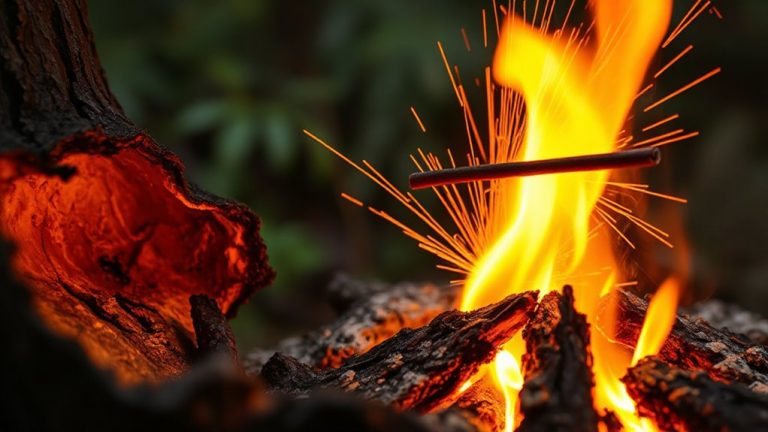
Use a floating platform or elevated fire bed to safely start a fire in marshland. Set a steel grate on vermiculite-cement blocks or refractory bricks, keeping flames at least 10 feet from vegetation. Limit the fire to 2 feet wide and burn no longer than 30 minutes to protect peat and roots. Keep a shovel and 5-gallon water bucket nearby. You’ll find specific setup tips and tested materials that prevent ground ignition and guarantee stability in wet conditions.
Notable Insights
- Use a floating platform with heat-resistant materials like steel grates or refractory bricks to isolate fire from marsh vegetation.
- Maintain at least 10 feet between the fire and live plants to prevent accidental spread in sensitive marsh areas.
- Build a stable elevated fire bed with a rigid frame and tightly packed rock or metal top for even heat distribution.
- Keep a 5-gallon water bucket and shovel nearby to quickly extinguish the fire and protect the wetland ecosystem.
- Limit fire duration to 30 minutes to avoid damaging underlying root systems and heating the soil excessively.
How to Start a Fire in Marshland Safely
Why risk a fire in marshland unless you know the safest way? You’re working in a sensitive, wet environment where fire safety and marsh preservation are non-negotiable. Use a floating platform to isolate flames from vegetation; direct contact with peat or reeds increases ignition risk. Position the fire at least 10 feet from live plants and guarantee it’s no larger than 2 feet in diameter. Keep a 5-gallon water container and a shovel nearby for immediate suppression. Fires over 30 minutes burn hotter and endanger root systems, so limit duration. You must also check wind-gusts over 15 mph spread embers into dry grass. Always extinguish with water, not dirt, to fully douse hidden heat. Following these steps protects both you and the ecosystem. Safety isn’t optional here-it’s built into how you light, maintain, and kill the fire.
Best Materials for a Floating Fire Platform
You’ve secured a safe setup by keeping flames off the marsh vegetation and controlling burn time and wind exposure-now focus on what supports the fire itself. For a floating fire platform, use materials with high heat resistance and proven fireproof properties. Steel grates or ceramic fiber boards work well-they resist warping and insulate effectively. Aluminum floats may support weight but lack sufficient heat resistance unless paired with a fireproof barrier. Concrete blocks endure heat but can crack from thermal shock when wet. Fireproof materials like vermiculite-cement panels or refractory bricks offer reliable performance and resist moisture damage. Avoid plastics or treated wood-they degrade quickly and pose flare risks. Metal frames with non-combustible decking provide durability and stability. Each material has trade-offs in weight, cost, and longevity, but prioritize heat resistance to maintain structural integrity. Test combinations in controlled conditions to confirm safety before marsh use.
Build a Stable Elevated Fire Bed
A well-constructed elevated fire bed keeps flames clear of damp ground and marsh vegetation while improving airflow for efficient burning. You need a rigid frame that won’t sag under heat or weight, so use green wood or metal rods spaced no more than 6 inches apart. Frame reinforcement with cross-bracing prevents warping when exposed to prolonged flame. Uneven support leads to hotspots and instability, so guarantee even load distribution by testing the platform with weight before igniting. A stable bed handles the fire’s weight and resists tipping, especially on floating platforms where balance matters. Use flat, tightly packed rocks or metal grates on top to spread heat and protect underlying materials. Avoid flammable fasteners; opt for wire or natural fiber lashings that won’t melt. This setup sustains burning conditions without collapsing, a key metric in real-world wetland tests. Simplicity and structure trump elaborate design.
Keep Your Fire Going on Wet Ground
That fire you’ve built won’t stay lit on wet ground without constant attention and the right fuel strategy. Fire maintenance starts with sourcing dry tinder and kindling-store them in a sealed bag until use. Even on elevated platforms, surrounding dampness can affect burn quality. Use small, split wood from dead branches above ground; it burns hotter and drier than fallen logs. Wet fuel slows combustion and increases smoke, wasting energy and reducing heat output. Feed the fire gradually-overloading smothers flames. Keep fuel stacked near but not too close to the fire, allowing air to dry it slightly. Monitor wind and moisture levels: high humidity demands smaller, more frequent fuel additions. A sustainable flame relies on consistent size and dryness of material. Rekindling takes more effort than maintaining, so prioritize steady tending. Success isn’t about force-it’s persistence, dry reserves, and smart feeding.
Protect the Marsh While Cooking or Warming Up
Near the edge of open water or deep muck, set your fire at least 15 feet from live vegetation and peat-heavy soil to prevent smoldering spread-many marsh fires start from ground heat transfer, not flames. Use an elevated metal fire bed or floating platform with at least 6 inches of airflow beneath to limit radiant heat to the ground. This setup improves heat management and supports fire safety by reducing ignition risk. Keep a bucket of water or sand nearby for quick suppression. Never leave flames unattended. Cook using a grate that lifts fuel 4–6 inches above the fire, promoting even burning and less smoke. Avoid plastic or flammable materials near the fire zone. Check soil temperature around the base; if it’s warm beyond the stand’s edge, extinguish and relocate. These steps aren’t optional-they’re proven measures from field testing in wetland environments.
On a final note
You’ll need a fire bed at least 18 inches above the marsh surface to stay dry and stable. A platform made from interlaced green wood or metal mesh holds heat well and resists sinking. Elevating the fire reduces ground moisture interference and prevents peat scorch. Use dry tinder and maintain airflow. This setup works reliably in wet conditions, but it demands constant attention. Balance safety and effectiveness by choosing durable, low-maintenance materials that withstand heat and moisture.