How to Choose a Bug-Out Bag That Fits Under Emergency Vehicle Seats
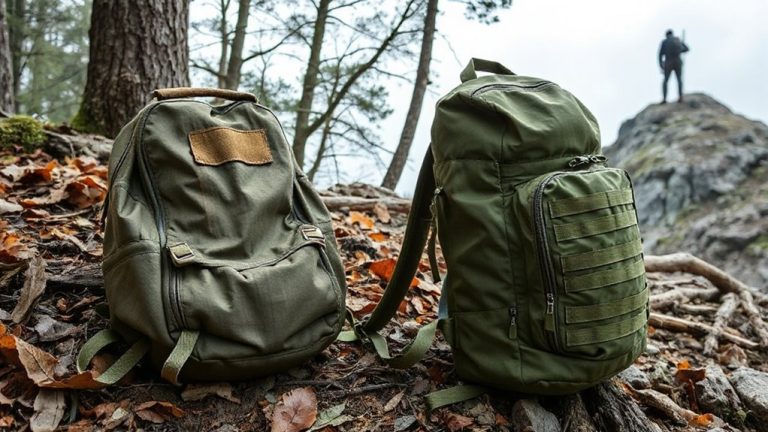
Choose a bug-out bag 16–18 inches deep and under 8 inches thick to fit most vehicle footwells. Stick to 25–35 liters for enough space without sacrificing stowage. Pick one made from 600D polyester or high-denier nylon with reinforced stitching for durability. Keep weight under 20 pounds and use flat, lightweight essentials like vacuum-sealed food and water tablets. Test the packed bag under a real seat to verify it slides easily. A slim, boarding-ready design ensures fast access and reliable clearance-even in tight spaces.
Notable Insights
- Choose a bag with a depth of 16–18 inches to fit under most vehicle seats.
- Opt for a slim profile under 8 inches thick to clear seat gaps and wheel wells.
- Select a capacity between 10–15 liters to avoid overpacking and ensure snug storage.
- Use lightweight, durable 600D polyester or high-denier nylon to balance strength and size.
- Test the loaded bag in real vehicles to confirm fit, stability, and quick retrieval.
Check Under-Seat Size Limits for Bug-Out Bags
Under your seat is likely where you’ll stash your bug-out bag if you’re using a vehicle, so check the dimensions before buying or packing one. Most compact cars allow only 16–18 inches in depth under the front seat, meaning longer bags won’t fit or slide easily. Measure your space first-don’t assume. Bags exceeding weight limits can strain your back during evacuation, especially if you’re moving quickly on foot. Stick to loaded weights under 20 pounds for practical mobility. Material durability matters because daily friction against pedals or seat rails wears down fabric over time. Look for 600D or higher polyester with reinforced stitching; it holds up better than cheaper alternatives. A slim, low-profile design prevents snagging and fits tighter spaces. Some military surplus bags are tough but often too bulky. Balance size, weight limits, and material durability to guarantee your bag stays accessible and functional when you need it most. For air travel, consider models from the best under-seat backpacks list to ensure compatibility with confined spaces.
Choose a 25–35 Liter Bug-Out Bag
You’ve checked under the seat, so now let’s talk capacity-specifically, a 25–35 liter bag. This range fits under most emergency vehicle seats while holding essentials. Too small, and you’ll lack supplies; too large, and it won’t stow properly. Size impacts mobility and storage, so balance is key. A well-designed survival backpack ensures organized, efficient packing without sacrificing durability.
| Volume (L) | Weight (lbs) | Best For |
|---|---|---|
| 25 | 2.1 | Minimal kits, tight spaces |
| 28 | 2.3 | Urban evacuations |
| 30 | 2.5 | 72-hour needs |
| 32 | 2.6 | Mixed climates |
| 35 | 2.8 | Full personal gear |
Choose a proven bug out bag color like coyote brown or black for low visibility. Prioritize bag material durability-1000D nylon outlasts 600D in abrasion tests. Lightweight doesn’t mean flimsy if the fabric’s high-density.
Pick a Slim, Boarding-Ready Bug-Out Bag
While maximizing stowage in tight spaces, a slim-profile bug-out bag keeps your core survival gear accessible and secure during rapid evacuations. You need one that slides easily under seats without snagging or blocking aisles. Look for a profile under 8 inches thick-this fits most transit and emergency vehicle seat gaps. A boarding-ready design also means meeting airline compliance for carry-on dimensions, so you won’t get stuck checking it. Materials matter: high-denier nylon with reinforced stitching guarantees bag durability during drops, drags, or rough handling. Avoid wide straps or bulky external pockets-they catch on obstacles. Zippers should be lockable and smooth-operating after dust exposure. A flat back panel improves stability when stowed vertically. Test how it slides in and out of confined spaces. Real-world fit beats advertised specs. Prioritize function over features you don’t need.
Pack Flat, Lightweight Emergency Essentials
A slim bag won’t help if what’s inside adds bulk and weight you can’t afford. Choose flat-packed emergency rations like vacuum-sealed calorie bars or dehydrated meals that stack neatly and weigh under 10 ounces for a 72-hour supply. Standard military rations work but often take up more space. For water purification, skip bulky filters; a lightweight chemical tablet system or a hollow-fiber straw lets you treat up to 1,000 liters under 3 ounces. Tablets are less convenient for immediate use but take up almost no space. A straw filter offers real-time use but can freeze or clog in silt-heavy water. Both options outperform boiling when fuel is scarce. Always test your combination for packability-what lies flat on day one shouldn’t expand after compression. Efficient choices let you carry more without increasing profile.
What Fits in a Compact Bug-Out Bag?
With space and weight at a premium, what you include must justify every ounce and cubic inch. Prioritize lightweight, multi-use items that support survival basics: water purification, fire starting, signaling, and basic medical needs. Compact doesn’t mean underprepared-it means deliberate. Below are essentials that fit in most under-seat bug-out bags:
| Item | Purpose |
|---|---|
| Water purification tablets | Treat 50+ liters in <2 oz |
| Mini fire starter (ferro rod) | Reliable fire starting in wet conditions |
| Compact first aid kit | Addresses cuts, blisters, minor injuries |
| EmergencyMylar blanket | Retains body heat, weighs under 3 oz |
| Waterproof headlamp | Hands-free lighting, long battery life |
Each item serves a core function without excess. Water purification beats carrying water. Fire starting tools are smaller and safer than fuel-heavy alternatives. Choose proven performance over novelty.
Test Your Bug-Out Bag in Real Transit Seats
You’ve picked your gear, but that doesn’t mean it fits. Test your bug-out bag in real transit seats before relying on it. Most under-seat spaces measure 16–18 inches deep, 14–16 inches high, and 14 inches wide-check your bag’s dimensions against these. Slide it under a bus, train, or airplane seat to confirm seat compatibility. Don’t assume a slim profile means it’ll fit; wheel wells and seat brackets reduce usable space. Use a tape measure for accuracy. Test with the bag fully loaded to assess real-world clearance. Also, note how bag durability holds up during repeated insertion and removal-zippers, fabric, and corners should resist wear. A sturdy handle or grip helps retrieval. If it doesn’t fit smoothly during transit testing, it won’t work when it counts. Practical fit beats theoretical capacity.
Don’t Overpack Your Under-Seat Bug-Out Bag
Every inch of space matters when your under-seat bug-out bag is crammed full, but overpacking quickly turns it into a liability. You risk jamming the bag under the seat, making it impossible to deploy during a real emergency. Overpacking risks include exceeding the bag’s structural limits and reducing access to critical items. A stuffed bag also throws off weight distribution, making it unstable if you need to move quickly. Uneven weight can strain your body during carry and increase fatigue. Most under-seat bags max out around 10–15 liters-use that space wisely. Prioritize essentials: water purification, first aid, high-calorie food bars, and a compact tool. Measure your gear before loading. Test the packed bag under a vehicle seat to confirm fit and check balance. A well-distributed, lean load performs better than a bulging, disorganized one. Keep it light. Keep it functional.
On a final note
You’ll need a bag under 18 inches long and 10 inches high to fit most vehicle seats. A 25–35 liter capacity balances space and fit. Slim, boarding-ready designs slide in easier. Pack flat, lightweight essentials-bulk kills function. Test the loaded bag in actual seats; real-world fit beats specs. Overpacking risks entry failure. Choose function over features-survival depends on access, not gimmicks.